The walmart 2-day shipping badge looks like a tiny label on a product page. From the seller side, it feels like a marketing asset. From the warehouse side, it is a daily promise your pickers, packers, and carriers either keep or quietly break. I learned that the annoying way, and I will complain about the platform for a second before I get to the data: the badge flickers, Seller Center gives you a lagging view, and everyone blames the listing first. In both cases below, the listing was fine. The building was the problem.
Stop editing the listing and check your cutoff time
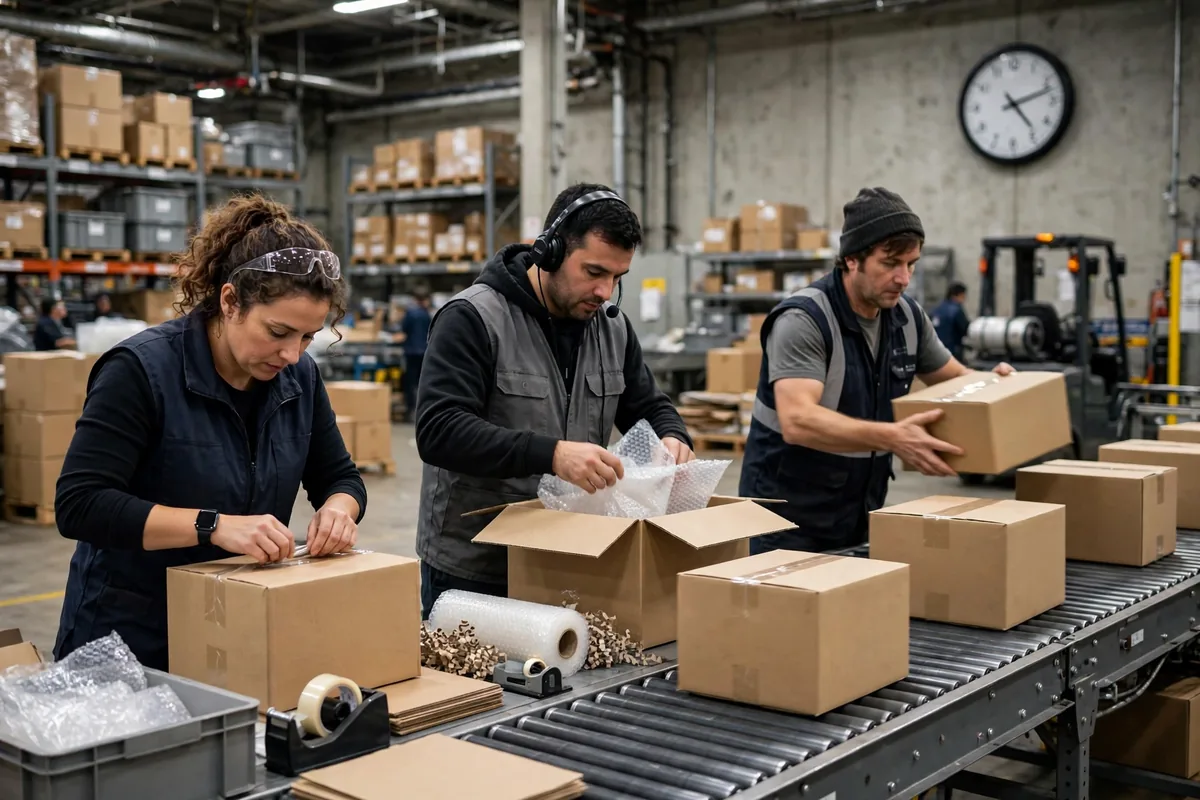
In the fall of 2024, a friend selling home storage boxes through a partner warehouse near Ontario, California kept losing and regaining the badge. Weekdays looked acceptable. Friday afternoons were a mess. Orders arrived, sat through the weekend in a general queue, and only really moved on Monday. We changed nothing on the product page. Instead, the warehouse created a separate wave for two-day orders, put a small staging rack for those orders next to the pack bench, and kept one extra person on Friday afternoons just to clear that wave. Late departures fell within a week, and the badge stopped flickering.
Here is the counterintuitive part: a later cutoff is not automatically better. Sellers love advertising a late cutoff because it sounds responsive. On a real floor, a cutoff the team cannot reliably hit compresses picking, checking, and labeling into a frantic final hour, and errors rise exactly when volume peaks. A slightly earlier cutoff that the crew clears almost every day protects the badge far better than a heroic cutoff they miss twice a week. Stability is what a delivery promise rewards, not theatre.
Use a simple daily table like this one, set to your warehouse time zone and your carrier pickup schedule. Any platform threshold or eligibility detail should be confirmed against current platform rules, because those rules change and old screenshots are not evidence.
| Stage | What must happen | Warning sign |
|---|---|---|
| Before cutoff | Two-day orders waved separately from standard orders | Priority orders mixed into a general wave |
| Within an hour after cutoff | Pack and label queue cleared, exceptions pulled aside | One missing label stalls the whole wave |
| Before carrier pickup | Boxes staged by carrier and scanned out | Cartons leave but the system shows no movement |
| End of day | Unshipped list reviewed with a reason for each order | Yesterday's miss is discovered tomorrow |
Ten minutes with that table at close of business beats an hour of arguing about a dashboard at month end.
Your walmart 2-day shipping badge lives or dies on stock placement
Early this year, a pet supplies seller I know kept all inventory in one central warehouse. On paper, one building meant lower rent and simpler counting. In practice, orders to both coasts depended on luck and long-haul lanes. He moved part of his two most reliable sellers into a small East Coast site. The rent line went up, and his accountant hated the idea for about a month. Then the picture changed: fewer emergency transfers, fewer long cross-country shipments for orders that needed speed, and fewer customer messages asking where a parcel was. Run the rough math yourself. A second stocking point adds rent, a transfer run, and extra counting time. It saves long-zone shipping, rushed replacement shipments, and the sales you lose when delivery promises look weak. If two or three products drive most of your volume, placing those products near concentrated demand usually wins. If your catalogue is wide and thin, with every item selling a little, splitting stock can strand units in the wrong building and make things worse. Placement is a bet on your actual order map, not a badge trick.
Placement inside the building matters just as much. The fast movers that appear in two-day orders should not live at the far end of the aisle. If a picker walks an extra two minutes per order across several hundred orders, you have burned hours of labor and eaten the exact window you need before cutoff. In the Ontario case, moving one storage box line to a golden zone near packing annoyed a senior picker for a day because it took prime space. By day three he stopped complaining, because his own route got shorter.
For the metric side of this, read the earlier breakdown I lean on, the Walmart Fast Tag performance guide, which explains the performance view in more detail than I will here. My point is different: metrics are the scoreboard. Cutoff discipline, stock placement, and staffing are the levers you can actually pull today, so pull them in that order.
Weekend coverage for two-day delivery: half a shift beats no shift
The third case is smaller and more painful. A kitchen tools seller had decent weekday numbers and a recurring Monday morning problem. Saturday orders arrived as normal, the warehouse worked a short Saturday, nobody worked Sunday, and Monday began with a backlog competing against Monday's new orders. The fix was not a full weekend operation. Saturday got a small crew handling only two-day and exception orders. Sunday stayed closed, but one person checked order volume and stock remotely, and Monday started thirty minutes early for the first two weeks until the backlog habit broke. Labor cost rose a little. Compare that with what a lost badge costs in weaker conversion and extra advertising to win the same click back, and the small crew was the cheaper option.
Do that math for your own building before you copy anyone. Multiply your typical weekend two-day order count by contribution per order, then compare it with the cost of a small weekend crew. If contribution roughly covers the crew, the badge stability is close to free. If weekend volume is tiny, do not staff a full shift out of pride. Bring one person in for a short window before cutoff to clear the priority wave and go home. Small sellers win by sizing the response to the orders they actually have.
One last floor detail: inventory truth on weekends. Nothing hurts a fast promise like selling stock that is already gone, or counting an in-transit transfer as available in two places. Set a manual safety line for your fast movers based on your own daily sales and replenishment lead time, and slow promotion when you cross it. I will not give you a universal number, because a universal number would be invented comfort. Check current platform rules for how inventory and delivery performance are assessed, keep your own floor count honest, and review the unshipped list every night for a month. Do those three boring things and most so-called platform problems turn out to be warehouse rhythm problems you can fix this week. That approach has worked every time I have tested it.
By Ah K, E-commerce Seller (5 yrs)