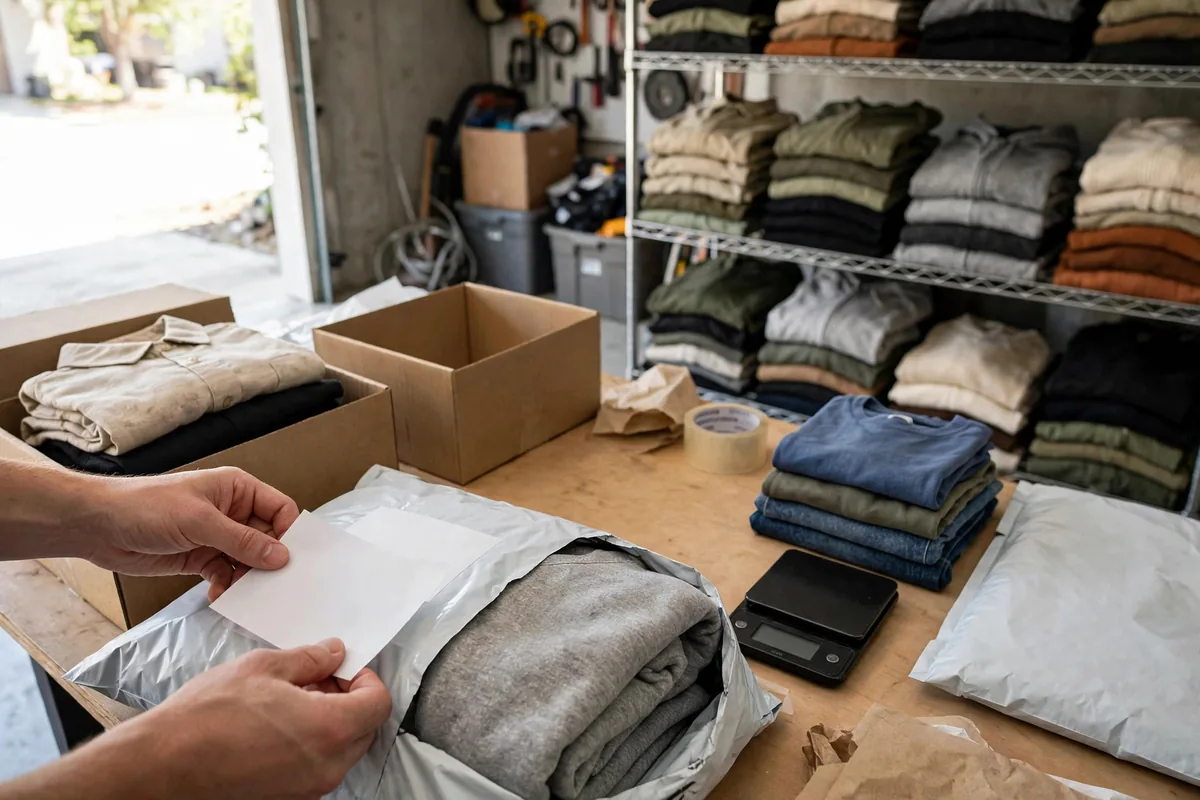
Let me start with the complaint, because every seller I know has lived it: Poshmark seller shipping fulfillment is the easiest shipping setup to start with and the easiest one to mess up in the details. Selling the item is not the hard part. The hard part is the label that prints fine, the box that weighs more than you thought, and the buyer watching a tracking page that never moves. Platform rules also change quietly, so treat every specific threshold in this article as a prompt to check the platform's latest rules — I will give you the playbook, not fake precision.
Poshmark Seller Shipping Fulfillment Starts with the Prepaid Label
Poshmark does not work like Amazon. When a buyer orders, the platform hands you a prepaid shipping label. You print it, stick it on, hand the parcel to the carrier, done. Half blessing, half trap.
The trap is that the label has a defined scope: weight limits, package conditions, and what happens when your parcel falls outside them. Inside the scope, ship with your eyes closed. Outside it — say a heavy winter coat plus boots in one box pushes the parcel over the covered weight — you must use the platform's own upgrade or adjustment process. The dumbest move is buying a random label at a counter and sticking that on instead. The tracking number will not match the order, the platform will show the order as unshipped forever, and when the buyer complains, you have no defense.
My routine has three steps. First, match the label to the order — address and item count, every time. Second, weigh the finished parcel and photograph the scale reading; a dated photo settles disputes faster than any message thread. Third, one label only. Tear off every old label and stray barcode fragment, because a sorter that scans two barcodes sends your parcel wherever luck decides.
The week after Black Friday last year, I was shipping over forty orders a day and stuck buyer A's label on buyer B's parcel. Both were black sweaters; I was packing on autopilot. One buyer got the wrong size and opened a case, the other waited three days and escalated. Both orders ended in returns, and I ate the time and the reputation hit. My rule since then: print one label, pack one order, apply one label, cross one line off the list. Ten extra seconds per order, maybe seven minutes a day — far cheaper than one dispute.
Packing and Weighing: Where Poshmark Seller Shipping Fulfillment Breaks
Clothing sellers die on one mistake: weighing the garment instead of the parcel. The carrier weighs everything — garment, box, moisture bag, tape. I learned this with a heavy coat that seemed safely under the limit bare, then crossed into the next band once boxed. The parcel had to be handled through the platform's process at the drop-off point, it lost two days, and the buyer nearly cancelled.
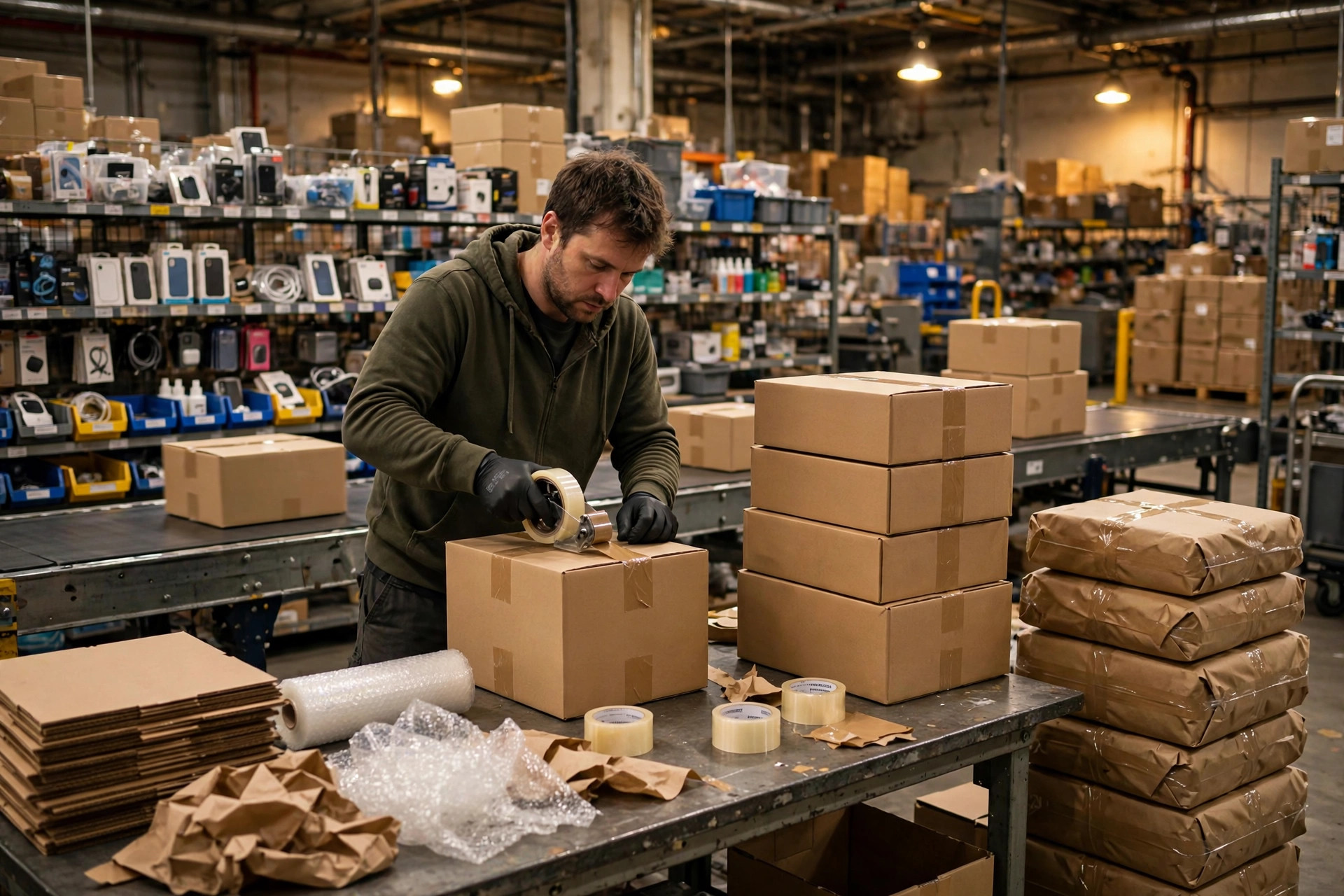
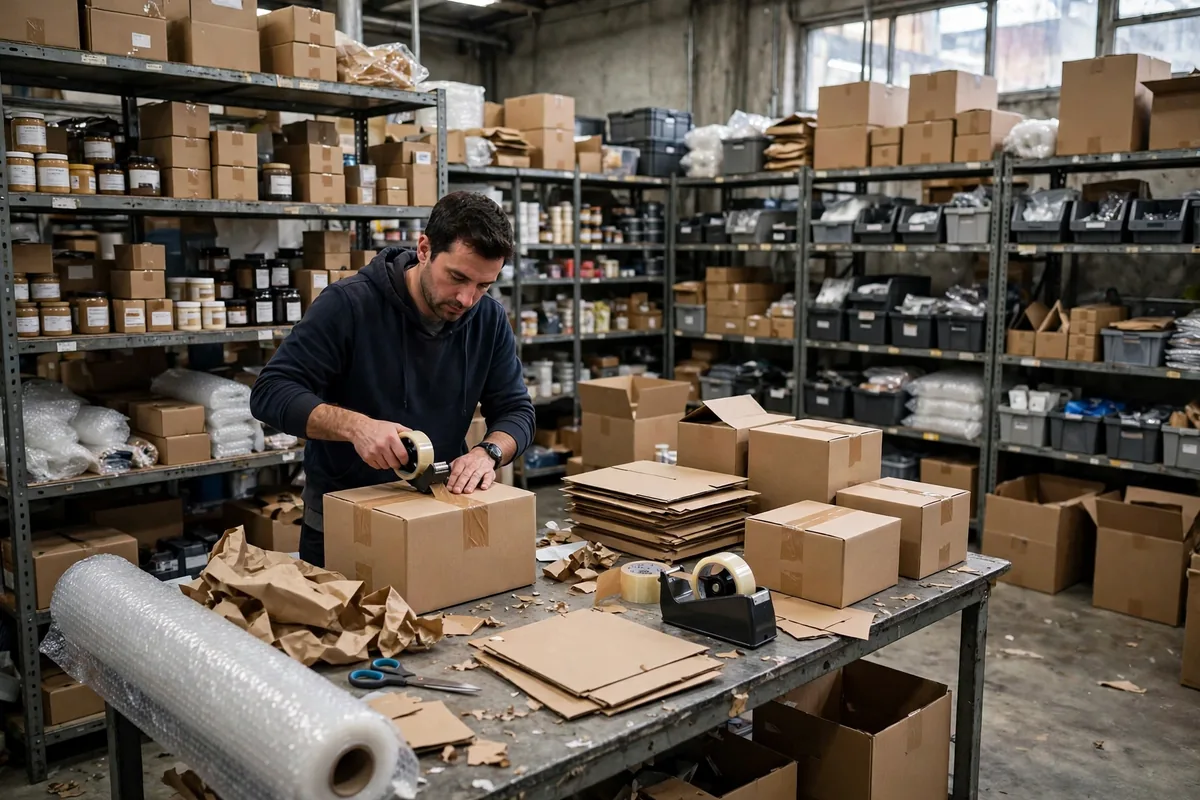
So my packing table always holds three things: a scale that gets zeroed every session, a tape measure, and only three box sizes. Fewer box sizes means faster packing and predictable weights. Small garments go in mailers, outfits in the medium box, shoes and boots in the large one.
Here is the materials math, clearly labelled as a hypothetical example — plug in your own numbers. Say you ship 120 orders a month. Buying mailers, tape, and label paper at retail might run you a little over a dollar per order in materials; buying in bulk can cut that roughly in half. Over a year that difference is real money on clothing margins. But do not over-save: shipping a garment in a grocery bag earns one-star reviews for looking unprofessional even when the item arrives fine. The market judges the unboxing, whether that is fair or not.
Bundles Ship as One Order, Not a Pile of Orders
The bundle feature is how you raise average order value on Poshmark: the buyer combines several of your items into one purchase. The classic fulfillment error is packing a bundle like separate singles and shipping them apart.
One bundle order means one shipment. Everything goes into one parcel, under that order's label. Split it and two things break: the extra parcels have no valid label attached to the order, so you pay out of pocket or face a missing-item case; and the platform's tracking only recognizes the one number, so the other parcels officially do not exist.
At my store's peak, bundles were about thirty percent of orders. My system: bundles get their own basket, never mixed with singles. I read the item count out loud, place items one at a time, tick them off, and count again before sealing. It feels like kindergarten roll call because it is. Last year I missed a camisole from a five-item bundle; the buyer photographed four items and there was no excuse — it was pure process failure. Roll call three times, and I have not missed an item since.
The counterintuitive part: bigger bundles are not always better. More items mean more weight, more damage risk, and a bigger loss when the whole bundle comes back as one return. I would rather nudge buyers toward practical three- or four-item bundles than push giant ones.
Ship Speed and Cancellation Risk
There is a hard line in Poshmark seller shipping fulfillment: timing. The platform sets expectations for how quickly sellers ship and how long a buyer waits before cancellation becomes possible; the exact windows are in the platform's latest rules, so check there rather than trusting any number in a blog post. The underlying logic is universal — buyer patience starts counting down at checkout, and every extra day raises the odds of a cancellation or a case.
My fix is rhythm: two packing sessions a day, morning and afternoon, and no order sleeps overnight. If something cannot ship — a flaw I missed, a stock error — I message the buyer immediately with a choice: wait or refund. Going silent is the expensive option. I watched a fellow seller do it: cancellation, one-star review, and visibly weaker traffic for a week afterward.
Peak season is a separate plan. From Thanksgiving to Christmas my volume more than doubles, and one pair of hands cannot hold ship times. Consumables get stocked before November, and temporary help gets hired and trained early — in my own store records, a new packer's error rate runs three to four times a trained one's.
From Kitchen Table to Small Warehouse: When to Upgrade
Finally, when do you outgrow home fulfillment? My decision framework uses three numbers. First, daily volume: not one spike, but two straight weeks averaging twenty to thirty orders a day, where packing starts eating listing and customer-service time. Second, space: inventory and materials occupying more than a room. Third, error rate: two mistakes a week means the process has outgrown one person.
Hit two of the three and it is time to price a small warehouse or a local micro-fulfillment service. The math is simple, again as a labelled example: take the monthly rent plus basic labor in your city, divide by monthly orders, and compare that per-order cost against what your own packing hours could earn if spent on sourcing, listing, and pricing. If your time earns more elsewhere, outsourcing wins. If not, wait — rent on volume you do not have yet is a monthly bleed.
I started in my garage and moved only when volume held steady. The biggest change was not prestige; it was that shipping stopped occupying my brain, and I could focus on sourcing and pricing, which is where clothing sellers actually make money. Fulfillment is a basic skill. Master it until it stops making mistakes — then stop letting it eat your week.
This is the routine I run myself, and it works.
By Ah K, E-commerce Seller (5 yrs)