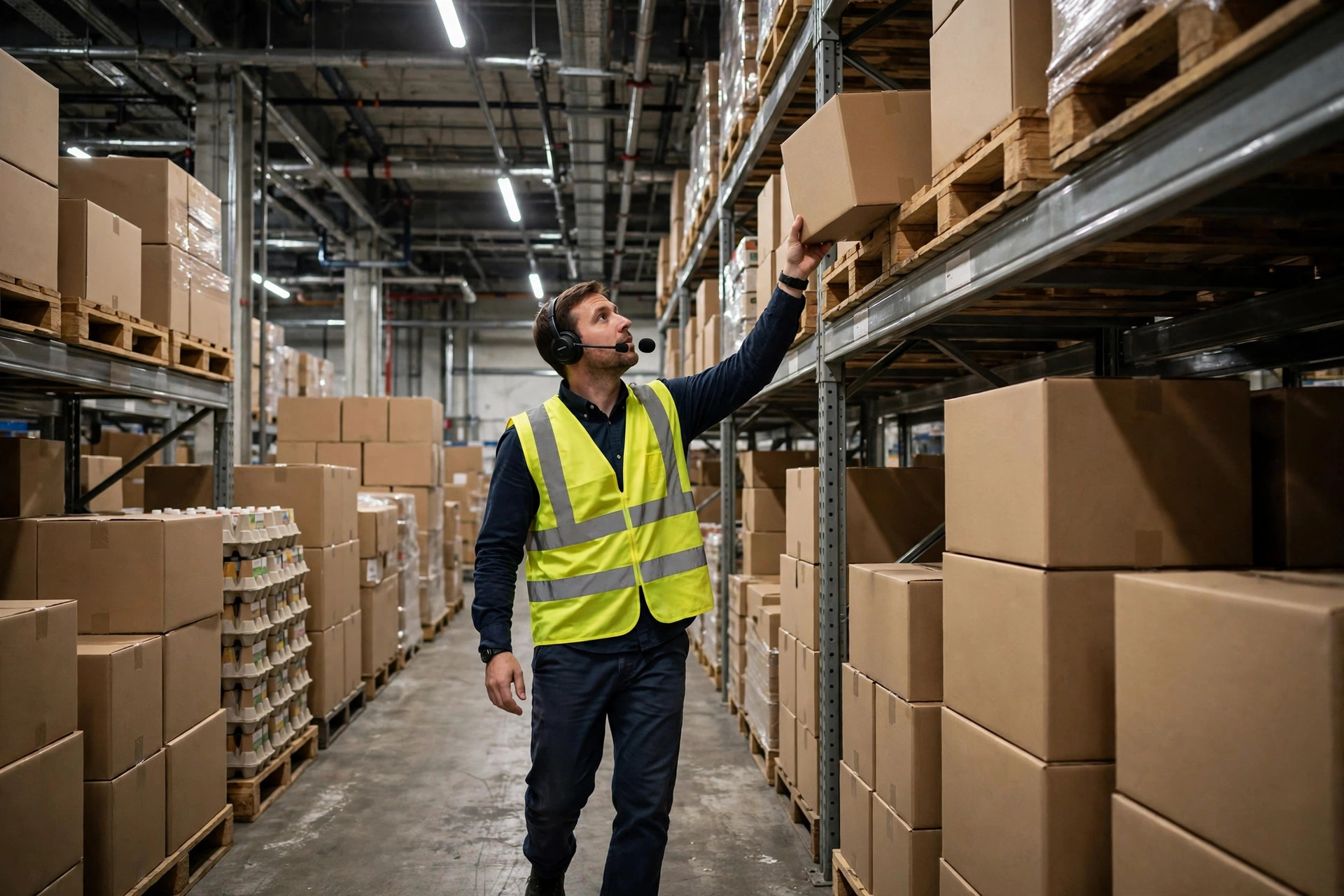
Here is the uncomfortable truth about voice picking: when it keeps mishearing your crew, the hardware is guilty maybe two times out of ten. The technology has matured. What fails, almost every time, is one of three things nobody tuned — noise, accents, or the confirmation vocabulary.
A US distributor published its numbers in the trade press after going live with voice: picking errors down 65%, accuracy up from 99.73% to 99.9%. Note the phrasing — "after going live," not "after installing the hardware." The same equipment, with the process untuned, misheard people all day long.
So this piece is not about choosing hardware. It is about the checklist that drives misrecognition down — plus a verdict on which warehouses should skip voice entirely.
Start with a Sound Meter, Not a Service Ticket
Voice picking does not fear "loud." It fears continuous, rhythmic loud — conveyor rollers, rooftop fans, forklift backup alarms. To the human ear these fade into background. To a microphone they are interference. OSHA sets the 8-hour worker noise exposure limit at 90 dBA, and I have measured plenty of conveyor lines hovering right around that number. Noise-canceling boom mics have limits, and past those limits no headset saves you.
The field checklist is short.
First, walk the pick zones with a sound meter before go-live. Measure three spots in particular: conveyor curves, under the big fans, and the dock doors. Anywhere that sits above 85 dBA for long stretches is a future misrecognition hotspot. That 85 is my own working threshold, not a regulation — the regulation is 90, but if you wait until 90 to act, you are already late.
Second, insist on directional boom microphones, positioned at the corner of the mouth. Warehouses that cheap out on generic headsets — mic floating centimeters from the mouth, ambient noise mixing straight into the voice channel — lose a full tier of recognition accuracy on day one.
Third, add a manual confirmation step in the hotspots: after the system calls out a location, the picker speaks the check digit and scans the location barcode. One extra second, and misrecognition in that zone drops to near zero. I have done the math on this trade-off: the cost of reworking one bad pick pays for thousands of barcode scans. It is not even close.
The Accent Problem Is Really a Vocabulary Problem
A US warehouse crew routinely mixes Spanish accents, Southeast Asian accents, and half a dozen regional American ones. Early voice systems made everyone record a personal voice template — catch a cold, have a bad day, and accuracy fell apart. Modern speaker-independent recognition needs no templates, but the accent problem did not disappear. It changed shape: from "it cannot recognize this person" to "it cannot distinguish certain words."
Numbers are always ground zero. Fifteen versus fifty, thirteen versus thirty — with a heavy accent, the system cannot tell them apart. Any process that asks a picker to speak digits as confirmation, in a noisy aisle, is handing misrecognition a loaded gun.
Two fixes. First, avoid pure digits in confirmations. Mix words and digits — "Alfa-3" instead of "1-3." Words carry more syllables and more acoustic features, so the system recognizes them better and people mispronounce them less. Second, during the first week of go-live, export each picker's most-misrecognized words and add them to the system's homophone dictionary one by one. It is grunt work. It pays off for half a year.
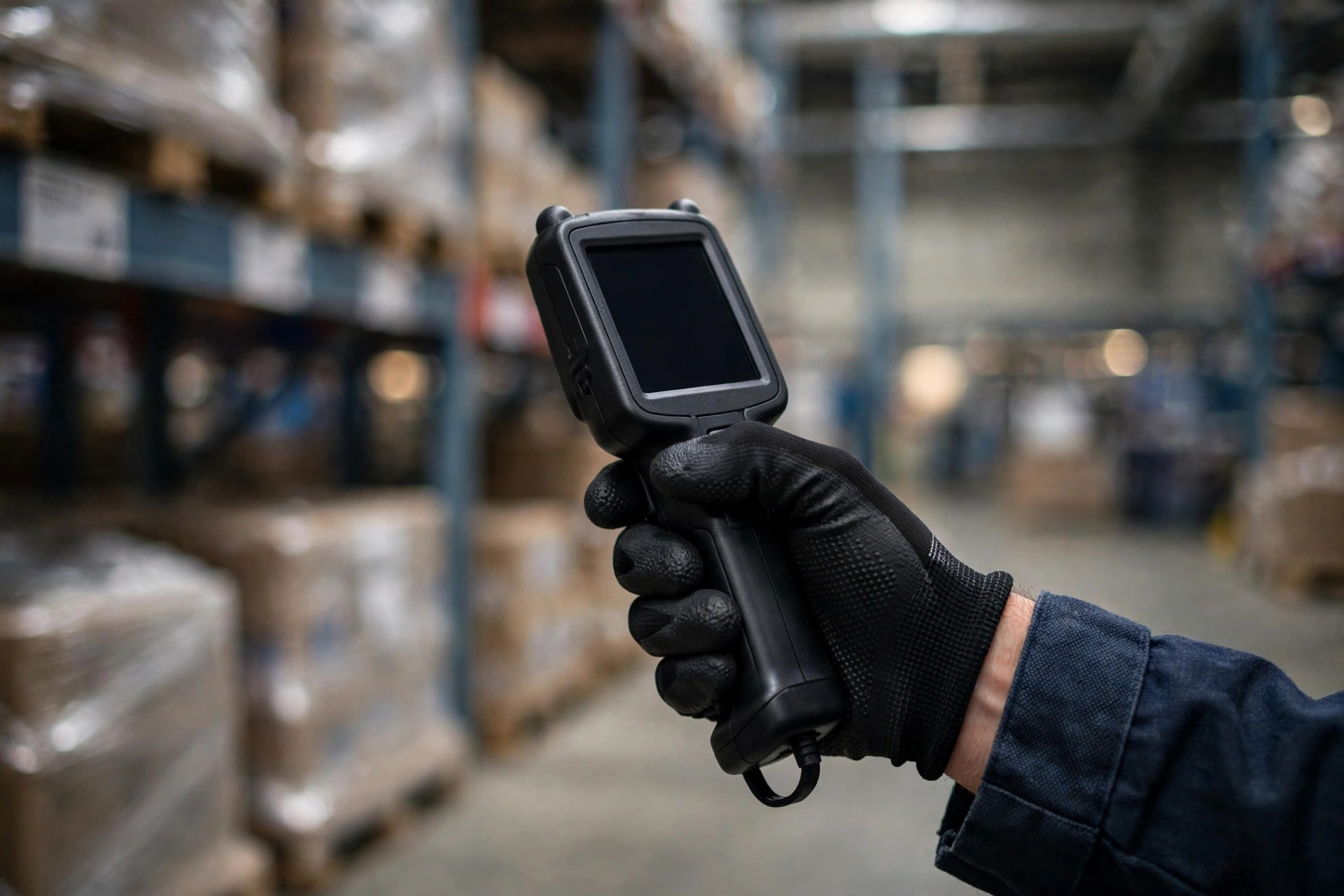
Swap Digits for Words: The Highest-Leverage Change I Have Seen in Years
The classic mechanism is the check digit: a two- or three-digit code posted at each slot, spoken aloud by the picker on arrival, matched by the system before releasing the pick. The mechanism is sound. The weak point is the speaking — digits are short, low in syllables, and the first thing to break under noise plus accent.
The most effective change I have seen in recent years is swapping numeric check digits for word check codes. The method is simple: assign each slot in the high-velocity pick zones a short confirmation word, chosen so the words sound maximally different from each other — think the NATO phonetic alphabet approach: Alfa, Bravo, Charlie. The picker speaks the word, not the digits.
The payoff comes from a simple trade-off: a word takes half a second longer to say, but the chance of it being misheard is far lower than a digit string. An operations manager at a 3PL told me rework requests at the check step fell by nearly half after the switch. The cost is maintaining a slot-to-word mapping table and updating it whenever slotting changes. My verdict: for a warehouse doing thousands of pick lines a day, the maintenance cost is trivially worth it. For a slow mover doing a few hundred lines, do not bother.
One more small trick: never use confirmation words people say in normal conversation. "OK," "yes," "got it" — spoken casually all day, they trigger false positives. Use dedicated words nobody says on the warehouse floor.
Three Warehouses That Should Skip Voice
Final verdict. Voice picking is not a universal medicine, and I have watched all three of these warehouse types pay tuition for forcing it.
The low-density warehouse. A few hundred pick lines a day, pickers spending most of their time walking — the "no more looking down at paper" savings dilute to nothing per order, and the hardware plus implementation cost never pays back.
The warehouse with a noise problem it cannot fix. Cold-storage fans, heavy conveyors running around the clock, measured noise permanently above what the headsets can cancel — voice will mishear all day. Use scanners, or fix the noise first and talk about voice later.
The precision warehouse with strict verification. High-value goods, one-to-one serial tracking — asking a picker to speak a 20-digit serial number into a headset is a disaster. Scanning is the only answer there; voice does not even make the shortlist.
Voice picking genuinely shines in high-line-count, standard-SKU, noise-controlled grocery and food distribution. There it can push accuracy past 99.9%. But only after three things are done: the noise is measured, the accents are adapted, and the confirmation words are designed. Skip those three, and the most expensive hardware is furniture.
So here is my question back to you: of all the misrecognitions in your warehouse, how many are the system truly "mishearing" — and how many are just nobody designing how people are supposed to speak?