An 8-ounce poly mailer. USPS Ground Advantage and UPS SurePost (now called UPS Ground Saver) can both move it, and the label prices look almost identical. But last year we picked the wrong side and bled nearly two grand in a single month. Here is everything we learned the hard way, so you don't have to.
Our predicament: every extra dime on shipping is a dime off our margin
Some background first. I run a small warehouse — about 3,000 square meters in Ontario, California. Nine people total across picking, packing, and customer service, three of them part-time. We push three to four hundred small parcels a day, and eighty percent of them weigh under a pound: phone cases, charging cables, hair ties, little accessories, all for small e-commerce sellers.
Big companies have automated rate-shopping and smart routing. We can't afford that, and honestly we couldn't use it if we could. Our "system" is me: every morning, coffee in hand, two rate pages open, pick whichever is cheaper. Sounds primitive, but that's the daily reality of a small warehouse. Every extra dime on shipping is a dime off our margin.
Last year, a phone-case seller doing about 300 orders a day — all 4-ounce packets — asked me: "Ma, UPS has this thing called SurePost, it's dirt cheap, can we put everything on it?" I said sure, every cent saved is profit. Then July happened: more than twenty parcels went silent for over a week, three vanished completely. Reships, refunds, bad reviews — the client nearly walked. That month alone cost us nearly two thousand dollars. Lesson learned the expensive way: for small parcels, never judge by the label price alone.
The gut punch: UPS SurePost is dead
If you're still googling "is UPS SurePost cheap," here's the gut punch: the service was renamed in April 2025. It's called UPS Ground Saver now.
The name isn't the only thing that changed. SurePost used to be UPS pickup with USPS running the last mile; after UPS ended its last-mile partnership with the Postal Service, most parcels are delivered door-to-door by UPS drivers. And here's the one that really hurts: the included liability for lost or damaged parcels was slashed from $100 down to $20. Oh, and it also took a rate hike of nearly 10% back in January 2025.
So those "2024 SurePost is insanely cheap" guides floating around online? Ancient history. Most comparison articles are still stuck in 2024 — they use the old SurePost name and never mention the $100-to-$20 insurance cut. That gap between what you read and what's real? That's exactly the trap. If you searched for UPS SurePost and landed here, remember: the thing you're actually comparing today is UPS Ground Saver.
One more thing most comparison articles miss: when the rename happened, PO box and military delivery got cut, and the internet has been arguing about it ever since — half the guides say yes, half say no. The truth is UPS later struck a new last-mile deal with USPS and restored PO box coverage in 2026. If two articles disagree, check the publication date. My rule: always verify on ups.com before you ship.
Our redneck method: split the volume in half and let the data talk
Big companies have data teams. We don't. But we have a redneck method: in August 2026, I took two straight weeks and split every day's orders down the middle — half on USPS Ground Advantage, half on the UPS side. All 8-ounce-ish packets, shipping from California to Texas and New York. I tracked it all in a spreadsheet, by hand.
Two weeks, a little over two thousand parcels, and the results were pretty clear.
Transit time first. The USPS batch mostly landed in 3 to 4 days; the UPS batch mostly took 4 to 6. That lines up with what both carriers publish: USPS quotes 2 to 5 business days for Ground Advantage, and UPS says Ground Saver runs about 1 to 2 days slower than regular UPS Ground. A day apart, give or take. If the order isn't urgent, who cares; if it is, don't cheap out.
Then loss and damage. Neither side loses much, but the cost of a loss is worlds apart. The UPS batch lost a pair of Bluetooth earbuds worth over $60 — under the new rules, $20 back, and we ate the other $40. The USPS batch lost one too, a $45 item, fully covered by the $100 included insurance. Zero out of pocket.
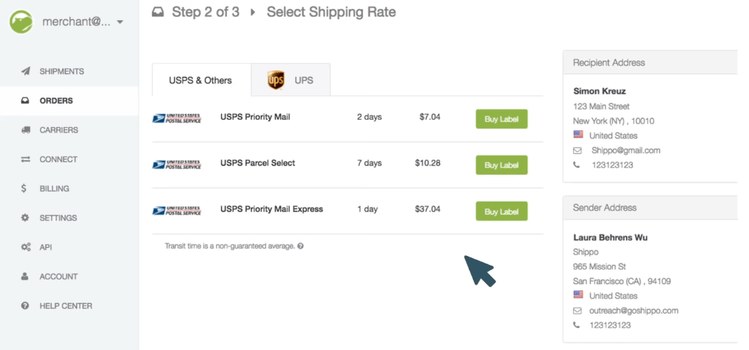
Finally, price. For a parcel around a pound, commercial rates on third-party platforms like Pirate Ship or Shippo put both services in roughly the $5 to $8 ballpark, depending on zone, with the UPS side usually a few dimes cheaper. One warning: we're in the middle of USPS's temporary holiday pricing right now (October 4, 2026 through January 17, 2027), so rates are running hot — re-shop both before you buy. And forget the post office counter: retail starts around $8 for a one-pound parcel, way above platform pricing. Treat my numbers as magnitudes, not quotes; always check the live rates on the carrier sites and platforms.
USPS Ground Advantage vs UPS Ground Saver: the honest table
| What matters | USPS Ground Advantage | UPS Ground Saver (formerly UPS SurePost) |
|---|---|---|
| Label price, around 1 lb commercial | Roughly $5–$8, zone-dependent | Same ballpark, usually a few dimes less |
| Published transit | 2–5 business days | About 1–2 days slower than UPS Ground |
| Included loss/damage coverage | $100, baked into the label | $20 |
| Tracking | Full USPS tracking | Full UPS tracking number, last mile mostly UPS drivers now |
| PO boxes / military / AK & HI | Deliverable | Cut at the 2025 rename, restored in 2026 after a new UPS–USPS last-mile deal; rules flipped twice in a year, verify on ups.com before shipping |
| Pickup | USPS pickup generally free | UPS driver pickup |
The counterintuitive part: the cheapest label isn't the cheapest shipment
Here's the thing I most want fellow small operators to hear: the label that saves you fifty cents can cost you everything you saved — and then some — the first time something goes wrong.
Do the math. A $60 item ships fifty cents cheaper on the UPS side. It gets lost. You get $20. You're out $40. Recovering that $40 takes eighty parcels of fifty-cent savings. And that's before the customer service back-and-forth, the reship, the bad review. Out of our nine people, customer service is one part-timer. Her time is worth a lot more than fifty cents.
So here's my possibly counterintuitive take: under a pound, the $100 included insurance on USPS Ground Advantage is criminally underrated. It's not "a few dimes more expensive." It's "a few dimes for an insurance policy." Now, if the item is genuinely cheap — a $10 trinket you'd shrug over — then sure, chase the cheapest label. Horses for courses.
Our final house rules for splitting volume
After two months of messing around, here's how we split it now. A nine-person team can run this without any software:
- Item value under $30, normal address: take whichever is cheaper — most days that's UPS Ground Saver. A dime saved is a dime earned.
- Item value over $30: USPS Ground Advantage, no exceptions. The $100 coverage lets me sleep at night.
- PO boxes, military addresses, Alaska and Hawaii: check USPS first. The UPS side cut PO boxes at the 2025 rename and restored them in 2026 — the rules flipped twice in a year, so confirm on their site before you ship.
- Holiday season, October through January: USPS runs temporary pricing, so re-shop both carriers. Don't fly on old data.
The results? In September we ran over 8,000 parcels on these rules. Shipping spend dropped about 8% versus June, loss-related payouts basically went to zero, and customer service hasn't banged on my desk over a "parcel hasn't moved in ten days" since. A small team needs rules that don't require thinking.
One last tip: don't buy labels at the post office counter. Third-party platforms like Pirate Ship and Shippo sell commercial rates — the same USPS label, two to three dollars cheaper. Accounts are free, you upload a spreadsheet and print. That's the real small-warehouse coupon-clipping move.
Small warehouses have their own way of surviving. Big companies compete on systems and scale. We compete on spending every cent where it counts — plus a little shameless elbow grease.
By Xiao Ma, Small Warehouse Owner