Last month I was picking up a container at a small fulfillment warehouse in Rancho Cucamonga. The owner, a guy named Chen who sells on Amazon and Etsy, was squatting by the office door punching numbers into a calculator, muttering: "UPS charged me this much for that order, and last month USPS shipped the same thing for half that..." I laughed, because after fifteen years behind the wheel of a truck, I know that face. It's not just his problem. Every small seller eventually hits the same wall: for last-mile small parcels, do you go with USPS Ground Advantage, or UPS Ground?
Trucks are my world, containers are my cargo. But don't write me off as an outsider here. I've spent over a decade watching how these two actually move freight to people's doorsteps: what hours the postal trucks roll into the sort centers, when the UPS tractors pull up to warehouse docks. I've got it all figured out. So today, let's do a real-world ledger, no jargon, just the mechanics.
How the Two Actually Bill You
Let me be blunt: USPS Ground Advantage and UPS Ground both have "Ground" in the name and both move small ground parcels, but the way they count their money is completely different.
USPS Ground Advantage launched in 2023, merging the old First-Class Package and Parcel Select ground products. Up to 70 lbs, 2 to 5 business days. Here's the thing: its pricing is unusually friendly to light, small packages. Why? Post offices are everywhere, and the letter carrier already walks your street every day — slipping a small parcel into that route costs them almost nothing at the margin. So for anything under a pound, USPS often beats UPS by a wide margin, typically 20% to 40% cheaper. How much exactly changes every year, so always check the latest rates on the official sites — I'm talking direction, not dollars.
UPS Ground is UPS's flagship service, also 1 to 5 business days, up to 150 lbs. Its real game is the commercial discount. UPS's published rates look terrifying, but once you have a business account, discounts routinely knock off thirty to forty percent. The catch: a small seller without negotiating volume might never see anything close to that. So when a new seller looks at a UPS quote and shakes their head — that's the rack rate talking, not the real price.
The second mechanic: dimensional weight. Both carriers charge DIM weight (a big, light box gets billed by volume, not scale weight), but the breakpoints sit in different places. USPS is forgiving on small boxes; UPS's DIM rules bite harder on medium-to-large packages. I've seen too many small sellers ship product in boxes twice the size of the item, doubling their freight bill without knowing the problem was their packaging. That has little to do with which carrier you pick, and everything to do with saving money.
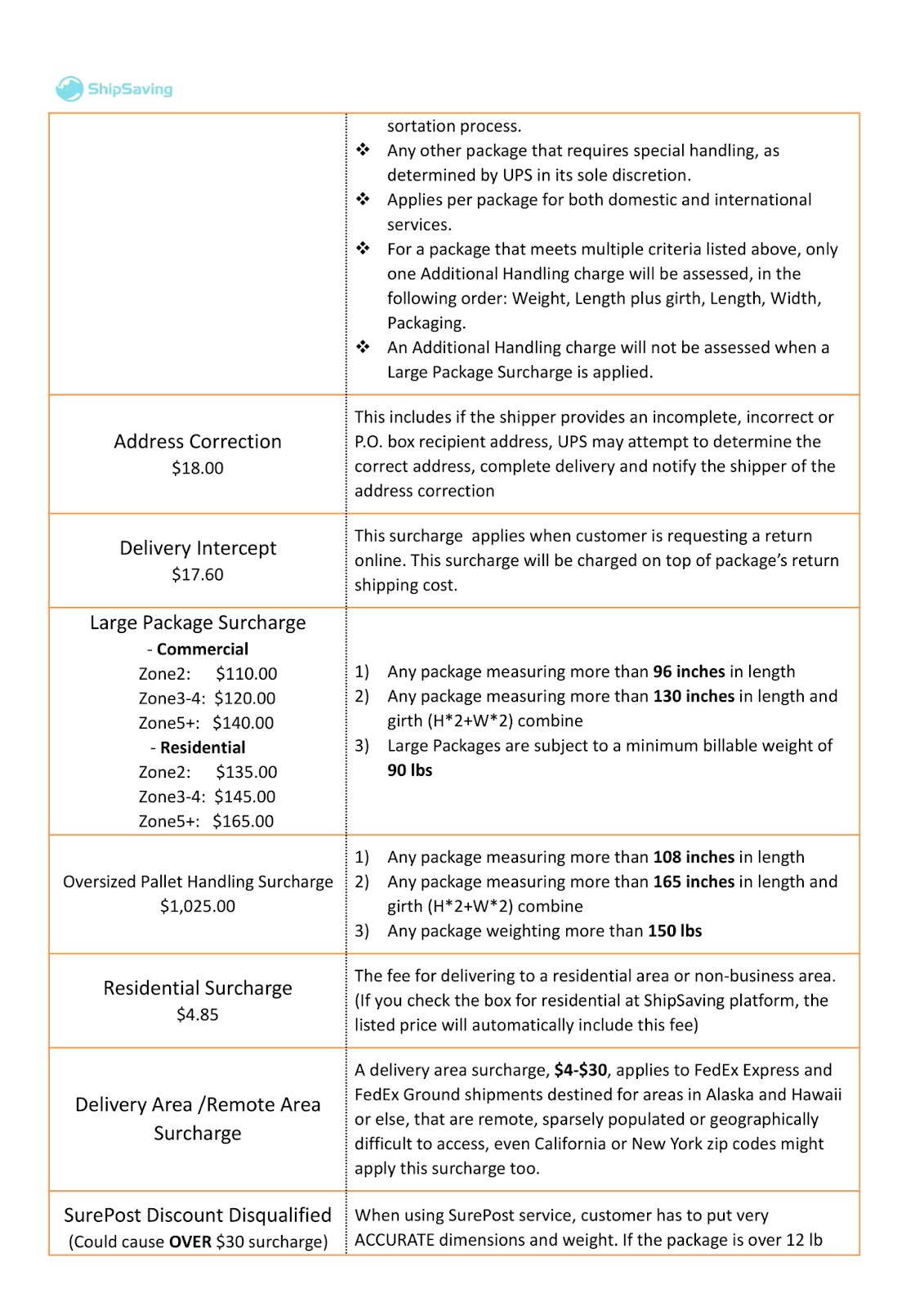
The third mechanic, and the one I care about most: billing surprises. UPS is a master of the after-the-fact bill — the label prints at one price, then the month-end invoice arrives with address corrections, oversize charges, and billed-weight adjustments. USPS is simpler: what prints on the label is pretty much what you pay. For a small seller running on tight cash flow, the scariest thing isn't a higher price — it's not knowing what next month's invoice will look like.
Two Real Tests: A 10-Ounce Bar of Soap and an 8-Pound Box of Tableware
Story one, November 2025, Eastvale. A friend of mine sells handmade soap on Etsy, 10 ounces a bar, shipping to the East Coast (roughly Zone 6 and 7). On my advice, he ran a dumb experiment: for two weeks, odd-numbered orders went USPS Ground Advantage, even-numbered went UPS Ground, fifty orders each. The result? USPS averaged three to four days, UPS averaged three days — transit time was nearly identical. But the postage column told a different story: UPS came out nearly fifty percent more expensive on almost every single order. He told me, "Shifu, that trick really works." I said it's not a trick, it's a test — for light packages under a pound, don't overthink it, USPS almost always wins. That's one of the iron rules I've picked up from all these years on the road.
Story two, March 2026, Ontario. A small 3PL warehouse shipping tableware sets for a client, eight pounds a box, bound for the Midwest. The owner started out shipping everything USPS, figuring it was cheaper. Then one month he actually ran the numbers and found that at eight pounds, USPS wasn't the bargain anymore — with his commercial discount, UPS priced out about the same, and UPS's tracking and lost-package claims process ran circles around the postal service. The real gut punch came separately: two UPS orders got hit with post-shipment billed-weight adjustments, and he spent half an afternoon cursing in the warehouse. I told him, cursing won't change UPS's personality — weigh and measure accurately before you print the label, and don't leave air in the box, and you'll dodge eighty percent of those adjustments.
What do these two stories prove? That neither carrier is always cheaper — only "at this weight, this distance, this volume" is one of them a better fit. Light parcels favor USPS; at five pounds and up, UPS with a decent discount can match or beat it. The crossover sits roughly in the three-to-five-pound range, but everyone's discount is different, so run twenty orders through both yourself instead of trusting somebody else's chest-thumping.
The Small Seller's Decision in Three Steps
Here's the plain three-step method I've worked out with the small sellers I know. Costs nothing:
Step one: split by weight. Pull your last three months of orders and bucket them: under one pound, one to five pounds, over five pounds. Odds are the lightweight bucket holds seventy to eighty percent of your orders. That seventy to eighty percent goes straight to USPS Ground Advantage — cheaper, hassle-free, and the transit times hold up.
Step two: negotiate on the heavy stuff. For orders over five pounds, take your monthly volume to UPS and negotiate a commercial rate, or go through a reputable third-party discount platform. Then run twenty identical orders through each carrier and compare the total bill — adjustments, claims, and loss rates included, not just the label price.
Step three: know your time tolerance. Both promise two to five days, but during peak season (November to December) UPS's network has more slack and loses fewer packages when the system is slammed. If you're shipping Christmas gifts where the date matters, stop haggling over pennies and pick the reliable one. Here's the counterintuitive truth: a small seller's biggest cost isn't the few cents of postage difference per order — it's the margin and the bad review you eat when a package disappears.
One more piece of advice, about pickup: USPS already comes to your door every day to deliver mail, so pickup rides along for free. UPS needs a scheduled pickup, and at small volumes you sometimes end up driving to a store yourself. Don't discount that — half an hour a day to a drop-off point is fifteen hours a month. Is your time worth nothing?
Fifteen years of driving has taught me one thing: picking a carrier is like picking a truck. There's no best one, only the right one for your route. As the old saying goes, only the foot knows whether the shoe fits. Run twenty orders as a test — it beats a hundred people lecturing you.
By Shifu Zhao, Trucking Veteran (15 yrs)