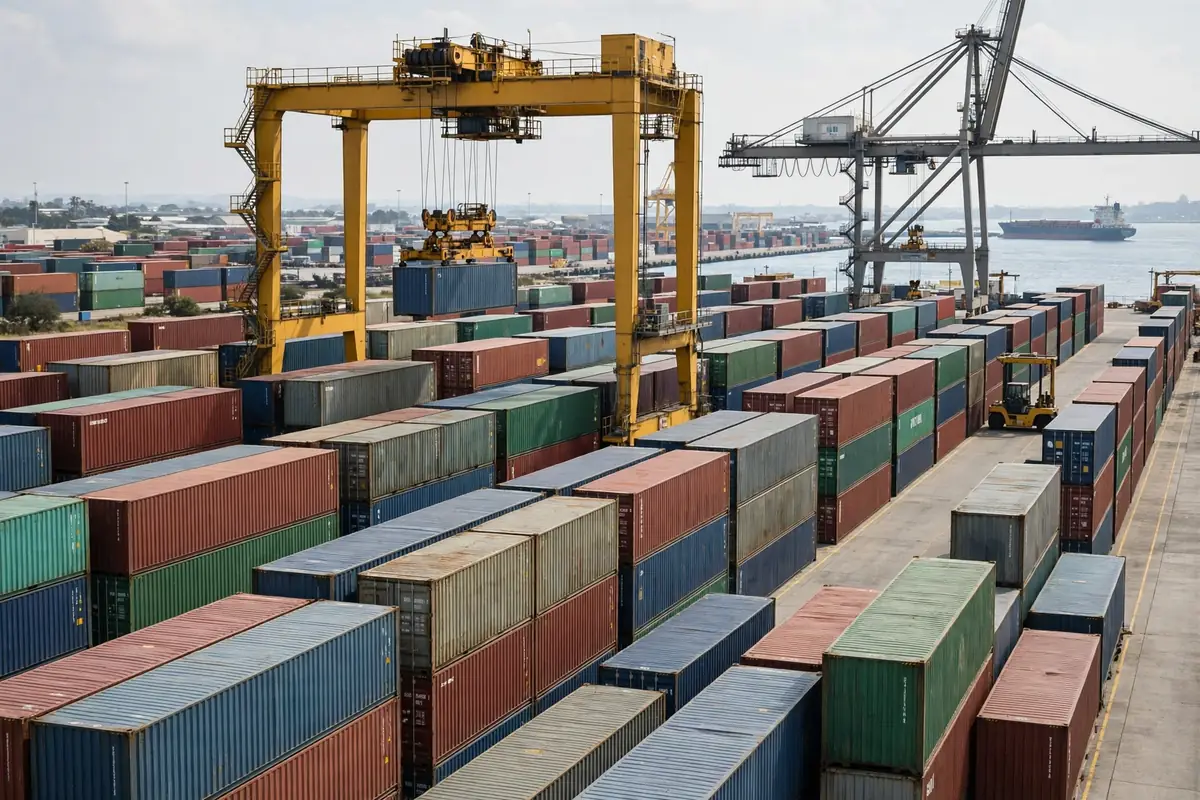
A US tariff increase changes the first question an importer asks. It stops being "how fast can we sell this?" and becomes "how much should we pull forward, and what does that money cost us while it sits?" Frontloading into an overseas warehouse can lock in today's duty cost, but the saving is a one-off. The cost of holding that stock runs every month until it sells. Check the official government source for the latest policy before you order — no rate quoted from memory or rumor should drive a buying decision. What follows is the funding math.
Take a real pattern from September 2026. A small-appliance importer in Shenzhen had several hundred thousand dollars of goods in production for Los Angeles, planned as three shipments across the autumn. Faced with a possible duty change, the owner merged all three into one early shipment. The duty position was locked, and the sales team was confident peak season would clear the stock. By late December, about 30% of one slow model was still in the warehouse. The extra stock had tied up cash for two more months, the warehouse bill had grown with it, and the discount needed to clear the slow model ate almost all the duty saved. The direction was not wrong. The quantity and the timing were.
Contrast that with a home-goods importer in Los Angeles in October 2026. The same pressure, a different answer. This importer split the seasonal buy into three tranches. Tranche one covered only 45 days of proven demand and moved early. Tranche two waited on sell-through data from tranche one. Tranche three stayed as semi-finished goods at the factory, finished and shipped only when orders justified it. Duty was saved on tranche one alone. Cash was tied up for a little over a month, not a quarter, and no model piled up. One importer saved more duty on paper and kept less of it. The other saved less and kept more.
What frontloading saves, and what it actually costs
Frontloading saves one thing: the duty difference on the goods you move early, measured against the policy in force when they arrive. Once the goods are in, that saving is fixed.
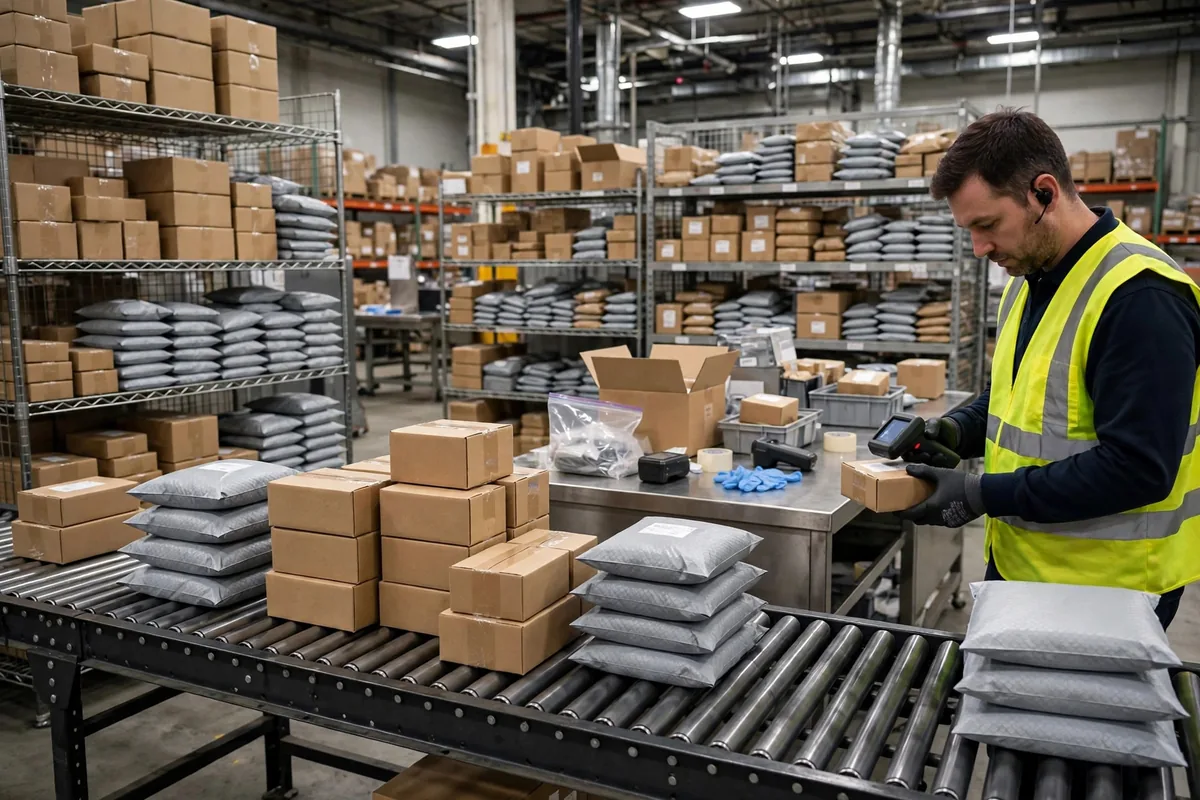
The costs are fourfold, and they keep running. The first is the cost of capital. Several hundred thousand dollars held two extra months is two months of interest or lost opportunity — money that cannot pay another supplier or fund another product line. The second is warehousing: more pallets, more space, more handling, for longer, with slow models burning the most. The third is markdown risk. A model change or a softening season turns stocked goods into discounted goods, and the discount often exceeds the storage bill. The fourth is currency. The longer the gap between paying for goods and collecting from customers, the more exchange-rate movement can take out of the margin.
Of the four, the cost of capital is the one most importers undercount. Storage invoices get scrutinized line by line, while the cost of their own cash gets treated as zero, as if money they already own were free. It is not. Two extra months of holding is two months of that price.
Frontloading versus replenishment: run the funding comparison
Put the two approaches side by side and the trade-off stops being abstract. The figures below use an illustrative assumption — inventory value of $1 million, annual cost of capital of 8% — labeled as an estimating example, not a policy figure or a warehouse quotation. Replace each number with your own and rerun the math.
| Cost item | Frontloading: three months of sales in one shipment | Replenishment: one month of sales at a time |
|---|---|---|
| Duty | Duty cost locked at the policy in force on arrival | Later tranches pay the policy in force when they arrive; check the official government source for the latest policy |
| Cost of capital | $1 million held about two extra months, about $13,000 at an 8% annual rate in this estimating example | Only the month ahead is funded, cash cycles faster, funding cost lower |
| Warehousing | Three months of stock at once, higher space and handling charges | Stock turns faster, roughly one month on hand, lower storage bill |
| Markdown risk | Three months committed at once, slow models sit in full | Monthly review, slow models get cut before the next order |
| Stockout risk | Lowest in the short term, peak season covered | A delayed sailing can empty the shelf, so safety stock is needed |
| Currency exposure | One large payment, exposure concentrated | Payments spread across tranches, exposure spread with them |
The counterintuitive point sits in that table. Frontloading does save duty, and that saving is real — but it is not a net saving until funding, storage, and markdown risk have been paid out of it. Every extra unit pulled forward adds duty saving and holding cost at the same time. Past a certain point, the next unit costs more to hold than it saves in duty. Importers who lose money here rarely misjudge the duty. They misjudge the three lines underneath it.
How much to pull forward: find the breakeven point
The breakeven test fits in one sentence: duty saved must exceed the three extra costs combined.
Duty saved is the extra duty the frontloaded goods would have paid if they had arrived later, sized from the official policy in force at each arrival date. The three extra costs are funding cost, added warehousing, and a provision for markdown risk. Funding cost is inventory value multiplied by the annual cost of capital, multiplied by extra months held, divided by 12. On the $1 million, 8%, two-month estimating example, that is about $13,000. Added warehousing is the monthly rate per pallet from the warehouse quotation, multiplied by extra pallets and extra months. The markdown provision can be set from history: if one in ten units of a similar product has typically needed a discount to clear, provision for that loss up front.
Add the three costs. If they already exceed the duty saved, do not frontload that tranche. If a surplus remains, that surplus is the true gain. Run the Shenzhen case through this test and the result is plain: the duty saved looked large, but funding plus storage plus the discount on the 30% that sat unsold left almost no surplus. The Los Angeles case shows the opposite: less duty saved, far lower holding cost, a larger net gain.
A practical way to set quantities is to sort demand into three bands. Band one is certain demand, 30 to 45 days of sales backed by orders or steady sell-through. Frontload this band with confidence. Band two is probable demand, 45 to 90 days, supported by last year's pattern and channel feedback. Frontload this band in tranches, only after band one proves itself. Band three is speculative demand, anything beyond 90 days, plus new products and seasonal models with no track record. Do not frontload this band. Saving a little less duty beats converting cash into stock that may not move. Any band without data behind it drops down a band.
The rhythm for phased frontloading
Phased frontloading works when each tranche arrives only a little before it sells, not months before.
Start with tranche one only, sized to 30 to 45 days of certain demand, arriving early enough to lock the duty position on that quantity. Review sell-through every week once it lands. If it sells faster than expected, pull tranche two forward. If it sells slower, push tranche two back or cut it. Let tranche two cover only the models that proved themselves; do not replenish a slow model on hope. Keep a cash reserve rather than converting every dollar into inventory. A market turn with no cash available costs more than a little extra duty.
Two levers sit outside the duty line and are easy to miss. One is payment terms with the factory: staged shipments can carry staged payments, and a final payment deferred by a month is a month of funding cost removed. The other is the warehouse contract: ask how storage rates step up for long-stay pallets before deciding how long to hold. The cheapest place to save money in a frontloading plan is often the payment schedule and the storage terms, not the duty itself.
Run your own numbers through the breakeven test — inventory value, cost of capital, warehouse rate, sell-through. Duty saved minus funding cost, added storage, and markdown provision: a positive remainder means frontload, a negative remainder means do not, and a small remainder means frontload band one only. A frontload you can calculate is a business decision. One you cannot calculate is just cash turned into boxes.
By Lao Zhou, Logistics Cost Analyst