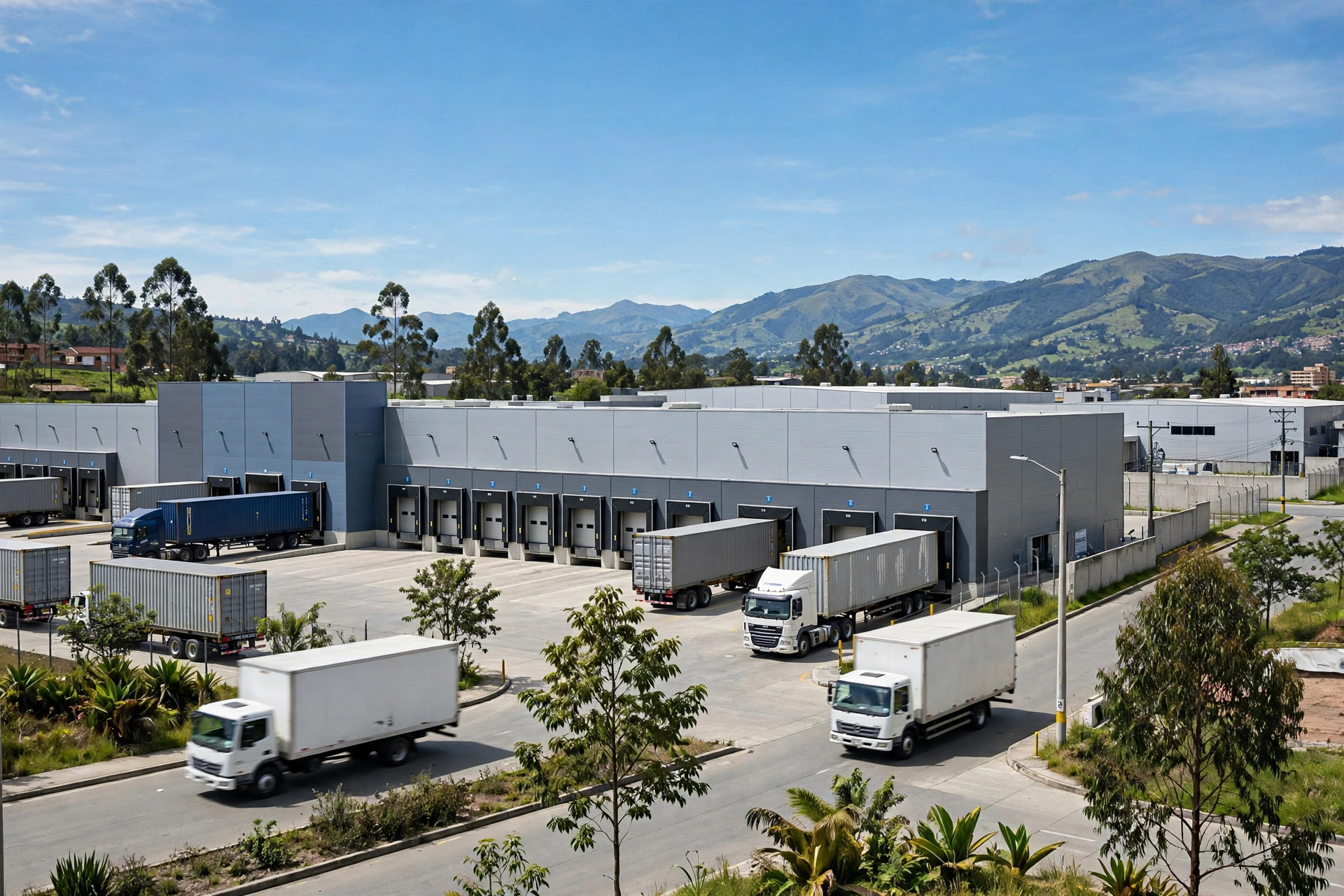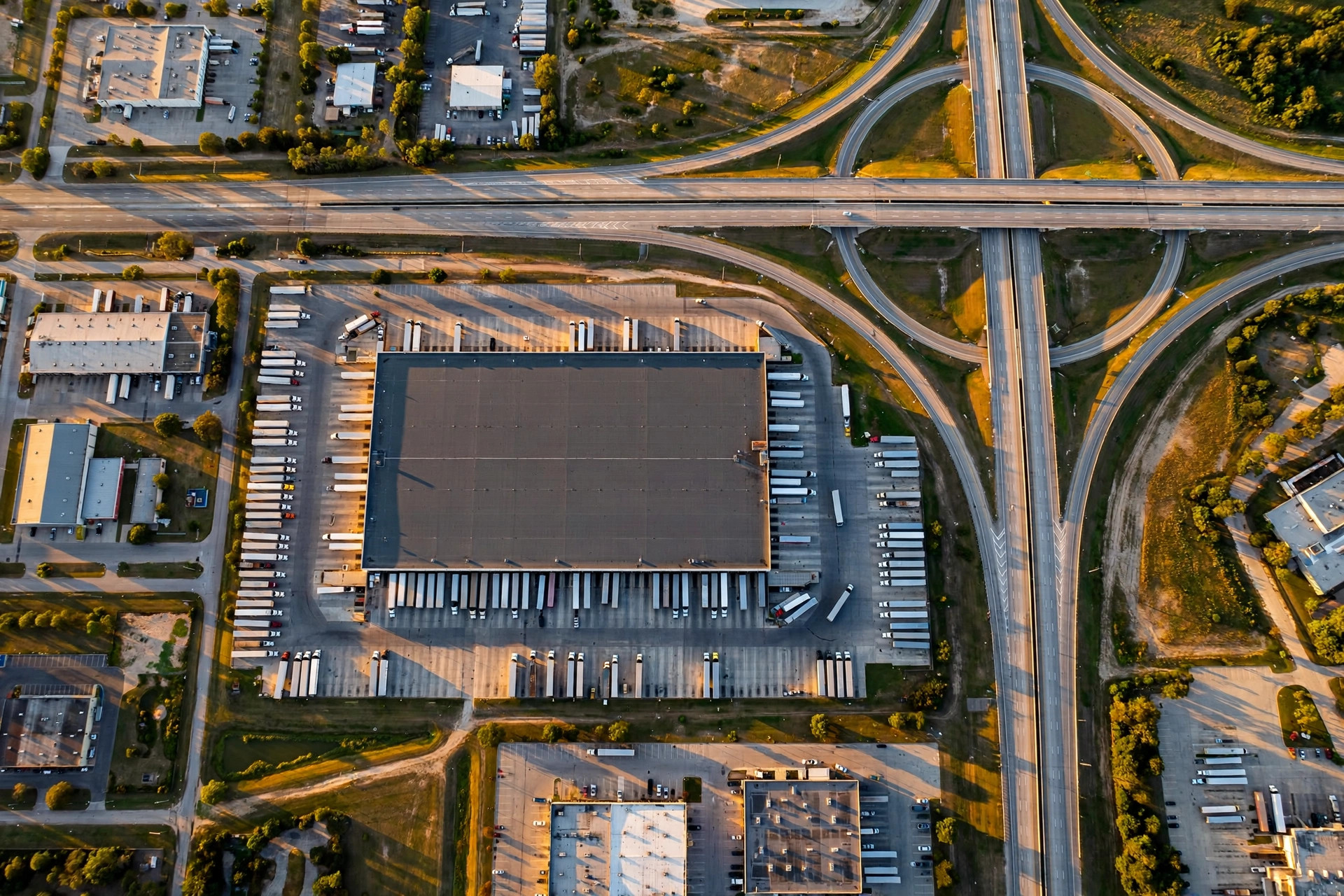
"Should we put one warehouse on each coast, or one big one in the middle?" I get asked this seven or eight times a year, by everyone from $5-million sellers to nine-figure brands. My answer is never A or B — it's an arithmetic problem, and your order geography decides the answer.
Start with a basic fact: orders across the lower 48 states are naturally heavy on both ends and light in the middle. A single warehouse in the central US (think Dallas or Kansas City) can reach most of the country in 2 to 4 days via UPS or FedEx Ground. Two warehouses split between the coasts (say, New Jersey plus California) give 1-to-2-day delivery to coastal customers — but shoppers in the middle can actually get slower service, since they're far from both.
The First Calculation: How Much Does Shipping Differ?
This is the calculation that matters most. Last-mile freight dominates e-commerce fulfillment cost, so site selection is really about choosing "close to your customers."
Take a 2-pound parcel as an example (treat carrier rates as directional only — always check the carrier's current published rates): shipping from a California warehouse to a California customer travels the shortest zone and costs the least; the same parcel from California to New York crosses the continent at the highest zone and can cost more than double. If 70% of your orders are on the East Coast but your warehouse is in the West, you're paying a cross-country tax on every parcel.
The two-warehouse logic is simple: make every parcel travel short. East Coast orders ship from the East Coast warehouse, West Coast orders from the West Coast one, average zones come down, and per-order shipping follows.
But two warehouses are no free lunch. The second calculation arrives immediately.
The Second Calculation: Where Does the Extra Money Go?
Two warehouses mean splitting inventory in two. The same SKU stocked on both coasts needs 30% to 50% more total safety stock than a single location — a basic law of inventory management: more stocking points, more buffer against demand variability. Your inventory capital jumps overnight.
Then operating costs: two warehouse teams (or two 3PL accounts), two system integrations, two ocean inbound shipments (or one ocean plus one domestic transfer). I worked with a home-goods brand doing $20 million a year that moved from one warehouse to two — the first year alone, extra 3PL fixed fees and integration work ran close to $100,000.
So the arithmetic is: last-mile savings from two warehouses, minus the extra inventory carrying cost and extra operating fixed cost. Positive or negative?
My Three Rules of Thumb
After years of doing this math, I've settled on three lines:
The volume line. Under 500 orders a day, run one warehouse, no debate. The fixed cost of two warehouses spread across each order eats whatever you saved on freight. Above 2,000 orders a day, it's worth modeling two warehouses seriously. Between 500 and 2,000 — check the next line.
The geographic concentration line. Pull six months of orders by state. If the coastal heavyweights (California, New York, New Jersey, Florida, Texas) add up to more than 75% of orders, two warehouses will save serious freight money. If orders spread evenly across all 50 states, a central single warehouse covers more efficiently.
The delivery-promise line. Does your product page dare to say "2-day delivery"? If yes, two warehouses are nearly mandatory — a central warehouse can't do 2-day nationwide. If your customers are fine with 3 to 5 days, a central warehouse wins on cost.
Three Things to Do Before Deciding
First, pull the data. Six months of orders by ship-to state: counts and percentages in one table. This is the foundation of everything — without it, the rest is guesswork.
Second, get two quotes. Price one central warehouse and one coast-pair setup (they can be two facilities from the same 3PL) against the same SKU profile and volume, and get the warehousing-plus-handling breakdown. Ask specifically about inbound receiving fees, return processing fees, and long-term storage surcharges — the three most underestimated line items.
Third, run the total. The formula is simple: (annual freight savings of two warehouses) minus (extra inventory carrying cost plus extra operating fixed cost). Estimate carrying cost at your real cost of capital, or 8% to 10% annualized. Positive means two warehouses; negative means one; near zero means one — simpler systems break less often.
Central Warehouse Decided — But Which City?
Once you've chosen a central single warehouse, the next question is: the middle of the country is big — where exactly? Dallas, Kansas City, Memphis are all popular, each with its own math.
Dallas offers population and labor — North Texas keeps growing, hiring isn't hard, but warehouse rents have climbed hard there in recent years; what happened in the Inland Empire is repeating in Texas. The Kansas City area is the true geographic center with the most balanced nationwide Ground coverage, but a smaller labor pool that strains under peak-season temp hiring. Memphis is a logistics heavyweight with a strong overnight air network, great for categories needing air speed — but natural-disaster risk (tornado alley) belongs in your insurance math.
My advice on choosing: weigh three factors — whether your order center of gravity leans east or west (lean east: Memphis area; lean west: Dallas), how much labor you need (thousand-plus headcount favors Dallas), and how valuable your goods are (high value means weighting disaster risk and insurance more).
One frequently ignored factor: state taxes. Texas has no state income tax, friendly to overall corporate tax burden — but for warehouse siting, what really matters is local property tax and incentives. Many central cities offer new warehouses 5-to-10-year tax abatements to attract investment, and negotiating those can save serious money annually. Policies change yearly, so before signing, get the latest incentive schedule from the local economic development corporation — don't skip that step.
One honest closing note: there is no universally correct answer, only "what fits right now." When volume doubles, redo the math. I've seen sellers grinding along on a single warehouse at 5,000 orders a day, overpaying hundreds of thousands a year in last-mile freight — and I've seen 300-order-a-day sellers crushed under the fixed costs of two warehouses. Numbers don't lie. Do the math first, then pick the site.