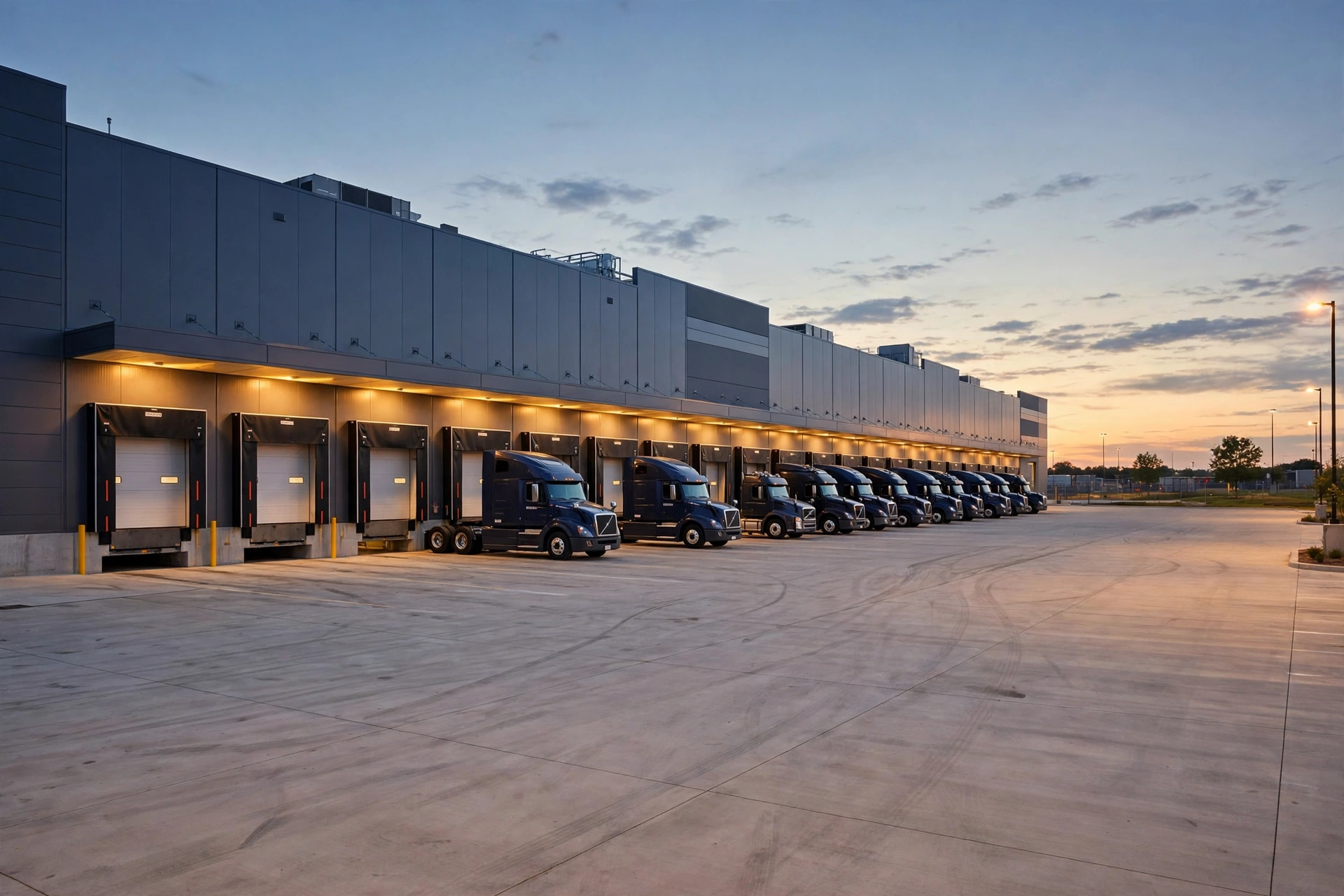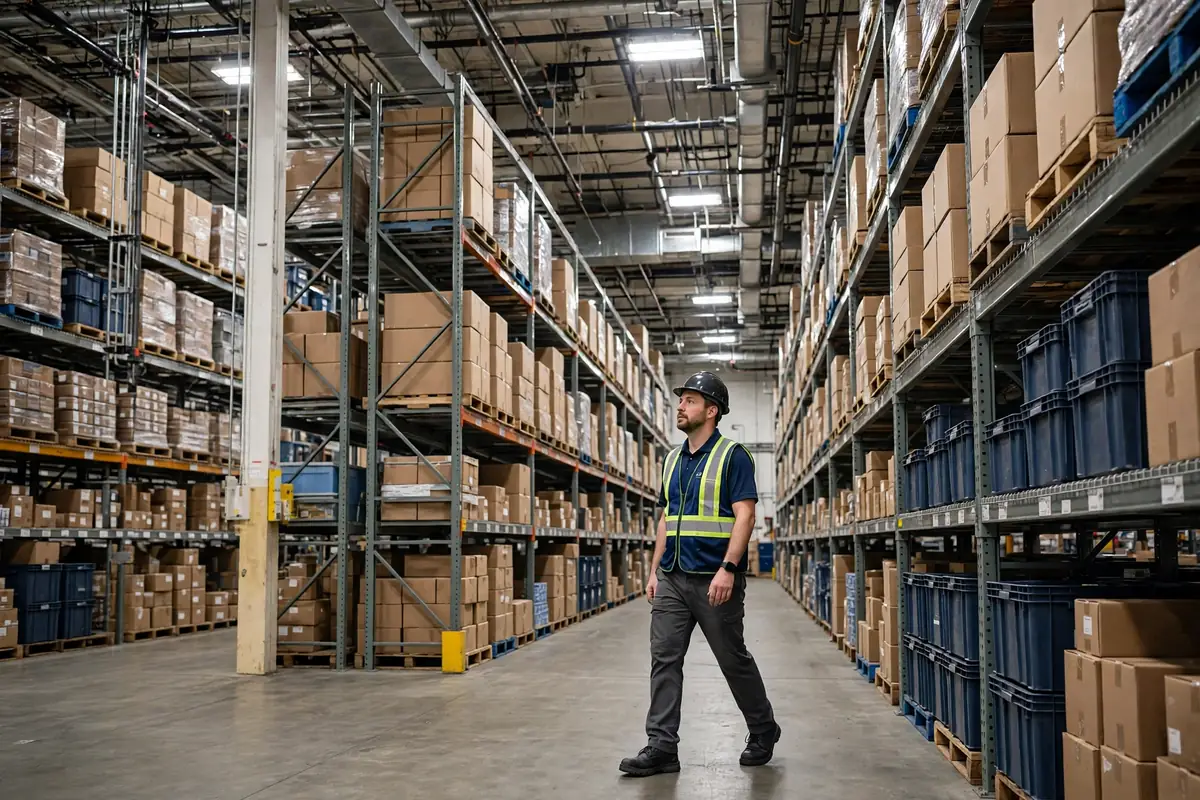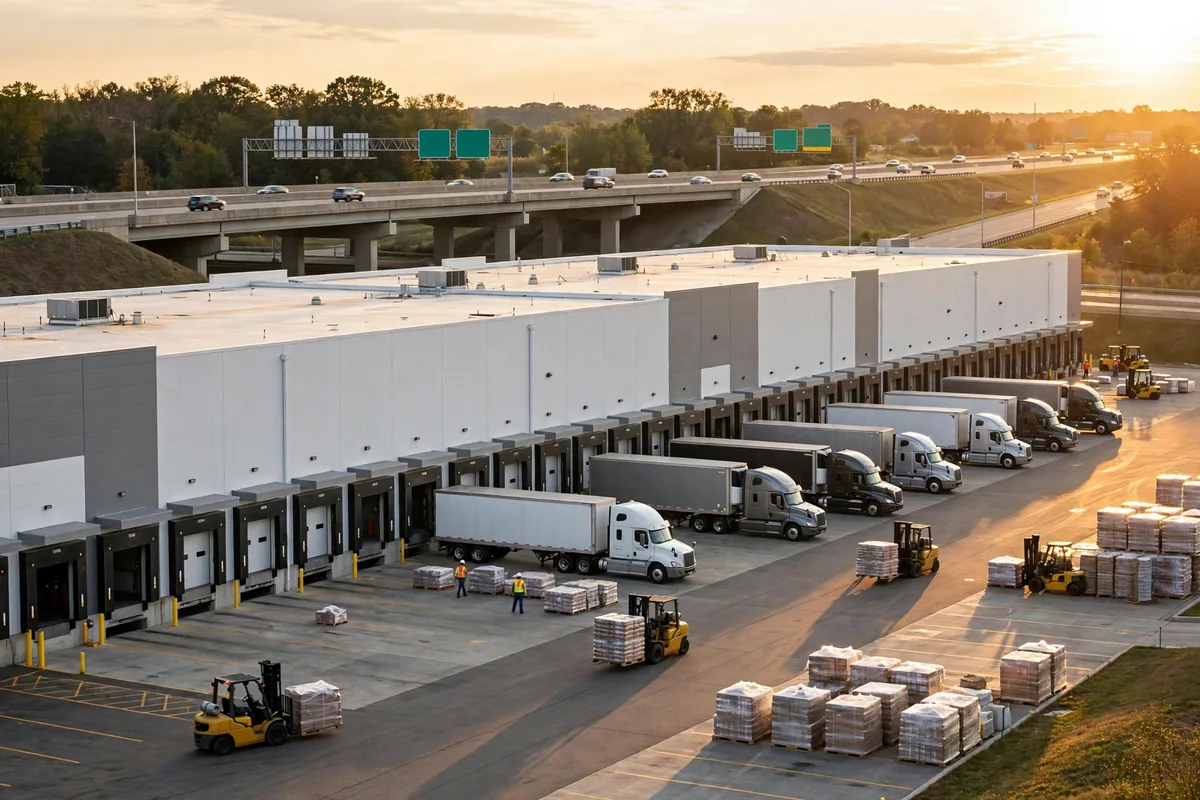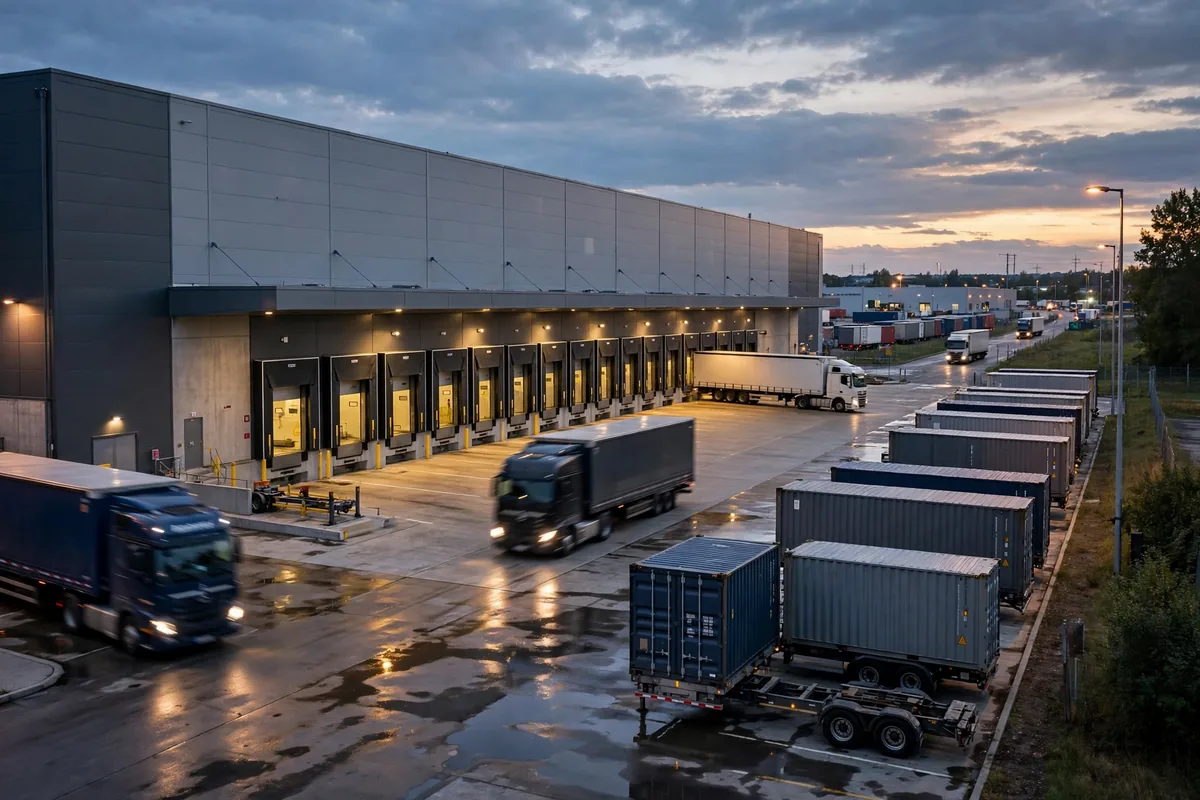
We had a client, a home goods seller, who came to me early last year with a US overseas warehouse location question that sounded very simple. "Susan, should I put one warehouse on each coast in the US, or just one big warehouse in the middle and be done with it?" I did not answer right away. I asked him three questions first: Where does your freight come in? Where are your customers? How much volume are you doing? He paused and said, "Does that matter for choosing a location?" It matters a great deal, I told him. Get those three answers wrong, and the conclusion can flip completely.
That is the easiest trap in US overseas warehouse location decisions. Too many people start with the map. The middle of the country looks central, so it looks close to everywhere. Or one warehouse on each coast looks like the most complete coverage. But you do not choose a warehouse that way. Before you look at the map, work out your freight flow and your customer flow. Otherwise the money you save on rent will come straight back out in freight cost and delivery time.
One Warehouse on Each Coast: Where the Warehouse Location Cost Hides
Let us start with the two-coast option. It sounds attractive. One warehouse on the East Coast serving New York, Boston, and Atlanta, and one on the West Coast serving Los Angeles, Seattle, and San Francisco. Between the two, most of the country is reachable in two or three days. For categories where delivery speed matters, apparel, consumer electronics, seasonal goods, the customer experience is genuinely good.
But the numbers need a closer look. Two warehouses mean two rents, two teams, two system integrations. More importantly, your inventory has to be split in two. Take one product. You stock a hundred units on the East Coast and a hundred on the West Coast. If the East Coast runs out, the stock sitting on the West Coast cannot help you, not without an inter-warehouse transfer, which costs freight and time. In the slow season, both warehouses turn slowly, and your cash sits in inventory. The pressure is real.
We had a client who learned this the expensive way. His freight came in mainly through the Port of Los Angeles, but sixty percent of his customers were on the East Coast. He leased one warehouse in New Jersey and one in California. The West Coast warehouse kept having to transfer stock east, and the transfer freight cost more than shipping directly from the West Coast to East Coast customers. When we added it up, the two-coast setup was costing him several hundred thousand yuan a year more than a single-warehouse setup, just in transfers and duplicated safety stock. He eventually gave up the East Coast lease and switched to a West Coast main warehouse plus a small East Coast forward stocking location. Costs came down immediately.
So the two-coast option is not wrong. It just needs two conditions. First, your volume has to be large enough that each warehouse turns over at a healthy pace on its own. Second, your customers have to be spread fairly evenly across both coasts, not tilted heavily to one side. Miss either condition, and the case for two warehouses starts to wobble.
One Central Warehouse: Location, Rent, and a Bet on Delivery Time
Now the single central warehouse. Dallas, Kansas City, Chicago, the Memphis area. Rents there are genuinely lower than on either coast, warehouse choices are plentiful, and one large building lets you manage all your inventory in one place. No splitting stock, better turnover, simpler systems. For a seller whose volume is still growing, whose product range is concentrated, and whose delivery time requirements are not extreme, this is a very practical starting point.
But a central warehouse has one weakness you cannot design around: delivery time. The distance between the US coasts is what it is. Shipping from the middle of the country to Los Angeles or New York by ground routinely takes three to five days. If your customers expect two-day delivery, or your category wins by restocking fast, a single central warehouse becomes your weak spot. Returns work the same way. A return from either coast back to the middle travels a long way and takes a long time, and a longer returns cycle hurts both the customer experience and your cash flow.
There is another cost people often miss: the inbound cost to a central warehouse. If your freight comes in mainly through Los Angeles or New York, it has to travel from the port to the middle of the country before it even reaches your warehouse. That linehaul leg has to be counted. A warehouse near the port takes freight straight off the ship. A central warehouse adds a whole leg. Part of the rent you save will be spent on that leg. Before you choose, add up both legs, port to warehouse and warehouse to customer. Never count just one.
Four Questions That Settle the Choice
When I advise a client on US overseas warehouse location, I like to sketch a simple comparison on a blank sheet of paper. Nothing fancy. Two-coast on the left, single central warehouse on the right, and four questions in the middle.
First, where is your port of entry? If freight comes in mainly from the West Coast, a central warehouse adds inbound freight. If freight comes in evenly from both coasts, two warehouses can actually lower inbound cost.
Second, where are your customers? If they cluster in one region, move toward that region. If they are spread evenly, the delivery-time advantage of two warehouses is worth paying for.
Third, how much volume are you doing? Low volume cannot afford split inventory, and the fixed cost of two warehouses spreads too thin. High volume lets each warehouse reach scale on its own, and that is when two warehouses pay.
Fourth, how sensitive is your category to delivery time? If speed is your competitive edge, two warehouses are worth it. If three to five days is acceptable, a single central warehouse is more than enough.
Answer those four questions and the conclusion usually writes itself. Our home goods client ended up with a West Coast main warehouse plus a small East Coast forward location. The main warehouse holds bulk stock and serves West Coast customers. The forward location holds only twenty or thirty fast-moving products for the East Coast, small quantities, fast turnover, and a flexible lease. That hybrid, one large and one small, suited him better than either extreme.
Before You Sign, Ask These Questions
Once the location is settled, there are a few things to pin down in the contract. I remind every client about them. Do not discover them after signing.
First, what charges sit on top of rent? Management fees, system integration fees, minimum monthly charges, peak-season surcharges. Get them in writing, not as verbal promises. Second, can capacity flex? Can you add space in peak season and shrink in the slow season? Is there a flexibility clause in the contract? Third, what are the exit terms? How much notice, and how is the penalty calculated? Business goes up and down, so leave yourself a way out. Fourth, can the warehouse system connect with your platform? Orders, inventory, and tracking status, are they synced in real time? A warehouse that cannot integrate is a decoration, no matter how cheap it is.
Next time you negotiate a contract, remember to ask three things: What fees sit on top of rent? Can peak-season capacity flex? How much notice do I need to give to exit? Get those three answered clearly, and you will have avoided most of the location traps.
There is no standard answer to US overseas warehouse location. One warehouse on each coast, or one in the middle? It depends on where your freight comes from, where your customers are, and how much volume you do. Work out those three numbers first, then look at the map. The map will not give you the answer. Your freight flow will.
By Susan, 3PL Sales Director