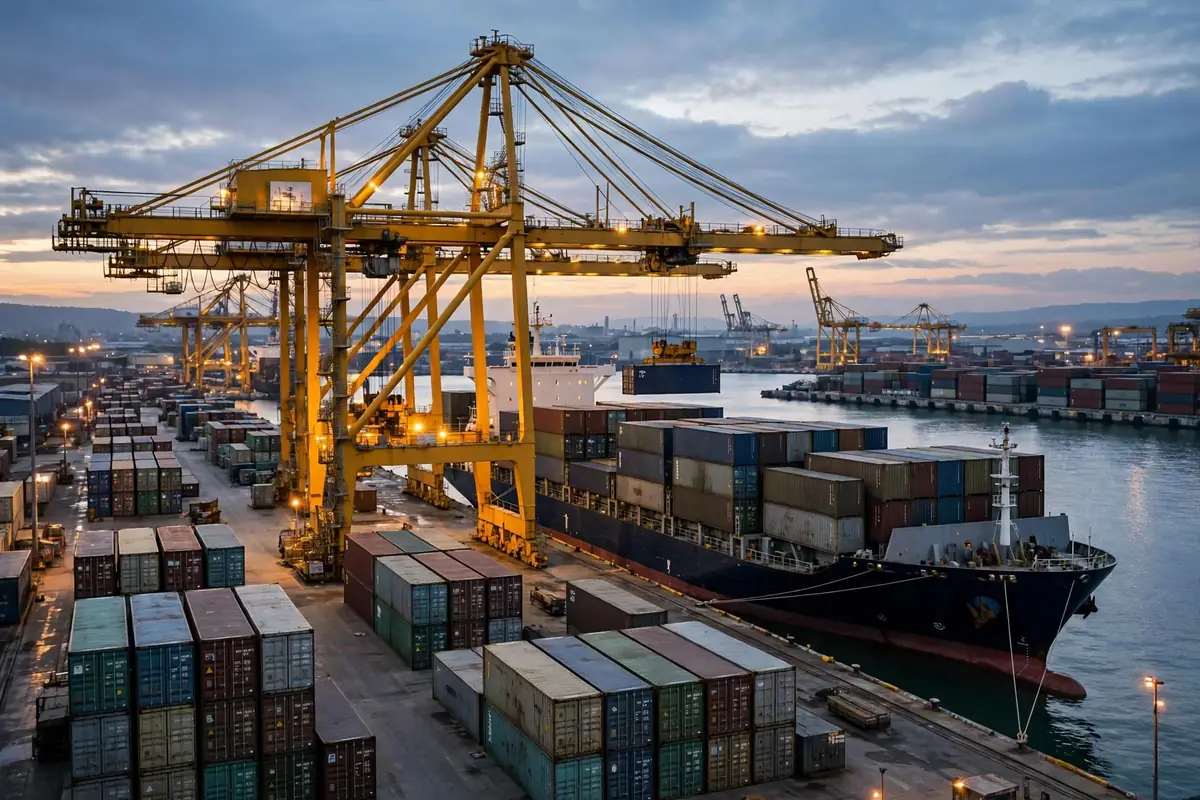
Uruguay pulp export warehouse logistics is not a subject I should be writing about. My warehouse is 3,000 square metres. The pulp store at the Port of Montevideo alone is over 50,000. That gap is exactly why I wanted to follow this chain from the mill to the ship: the big players spent billions building it, and somewhere inside that spending there have to be lessons a small team can steal without spending billions of its own.
Start with the scale. UPM's Paso de los Toros mill in central Uruguay started up in April 2023 and was inaugurated that June. It produces 2.1 million tonnes of eucalyptus pulp a year, making it the largest pulp mill in Uruguay and the largest single-line pulp mill in the world. The whole project, mill plus Montevideo port terminal plus local infrastructure, cost USD 3.47 billion. UPM put the delivered cash cost at roughly USD 280 per tonne. The older Fray Bentos mill, running since 2007, adds another 1.3 million tonnes a year. Put together, Uruguay can make around 3.4 million tonnes of pulp a year, and almost all of it has to leave the country by ship.
In 2024, Uruguay's pulp exports reached USD 2.545 billion, up 35% year on year, making pulp the country's top export category, out of total goods exports of USD 12.845 billion. IndexBox puts Uruguay's 2024 wood pulp export volume at about 2.8 million tonnes. In September 2024, a single month's pulp sales hit USD 260 million, up 36% on the same month a year earlier, with the European Union taking 54% and China 39%. This is the main artery of an entire national export economy, and warehousing sits right in the middle of it.
Uruguay pulp export warehouse logistics: where the money actually goes
Pulp looks tough. It arrives as dense, strapped bales, and it survives a forklift bump without complaint. What it does not survive is damp, dirt, and mixed batches. A bale that gets wet at the edges can look fine outside and fail on strength and brightness once the customer opens it, and the claim that follows can cost more than the cargo itself. So the first line in any honest warehouse budget for this trade is moisture control and batch separation, not rent.
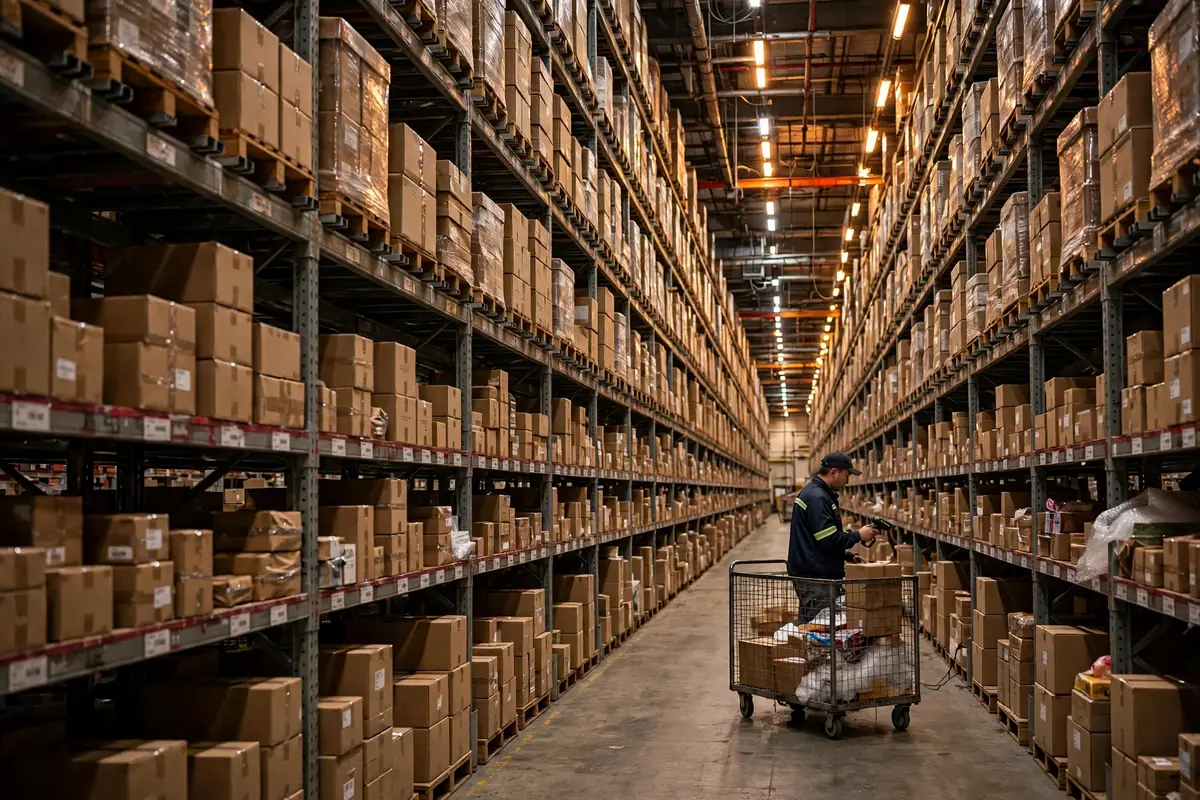
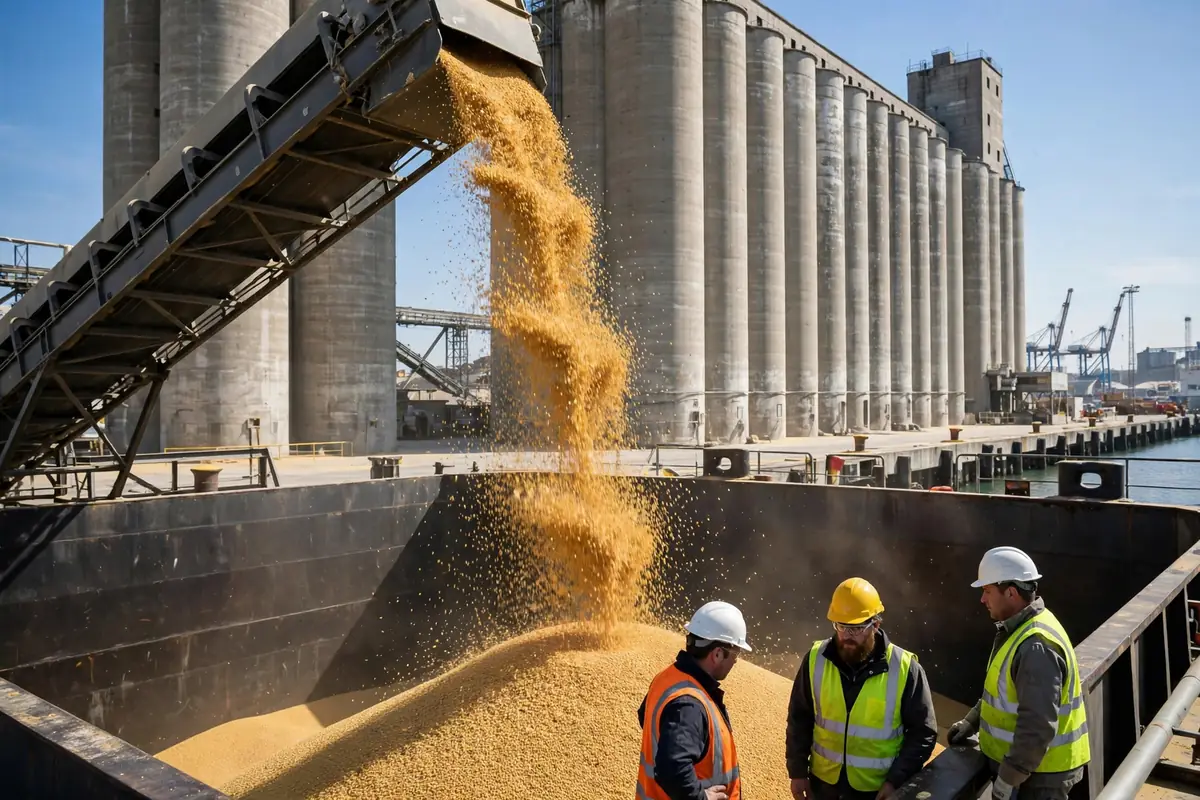
The UPM terminal in Montevideo shows how the big end of the trade handles that. It started operating in October 2022, with annual operating capacity above 2 million tonnes and room for about 80 ships a year. The warehouse covers more than 50,000 square metres and can hold 150,000 tonnes of pulp. The port investment was USD 240 million, on a 50-year concession, with around 100 staff, rising to 200 during vessel loading. The first shipment left on 26 May 2023, when the M/V Saga Faith sailed with about 50,000 tonnes of pulp for Asia. That is the point: 150,000 tonnes of storage against 2.1 million tonnes of annual mill output is less than a month of production. That terminal was never built to stockpile. It is a buffer, a place to catch pulp while a ship is on its way and load it out fast when the ship arrives.
The leg between mill and port runs on a rebuilt 273-kilometre railway, the Ferrocarril Central, with freight speeds of 80 km/h and a 22.5-tonne axle load. UPM expected to run six trains a day, each carrying 1,664 tonnes, which works out to roughly 10,000 tonnes a day. Trains have to land in step with vessel schedules. When a ship slips by a week, the rail timetable, the warehouse intake plan, and the loading gang plan all have to be redrawn. My warehouse knows the small version of this pain: the worst day is when a truck arrives and nobody is ready to receive it.
The Montevideo pulp terminal is a buffer, not a stockpile
Here is the counterintuitive part: in pulp export, a bigger warehouse can lose more money than a small one. Empty racking burns cash every day, and so does a full warehouse that cannot move. If a vessel is delayed by a week while trains keep arriving at 10,000 tonnes a day, a 150,000-tonne store fills up fast. After that the choices are all expensive: hold trains at the mill, rent temporary storage outside the port, or pay to change the vessel schedule. The asset that actually earns its keep is not the square metres. It is the speed of turnaround and a timetable where ship, train, and warehouse agree.
Take an illustrative example: a small trader in Ningbo in March 2025, handling 800 tonnes of Uruguayan pulp in two 400-tonne lots, 20 days apart. The first lot lands just as his customer changes production orders. The second lot hits a vessel delay and sits in port storage for 12 extra days. Nothing is damaged, nothing is lost, and the order still ships. Under the hypothetical figures in this example, the extra storage and tied-up working capital over those 12 days cost him roughly a month of boxed lunches for his whole warehouse crew. The margin did not die in one dramatic accident. It bled away, a little each day, while the cargo sat still.
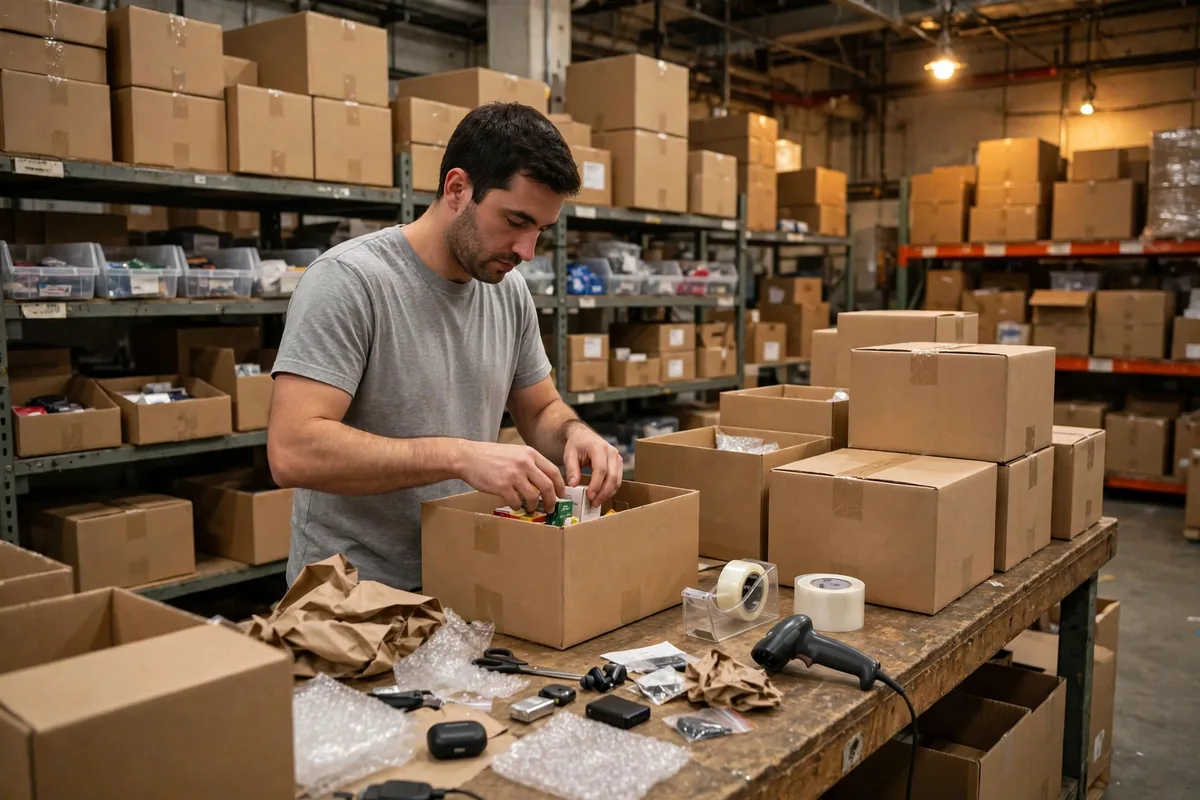
A second illustrative example comes from my own floor. In June 2026, during the rainy season, a batch of paper products sat in my warehouse for nine days. The pallets against the wall took damp at the bottom layer, and the edges went soft. The claim was small, a little over 3,000 yuan, but the lesson stuck: keep pallets 15 centimetres from the wall and 15 centimetres off the floor, and check humidity twice a day. The Montevideo terminal fights damp with a building and a system. I fight it with a hygrometer and stubborn habits. Different budgets, same physics.
| Option | What it means | Who it suits | Cost under the hypothetical figures |
|---|---|---|---|
| Direct rail to port store | Mill loads trains straight to the port warehouse, load out when the ship arrives | Large shippers with steady vessel schedules | Lowest storage cost, most exposed when a ship slips |
| Inland buffer warehouse | Hold stock near the mill or mid-route, feed the port in stages | Mid-size teams that want to consolidate for a vessel | Extra handling and rent, buys flexibility on vessel dates |
| Small frequent lots | Ship little and often, hold almost nothing | Cash-tight traders with scattered orders | Higher freight per tonne, lowest inventory and cash pressure |
No row in that table is right for everyone. The wrong choice is usually the one copied from a bigger player. A small team that stockpiles like a major mill, without a major mill's say over vessel schedules, ends up paying for storage it cannot control.
Three cheap tricks a small warehouse can steal from Uruguay pulp export
The first is to treat the batch number as sacred. Stack pulp by batch, by vessel, and by customer, and write the label where two people can read it from the side of the pallet, instead of just on top. My warehouse once lost 40 minutes on a pick because the only label sat on the top layer and a forklift blocked the view. UPM tracks batches with a system. I track them with eyes and labels. The method is crude, and the goal is identical: when something goes wrong, find the batch, the vessel, and the intake day in minutes.
The second is to keep a daily humidity log. Measure temperature and humidity twice a day, write the numbers down, and watch the trend instead of waiting for damage to show. My rule is simple: when humidity crosses the line, the dehumidifier and fans go on at once, even if the power bill jumps that day. A few dozen yuan of electricity is cheaper than one ruined pallet.
The third is to compete on turnaround, not on capacity. A 3,000-square-metre warehouse survives by never letting cargo sleep on the floor. The same logic applies to any small team looking at this trade: do not rent a big store near Montevideo and bet on pulp prices rising, because price moves are not a game a small warehouse can win. Line up the vessel date, the train slots, and the warehouse slots on one sheet, and move cargo the moment it arrives. The faster it moves, the lower the storage bill.
Looked at from a small warehouse, the Uruguay chain is impressive less for its money than for its discipline. Mill, railway, port store, and ship work as one line, and the warehouse is one link in that line rather than a place to park stock. I cannot handle 2.1 million tonnes a year. What I can do is keep my few hundred tonnes moving, dry, and labelled, and that is the same job, just at a size I can afford.
By Xiao Ma, Small Warehouse Owner