Every October, U.S. parcel shippers run into the same problem: peak-season invoices come in noticeably higher than budgeted. As the 2026 holiday cycle approaches, it is worth taking a structured look at the UPS and FedEx peak season surcharge 2026 schedules — first the phenomenon, then the published data from both carriers (all figures below should be verified against the carriers' official websites), then why these charges keep rising, and finally what holders of direct carrier accounts can do before the window opens.
The data: 2026 peak season surcharge windows and tiers
According to the peak-season schedules published by both carriers (subject to the latest official postings), UPS applies its 2026 peak surcharges from September 27, 2026 through January 16, 2027, while FedEx's window runs September 28, 2026 through January 17, 2027. The near-total overlap is no coincidence: the U.S. parcel peak window is fundamentally defined by the Thanksgiving–Christmas–returns consumption curve, and carriers simply write that curve into their rate tables.
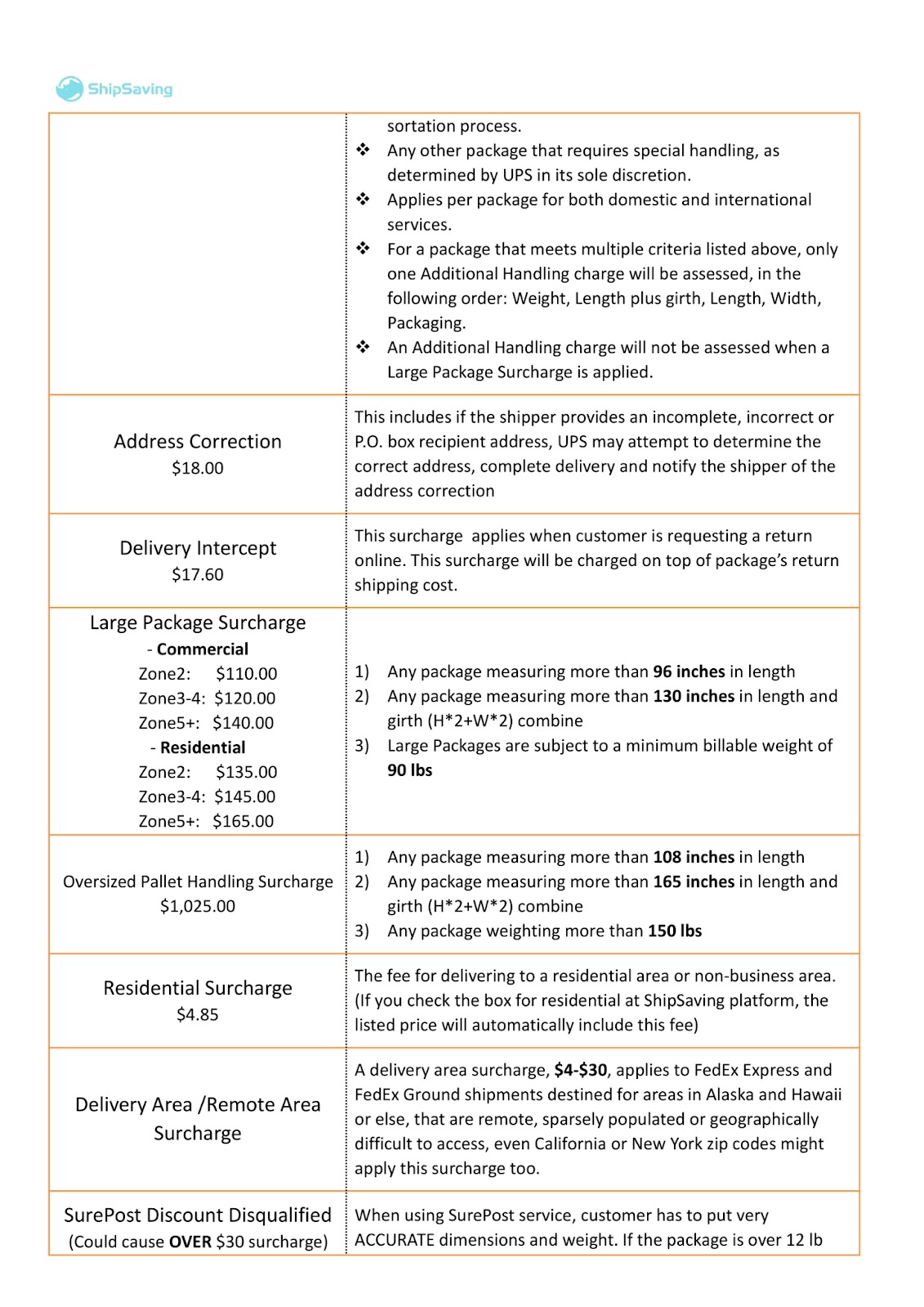
The headline peak-season tiers for 2026 (USD per package, per the carriers' official postings):
- Ground residential demand surcharge: about $0.75 per package at UPS, about $0.80 at FedEx
- Additional Handling: $11.90 at UPS, $11.85 at FedEx
- Large / oversize package surcharge: $117.50 at UPS, $117.25 at FedEx
- Peak weeks (UPS: Nov 22–Dec 26; FedEx: Nov 23–Dec 27) carry the highest tier of each charge
- The top volume tier — residential shippers exceeding 20,000 packages in a single week — reaches up to $9.35 per package
For reference, USPS published its 2026 holiday pricing for October 4, 2026 through January 17, 2027 at an average increase of roughly 6% (per official postings), but without the finely layered peak surcharge architecture of UPS and FedEx. That difference is a direct reflection of business models: USPS runs closer to an across-the-board increase, while UPS and FedEx practice tiered pricing.
Doing the math: what share of freight spend is peak surcharge?
Absolute surcharge amounts are easy to tune out; what matters is their share of total freight. Consider a mid-size seller shipping 3,000 packages per week at an average base rate of about $8 per package (rates per official postings):
| Package-mix scenario | Calculation logic | Weekly peak surcharge (USD) | Approx. share of weekly freight |
|---|---|---|---|
| A: all standard Ground residential | 3,000 × $0.75 (UPS residential tier) | about 2,250 | about 9% |
| B: A, with 8% triggering Additional Handling | 2,250 + 240 × $11.90 | about 5,106 | about 19% |
| C: B, plus 5 large packages per day | 5,106 + 5 × 7 × $117.50 | about 9,219 | about 30% |
| D: peak week, top volume tier (20,000+ residential/week) | 20,000 × $9.35 | about 187,000 | over 40% |
Two things stand out. First, surcharges are not rounding errors: the jump from scenario B to C shows that once non-standard and large packages enter the mix, peak surcharges can consume nearly a third of total freight spend. Second, Additional Handling has enormous leverage — it triggers per package at $11.90 (per official postings), so a single Additional Handling package costs as much in surcharges as roughly 15 standard residential packages combined.
Two invoice post-mortems: where the money actually went
The first case comes from a home-goods seller in Ontario, California. Between November and December 2025, the company shipped roughly 65,000 parcels and paid $49,000 in peak surcharges — 9.3% of its two-month freight spend. The post-mortem found that packages triggering Additional Handling were only 6% of volume but accounted for 41% of all surcharge dollars. The root cause was specific: to "protect the product," the team had long used cartons noticeably larger than the items inside, stuffing the gaps with filler. In the carriers' automated sortation systems, that packaging profile reads as non-standard dimensions, and the surcharge is applied per package automatically — no human can intercept it.
The second case is a beauty seller in Texas shipping about 8,000 packages per week. In the first two weeks of the 2025 peak season, its weekly surcharge bill hit $6,100. In mid-November the team did two things: remeasured every active SKU and consolidated 14 carton sizes down to 6, and repackaged everything that crossed the Additional Handling threshold into tighter-fitting boxes. After the change, the Additional Handling rate fell from 9% to 4.5% and the weekly surcharge dropped to $4,800. The two-week project cost roughly $9,000 in re-sampling and changeover labor — paid back within a single peak season.
Both cases point to the same attribution: most of what sellers overpay in peak surcharges is not "rates went up," but "their own package profile is creating trouble for the carriers' automated lines."
The counterintuitive take: negotiate box sizes before base rates
Many sellers' first instinct is to negotiate — push the base-rate discount another 2 to 3 points with the account rep. Based on my reading of rate tables over the years, the return on that effort is diminishing: base-rate discounts are percentages, while surcharges are fixed dollars per package. They live in different dimensions.
A simple comparison: assume an average package costs $10 to ship. An extra 3% discount saves $0.30 per package. One Additional Handling surcharge is $11.90 (per official postings). In other words, a single non-standard package can wipe out the entire gain from a hard-won rate negotiation — and then some. The logic chain is complete: surcharges are assessed per triggering package and are generally not covered by discount agreements, unless the agreement explicitly includes a waiver — and most default to full assessment.
So the priority should be inverted: audit the package profile first, drive down the Additional Handling and oversize ratios, and let negotiation be the finishing move. The savings from dimensional discipline are typically several times what another round of rate talks can deliver. This is not to say negotiation is unimportant — only that, under the surcharge rulebook, box size is a harder lever than base rate.
How direct-account holders can lock in early
The 2026 peak season surcharge rules apply to direct (own) accounts and third-party platform accounts alike, but direct accounts have one advantage platform accounts lack: you can get the rules in writing ahead of time. Based on sellers' practice in prior years, four things are worth completing 60–90 days before the peak window opens:
First, request a written peak rate sheet from your account representative and confirm, line by line, which tier your package profile falls into — especially the Additional Handling and oversize thresholds. Verbal assurances mean nothing when the invoice arrives.
Second, pull out your existing discount agreement and check, clause by clause, whether peak surcharges are waived or reduced. Many agreements feature attractive base discounts up front while the fine print defaults to full surcharge assessment. That gap is both the most overlooked risk and genuine negotiation room.
Third, run a full-SKU packaging audit and re-match carton sizes against the carriers' published dimensional rules. The Texas seller's case shows this work typically pays back within one peak season.
Fourth, prepare an overflow plan: USPS holiday pricing averages roughly 6% higher (per official postings) but with a simpler structure, making it a reasonable overflow channel for standard small parcels; regional carriers (such as OnTrac-class operators in the West) offer line-haul advantages on specific lanes. Multi-carrier diversification is, at its core, about not putting all volume into a single peak-pricing system.
Trend assessment: peak season surcharges turning into a structural cost
Zooming out, UPS and FedEx peak surcharges have followed three consistent trends since 2019: ever-finer tiering (from flat fees to layered weekly, volume-tier, and package-type charges), ever-higher ceilings at the top volume tiers (the 2026 top tier reaches $9.35 per package, per official postings), and ever-longer windows (from 6–8 weeks to nearly four months).
The three trends point to a single attribution: carriers are passing peak capacity costs through with increasing precision. A surcharge's real function was never just revenue — it is a demand-management instrument, using price signals to shave peaks, smooth capacity, and push low-value peak demand out of the network. Once tiering is fine enough to price by weekly volume, the surcharge stops being a seasonal fee and becomes a structural line item in the annual freight budget.
A reasonable forward assessment: within 2–3 years, dynamically priced surcharges based on peak-week delivery density or real-time capacity utilization would not be surprising. The carriers already have the technical capability; only the timing of rollout remains open.
One open question to close with: when peak surcharges become a normalized structural cost, the question sellers should answer may no longer be "how much did it rise this year," but rather — how many of my packages should never have traveled during peak at all, and how many are paying for my packaging problems on the carriers' automated lines? The answer sets the ceiling for next season's invoice.
By Dr. Chen, Supply Chain Researcher