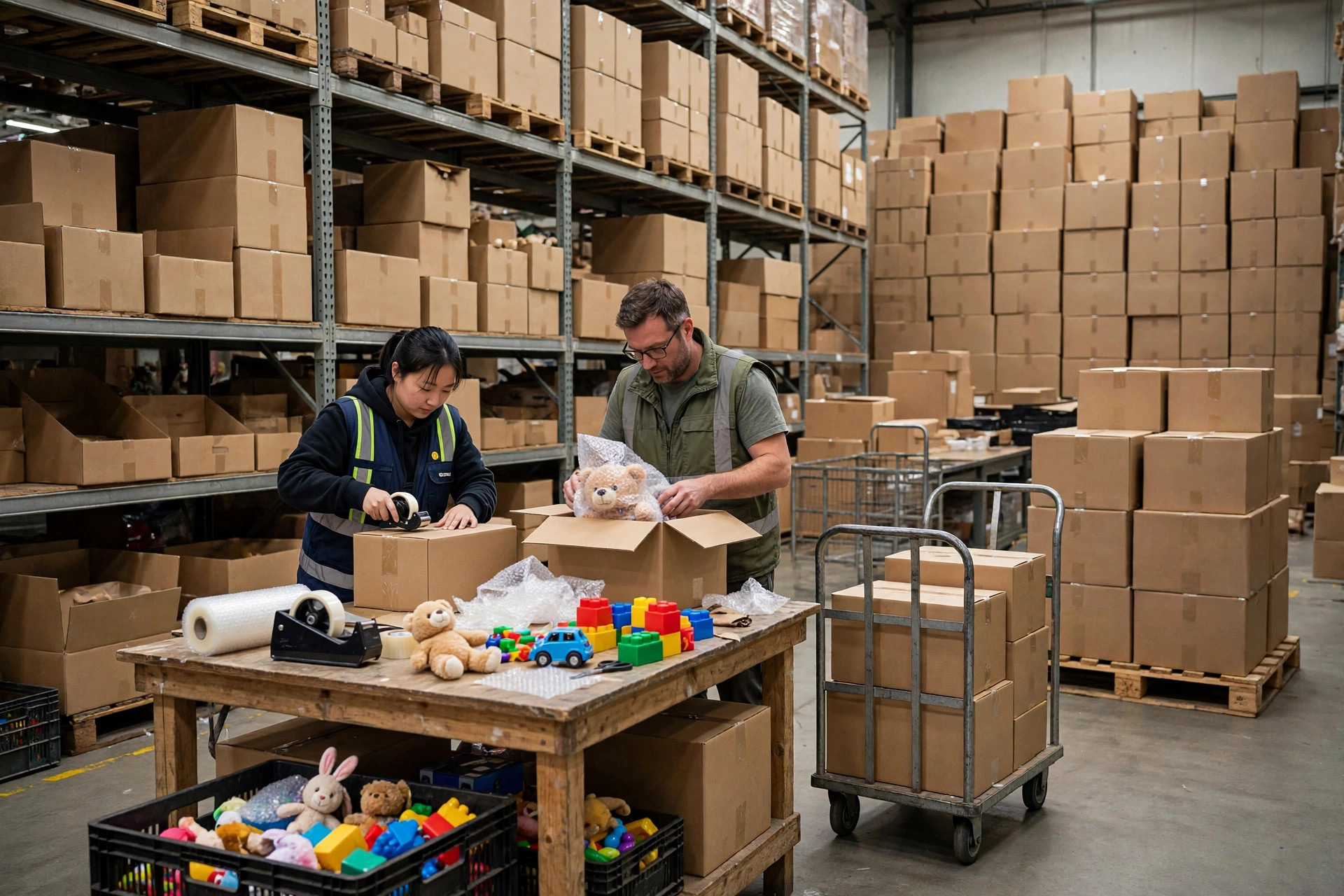
Amazon changed the rules again — I say that every year before Black Friday. Selling toys means your toy ecommerce warehouse fulfillment operation has two ways to die in Q4: understock and go out of stock during the three-day sales spike, or overstock and bleed long-term storage fees starting in January. And then there is CPSIA. Without that piece of paper in order, your container is worthless the moment it reaches a US port. Here is everything I have learned the hard way.
Black Friday Toy Stock Planning Is Everything
In September 2024, I was prepping Black Friday inventory for one of my magnetic tile sets. Based on the prior year, I sent 45 days of stock to ONT8 and felt safe. Then Black Friday hit: the listing cracked the category top 30, sold 40 days of inventory in 3 days, and went out of stock on day four. Replenishment? Ocean freight takes 25 days minimum, and air freight would have eaten the entire margin. So it sat out of stock for 12 days while I watched the ranking slide from the leaderboard down past No. 80.
That is when I did the real math. Twelve days out of stock is not just twelve days of lost sales. The ranking tanked, and my ACoS jumped from 18% to 35% just to buy back visibility — paying double the ad spend for half the traffic. The true cost of a Black Friday stockout is lost sales plus two months of burning cash to win the ranking back.
My formula is now non-negotiable: Black Friday stock = daily sales × 60 days × 1.5 safety factor. Daily sales means the peak-week average from September, not the annual average — planning toy inventory off an annual average is lying to yourself. Sixty days covers all of November plus early December, and the 1.5 factor is the buffer for the spike. I would rather pay extra storage in January than eat a stockout.
One more date to burn into memory: Amazon publishes its FBA inbound cutoff dates for the holiday season every September or October. Miss that date and your freight does not get in, and your deal submissions are dead. I work backwards: 45 days before the cutoff is the ocean freight cut-off, and 15 days before that is the factory ship date. In 2024 I shipped at the end of August and the goods landed mid-September — just in time. Every year, the sellers who ship against the deadline are crying in the logistics group chats. Do not be that seller.
CPSIA Compliance: No Certificate, No Business
CPSIA is the US Consumer Product Safety Improvement Act, and it covers children's products for kids under 12 — toys are squarely in the blast zone. Three core requirements: the product must meet the ASTM F963 toy safety standard, hazardous substances like lead and phthalates have regulated limits, and most importantly, you need a Children's Product Certificate (CPC) backed by third-party testing from a CPSC-accepted laboratory. A self-declaration from your factory counts for nothing.
In early 2025, a friend selling squishy toys learned this the expensive way. Amazon's compliance team suddenly asked him to upload his CPC. All he had was a two-year-old "self-declaration" from the factory, from a lab that was not CPSC-accepted. Listing taken down for two weeks while he scrambled to find an accepted lab, wait for test results, and issue a proper CPC — over 20 days lost. He missed more than Black Friday; those two weeks were his new-product launch window. Gone.
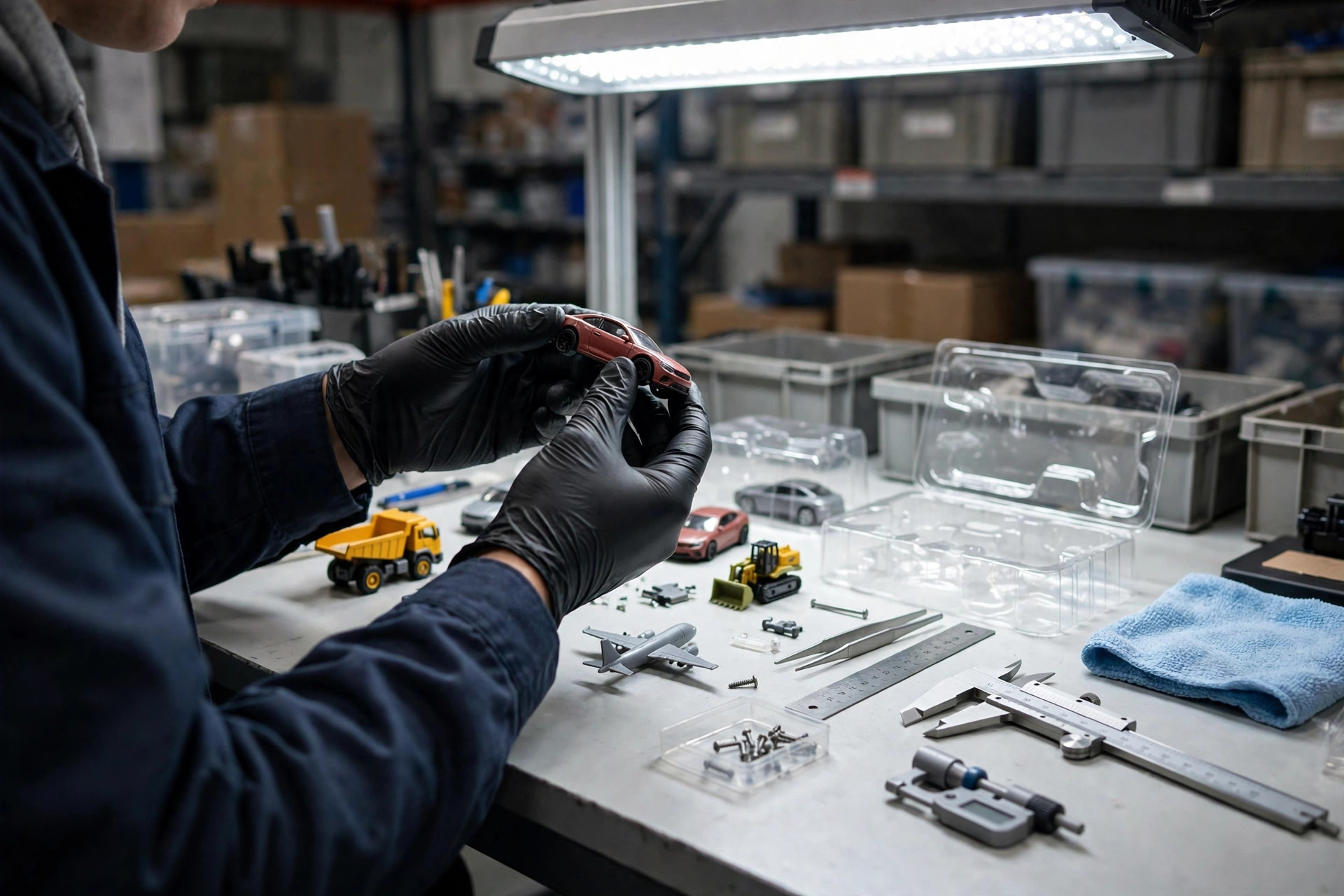
My workflow is now a fixed four-step routine, and no step gets skipped:
First, lock in your lab before placing the order. Pick from the CPSC's accepted-laboratory list, confirm pricing and lead time up front — lab slots get tight in peak season, so book at least two months ahead.
Second, test a small batch before mass production. Do not wait until tens of thousands of units are made to discover a material failure. Send 5 to 10 samples first; only green-light the bulk order after they pass.
Third, retest when anything changes. New material supplier, new paint, new factory — retest everything. The product information on the CPC must match what actually ships, or the certificate is worthless.
Fourth, upload to Amazon's compliance dashboard early. Do not wait for the audit notice to start scrambling — get the CPC and test reports uploaded ahead of time so audits pass on contact.
One caveat: a CPC is not a one-and-done. Which tests apply, what the limits are, and how often retesting is required all follow the latest CPSC requirements, which get tweaked year to year. Check the CPSC website for the current rules instead of running on three-year-old experience.
FBA vs 3PL for Toy Fulfillment: My Math
For toy fulfillment, here is my FBA vs 3PL comparison table, paid for in tuition over several years:
| Dimension | FBA | 3PL Overseas Warehouse |
|---|---|---|
| Holiday inbound | Hard cutoff dates — miss it and you are out | Your call, inbound anytime |
| Long-term storage | Kicks in after about half a year, gets pricier the longer you sit | Per-pallet or per-unit, negotiable |
| Returns handling | Toy returns are often graded unsellable and destroyed or returned for a fee | Can re-inspect; resellable units go back on the shelf |
| Stockout recovery | Out means out, replenishment takes forever | Can act as a buffer hub for fast transfers |
| Compliance support | Only cares about your backend paperwork | A good 3PL helps with labeling, sorting, and inspection handling |
Look at the returns row. FBA grades a large share of toy returns as defective and unsellable — your inventory just vanishes. A 3PL can re-inspect: units with intact packaging get repacked and relisted. That one line saves real money every year.
My setup is a combo: 70% of hero SKUs go to FBA for Prime traffic, 30% sits in the 3PL as a buffer. When the FBA low-stock alert fires during Black Friday, the 3PL transfers stock into FBA immediately or ships self-fulfilled orders to hold the line. After the 2024 stockout disaster, I ran this exact playbook in 2025: zero stockouts through Black Friday. The extra storage cost was pocket change next to what a stockout costs.
The Counterintuitive Take: Compliance Is a Moat, Not a Cost
Most sellers treat compliance as pure cost to be minimized. I see it the other way: compliance is the biggest moat in the toy category.
Think about it — Amazon runs compliance sweeps constantly, and every wave takes down a batch of sellers with no CPC. Your listing stays live and soaks up their traffic for free. And if a real safety issue ever surfaces, a seller with a complete testing paper trail lives in a different world from one without. A CPC plus lab reports costs little amortized per SKU, but it buys your right to keep selling in the US market long term.
One more trade-off to get straight: never switch to cheaper materials to save on testing costs. A material change voids your previous reports, and the retest fees plus lost time cost ten times what the cheaper material saved. Ask me how I know — losing money teaches fast.
The Pitfall Checklist Before Black Friday
First, have your CPC and test reports ready by September. Lab slots fill up in peak season — do not drag this into October.
Second, confirm whether your product actually counts as a children's product. CPSIA covers products for children under 12. Toys positioned for teens 14+ and adult collectibles follow different logic — do not scare yourself, but do not gamble by misclassifying a kids' toy either.
Third, do not forget the tracking label. The law requires traceable production information on children's products, right on the packaging. Factories skip this constantly — verify it item by item during QC.
Fourth, split your inbound into waves, never all-in-one. First wave by ocean at the end of August, second wave mid-September by expedited ocean or small air batches, then adjust dynamically against actual September sales.
Fifth, write the returns plan in advance. Toy return rates run high after Black Friday — decide now whether FBA-returned units get destroyed or routed to the 3PL for resale, instead of improvising when the December returns wave hits.
At the end of the day, toy ecommerce fulfillment is two battles fought at once: the stock-planning battle in the first half, the compliance battle in the second. Stock planning tests your math; compliance tests your attention to detail. Win both and Black Friday is your season. Lose either one and peak season becomes peak-season robbery.
This one I have personally tested and it works.
By Ah K, E-commerce Seller (5 yrs)