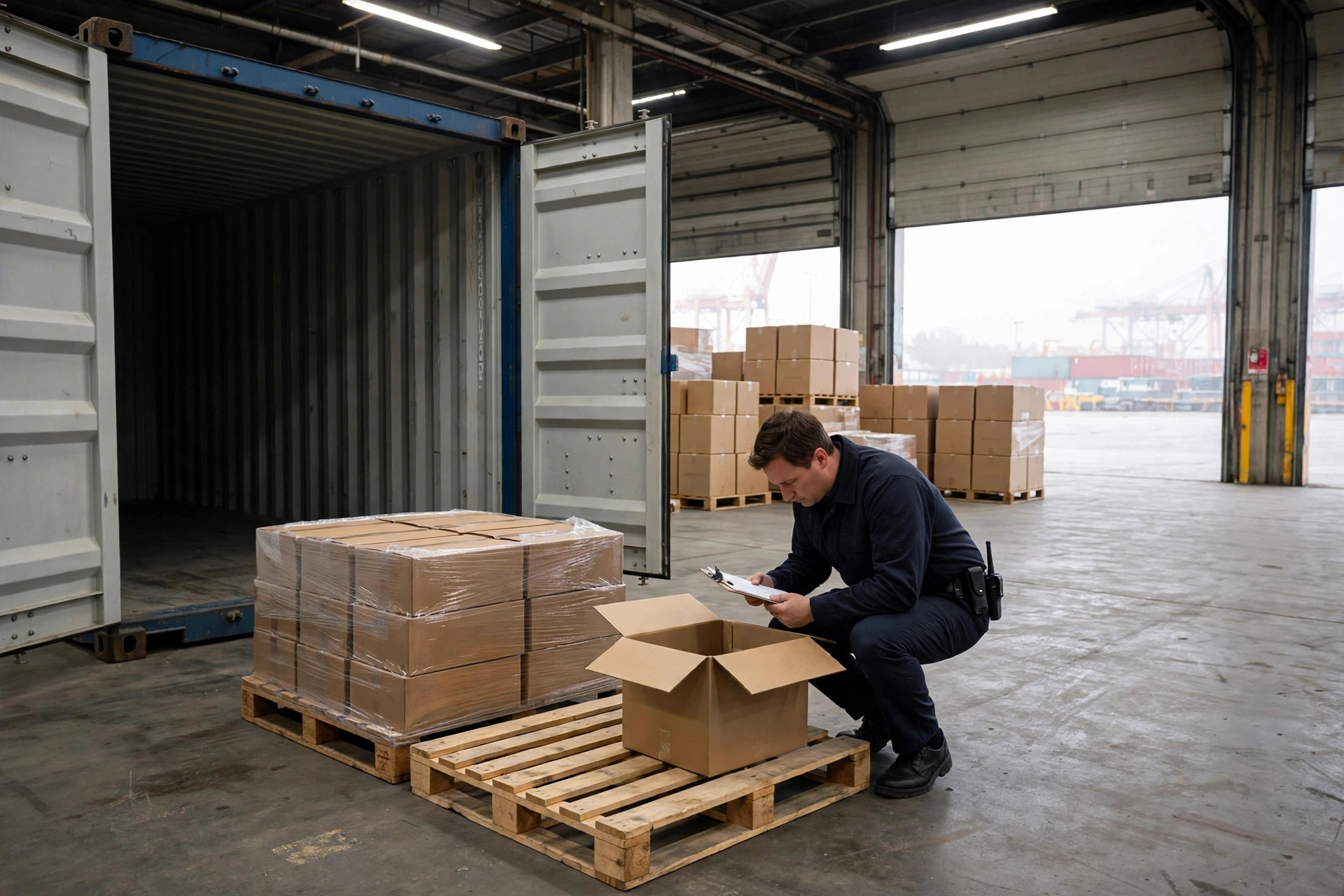
Let me start with the bill — a customs power of attorney bill. In 2023, I was reviewing the cost books of a home-goods importer moving containers through the Port of Long Beach, and one shipment had cost them over $9,000 extra — back duties plus interest, plus two weeks of clearance delays. The goods were fine. The paperwork was fine. The problem was a customs power of attorney signed two years earlier: no expiration date was written in, and the old one was never revoked. The old broker filed under the old tax ID, the new broker filed under the new one, the same cargo "fought with itself" in CBP's system, and as the importer of record, the importer ate the whole bill.
That is what the POA (CBP Form 5291) is. When your broker asks you to sign it, they'll probably say "it's just a procedural form, we need it to clear your goods." That's true, but free doesn't mean it costs nothing. I come from finance, and I read every document by looking at only three things: how much money, who's liable, how to cancel. This little form touches all three — which is why this article is about nothing else. An outsider looking in, doing the math before you sign.
What a Customs Power of Attorney (CBP Form 5291) Actually Authorizes
In one sentence: a customs power of attorney is the legal document that authorizes your broker to "do customs business on your behalf." U.S. Customs and Border Protection requires it — a broker cannot legally file entries, pay duties, or sign bonds for an importer without one, per 19 CFR 141.32. The form is numbered CBP 5291, the official template; every broker's version shares the same skeleton.
The powers it grants are bigger than most people realize. A standard POA typically covers the full stack: filing import entries on your behalf, paying duties, signing your importer bond, filing the ISF (the "10+2" rule, due 24 hours before vessel loading), and more. Who signs it matters too — for a corporation it must be an officer or an authorized signatory; the wrong signature can make the whole thing void from the start.
Two hard numbers to remember: the maximum term is two years. The form has an expiration-date field; leave it blank and it defaults to the two-year maximum — every single day of those two years, the authorization stays live, including the days after you've stopped using that broker. That is where the first hidden bill comes from.
The 5 Things to Check Before Signing a Customs POA
Your broker's POA is almost certainly their own template built on the 5291 skeleton. No matter how well you know them, check these five items by hand before you sign.
1. Scope: specific items or "everything." Templates love the phrase "authorized to conduct all customs business." Push back and enumerate: entry filing, duty payment, ISF, bonds. The broader you grant, the more room the broker has to "decide for you," and the harder it becomes to assign blame when something goes wrong.
2. Expiration date: fill it in yourself, don't leave it blank. Blank equals the two-year maximum. My practice: sign one year the first time, review before renewing. The hassle of annual renewal is one extra procedure; the benefit is one annual renegotiation window — a broker's service quality never shows up in your books, but it shows up clearly at renewal time.
3. Revocation: when you switch brokers, revoke the old one in writing. This is the most-skipped item, and the most expensive one. Legally, an unrevoked POA stays valid. In practice, if the old broker still holds your authorization, they can theoretically still file on your behalf. That $9,000 bill at the top of this article came from exactly this. Revocation must be written (keep both email and paper trails), and get written confirmation.
4. Liability: the importer of record is always you. This is the most counterintuitive part of the whole document: the broker is your paid agent, but in CBP's eyes, the one who pays for filing errors is the importer of record — you. 19 U.S.C. 1592 lays out a three-tier penalty structure for false statements: negligence up to 2x the lost duties, gross negligence up to 4x, fraud up to the domestic value of the merchandise. Wrong tax ID, wrong classification — the penalty notice is mailed to you, not your broker. These numbers aren't scare tactics; they're written in the statute, and no POA wording lets you dodge them.
5. Cost: the POA itself is free, but it authorizes actions that spend money. Paying duties on your behalf, signing bonds, amending entries, late-filing penalties — the broker does the work, the bill lands on you. Before signing, get three answers in writing: is there a fee for advancing duty payments, how much per entry amendment, and who bears late-filing liability. Put these in your service agreement, not just in conversation.
| Check | Right way | Cost of getting it wrong |
|---|---|---|
| Scope | List specific items | Blanket authority, endless disputes |
| Expiration | Fill in yourself, start with one year | Blank = two-year maximum, old authorizations live on |
| Revocation | Written revocation on every switch, keep proof | Old and new brokers filing simultaneously |
| Liability | Accept that importer of record = you | You pay for errors; penalties under 19 U.S.C. 1592's three tiers |
| Fees | Advancement/amendment/late fees in the agreement | Verbal promises; the real bill arrives later |
What a Badly Signed Customs POA Costs
A second case, from 2024. A friend selling on Amazon, shipping LCL into the U.S. with a freight forwarder's "all-in-one" broker. He signed the POA without reading it — and in the tax-ID field, the broker had filled in his personal SSN instead of the company's EIN, just to save time. The cargo cleared. Nobody noticed. Six months later CBP flagged it during a review: the entry had to be corrected, duties recalculated, interest charged at CBP's published quarterly rates, and the whole mess dragged on for three months. I did the math for him: a few thousand dollars in back duties and interest — but the real cost was timing. That shipment's peak selling season came and went while the case was open.
See the pattern? Both cases share one trait: the problem was never "no POA was signed," it was "a POA was signed but never read." In an import cost structure, the POA line item is zero — it generates no fee, so finance reviews never see it. But it's an amplifier: signed right, it's a piece of process paper; signed wrong, it turns someone else's mistake into your bill.
One more detail most people miss: the POA and the importer bond travel together. The broker signs bonds and files entries for you, and a bond has to back it all up. Continuous bonds have an official minimum amount; single-transaction bonds have their own floor. Not revoking a POA when you switch brokers creates risk here too: the old bond may not get replaced in time, the new entry may still sit on the old bond, and then two parties get to argue while your cargo waits.
How a Finance Person Reads a POA
Let me collapse all of this into a calculable conclusion. Assume you import 50 shipments a year, averaging $30,000 in goods value each:
- Cost of reviewing one POA: 10 minutes of your time + one email asking the broker to adjust the template = effectively zero.
- Expected loss of one bad filing: back duties (at the real rate difference) + interest at published quarterly rates + amendment/late fees + time cost. Conservatively, $5,000 per shipment.
- If just 1 of those 50 shipments goes wrong because of a POA issue, the expected loss is $5,000; spending 10 minutes checking each clause drives that toward zero.
You don't need me to do the rest of the math.
One last outsider's observation: the harder a broker pressures you to sign the POA, the slower you should go. Their urgency may be a sales KPI, but the liability you sign for is yours. A customs power of attorney is the only document in your entire import stack that can make you lose money while you sleep — it costs nothing to sign, which is exactly why it can cost so much.
By Lao Zhou, Logistics Cost Analyst