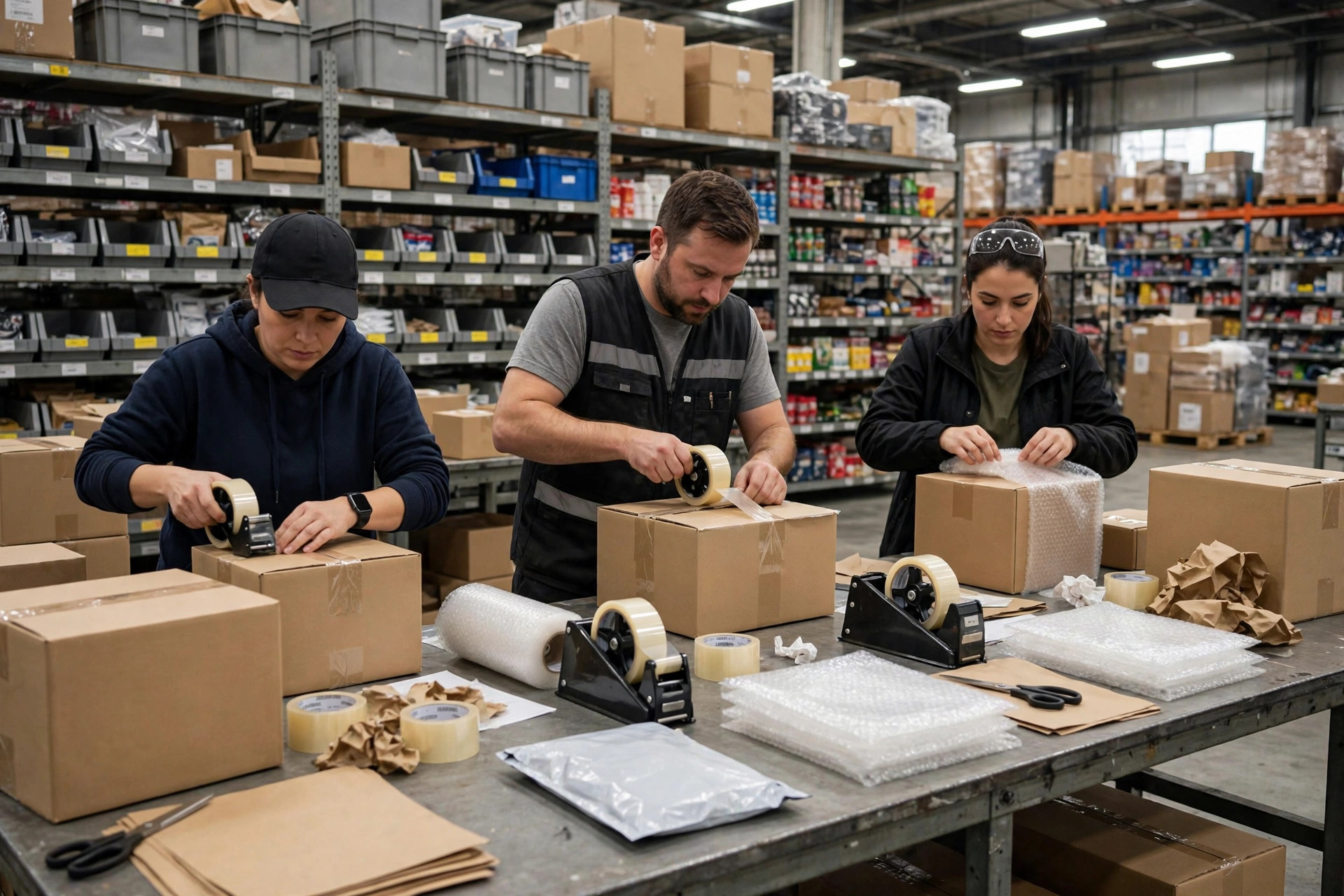
In March 2026, a women's apparel seller I know in Guangzhou called me, rattled. Traffic to his TikTok Shop had fallen off a cliff over two weeks. Nothing had changed — same products, same prices, creators still posting. The culprit turned out to be his shop health score: the fulfillment component had gone red, his late dispatch rate blown past the platform's line. The root cause was one sloppy week after the Lunar New Year holiday, when his warehouse was short-staffed and a few hundred orders missed the carrier cutoff. The system counted every one of them late. That single week cost him two months of traffic.
Here's the part most sellers get wrong: on TikTok Shop, an order counts as dispatched when the carrier first scans the parcel. Not when you print the label. Not when you hand the boxes to your forwarder. Not when you click "ship" in the seller center. A label that sits in the system for three days might as well not exist. Everything downstream — your score, your traffic, your settlement terms — hinges on that scan.
The scoreboard, and where the lines are drawn
TikTok Shop grades sellers on a health score — 1,000 points at the top, new shops starting at 200, under the platform's current seller rules. Late dispatches, seller-canceled orders, and bad reviews all chip away at it. On the logistics side, the platform watches a handful of hard metrics: late dispatch rate, valid tracking rate, on-time delivery rate. Cross the line on any of them and enforcement kicks in — point deductions, listing restrictions, longer settlement cycles, and in serious cases, throttled traffic. The exact thresholds move; TikTok adjusts them, so treat last year's screenshots as history rather than gospel and check the live rules in your seller center.
Two mechanics matter more than the numbers. First, points roll: deductions age out after 180 days, and clean fulfillment slowly earns points back. A damaged score is recoverable — but only if you change the operation that damaged it. Second, enforcement is algorithmic. No human reviews your case before the penalty lands, which also means nobody warns you first. You won't get an email saying your traffic is being throttled; your impressions just quietly halve over a fortnight while you blame the algorithm. That cuts both ways: it's unforgiving, but it's also predictable. If you understand the rules, you can engineer around them.
New shops are the most exposed. Points accrue slowly — a trickle per batch of completed orders — so one bad stretch in the first few months can drag a young shop into restrictions before it has built any cushion. An established shop with months of clean history can absorb a bad week; a three-month-old shop often can't. If you're new, treat your first 180 days as probation: over-staff fulfillment, under-promise delivery times, and check the metrics dashboard daily until the habit gets boring.
Three ways sellers bleed points
The first is missing the carrier cutoff. Plenty of small sellers set their warehouse cutoff at 5 p.m. while their carrier's last pickup leaves at 4. Orders "shipped" the same day get their first scan the next morning — and the system counts them late, by the book. That was my friend's story: packers working until 6, the courier gone by 4:30, two days of orders quietly reclassified as late dispatch. The fix is unglamorous: get the real pickup schedule from the carrier depot, not the sales rep, and set your warehouse cutoff thirty minutes earlier than that.
The second is the phantom pickup. Your forwarder promises "the truck is coming today," and the truck doesn't come for three days. Or worse, the forwarder logs a fake pickup in the system to buy himself time while your cartons sit in your warehouse. The platform only trusts the carrier's real tracking events; everything your forwarder tells you is noise until a scan exists. When you choose a logistics partner, don't just compare rates. Ask about real pickup frequency and the peak-season contingency plan, demand a carrier handover scan receipt for every pickup, and put it in the contract. A "picked up" with no scan receipt counts as not picked up.

The third is the fake shipment, and it's the one the platform hunts hardest. Orders pile up, the warehouse can't keep pace, so someone prints labels to flip the order status to "shipped" while the goods sit untouched. Once the system flags it, the penalty is far harsher than a plain late dispatch. If volume outruns capacity, the honest moves are delisting or capping daily orders — not fabricating shipments. The former costs you a few days of sales; the latter can cost you the shop.
Can you win the points back?
Start with the appeal — but only if you have evidence. When the fault sits with the carrier — a hub meltdown, lost freight, a tracking outage — get a written incident statement from them, attach your pickup manifests and chat logs, and file through the seller center. Complete evidence chains do get penalties reversed. Thin evidence means don't burn days on the appeal; spend that time stopping the bleeding instead. Appeal success tracks your paperwork, not your grievance.
Stopping the bleeding has three levers. First, move inventory forward: wherever the math works, ship from a local or overseas warehouse instead of cross-border direct, so "dispatch" is no longer your problem. Second, manage cutoffs ruthlessly: pin your carriers' real pickup schedules on the warehouse wall and run the packing line backward from cutoff, cartons sealed thirty minutes early. Third, dual-source your logistics: when one carrier melts down, volume shifts to the other the same day — never let a single channel hold all your orders. If the economics pencil out, the platform's own fulfillment service takes most of this pressure off your score, but go in with eyes open: stock has to land in their warehouses two to three weeks early, and the working capital and dead-stock risk sit with you. Run that math before you sign up; don't trade one problem for another.
Then make the monitoring boring and automatic. Check the fulfillment dashboard in the seller center every morning — late dispatch rate, tracking validity, cancellation rate — the way you'd check the weather. Set alerts for dispatch deadlines so the system nags you before the platform does. Most of the sellers I see bleeding points aren't reckless; they're just not looking. The dashboard told the story a week before the penalty landed, and nobody opened it.
Three things you can do before you log off today. Pull your last seven days of late dispatch rate from the seller center and find out exactly which days — and which carrier — broke it. Call your forwarder — not the salesperson, the operations person — and ask for the real pickup schedule and the peak-season plan. And move your warehouse cutoff thirty minutes earlier to build in buffer. Do those tonight, and next week's score at least won't look worse. Logistics scores are slow to heal and fast to bleed. Don't wait for the red flag to start caring.