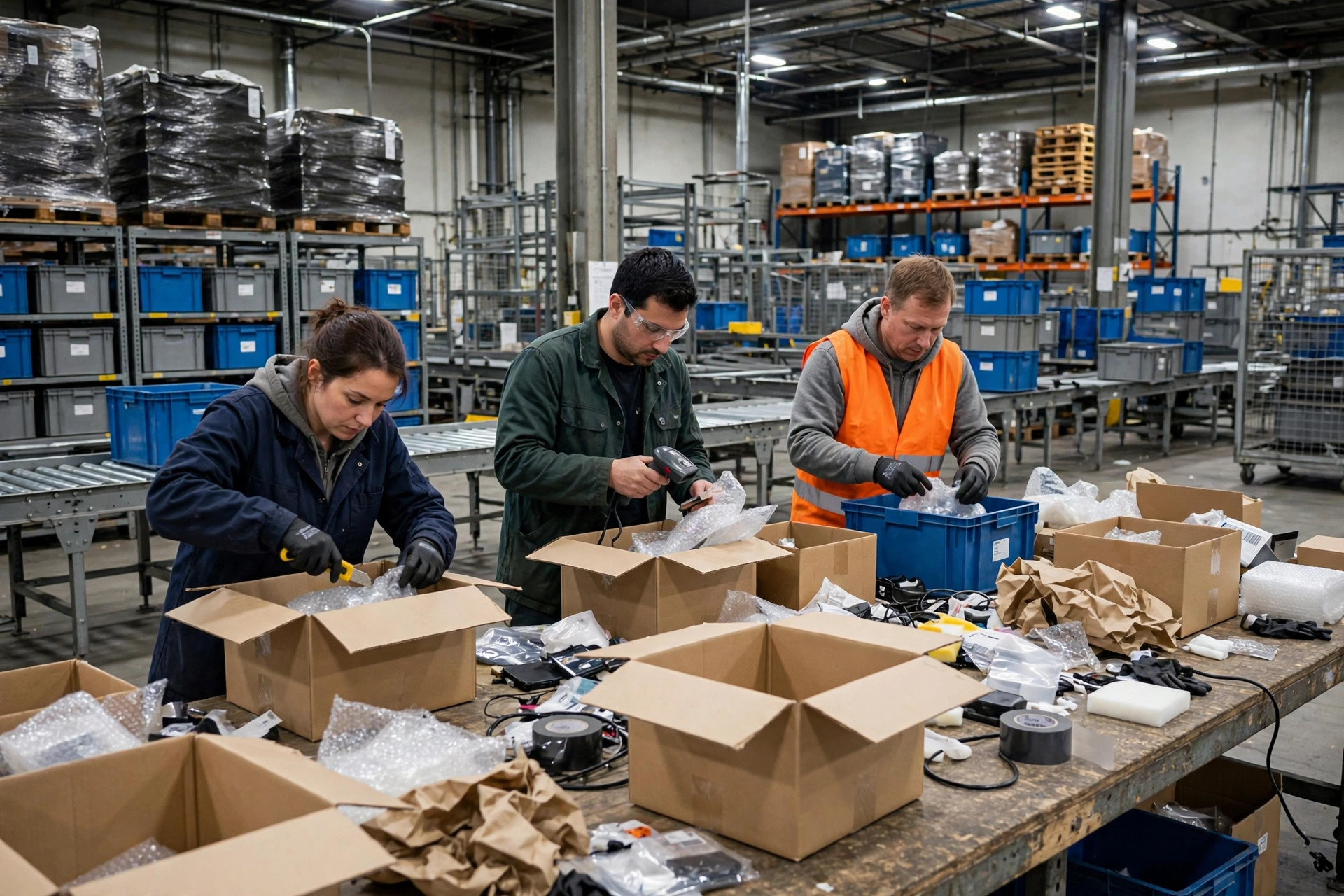
Nothing hurts worse than having orders you can't ship.
On the 24th last month, one of our hero SKUs suddenly popped off — 300+ orders in a single day. I was happily doing the profit math when my ops girl pinged me: "K, 60+ orders have been stuck in order review for two days. Customers are asking where their stuff is." I opened the backend. Sure enough, a pile of orders sitting in the manual review queue while customer service got roasted three times over.
Every e-commerce seller knows the order review step. An order comes in, and before you print the label, the system runs it through a set of rules: is the address legit, is the amount unusually high, do the coupons look right? Suspicious ones get kicked to a human for a look. Clean ones auto-release. Sounds great on paper.
In reality? This step is Schrödinger's checkpoint. Keep it, and stuck orders kill your ship time. Kill it, and one fraud order wipes out your smile.
Let me break down whether manual review deserves to live, and exactly how I set mine up.
The Time I Went Full Auto-Release (and Lost Nearly $3,000)
First, the painful story.
Last July, my standalone store was just getting traction, and I found manual review annoying — so I turned it off. Full auto-release. I figured: the store's volume is tiny, what could go wrong?
Early August, four orders came in. $600 to $900 each, all from the same new customer, all shipping to a freight forwarder, all stacked with two big coupons. The system auto-released them. The warehouse shipped the same day.
A week later, four chargebacks landed. Stolen credit cards. Goods gone, money clawed back — and PayPal hit me with a dispute fee on each one.
I did the math: product cost plus shipping, nearly $3,000 down the drain. Worse, once goods hit a forwarder's warehouse, they're gone forever.
That's when it clicked: review isn't there to annoy honest buyers. It's a speed bump for scammers. The only question is how tall you build the bump.
The Time Order Review Held My Orders for Two Days (and Cost Me Real Money)
Now the pain in the opposite direction.
This March, Amazon changed the rules again (of course it did) — tighter on-time shipment metrics for our category. And that same week I was running manual review on everything, overcorrecting from the fraud scare: every order over $200 went to a human.
The hero SKU blew up — 60+ orders queued. Two reviewers, max ~80 orders a day. Two days of backlog. A dozen orders missed their promised ship date. Three customers cancelled outright. Two left 1-star reviews: "shipping too slow."
The math: those 60 orders averaged $45, ~25% margin, about $11 profit each. The cancelled dozen cost me $150+ in profit directly. The two 1-star reviews knocked that listing's conversion rate down 0.8 points, and it took two weeks of ad spend to climb back.
See the pattern? Strict review stopped the scammers — and blocked the good customers too. That's the trade-off between risk control and speed: every extra 10 minutes of review saves you fraud losses but costs you ship time and conversion.
Here's the counterintuitive part: for small and mid-size sellers, slow shipping usually costs more than fraud ever saves you. Fraud is a low-frequency event — you might not see one for a month. But review delays are high-frequency — they happen every single day. Paying a daily cost to guard against a monthly risk is just bad math.

Which Orders Deserve a Human Look: My Five Red Lines
So my conclusion: keep manual review, but only for orders worth reviewing.
My setup now is "auto-release + manual backstop": ~95% of orders flow through automatically. Only orders tripping a red line go to a human. These five red lines were bought with real money:
| Red line | My threshold | Why |
|---|---|---|
| High-value first order | New customer, first order over $500 | Fraudsters' favorite: big ticket + new + first order |
| Address mismatch | Billing and shipping countries differ, or shipping to a forwarder | Forwarder address = goods you can never recover |
| Heavy discount stacking | Paid price under 60% of list | Coupon bug or card-testing; classic prelude to a haul |
| Rapid multi-orders | Same account/card, 3+ orders in 24 hours | Fraud rings love sweeping fast |
| High-risk regions | First order shipping to high-chargeback regions | Which regions? Check your own store's history |
Everything else? Auto-release. The warehouse prints, packs, ships — zero delay.
Since switching, manual review volume dropped from ~15% of orders to ~4%. Two reviewers spend under an hour a day. Ship-time complaints basically went to zero.
How to Configure Review Rules: Three Steps to "Auto-Release + Manual Backstop"
Red lines alone aren't enough — they need to become rules in your OMS. Don't let the term "rules engine" scare you; the work is very down-to-earth:
Step one, look at your history. Pull the last six months of chargebacks and refunds and find the patterns: a certain amount band? A region? A coupon type? When I did this, 80% of my problem orders tripped at least two of the five red lines. Direction became obvious.
Step two, two tiers: make auto-release conditions broad and manual-intercept conditions precise. My logic is "release by default, intercept on red lines" — not "hold everything, release one by one." Flip the order and the workload differs by an order of magnitude.
Step three, review monthly. Of the orders humans reviewed, how many were real problems? How many were false alarms? False-alarm rate over 30% means your rules are too tight — loosen them. Real fraud slipping through means there's a hole — patch it.
One more trick: give manual review an SLA. My rule: clear the queue within 4 business hours, or orders auto-release. A review queue can't be a black hole — every extra hour an order sits there, cancellation rates creep up.
Pitfalls I've Already Stepped In (So You Don't Have To)
- Don't cut by amount alone. My first version was "everything over $200 goes manual." Result: the $45 hero-SKU orders were fine, but a real $800 fraud order from a "returning customer" tag sailed through. Amount is one dimension — combine it.
- Always put coupon stacking in the rules. During big platform promos, coupon bugs letting people check out at a fraction of the price happen every year. If stacking isn't in your review rules, someone will clean you out.
- Build your blacklist. Confirmed fraud accounts, addresses, card BINs — throw them on a blacklist and auto-block next time, no review needed. That list gets more valuable over time.
- Don't blindly trust "fully automated risk scoring." Third-party fraud scores are fine as a reference, but I once had a chargeback on an order scored 90+. Score is a reference; red lines are the floor.
Bottom Line
Five years of selling taught me this about order review: there's no perfect risk control, only a trade-off worth paying for.
Keep manual review or kill it? My answer: keep it — but keep 5% human and give 95% to the rules. Full auto is gambling. Full manual is lighting money on fire. The middle path — auto-release plus manual backstop — is the one small sellers can actually afford.
This "five red lines + 4-hour SLA" setup has been running in my store for over half a year. Fraud losses are basically zero, and ship-time complaints stopped blowing up. Tested it myself, it works. Copy the homework — just tune the thresholds to your own store's data.
By Ah K, E-commerce Seller (5 yrs)