Here's the uncomfortable truth: most small sellers I meet overpay for shipping. Not because UPS or USPS ripped them off — because they picked the wrong shipping platform. They pay the monthly fee, use ten percent of the features, and never see the cheapest rate tier they qualify for.
A phone-case seller east of Los Angeles called me in late 2023. Three hundred orders a day, all shipping through Stamps.com on near-retail USPS rates, paying the monthly subscription without blinking. The extra postage that year could have hired another packer. These platforms — Pirate Ship, Shippo, ShipStation, Easyship, Stamps.com — I've integrated all five for clients, and I've watched all five burn money in the wrong hands. Forget the feature matrices. Three things matter: how each one actually makes money, how to compare the same shipment across them, and three traps that genuinely hurt.
How Each Platform Gets Paid
Understand the business model and you understand who is actually cheapest. Nobody does this for free out of kindness.
Pirate Ship is the simplest: completely free, unlimited labels, and it earns from the carriers' side. It only supports USPS and UPS, pooling thousands of small shippers to negotiate one volume rate, then passing it to you untouched. No subscription, and you can't plug in your own UPS account — if you have negotiated carrier rates of your own, look elsewhere. It's built for sellers doing dozens to hundreds of domestic parcels a day. The trade-offs are blunt: no FedEx, weak international capability, and thin automation. Complex multi-store workflows will outgrow it fast.
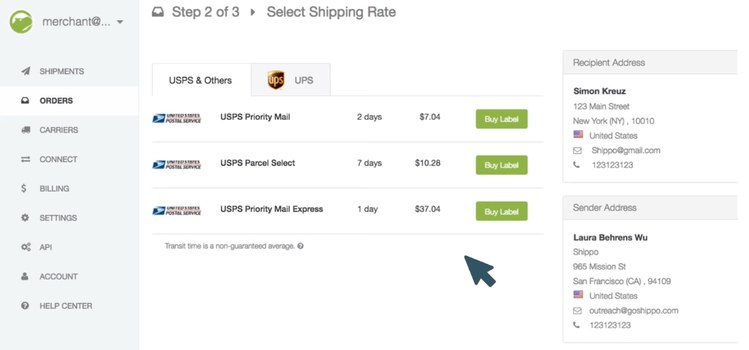
Shippo plays a different game: a free tier covers 30 labels a month, then volume-based subscriptions kick in (third-party trackers put entry around $19 a month for 31–200 labels in fall 2026, with higher bands at $29 and $54 — always confirm against the current official pricing). Its real strength is the API and 40-plus carrier integrations, which is why developers and growing sellers gravitate to it. One detail people miss: on the free tier, connecting your own carrier account adds a five-cent per-label fee.
ShipStation sells multi-channel automation. Subscriptions start around $14.99 a month (entry plan covers roughly 50 orders), with 200-plus channel integrations — orders flow in, rules pick the carrier, labels print, tracking numbers push back. It can halve your customer-service workload. But its carrier discounts are unremarkable, and lower tiers get email-only support, which is painful when something breaks in peak season. It fits sellers above 200 orders a day across three or more stores. One Shopify store? Overkill.
Easyship owns the cross-border niche: subscriptions from $29 a month, a free tier of 50 shipments, 500-plus courier services worldwide, and its killer feature is calculating duties and landed cost at checkout. For purely domestic US volume it offers nothing and costs the most. Consider it only when a third or more of your orders cross borders.
Stamps.com is the old guard: $14.99 a month minimum, no free tier, built around USPS batch shipping and postage management. It earned its place when sellers queued at post office counters; today its value is deep USPS integration and stable batch processing. If your volume is mostly UPS Ground, it can't help you. And at the same monthly fee, Pirate Ship's USPS rates are often lower — that $15 buys habit, not savings.
My verdict: under 100 orders a day, all domestic — Pirate Ship is usually the answer. Bringing your own carrier rates or building on an API — Shippo. Multi-store automation — ShipStation. Mostly international — Easyship. Stamps.com, unless you have legacy reasons, isn't where new users should start.
The Only Comparison Method I Trust
Ignore every "save up to X%" claim on these websites. My method is crude and it works: take your own real orders and rate the identical shipment on every platform, down to the cent.
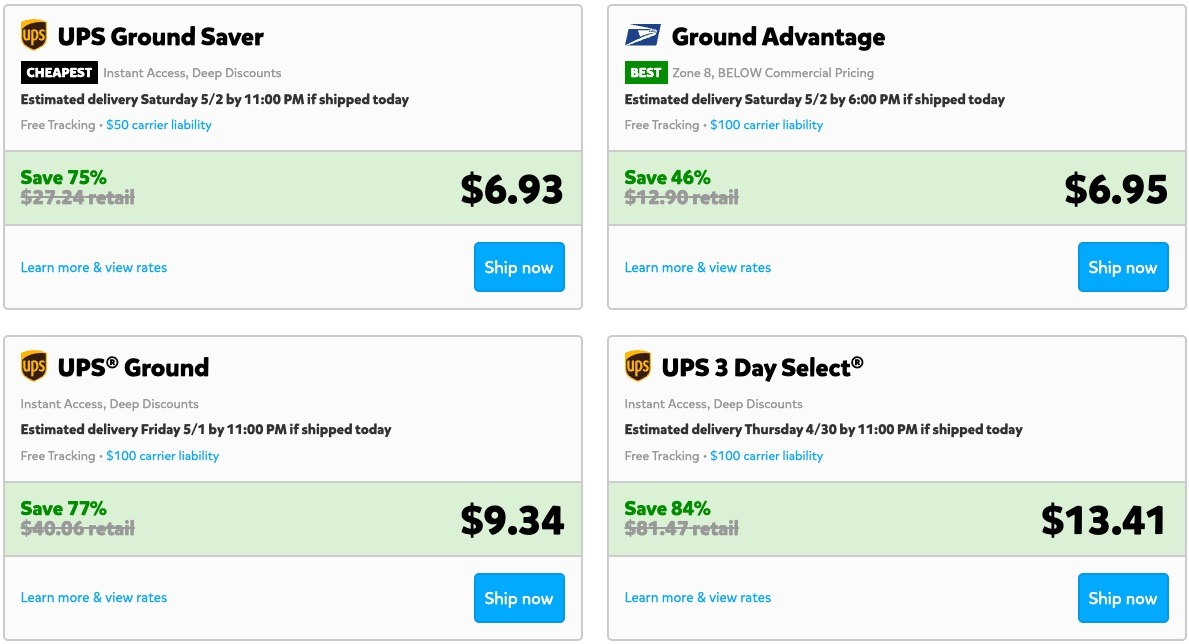
Pick your ten most representative shipments from the past week — light and heavy, near and far zones. Rate each one on Pirate Ship, Shippo, and ShipStation, but keep service levels aligned: UPS Ground against UPS Ground, USPS Ground Advantage against Ground Advantage. Comparing Priority pricing to Ground Advantage is lying to yourself. Log the total, the insurance, and the surcharges separately.
Then do the full math: divide the platform's monthly fee by your monthly volume and add it to each label. (Hypothetical example) — say you ship 400 orders a month and Shippo's $29 band applies: that's just over 7 cents per label. If Pirate Ship's postage on the same shipment is only 5 cents higher, the free platform still wins. Flip it: at 2,000 orders a month, if your own UPS contract rate beats the platform rate by a dollar per parcel, the subscription fee is a rounding error. You're optimizing postage, not software spend.
Run it for two weeks and the spreadsheet decides for you. Nine out of ten clients I've walked through this end up with two platforms: eighty percent of volume on the cheapest one, the rest on the backup. No single platform wins every weight break and every zone. Loyalty to one platform is a donation.
Three Traps That Actually Hurt
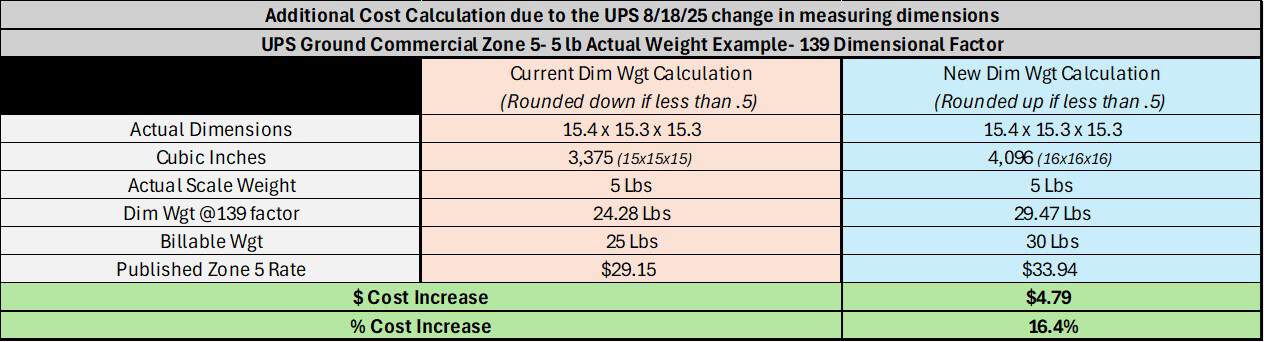
Surcharges deduct automatically. No negotiation. Wrong address, residential delivery, oversize, dimensional weight exceeding actual weight — the carrier pulls it straight from your platform balance, and the platform is just the messenger. I watched a seller change packaging, gain half an inch, trip UPS oversize surcharges, and bleed over $900 in a month before noticing. Switching platforms doesn't fix this, though some have better address auto-correction that catches part of it. The single most valuable line in this article: spend 30 seconds verifying address and dimensions before you print.
Read the claims rules before you buy the insurance. Lose or damage a parcel shipped on a platform-negotiated rate and you file with the platform, not at the USPS or UPS counter. Pirate Ship's built-in insurance is cheap but the exclusions are real — for high-value shipments, read them first. Shippo and ShipStation run claims through support tickets; timelines follow each platform's published policy, so don't count on fast payouts for urgent orders. The principle: read the exclusions before the loss, not after.
Account bans hurt most, and they're usually self-inflicted. Pirate Ship's terms are explicit: your account ships your goods only, no printing labels for others for a cut. People do it, get flagged, and lose the account — recovering the balance is a process. On Shippo the classic is label arbitrage: rating on one platform's contract and shipping through another channel, or abusing return addresses. Platform risk teams don't warn first. Ship your own goods, your own addresses, and stay out of the gray zone.
One thing you can do tomorrow: tonight, take your ten heaviest shipments from last month and re-rate each on Pirate Ship and whatever you use today. If Pirate Ship wins six or more, switch your primary next month. There's no magic to postage optimization — it's just labels, compared one at a time.