Thailand rice export warehouse storage is where a lot of export deals quietly go wrong. Everyone wants to talk price. Nobody wants to talk about the warehouse. I have followed two Thai rice export shipments for friends in cross-border trade, and my conclusion is blunt: rice that goes bad in storage costs more than rice that was priced badly. The mill warehouse, the port warehouse, and the moment of stuffing the container are three different jobs, and the bill for each one has to be counted separately.
Thailand Rice Export Warehouse Storage Starts at the Mill, Not the Port
A rice mill on the Central Plains starts work at six in the morning. Paddy comes in, and the first gate is quality: moisture, impurities, broken-grain rate, whatever the export contract and the buyer's inspection requirements say. One mill I visited had a rule the manager would not bend: paddy and milled white rice never share the same warehouse room. Paddy still has its husk, breathes, and heats up in the middle of a tall stack. Milled rice has lost that shell, absorbs moisture fast, and picks up odors from anything stored nearby. Separating them is not fussiness. It is survival.
Pest control is where beginners get fooled most. Rice weevils and grain borers lay eggs inside the grain, invisible to the eye. Export contracts usually allow zero live insects, so one infested bag found during buyer inspection can hold up a whole container. The honest routine is sampling before intake, regular warehouse patrols, and immediate isolation when pests appear, with written records kept for every step. Do not believe anyone who says one fumigation treatment covers you for six months. Change the storage conditions, and both the treatment effect and the residue rules have to be checked against the contract again.
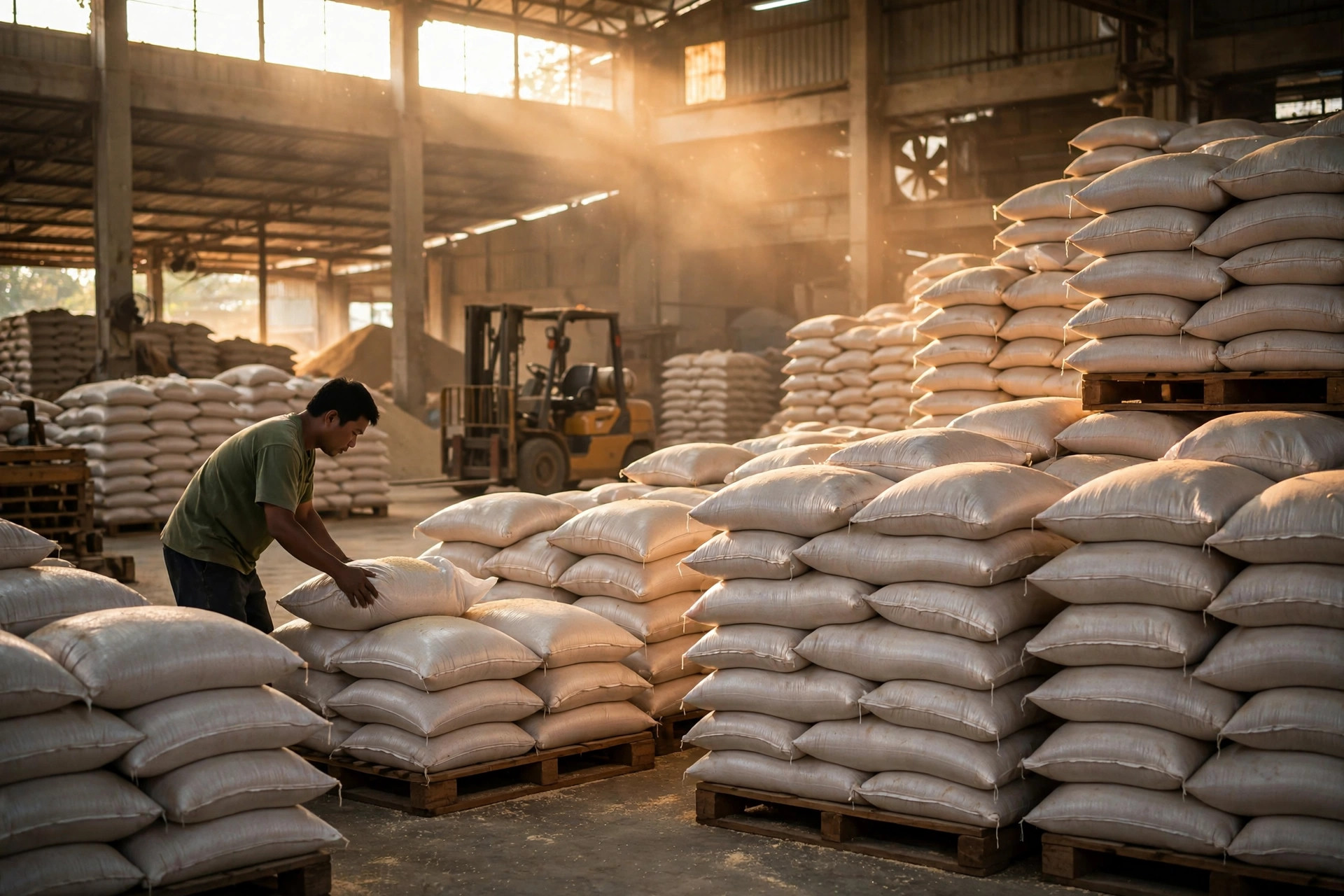
Moisture is even more practical. Thailand's rainy season pushes humidity high, and warehouse floors sweat. I saw one shipment where rice bags were stacked straight on the floor. The bottom three layers caked with moisture and had to be downgraded. The loss was bigger than years of pallet costs. The fix is boring and cheap: raise the stack, keep it off the wall, leave ventilation aisles. Pallets lift the bags a dozen centimeters, a gap from the wall gives you an inspection lane, and a daily check of walls and roof leaks in the rainy season costs almost nothing. Skip that small spend, and the loss shows up later, much larger.
A Real Lesson: Skipping Storage Records Cost a Whole Container's Bargaining Power
A seller friend of mine had a shipment that left the mill in perfect condition. It waited for its vessel near Laem Chabang, and the port-area warehouse told him they had always stored rice this way and never had a problem. He did not insist on a complete file of temperature, humidity, and pest-inspection records. The buyer's inspector found insect traces in one sampled bag, and the negotiation flipped in a second. The seller went from chasing payment to accepting a price cut and longer payment terms. The shipment still moved, but most of the margin went with the discount.
The lesson I took from that deal is simple: the evidence chain from the warehouse is your bargaining power. Intake slips, humidity logs, pest patrol records, and batch numbers must all tie back to a specific container number. Goods going wrong is bad. Having no proof that the problem did not start with you is worse. This trick actually works for me: before every shipment, I pack that whole record set into one file and send it to the buyer. Buyers inspect differently when the paperwork arrives before the container does.
Thailand Rice Export Warehouse Storage at Laem Chabang: When the Vessel Schedule Moves, the Bill Moves
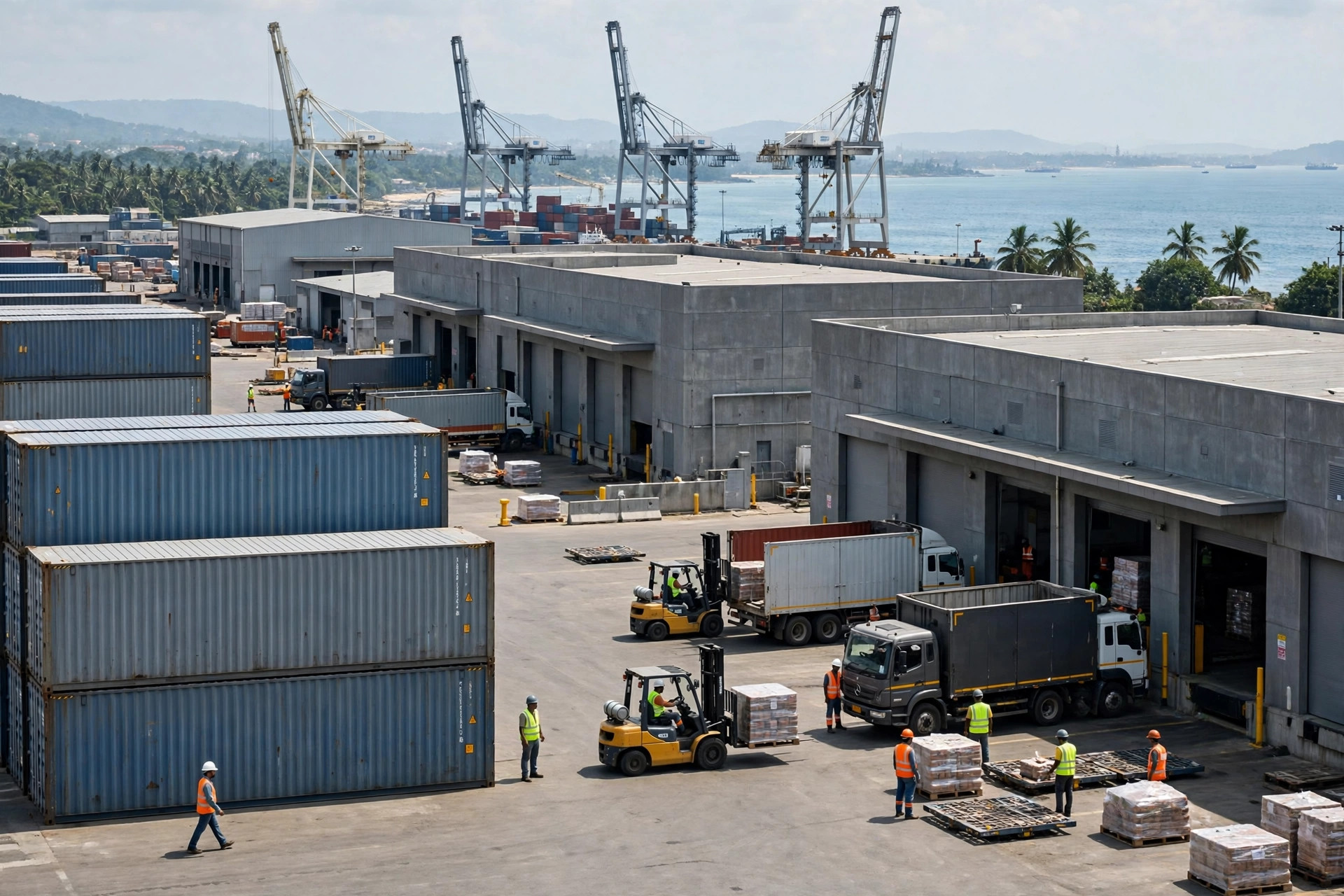
The second battlefield is the port. Laem Chabang is Thailand's main container export port, and rice travels from inland mills to port-area warehouses, waits for a vessel, and gets stuffed into containers. Any delay in that chain raises storage charges and the risk of late shipment. A vessel that sails early means rushed stuffing and more mistakes. A vessel that slips by a week means another week of moisture and pest pressure in the port warehouse.
My fix is to write storage responsibility into the contract in segments: who covers the mill-to-port leg, how many free storage days the port warehouse allows, and what rate applies after that. Never let the contract say just "warehouse." It has to name a place, a number of days, and a rate basis. Vague clauses always favor the other side when a dispute comes.
One more detail matters: re-inspection before stuffing. Bags that have sat in a warehouse can wear at the mouth and seams, and pallets can shift. Re-check moisture and appearance at stuffing time, replace damaged bags on the spot, and photograph the container number, seal number, and batch numbers together. That step takes less than half an hour, and it can save a whole round of claims later.
The Bag and the Stack: The Detail Beginners Ignore in Thailand Rice Export Warehousing
Export rice bags come in several forms: woven bags, paper bags, small vacuum packs inside an outer bag. Each has different strength, moisture resistance, and seam quality. On one shipment I followed, bags that looked fine in the warehouse split at the corner when a forklift nudged them during stuffing. The crew had to re-bag, sweep, and re-weigh, losing half a day of loading time. Stacking matters too. A stable stack with interlocked layers, kept below the bags' load limit, protects the bottom layer. Over-stack it, and the bottom bags burst, absorb moisture faster, and can fail the buyer's appearance check for the whole stack.
My routine is to zone the warehouse by packaging type at intake, never mixing bag types in one stack, and keeping damaged bags in a separate isolation area. Before stuffing, sample-check bag mouths and seams by stack, and tell the forklift operator which stacks hold fragile packaging. It looks fussy. It decides the buyer's first impression when the container doors open. A clean first look makes every later inspection smoother. A first look of split bags and spilled rice makes every later check stricter.
Counting the Cost: Three Bills, Not One
| Stage | Main cost items | Most underestimated risk |
|---|---|---|
| Mill warehouse | Separate storage, pallets, patrol labor | Pest treatment and downgrade losses |
| Inland transport | Freight, loading, moisture protection | Rainy-season delays and double handling |
| Port warehouse and stuffing | Storage fees, stuffing labor, re-inspection | Extra storage charges when vessels slip |
This table carries a counterintuitive point: the most expensive part of rice export warehousing is not warehouse rent. Rent is visible. Downgrades, price cuts, claims, and lost customers hide underwater until something goes wrong, then they double. Shifting the budget from "find the cheapest warehouse" to "find the warehouse with the most complete records" saves money over time. The rent saved on a cheap warehouse disappears in a single buyer discount, and reputation goes with it.
A Pre-Shipment Checklist You Can Actually Use
Check the contract inspection requirements at intake, separate paddy from white rice, and write batch numbers clearly. Patrol more often in the rainy season, keep stacks raised and off the wall, and keep humidity records unbroken. Isolate pest findings at once and record the treatment, instead of waiting for the buyer to find them. Confirm the port warehouse's free storage period in advance, and re-plan stuffing the day a vessel schedule changes. Re-inspect damaged bags before stuffing, and match container, seal, and batch numbers with photos.
That routine is not glamorous, and it makes a dull story. It is the whole truth of Thailand rice export warehouse storage: rice does not fear a high price. It fears quietly going bad in a warehouse while you are the last person to know. Treat storage as part of the export, not an afterthought before shipment, and the numbers start to behave. This trick I have personally tested, and it works.
By Ah K, E-commerce Seller (5 yrs)