In February 2026, the Supreme Court struck down the IEEPA tariffs. Importer group chats lit up like New Year's Eve, everyone calculating refunds. But once the dust settled, the realization landed: Section 301 tariffs didn't move an inch. They rest on Section 301 of the Trade Act of 1974 — a completely separate legal authority the Court's ruling couldn't touch.
Which means the working tariff for US importers in 2026 is Section 301. And its nastiest feature: it strikes by tariff number. One wrong digit doesn't cost you a point or two — it costs you double digits. This final part of the series replays real traps and gives you a complete classification-review method.
Know the Table: Section 301 Rates in 2026
Section 301 runs four lists, matched by 8-digit tariff number (compiled from USTR lists and tariff trackers — verify your own codes against the current publications before acting):
| List | Rate | Main coverage |
|---|---|---|
| List 1 | 25% | Industrial machinery, engines, electronic components |
| List 2 | 25% | Semiconductors, plastics, chemicals |
| List 3 | 25% | Furniture, lighting, handbags, building materials — the biggest list |
| List 4A | 7.5% | Apparel, footwear, consumer electronics, toys |
The 2024 review added "priority" targets: EVs at 100%, solar cells and semiconductors at 50%, lithium batteries at 25%, ship-to-shore cranes at 25%. July 2026 brought another 12.5% tier tied to forced-labor concerns, applied by country tier with China in it.
See why classification is life-or-death here: List 3 (25%) and List 4A (7.5%) sit 17.5 percentage points apart. Your product on the boundary between two lists — lean the classification a little left or right, and a year's duties differ by the price of a car.
Case Replay: 17.5 Points on a Lamp
Back to the outdoor-lighting friend from part one. His product: a solar wall light with motion sensor. His broker classified it under 9405.40 (other electric lamps) — a List 3 number at 25%.
His competitor's nearly identical product took a different classification path: arguing the essential function was security sensing, toward 8531 (electric sound or visual signaling apparatus) — where the relevant 8-digit number sits on List 4A at 7.5%.
On $600,000 of annual imports, the 17.5-point gap meant $105,000 extra per year. Over three years: more than $300,000 — because of a classification argument.
The resolution took two months: spec sheets, function test reports, marketing materials proving consumers buy it as a security light, then a binding ruling request to CBP. CBP agreed, the code moved, the rate dropped from 25% to 7.5%. The overpaid duties from prior years could only be chased through protest — recoverable in part, if at all.
One lesson: for multi-function products, classification is won on the "essential function" argument, not on gut feel.
Trap 2: The Code Was Right — Then the List Moved
A sneakier trap: your classification was correct, but the 301 lists changed — your number got swept into a higher rate, or a newly tariffed product happens to be your number — and you're still quoting off the old rate.
The 2024 review raised rates on batches of tariff numbers (some batteries from 7.5% to 25%; medical gloves, natural graphite, and permanent magnets to 25% effective 2026). Plenty of importers learned about it from their broker's invoice. The 301 lists aren't static — USTR reviews and adjusts them.
Countermeasure: every quarter, have your broker send you an "active codes × current 301 rates" cross-check. Takes little time, prevents quoting yourself into a loss.
Trap 3: Wrong Country of Origin — Paying 301 for Nothing
Section 301 applies by country of origin — China-origin only. Goods genuinely from Vietnam or Mexico aren't in scope. But origin follows the substantial-transformation standard, not "where it shipped from."
I've seen both errors: Chinese-made goods routed through Vietnam and declared Vietnamese — that's transshipment fraud, punished severely. And the reverse: genuinely Vietnamese production that Customs won't recognize because the documentation is thin — so 301 gets paid anyway. Keep your origin evidence chain (production records, input material lists) as a matter of routine, not something you scramble to get from the factory after Customs asks.
Trap 4: Still Counting on De Minimis? It's Gone for China-Origin Goods
E-commerce sellers, take note: the US $800 de minimis duty-free threshold was eliminated for China-origin goods effective May 2, 2025. The era of duty-free, informal-entry direct-mail parcels from China is over.
Every parcel from China to the US now, regardless of value, requires formal declaration and duty payment. Sellers who built their model on direct mail without ever looking up a tariff code got their first duty bill months after the change and finally woke up.
If you're still thinking "split it into small parcels to save duty," stop and replan: either price the classification and 301 rates into your landed cost, or shift to bulk import through a US warehouse. The small-parcel tax advantage for China sellers is history.
The Annual Classification Review: Four Steps
I recommend every importer run a classification checkup once a year. It's straightforward:
Step 1: pull the list Export every active SKU with its 10-digit code, one row per SKU. This is your classification inventory.
Step 2: re-verify the high-value SKUs Sort by annual import value — the top 20% of SKUs drive 80% of your duties. Re-check each of those codes on hts.usitc.gov: does the description still fit, has the rate changed?
Step 3: map against the 301 lists Run your 8-digit numbers against Lists 1–4A plus the 2024 review increases. Confirm the actual 301 rate in force for each code today — especially the 2026-effective increases.
Step 4: build the case for boundary products For products sitting between two codes or two lists, prepare your "essential function" argument package, and file a binding ruling where the money justifies it. One ruling binds every US port — far better than arguing with each port's officers.
Run these four steps and you'll likely find one or two places where you're overpaying. Find one, and the review paid for itself many times over.
Closing: Classification Is the Foundation, Not an Elective
Six parts, and we're back where we started: HTS codes opened the series, classification review closes it. That's no coincidence — classification is the foundation of the US import business. Foundation straight, everything built on it — clearance, exams, drawback, FTZ — stands firm. Foundation crooked, and every step pays for the error.
The tariff code doesn't care whether you understand it. Customs penalizes the importer, not the broker. Time spent mastering it is the highest-ROI investment in this business.
Section 301 lists are subject to change. Data current as of October 2026 — verify against USTR and HTSUS publications and consult your broker before acting.
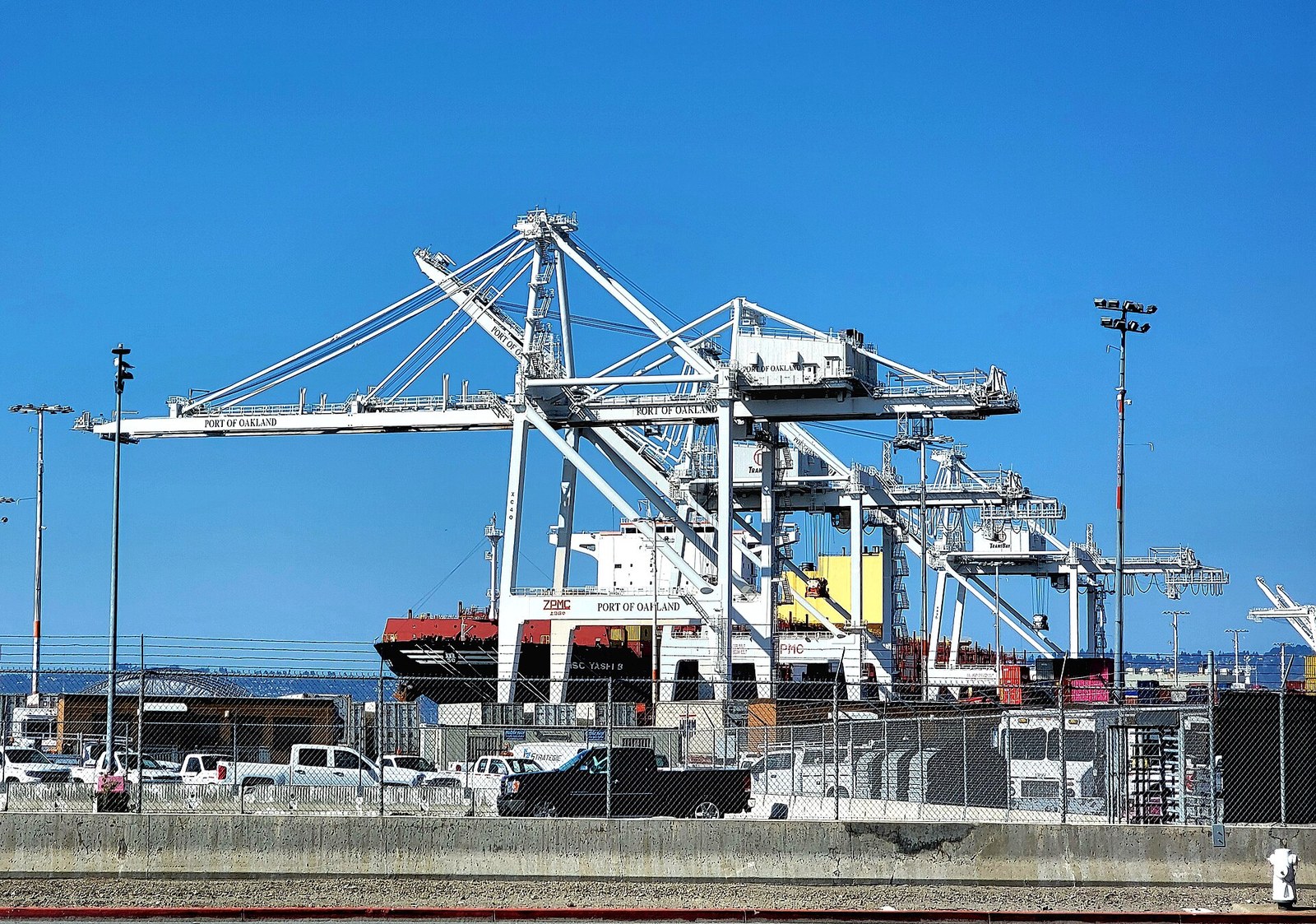
Photo credits: "Container crane at the Oakland Seaport" by Cullen328, CC BY-SA 4.0, via Wikimedia Commons.