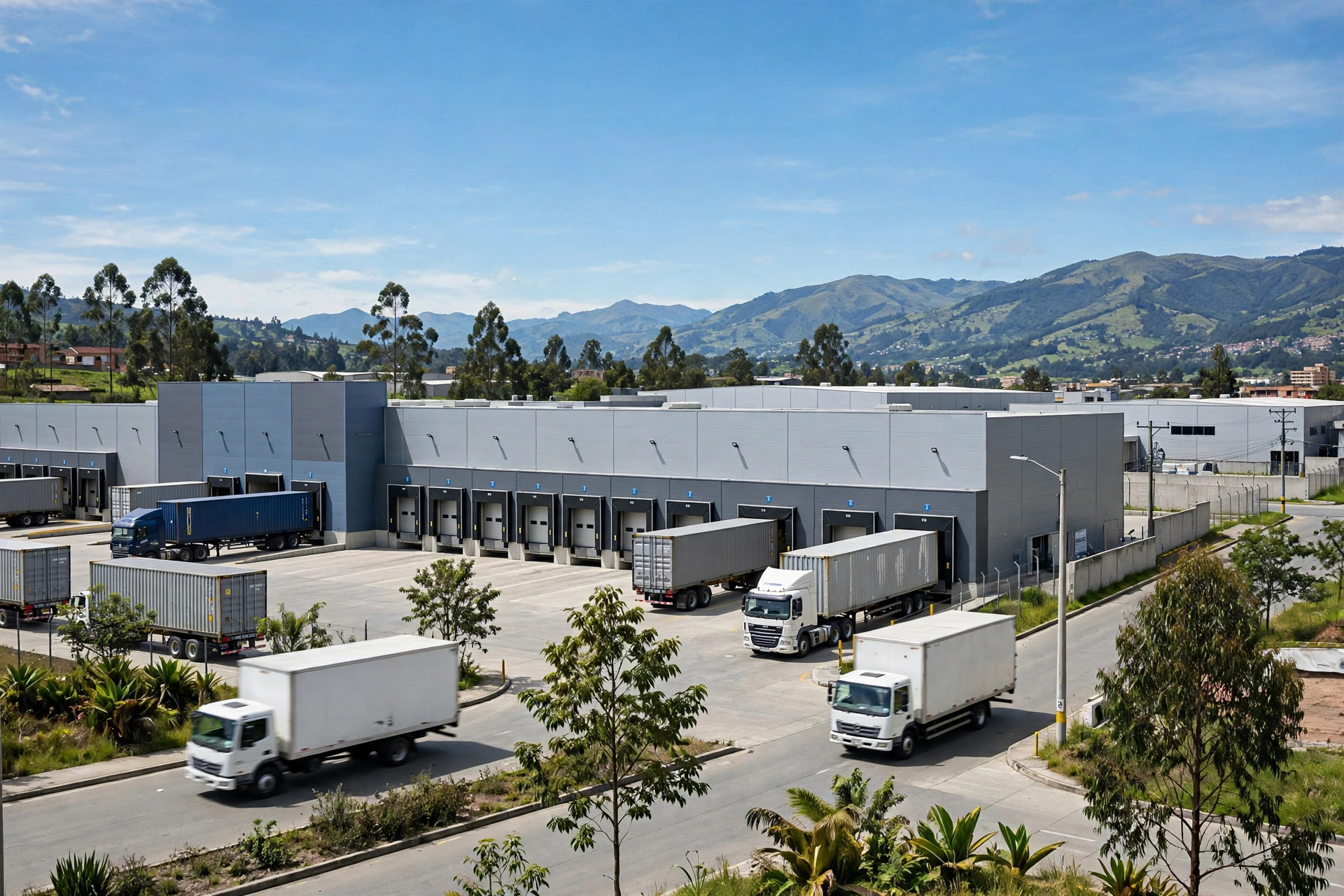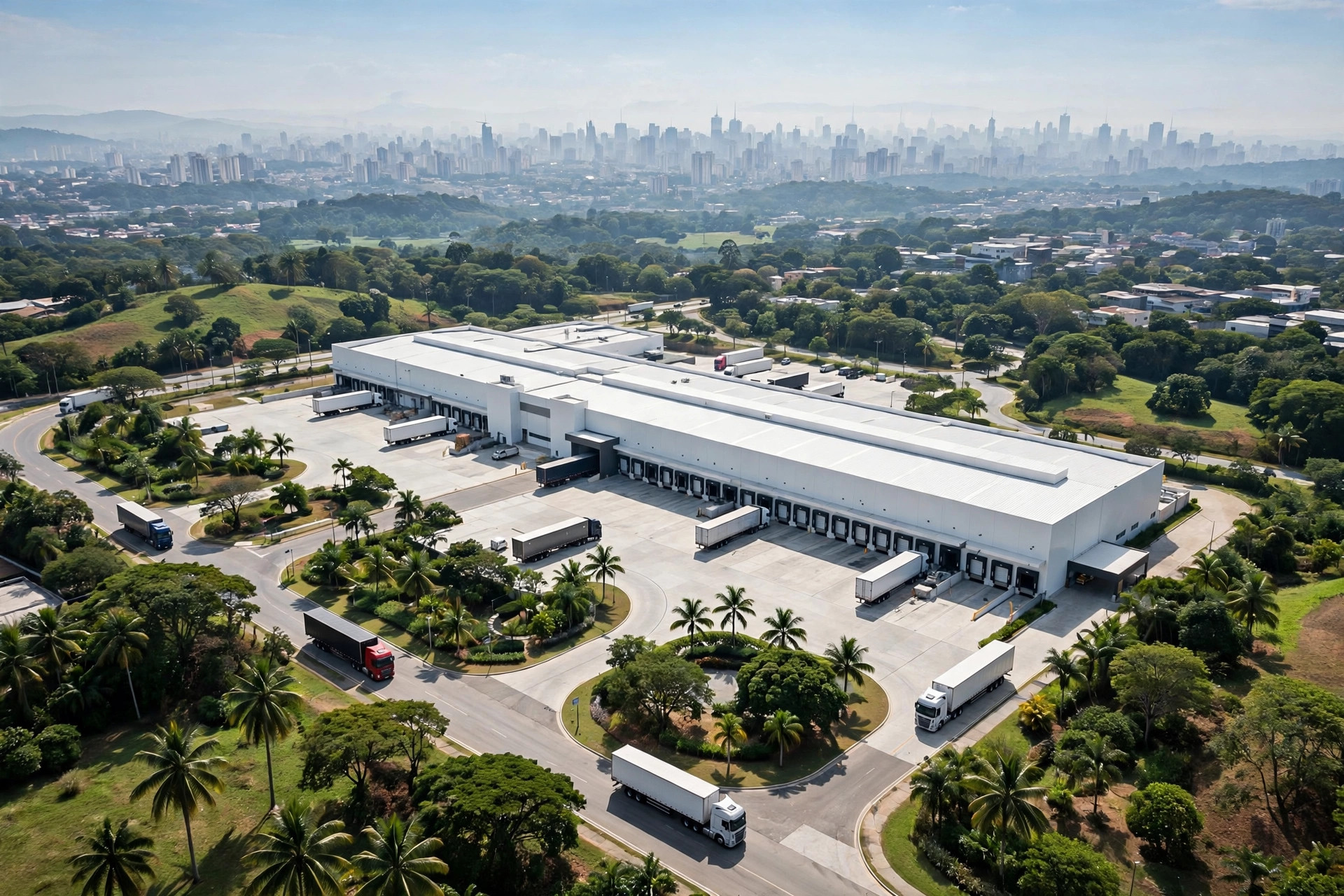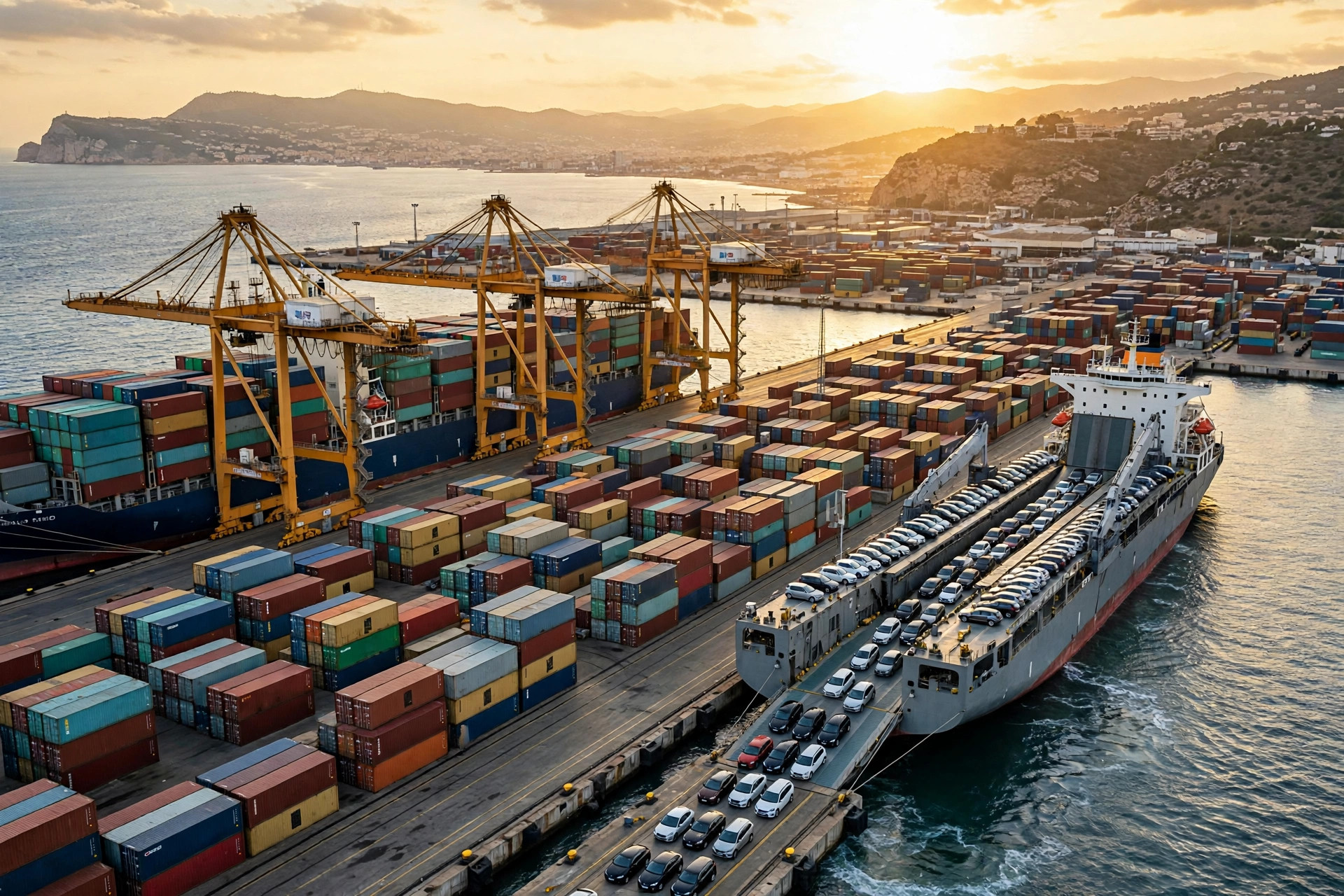
Here's my verdict up front: if you want to run JIT supply for European automakers, there is no second Tangier Med in Africa. Not because of its size — though the size is real: 10.24 million TEU in 2024, the largest port in Africa, 17th in the world — but because it is the only automotive supply chain node on the continent where "ship in the morning, deliver in Europe by lunch" is literally true. A ro-ro ferry crosses from Tangier Med to Algeciras, Spain, in 90 minutes. Put your parts warehouse next to that port and you have one foot inside the EU market and the other inside a free zone.
But this story has two sides. Over the last three years, more and more suppliers have asked me about setting up a Tangier Med automotive parts warehouse, and seven out of ten start with the wrong question. They ask about rent. The right question is: who are you supplying?
The Real Choice: Tangier Med Free Zone vs. Casablanca vs. Algeciras, Spain
Most people frame this as "two options in Morocco" — Tangier vs. Casablanca. That's the first mistake. The real decision is a three-way trade-off:
| Option | Transit time into Europe | Policy and cost picture | Best for |
|---|---|---|---|
| A. Tangier Med free-zone warehouse (Tangier Automotive City area) | Next to the quays; 90-minute ro-ro crossing, trucks roll straight onto Spanish highways | Bonded storage — no duties until goods actually sell; Morocco's association agreement with the EU gives preferential tariffs on vehicles and parts | Tier-1s running JIT/VMI for Renault Melloussa, with freight moving both directions |
| B. Casablanca/Kenitra-area warehouse | Hours by road to the Stellantis Kenitra plant | Inland conventional warehouse; fastest for local delivery, but Europe-bound freight needs an extra road-plus-sea leg | Suppliers dedicated to Kenitra with little re-export |
| C. Algeciras, Spain warehouse | Same 90-minute crossing, reversed; inside the EU, no cross-border paperwork | No Moroccan labor or land-cost advantage; but deep bench of mature 3PLs with strong WMS and sequencing capability | Pure distributors into the EU with no Moroccan production |
See it? A and B aren't competing with each other — Renault Melloussa sits next to Tangier, Stellantis sits in Kenitra, hundreds of kilometers apart, each with its own supplier ring. Your real competitor is C: the warehouse across the strait in Spain. In 2023, Morocco overtook China and Japan to become the EU's largest automotive import source by value — €15.1 billion. A good share of that flowed through warehousing and distribution around Tangier Med. Choosing between A and C is really choosing between Morocco's cost base and free-zone policy on one hand, and Spain's operational maturity on the other.
I've seen too many people get this backwards: they circle the spot closest to the port on a map, sign the lease, then discover their main customer is in Kenitra. Twenty kilometers closer to the quay, three hundred kilometers farther from the customer.
Where JIT Breaks: A Story I've Seen Too Many Times
A Tier-1 wiring-harness supplier once kept its Asia-sourced parts in a Casablanca warehouse while serving the Renault Melloussa plant up in Tangier. On normal days it worked — trucks ran at night, arrived by morning, JIT windows held. Then came one peak-season highway jam. One. The assembly line stopped for 40 minutes.
I won't spell out what an OEM line-stop penalty looks like. You only need one number: one minute of stoppage costs more than a month of extra rent in the free zone. That supplier now runs a VMI warehouse in Tangier Automotive City doing sequencing and multi-trip daily delivery. The lesson I took from it is simple: a JIT warehouse isn't selling square meters, it's selling trouble-free distance. Thirty kilometers from the customer versus three hundred isn't about fuel money — it's about whether you sleep at night.
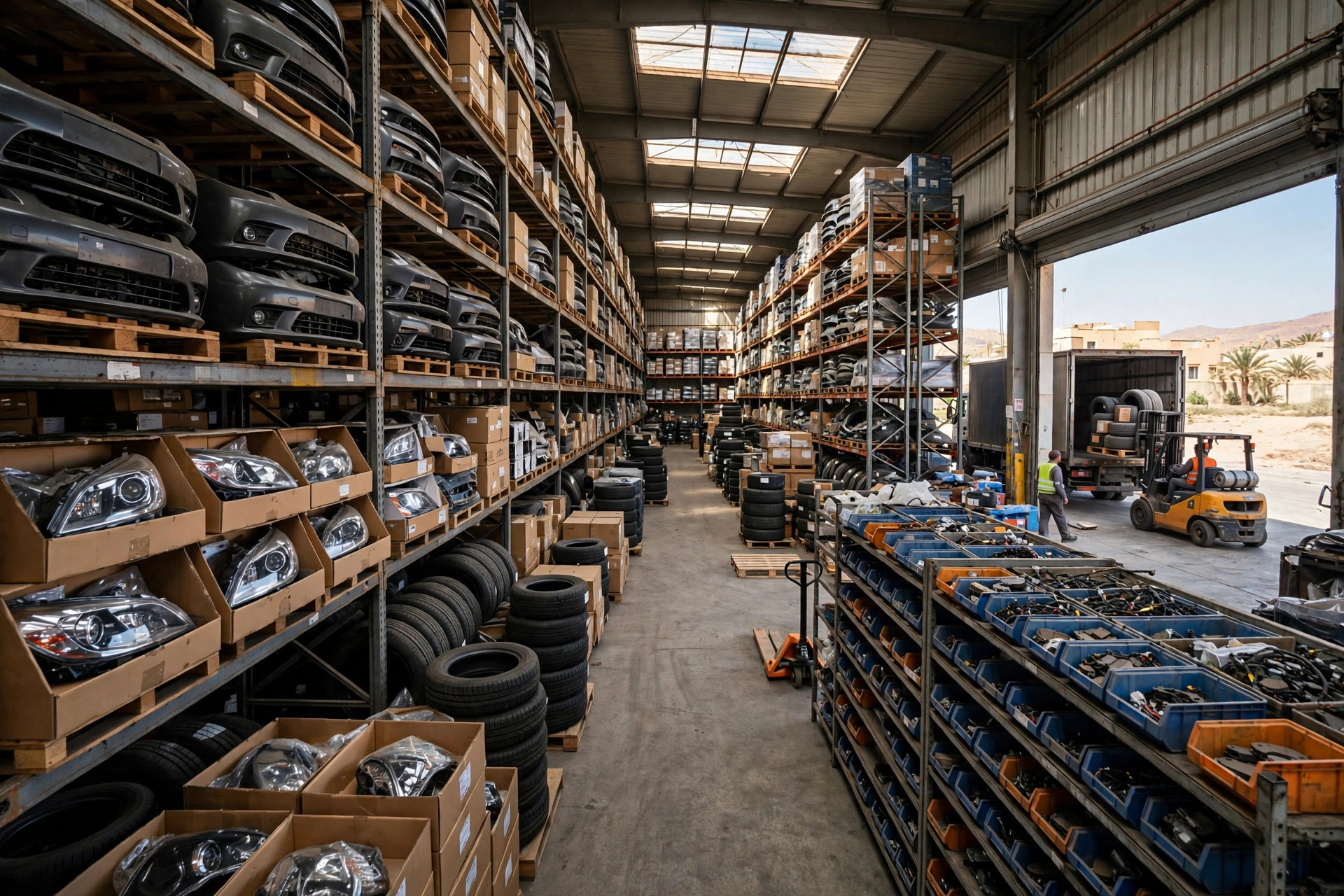
The second trap is subtler: inventory strategy. Some suppliers treat a Tangier Med free-zone warehouse as a cheap substitute for a European warehouse — full containers arrive from Asia and they want to re-export them unopened. Wrong move. In 2024 the port handled 516,842 TIR truck crossings, up 8.1%, a large share carrying industrial goods. Why don't those goods ship straight from Asia to Europe? Because the free-zone warehouse earns its keep through deconsolidation, sequencing, and re-dispatch: one 40-foot container of harnesses comes in, gets broken into 200 JIT racks sequenced to Renault's build order for the day, and trucks roll — 90 minutes across the strait, or under an hour to Melloussa. If all you want is a cheap place to stack containers, you capture none of Tangier Med's advantages and all of its disadvantages — including a local warehousing operations base that is, frankly, uneven.
Let me say the other side plainly: warehousing operational maturity in Tangier Med is not at Spain's level. WMS implementations, cycle-count accuracy, sequencing on-time performance — the local 3PLs are a generation behind the established European players. Come here and you accept the deal: big policy upside, but you watch operations yourself. If you want turnkey, go to Algeciras.
Two Ways In: Ro-Ro and Container Are Different Businesses
Running an automotive parts warehouse at Tangier Med means mastering two inbound modes that operate on completely different logic:
Ro-ro is the time-critical play. Trucks drive onto the vessel, 90 minutes across, drive off and go. That corridor moved 516,842 truck units in 2024, with industrial goods up 6.8%. The game is high-frequency, small-lot: multiple daily JIT runs to Melloussa, empty racks get refilled. A ro-ro-oriented warehouse lives or dies on dock velocity — the apron can never clog, the sequencing area always needs open slots, and every truck in transit has to be visible in the system.
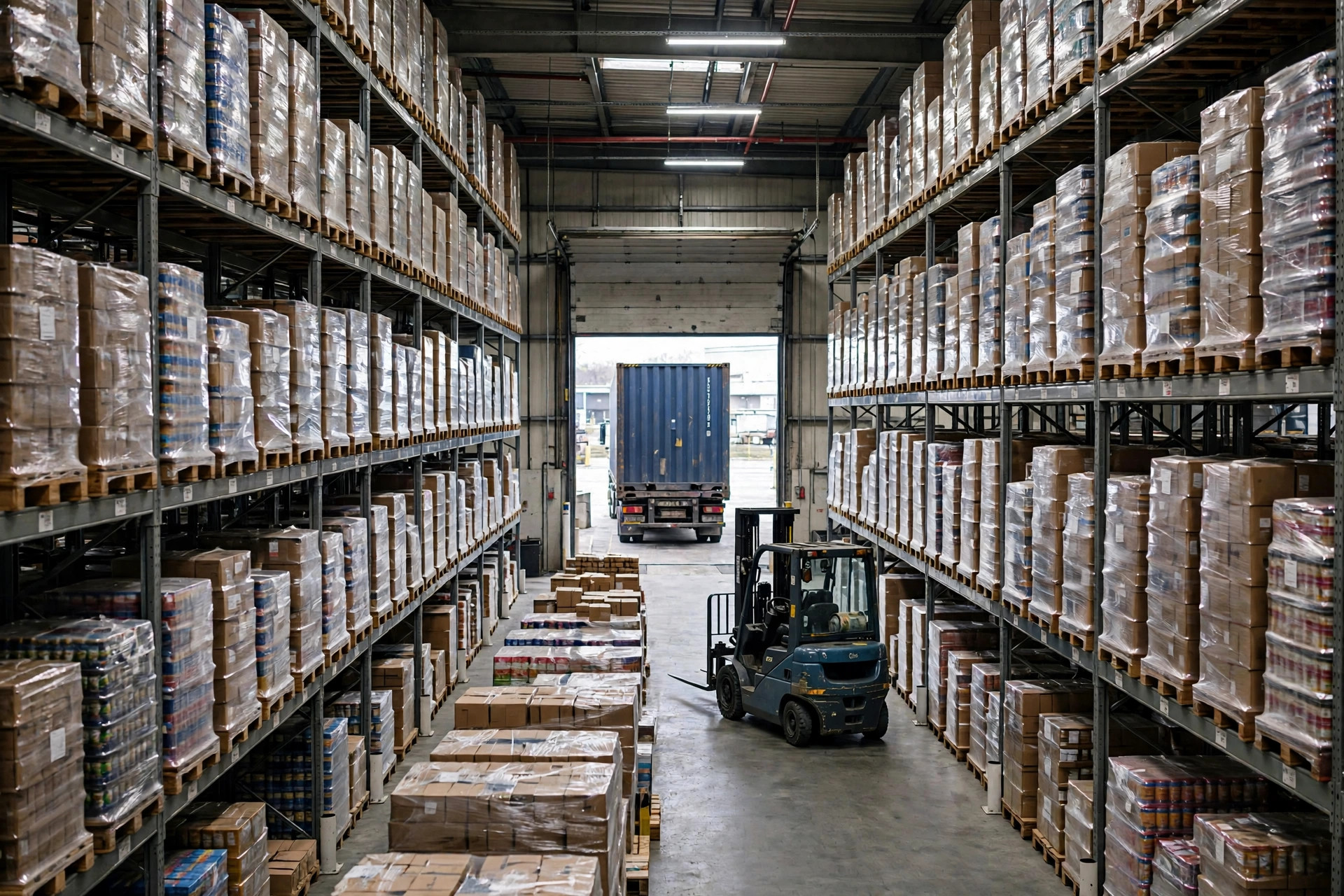
Container is the volume play. Parts arrive by sea container from Asia and the Americas, get deconsolidated, inspected, and sequenced in the free-zone warehouse, then converted into JIT deliveries. The port moved 10.24 million TEU in 2024 and 11.1 million in 2025, climbing to 16th in the world — and the automotive share keeps growing. Vehicle exports hit 600,872 units in 2024: 368,843 from Renault's Melloussa and SOMACA plants, 170,519 from Stellantis Kenitra. Behind every finished vehicle is a parts flow that needs warehousing.
Here's the counterintuitive part: most people assume a free-zone warehouse wins by being close to the quay. Wrong. What you're really buying isn't proximity — it's bonded flexibility plus single customs clearance. Goods sit in the free zone; nothing counts as imported and no duty is due until there's a sale. Once the destination is set — into a Moroccan plant, it clears as domestic; onto a vessel for Europe, it clears once as re-export. That's the real content of free-zone warehousing policy. Specific tax incentives vary by zone and by year, so verify against the zone authority's current published policy before signing anything — don't take a broker's word for it.
Three Things to Get Straight Before You Sign
First, know exactly who you're supplying. Serving Renault Melloussa? Put the warehouse in the Tangier Med zone. Serving Stellantis Kenitra? Look around Kenitra first — Stellantis is investing €1.2 billion to expand there, targeting 535,000 vehicles a year by 2030 with 75% local content, which means the parts-warehousing demand around Kenitra is about to surge. Serving both? Then it's two warehouses. Don't imagine one building covering 300 kilometers.
Second, know your inbound mix. Ro-ro-heavy means hugging the ro-ro terminal and the highway interchange — the game is dock turns. Container-heavy means hugging a zone with real deconsolidation muscle — the game is breakdown, sequencing, and VMI management. Both? Then your warehouse needs two separate flow paths. Don't mix them.
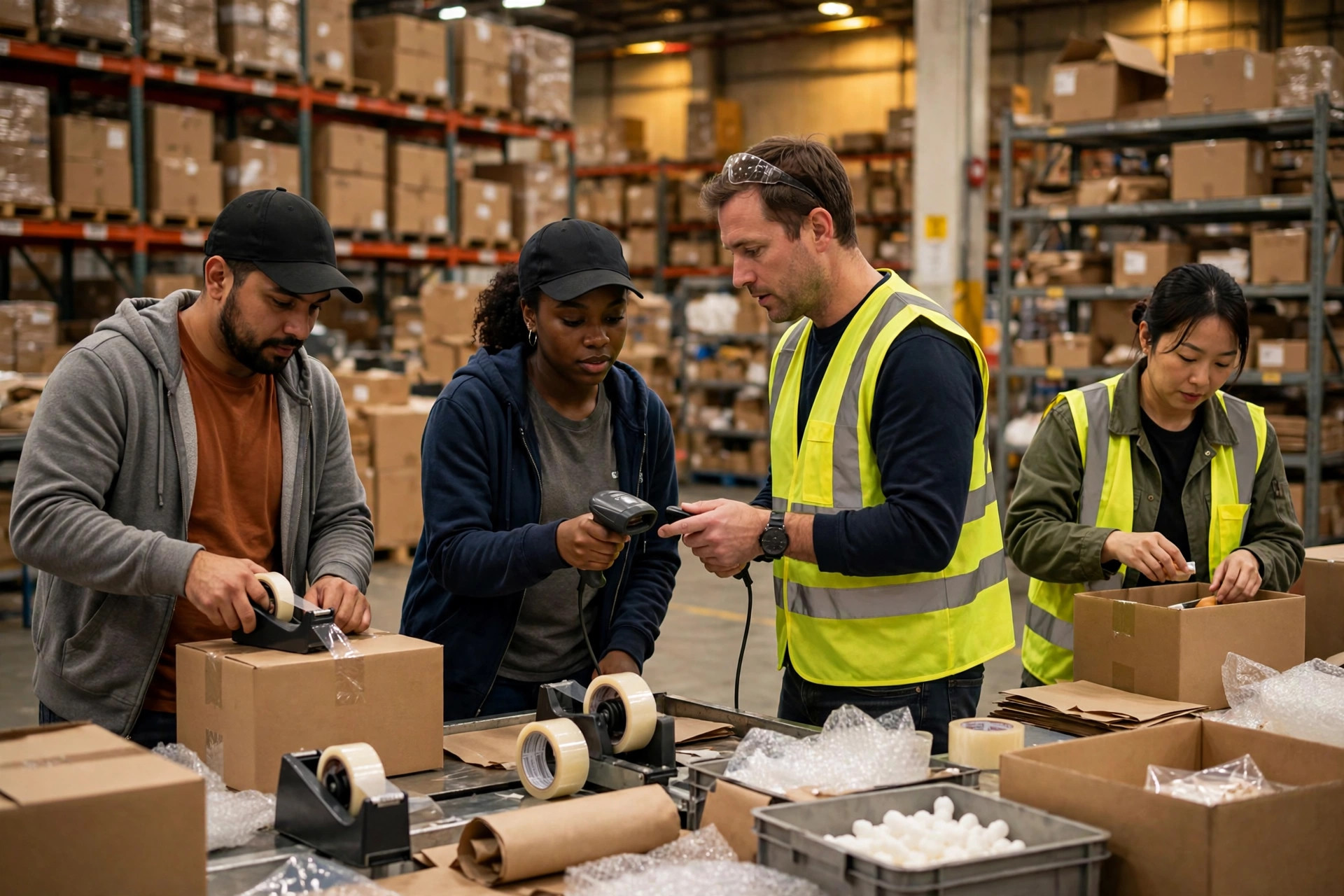
Third, decide who operates it. Local 3PLs are cheap, but automotive JIT disciplines — sequencing, kanban, EDI integration — may be beyond them. European 3PLs cost more but ramp faster. My advice: run the first two years with a proven operator while you build the local team. Good automotive logistics talent in Tangier is always harder to hire than you think.
One last piece of advice: the Tangier Med automotive parts warehouse story is uphill for the next five years — 11.1 million TEU and still climbing, two OEMs with one expanding and one stable, and a location at Europe's doorstep that nobody can move. But uphill doesn't mean risk-free. Winning here isn't about being five kilometers closer to the quay. It's about getting two things right at once: bonded flexibility and JIT on-time performance. Do you think you're up for that?
By Lao Mi, Supply Chain Veteran (20 yrs)