When this topic landed on my desk, my first reaction was: wrong guy. Brazil's tax reform — LC 214/2025 — sounds like a Dr. Chen topic. I run a 3,000-square-meter warehouse. My daily math is forklift charging costs and carton prices. What do I know about Brazilian tax law?
Then I thought about it again, and realized I know exactly one thing that matters here. In our business, the first question a client ever asks about a warehouse is always: "Which state is it in, and how does the tax work?" Site selection was never just about the map. And Brazil's tax reform (the Brazil tax reform warehouse location strategy question everyone is suddenly asking) just ripped the tax-arbitrage playbook in half. If you pick warehouse locations for a living — or you run a small warehouse or 3PL — this one's for you.
The Reform Flips the Table: Tax Follows the Consumer, Not the Shipment
Here's the timeline, all from public sources you can look up:
2026 is the test year. Invoices already have to show both new taxes: CBS at 0.9% and IBS at 0.1% — symbolic rates, offsettable against the old PIS/Cofins. In 2027, CBS goes live at its full rate, PIS/Cofins exit the stage, and IPI drops to zero — except for products made in the Manaus Free Trade Zone, whose incentives are locked in all the way to 2073. From 2029 to 2032, ICMS and ISS rates get cut by one-tenth each year (9/10 in 2029, down to 6/10 in 2032) while IBS ramps up to take their place. In 2033, ICMS and ISS are gone, and the new system runs the whole show.
The combined standard rate is estimated at roughly 28% (a reference figure from Resolution No. 14/2026 of the CGIBS, the IBS management committee, with a 26.5% safeguard cap on the overall burden — treat the official latest publications as authoritative).
But none of that is the real story. The real story is one sentence: tax will be collected where the consumer is, not where the goods ship from.
The old game was origin-based taxation: goods were taxed under the ICMS of the state your warehouse shipped from. So states bribed distribution centers with ICMS perks — Brazil's infamous "fiscal war" (guerra fiscal). Now it's destination-based. The warehouse's state gives you zero tax advantage.
Big companies burned real money chasing tax-haven states. We small warehouses could never afford that game anyway. Now everyone's back on the same starting line.
The Extrema Lesson: The Tax Discount Dies, the Location Discount Survives
One town explains the whole thing: Extrema.
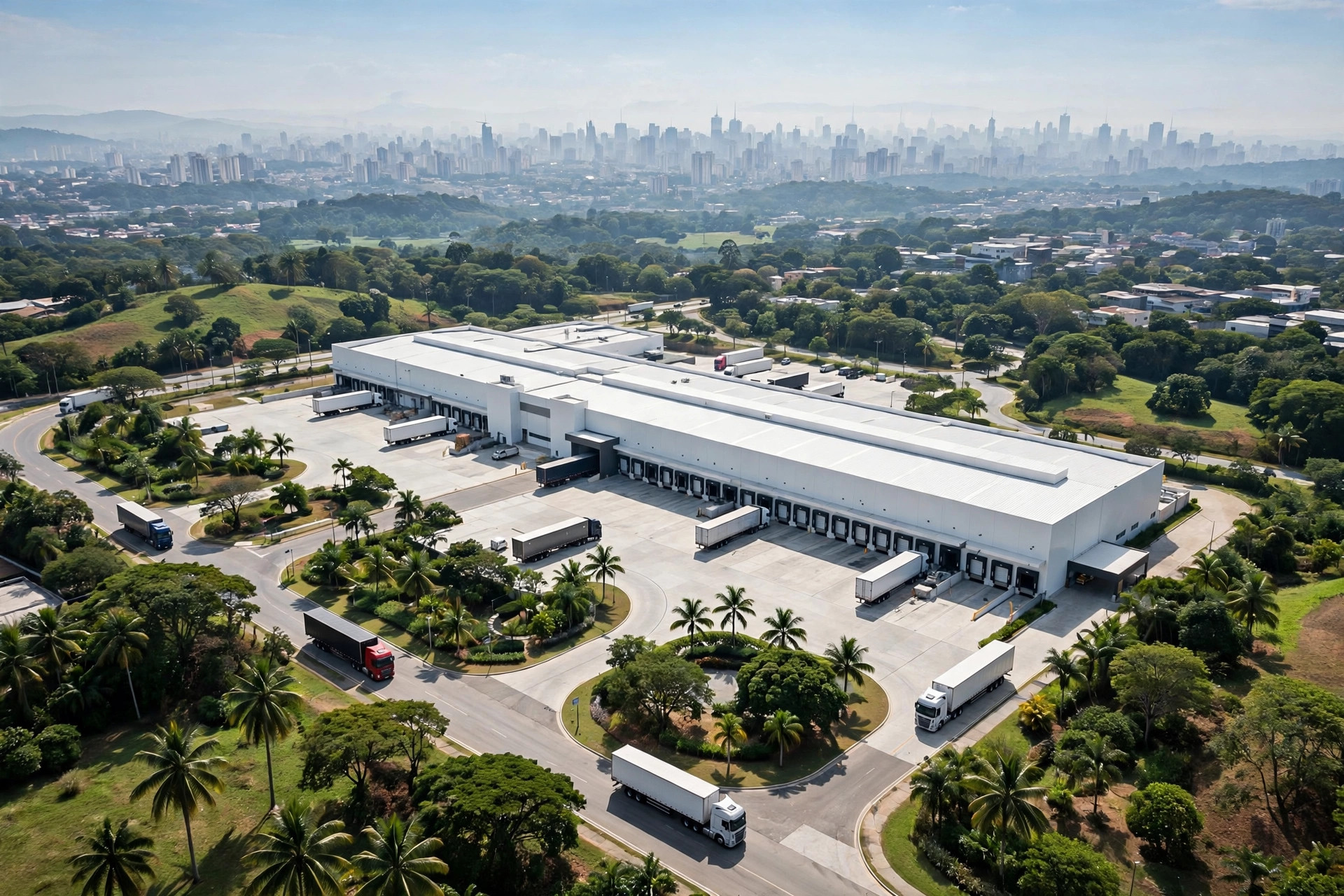
Extrema sits in Minas Gerais, 2 kilometers from the São Paulo state border, about 100 kilometers from downtown São Paulo — a little over an hour's drive into the city. Over the past two decades it turned itself into Brazil's "e-commerce logistics capital" with one trick: internal ICMS rates of 2%–6%, interstate sales as low as 1.3%, while São Paulo state across the border charged 18%. That double-digit spread was its entire pitch, and DCs and e-commerce fulfillment warehouses piled up along the BR-381 highway.
Under Brazil's tax reform, that spread goes to zero by 2033. The tax-arbitrage pitch is dead.
But here's the interesting part — Extrema might be fine. The reform can't take away what actually matters: 100 kilometers from Latin America's biggest consumer market, about 75 minutes into the city, an established warehouse ecosystem and a trained workforce. Meanwhile, prime logistics space inside Greater São Paulo is already asking around R$34.67 per square meter per month (Newmark, Q2 2026), with vacancy squeezed to a historic low of 5%. That rent premium was never about tax. It's about being close to people.
See the pattern? The reform kills the tax discount and rewards the location discount. Site selection logic flips from "which state taxes less" to "how close are you to the consumer." That's oddly good news for small operators — competing on proximity, speed, and service is our home turf.
Move or Stay? Score It Before You Decide
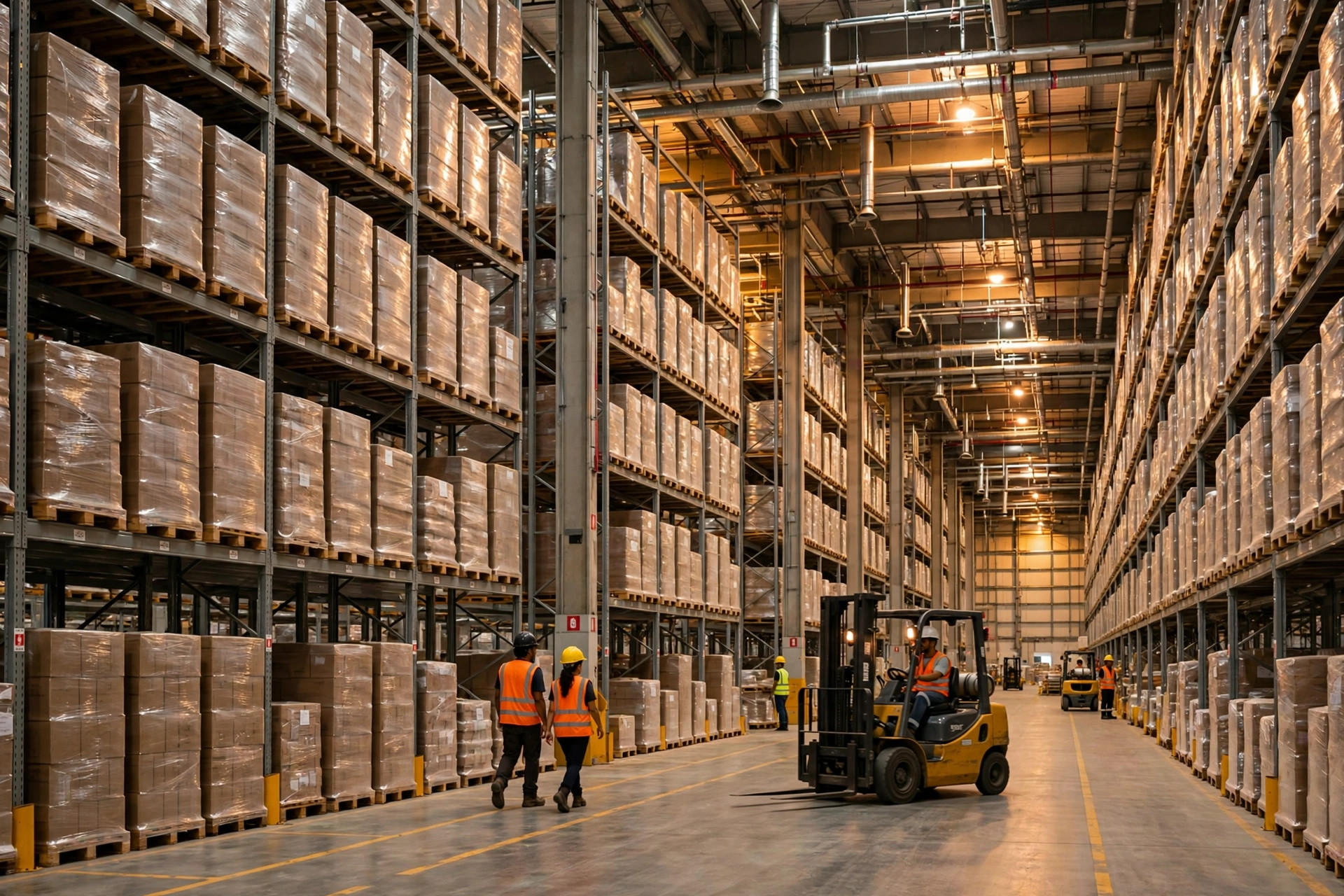
Enough theory. Here's my low-tech method: a four-factor scorecard. Don't go with your gut — go with the total.
| Factor | Case for staying | Case for moving | My scrappy workaround |
|---|---|---|---|
| Remaining tax perks | Perks still count through 2028 — milk them | From 2029 they decay 9/10 → 6/10, gone by 2033 | Align lease expirations with end-2032; any long lease you sign now needs a "tax-reform rent-adjustment / exit" clause |
| Market distance | Close to current customers, stable lead times | Your demand map changed — the warehouse should follow the orders | Plot a heat map of delivery addresses — post-reform, the DC belongs where the orders are |
| Rent and labor | Old lease locked cheap, experienced team | Emerging hubs are cheaper with available labor | Don't compare rent alone — compare rent + linehaul freight + lost speed, all three |
| Switching cost | No disruption, cash flow keeps flowing | One painful move beats years of slow bleed | Small players shouldn't move alone — use a 3PL for "elastic multi-warehouse": borrow space in peak season, hold your home base the rest of the year |
For the transition math, here's an Excel trick: one column for 2029–2032, fill in the perk coefficients 0.9 / 0.8 / 0.7 / 0.6, multiply your annual tax savings by each, and compare against the rent-plus-freight gap at the target location. The year the tax savings stop covering the move cost is your move deadline. Refresh that sheet once a year. It's more reliable than any broker's pitch.
A Real Dilemma: The Lease Expires in 2029 — Renew or Not?
True story. A friend of mine sells beauty products from Shenzhen on Mercado Livre. In 2024 he moved his Brazil stock from a São Paulo city warehouse to Extrema, chasing that double-digit ICMS spread — the annual tax saving paid for two extra operations staff. Now his lease expires in 2029, the landlord is pushing for renewal, and he's losing sleep: renew and risk overpaying post-reform, or walk away — to where?
My advice: renew, but only through 2032 — and negotiate a small returns/forward-stock warehouse inside São Paulo city at the same time.
The logic: 2029–2032 is a transition, not a cliff. Extrema's tax edge decays but doesn't vanish, its location edge stays, so a short renewal buys you optionality cheap. And the post-reform game will be won on two things — returns and speed. Destination-based taxation complicates reverse-logistics tax handling, which makes forward stock near the consumer more valuable, not less. Big DC in Extrema for scale cost, small city warehouse for returns and rush orders. We small-warehouse folks call that "one big, one small" — our oldest survival trick.
He laughed and said, "That's not tax advice, that's you exporting small-warehouse survival wisdom to Brazil." Honestly? He's not wrong.
The Counterintuitive Take: The Reform's Biggest Winners Might Be the Small Players Who Stay
Here's the contrarian read. Plenty of people call the reform bad news — no more tax spreads, hubs like Extrema are doomed. I see the opposite: when everyone's tax bill is identical, the contest comes down to who sits closest to the consumer, whose delivery is most reliable, whose service is most attentive. None of those are big-company strengths. Big companies win on capital and scale. On "close" and "careful," small warehouses and small 3PLs are born for it.
But don't celebrate yet — the trade-off is real. That 5% vacancy rate in Greater São Paulo tells you prime-location rents will keep getting bid up by the big players. The small-warehouse play isn't to fight them for a whole building in Guarulhos. It's to do what they can't: returns refurbishment, custom kitting, small-batch fast replenishment, "Brazil local warehouse + dropship" services for mid-size sellers. The reform closed the loophole road and widened the proximity road.
And the proximity road is the one we small warehouses know best.
Small warehouses have their own way of surviving.
By Xiao Ma, Small Warehouse Owner