The Invisible Cost Black Hole
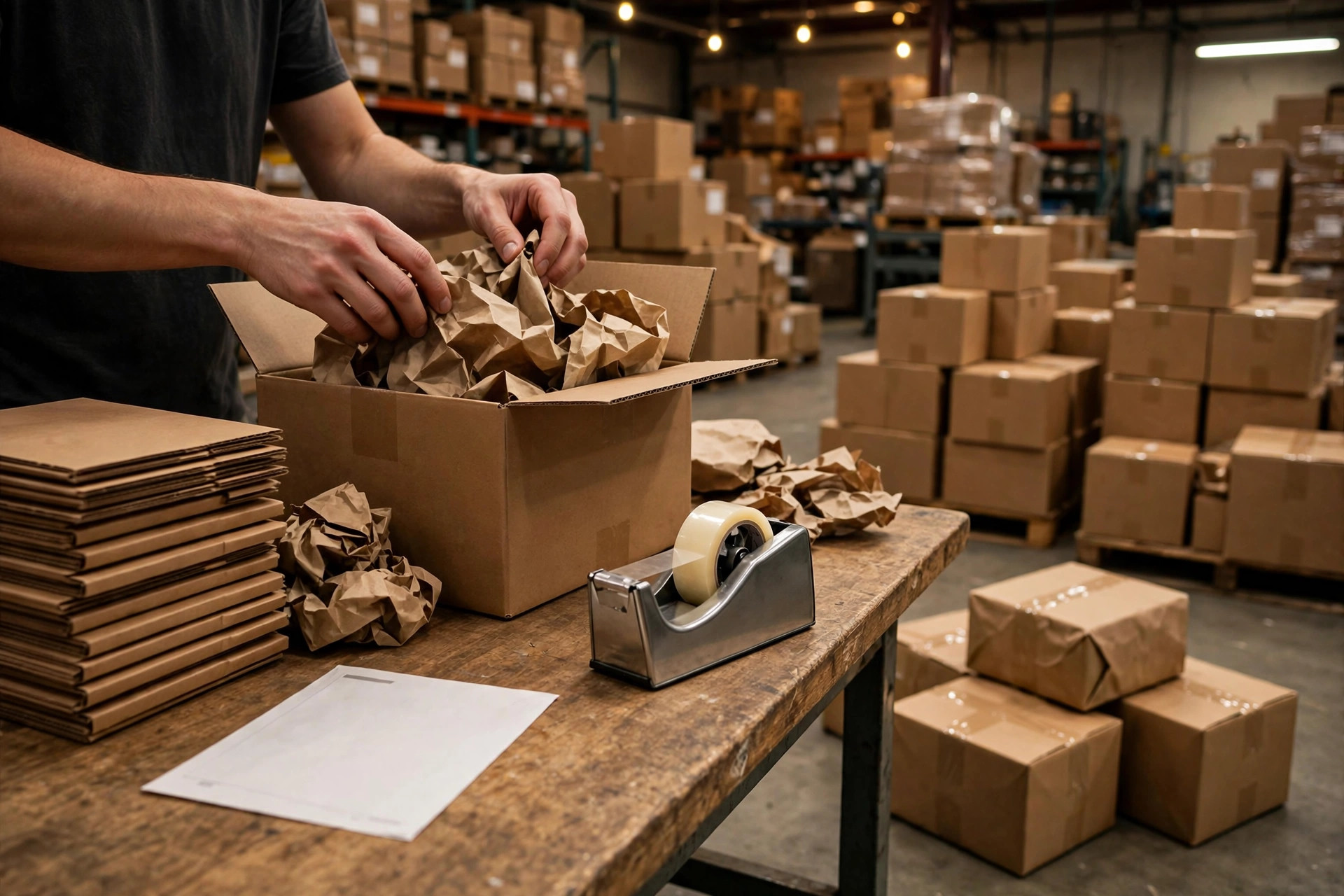
Every warehouse has a cost nobody thinks is big — until the annual total lands: stretch film. A warehouse shipping 500 pallets a day easily burns through $40K+ of stretch film a year. And most still wrap by hand — a worker circling the pallet with a film roll, tension entirely by feel, 1 meter of film wrapping 1 meter of freight.
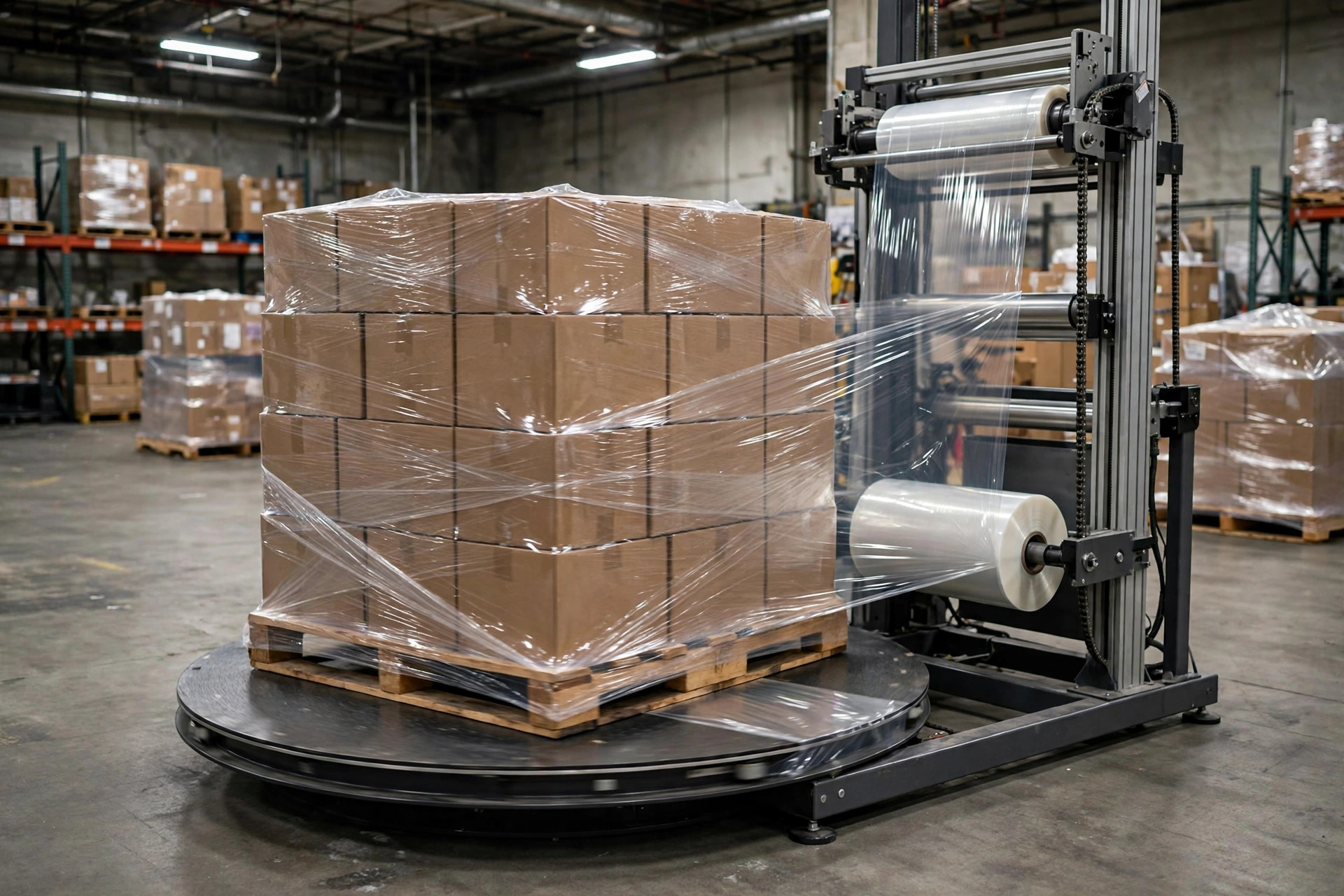
The core secret of an automatic stretch wrapper is one phrase: pre-stretch. That same meter of film, through a 250% pre-stretch carriage, becomes 3.5 meters — cutting film consumption by 60%+. This article unpacks pre-stretch principles, machine selection, and film-consumption math so you can see this invisible bill clearly.
1. Pre-Stretch Explained: Making 1 Meter Work Like 3.5
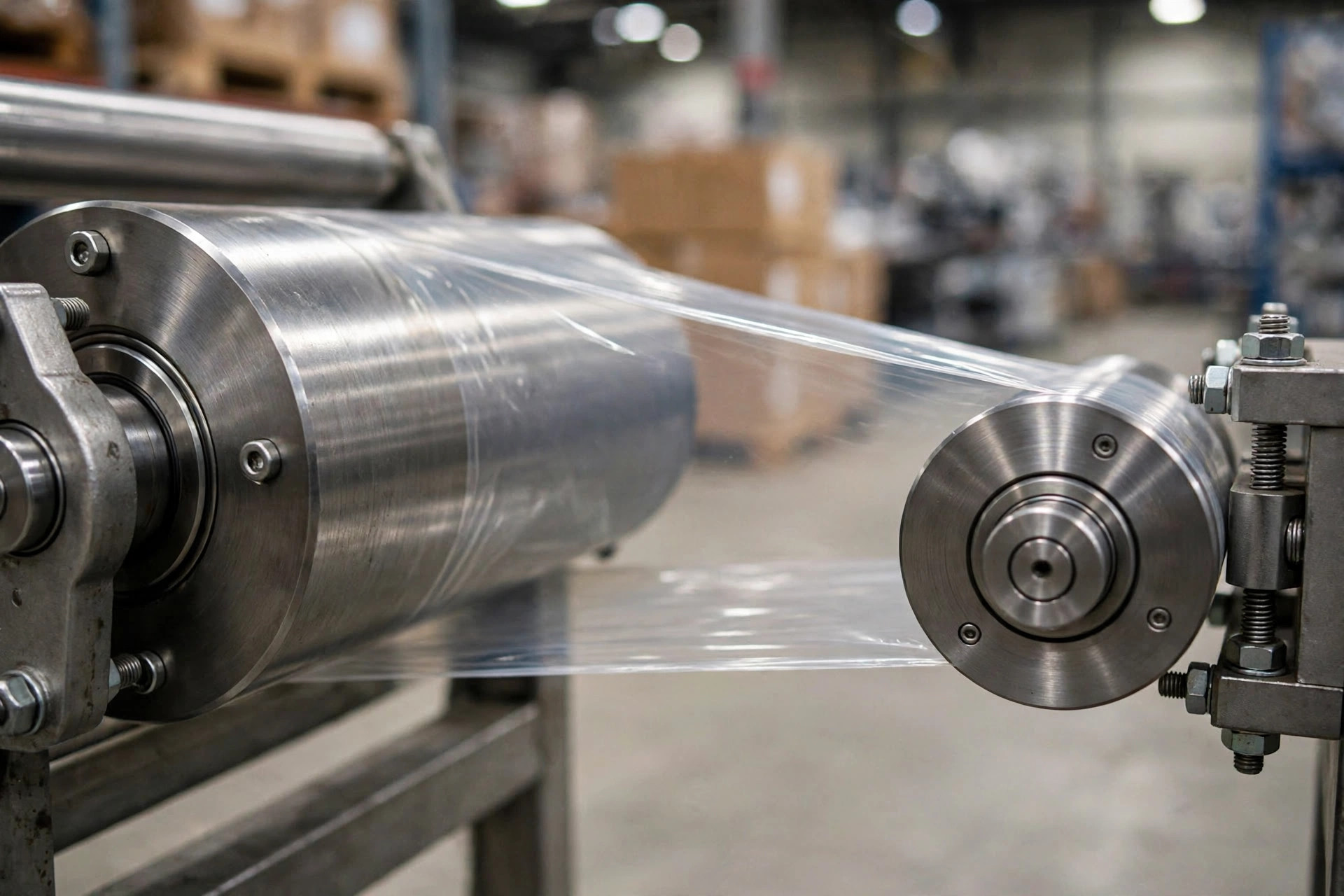
Pre-stretch is simple: before film touches the load, it passes through two rollers spinning at different speeds that "pre-elongate" it. Stretched film gets thinner and wider, covering multiples of the area.
Pre-stretch ratio = (stretched length − original length) / original length × 100%. Three mainstream tiers:
- 150% pre-stretch: entry level — 1 m becomes 2.5 m. Simple carriage, cheap machine, modest savings;
- 250% pre-stretch: the mainstream — 1 m becomes 3.5 m. Balances savings with film strength; the choice for most warehouses;
- 300%+ pre-stretch: premium — 1 m becomes 4 m+. Demands top-grade film; cheap film snaps mid-stretch.
One counterintuitive point: higher pre-stretch means thinner film and lower per-layer strength — compensated with an extra wrap or two. So 300% isn't automatically optimal; film quality, load weight, and transit distance must be weighed together.
2. Machine Types: Turntable, Rotary Arm, Rotary Ring
| Type | Principle | Throughput | Best for |
|---|---|---|---|
| Turntable | Pallet spins, carriage fixed | 20–40 pallets/hour | General default, light standard pallets |
| Rotary arm | Carriage orbits, pallet still | 30–60 pallets/hour | Heavy/unstable loads, higher throughput |
| Rotary ring | High-speed ring carriage | 60–120 pallets/hour | Very high throughput, in-line end of production |
Selection logic: first, how heavy and stable are the pallets — heavy (1 ton+) or tip-prone loads want rotary arm, where the pallet never moves; then throughput — turntable suffices under 40 pallets/hour, arm or ring above; finally, in-line or standalone — continuous production lines want ring machines on conveyors.
Price bands: turntable $4K–11K, rotary arm $11K–28K, rotary ring $35K–85K. Don't pay for throughput you'll never use — and don't let a cheap machine throttle the whole line.
3. Film Consumption Math: How Much Film per Pallet?
Film consumption is the heart of selection and negotiation:
Film per pallet (m) = pallet perimeter × wrap count / (1 + pre-stretch ratio)
Example: a 1.2 m × 1.0 m pallet, 4.4 m perimeter, 6 wraps:
- Hand wrap (no pre-stretch): 4.4 × 6 = 26.4 m;
- 250% pre-stretch machine: 26.4 / 3.5 ≈ 7.5 m.
That's ~19 m saved per pallet. At $0.021/m, $0.40 saved per pallet. At 500 pallets/day, 300 days/year → ~$60K saved annually. An $11K turntable wrapper pays back in under three months — that's the power of pre-stretch.
4. Wrap Patterns: Top and Bottom Wraps Matter
Saved film mustn't mean scattered freight. Wrap patterns balance "savings" against "security":
- Reinforced bottom: 2–3 wraps at the base, "locking" film to the pallet against whole-load sliding;
- Even middle: 1–2 uniform wraps to secure the cases;
- Top finish: 2 top wraps pulled inward, capping the top layer against dust and moisture;
- Top sheet (optional): for moisture-sensitive freight, add a top-seal sheet.
One acceptance test: tilt the wrapped pallet 15° (simulating hard braking) — no shifting, no toppling. If it fails, add wraps; don't economize those last meters — one toppled pallet's damage buys a year's film.
5. Matching: Pallet, Throughput, Film
- Pallet: measure the largest pallet's diagonal — turntable diameter must exceed it by 20+ cm. Oversize pallets (over 1.4 m) point straight to rotary arm.
- Throughput: size to peak pallets/hour × 1.2. Note 40/hour on a turntable is theoretical including load/unload — derate to 80% in practice.
- Film: machines at 250%+ pre-stretch demand quality cast film (LLDPE), 20–23 µm. Cheap film snaps under stretch, and the savings evaporate into downtime.
| Selection item | Data to confirm | Common trap |
|---|---|---|
| Pallet size | Largest diagonal | Turntable can't fit oversize pallets |
| Throughput | Peak pallets/hour | Treating theoretical rate as real |
| Film quality | Gauge, stretch yield | Cheap film on high pre-stretch = endless breaks |
| Load traits | Weight, tip-proneness | Heavy loads on turntables spinning pallets off |
Case Study: 40% Film Savings from a Pre-Stretch Upgrade
Background: a food DC in East China — 600 pallets/day outbound. Previously hand-wrapped: 12 rolls/month (1,500 m each), ~$3,700/month in film, wrap quality at the workers' mercy, endless transit-damage complaints.
Solution: 2 turntable wrappers at 250% pre-stretch (~$9K each), standardized pattern (3 bottom + 2 middle + 2 top + wipe-down), switched to 23 µm cast film.
Results: monthly film from 12 rolls to 7; ~$1,500/month saved — $18K/year; transit-damage complaints down 60%; $18K invested, payback under 12 months. Workers freed from circling pallets moved to loading — no labor wasted.
Pitfalls
- Don't pair cheap film with high pre-stretch: film gauge and stretch yield must match the machine. Bargain film that breaks costs 10 minutes per stop — five breaks a day wipes out the savings.
- Don't over-tension: excessive pre-stretch tension crushes cartons, especially light抛货 (low-density goods). Start at medium tension; passing the tilt test is enough.
- Check turntable load rating closely: a "2-ton" turntable running 1.8 tons continuously halves bearing life. Size capacity at 1.5× actual maximum weight.
- Maintenance = wiping rollers: film residue and dust on pre-stretch rollers degrade the stretch ratio. Five minutes of weekly wiping — don't skip it.
Takeaway
Stretch wrapper selection in one line: pre-stretch ratio decides what you spend; wrap pattern decides whether freight topples. 250% pre-stretch is most warehouses' sweet spot; choose turntable vs. rotary arm on pallet weight and throughput; match film quality to the machine. A machine costing a few thousand dollars saves tens of thousands in film a year — the fastest-payback, least-controversial automation investment there is. Stop letting workers circle pallets with film rolls.