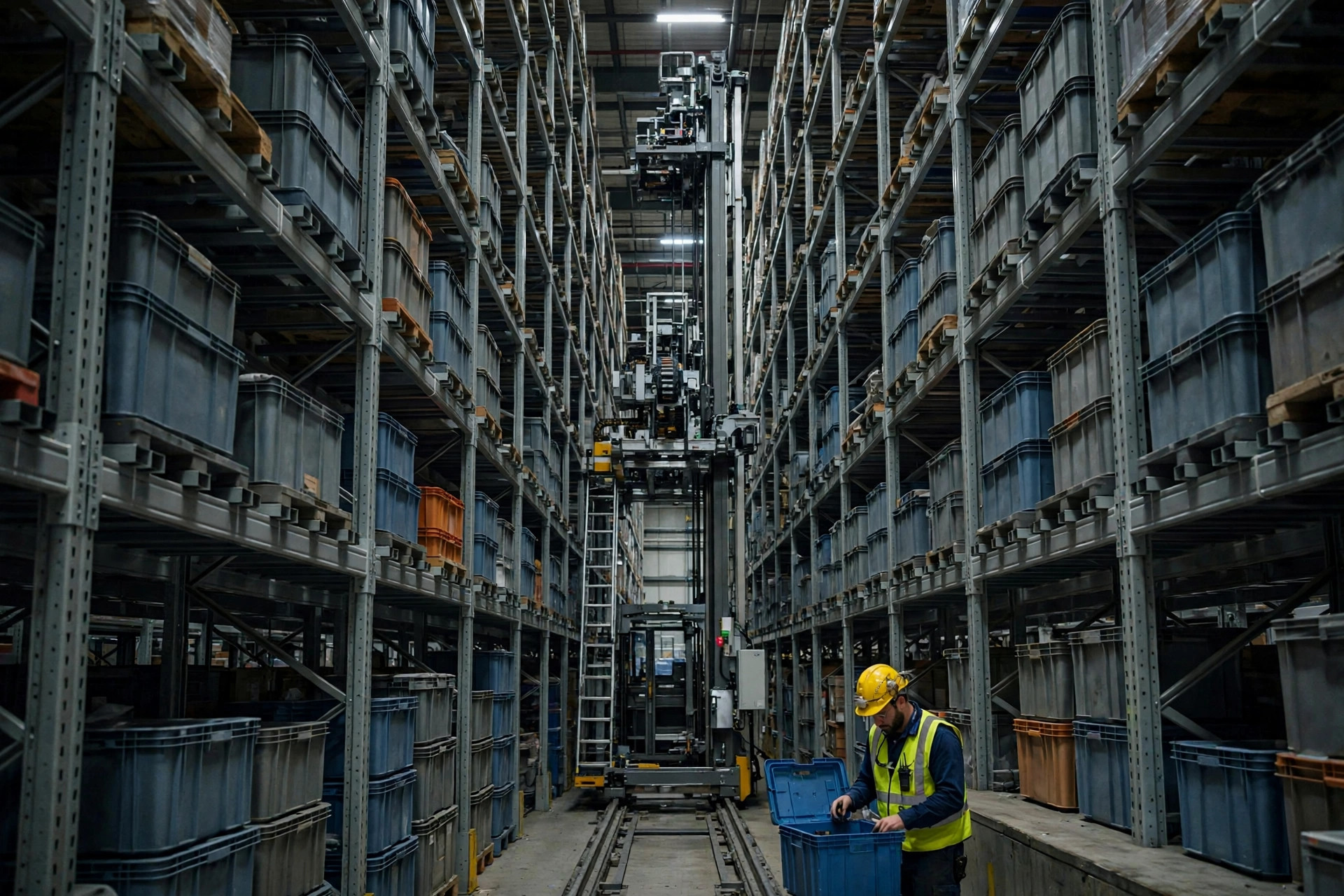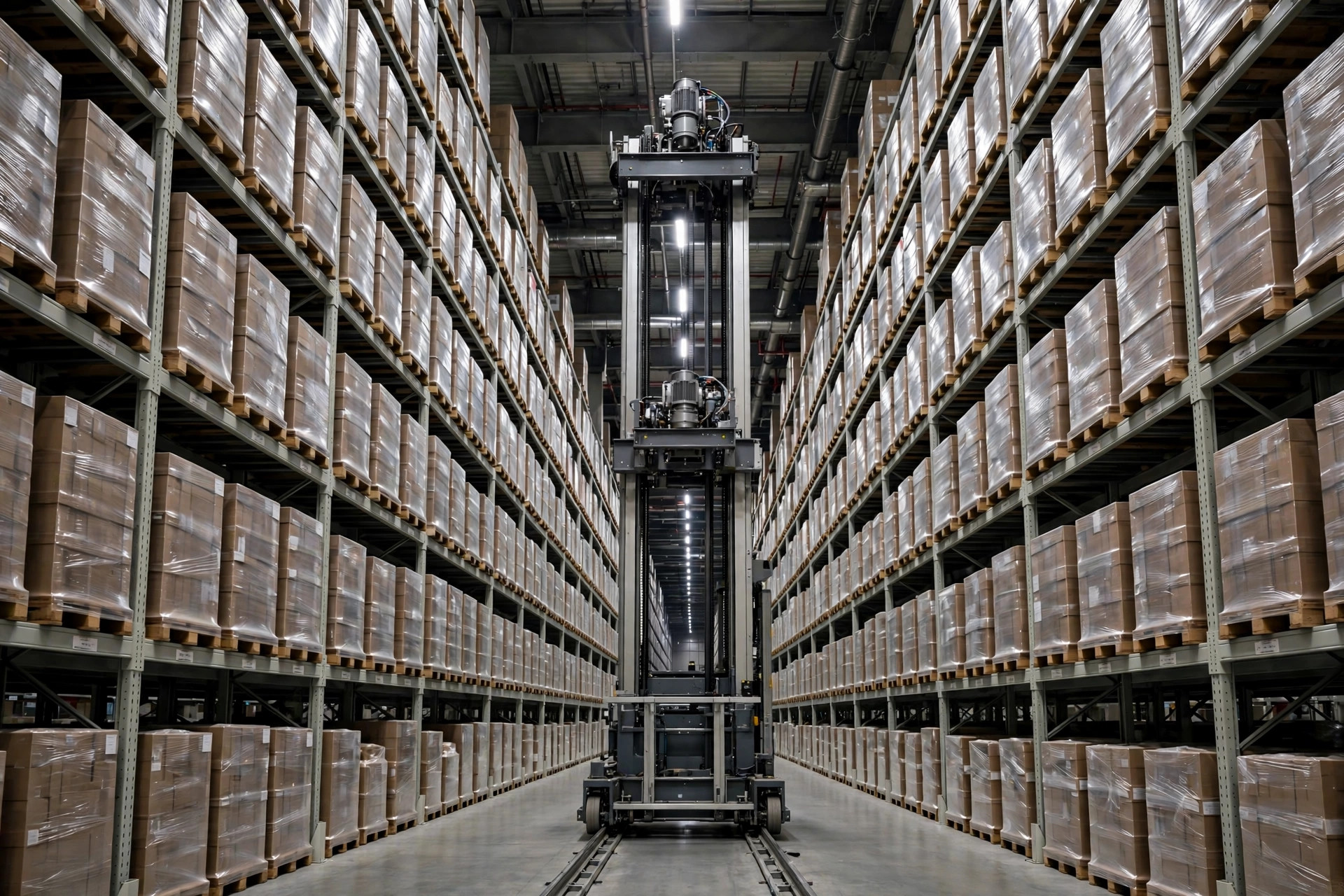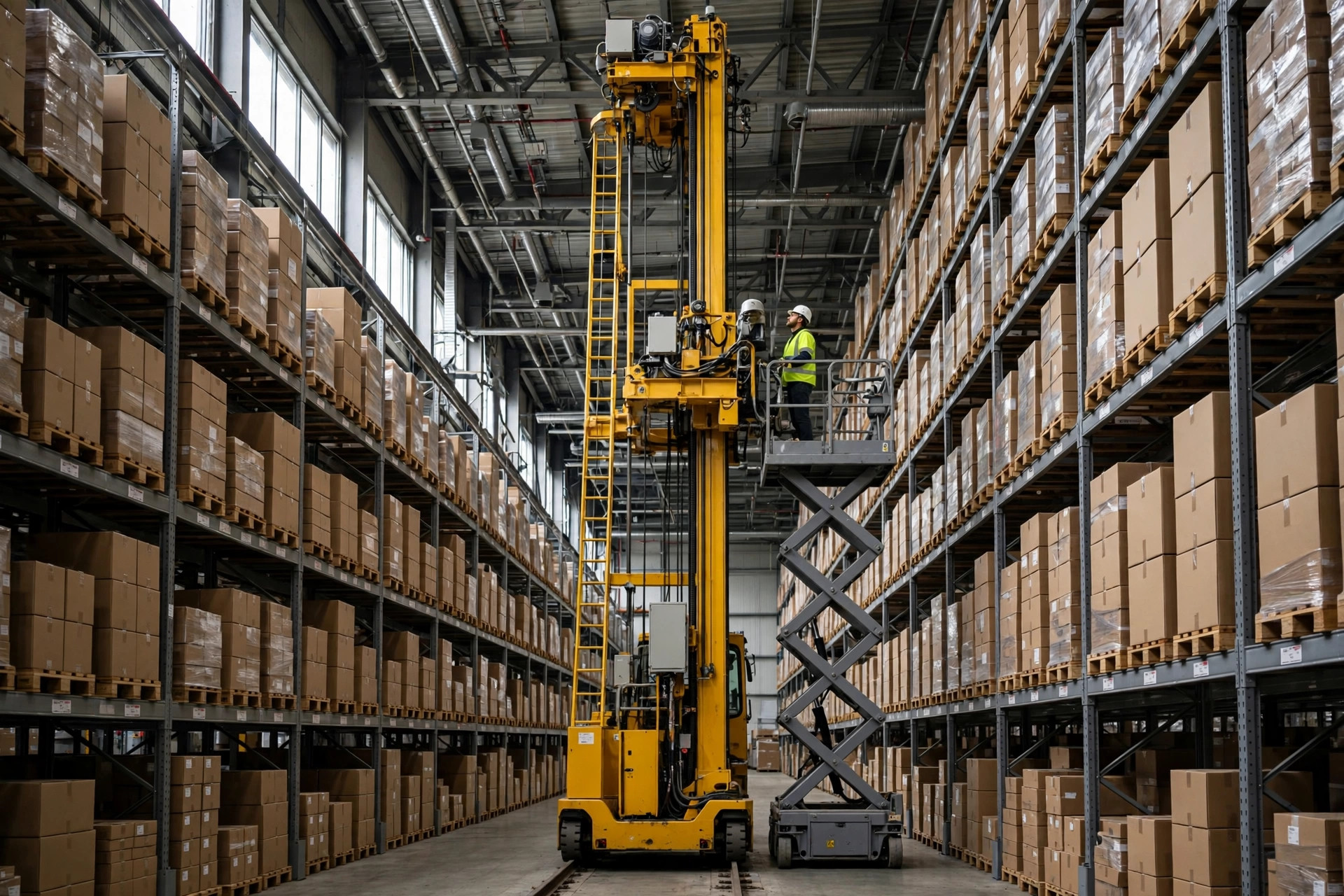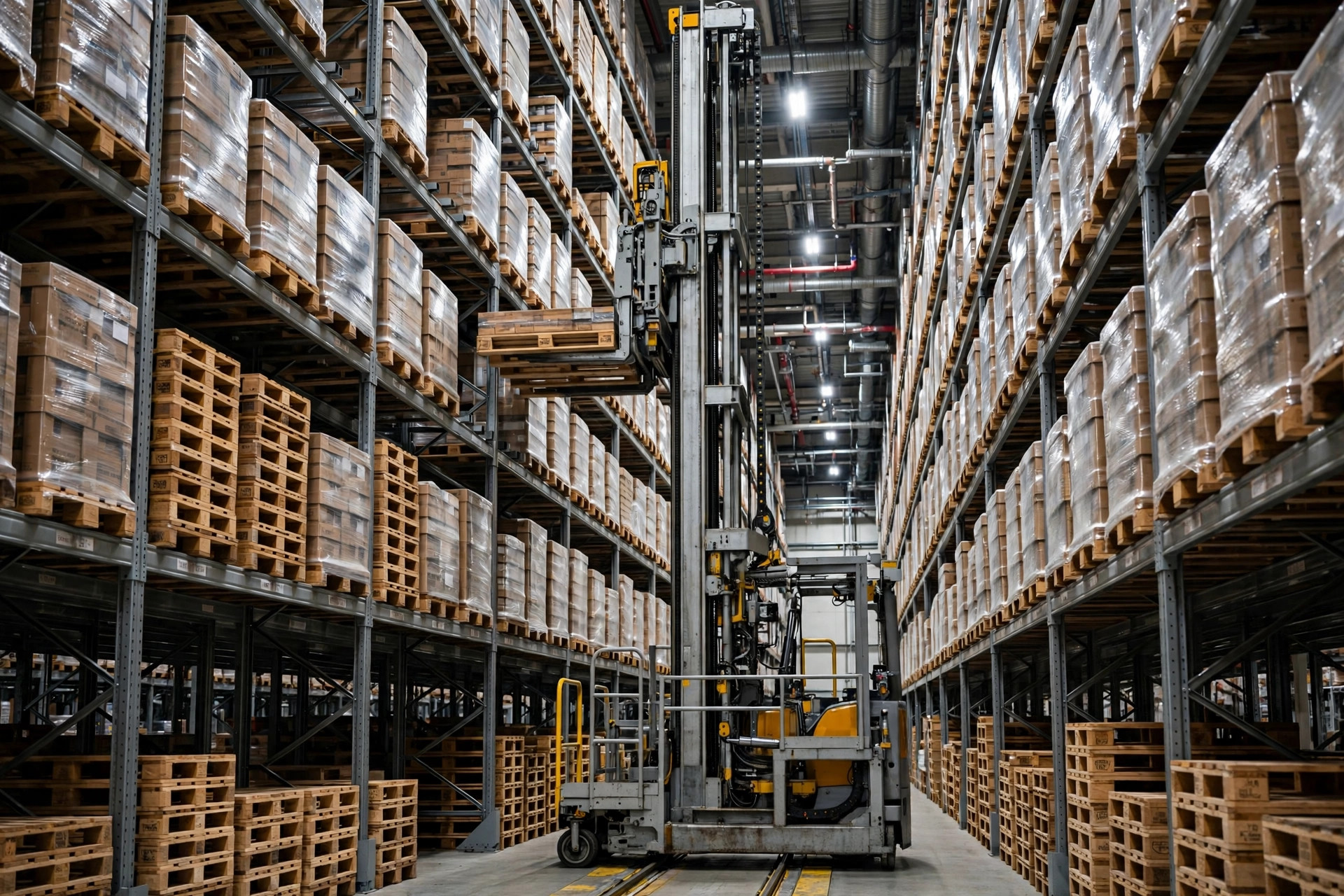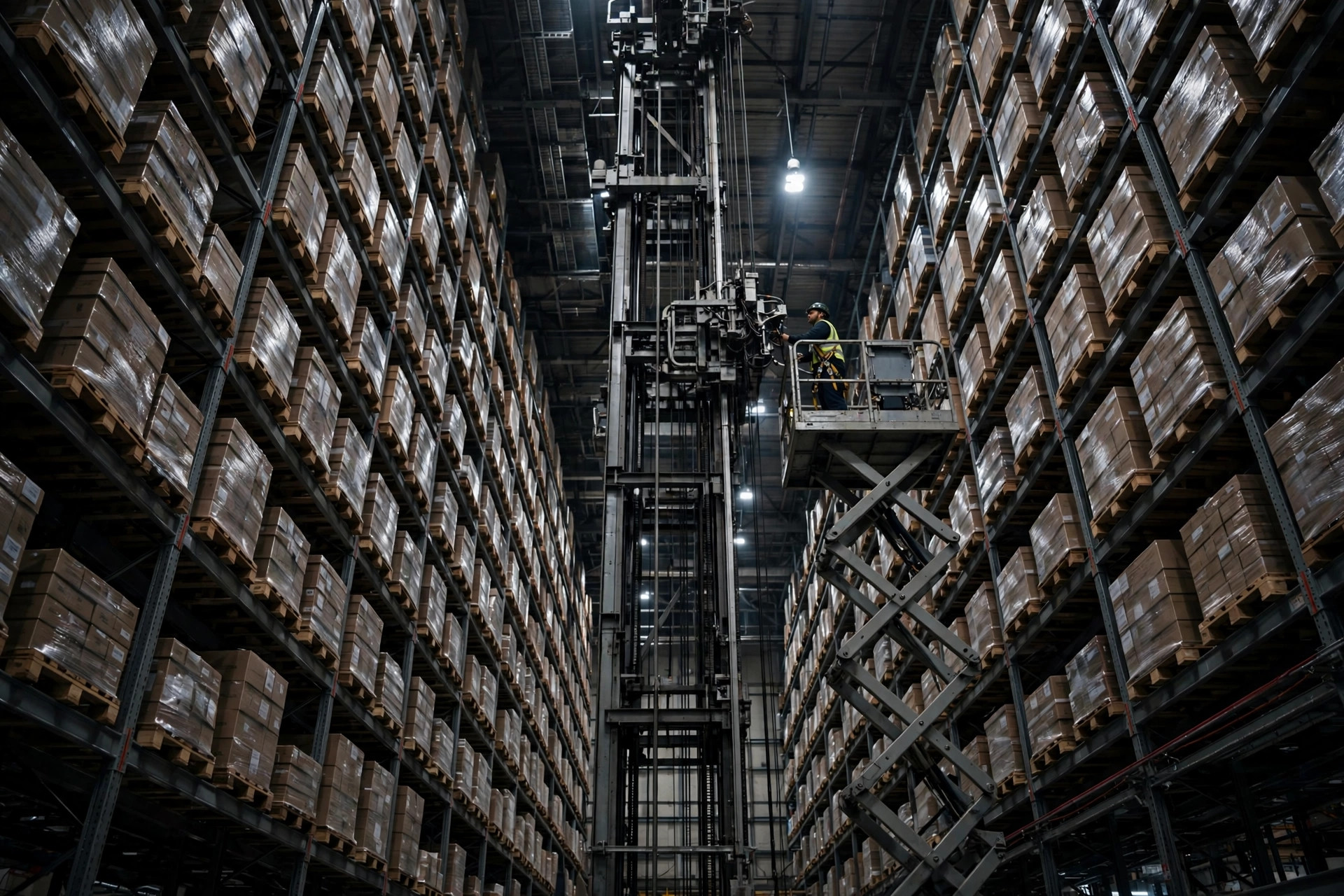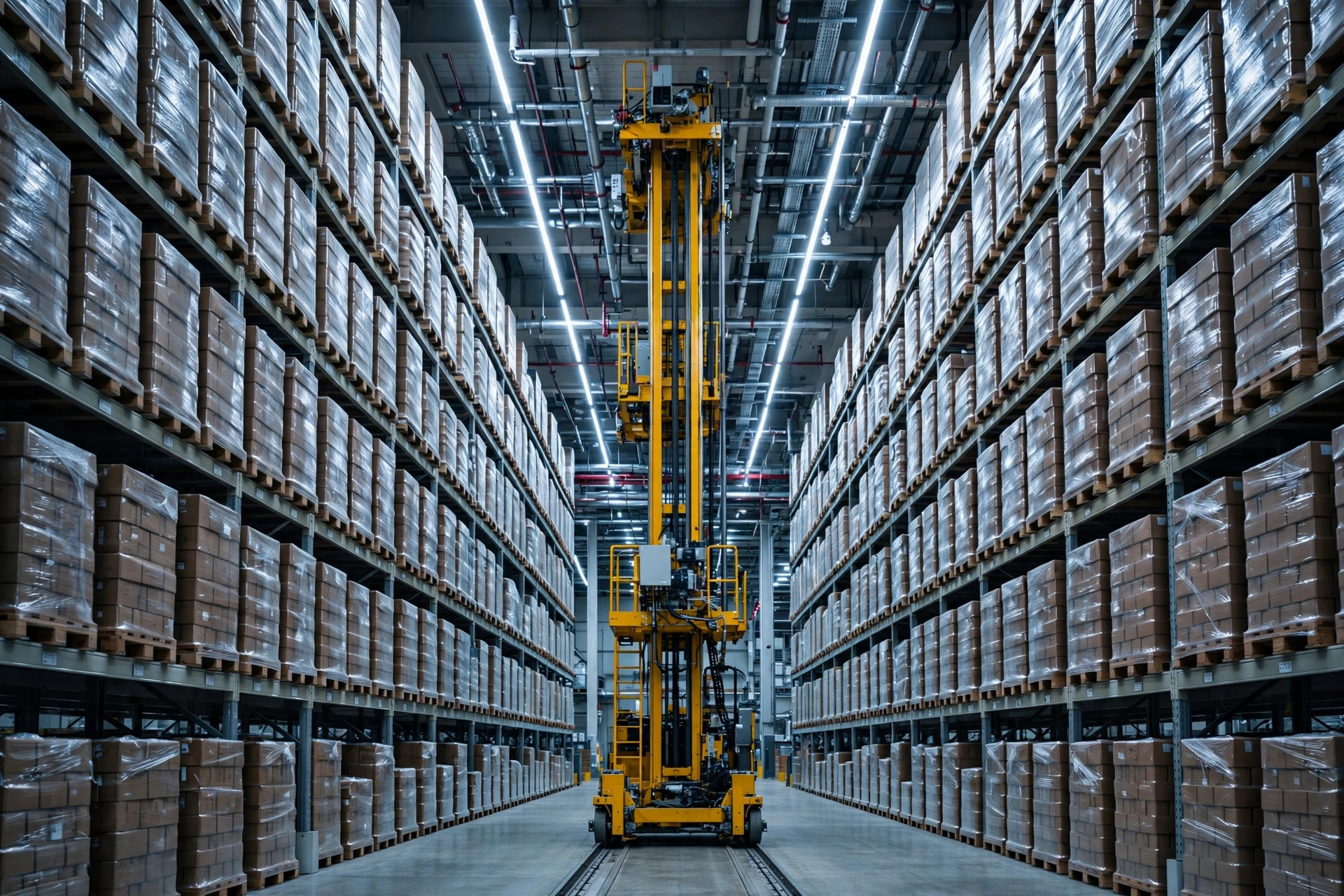
In November 2019 I drove out to Riverside, out in California's Inland Empire where warehouses stack up like dominoes. An e-commerce fulfillment company had just converted a 120,000-square-foot older building: a six-aisle stacker-crane automated warehouse, and the owner told me himself they'd put "over six million dollars" into the civil work and equipment (per vendor quotes). I was there on opening day. Watching a crane climb twenty-some meters to pull a pallet was genuinely impressive. Three months later he called me, and his tone had completely changed: "Lao Mi, help me figure out — did I buy the wrong system?"
Where did it go wrong? The warehouse carried 12,000-plus SKUs, most of them slow-moving long-tail items. Come peak season, the aisles queued up till midnight; come the slow months, the cranes sat idle on their rails. Six-plus million dollars (per vendor quotes) sunk into steel and machines, and the order flow simply couldn't feed these beasts. It wasn't a throughput problem — it was a concentration problem. A stacker crane is a one-way street: it eats concentrated, high-volume flow. Long-tail flow, it can't digest.
In 2022 I saw the other choice in Atlanta. An auto parts warehouse with 20,000-plus SKUs running four-way shuttles: little cars roaming the racking on their own, changing levels on lifts. Total investment came in lower than Riverside's, and even if the SKU count doubled, the place would keep turning. Put the two side by side and the line between them gets clear.
Same 3,000 pallets a day: one stacker-crane aisle can swallow it — how does a shuttle system?
A stacker crane's throughput math is dead simple: one (or two) cranes per aisle, and that's your ceiling. A unit-load crane moves roughly 50–80 pallets per hour in a single aisle (field-measured approximation; check vendor specs). Want more throughput for the whole building? Add aisles. When flow is concentrated, moves are full-pallet, and SKU count is modest — beverage distribution, big consumer-goods warehouses — a stacker crane is a joy to run: dedicate an aisle to one product family and the crane just hammers that family all day. Double-deep racking pushes density up another notch. It's built for "few SKUs, big volumes."
But scatter the flow and the crane suffers. It's a one-way street: one machine serving every SKU in its aisle. Riverside was the textbook case. With 12,000-plus SKUs, every order sent each aisle's crane scrambling across its full length for odd picks. Pretty per-aisle numbers mean nothing under that kind of thrashing. Queues in peak season, dust in the slow season, utilization never climbs, and the ROI looks ugly. What hurts more: a stacker crane is heavy iron among heavy iron. One machine plus its rails and controls — a single aisle's price tag (per vendor quotes) easily starts in seven figures. Once that money is in, there's no changing your mind.
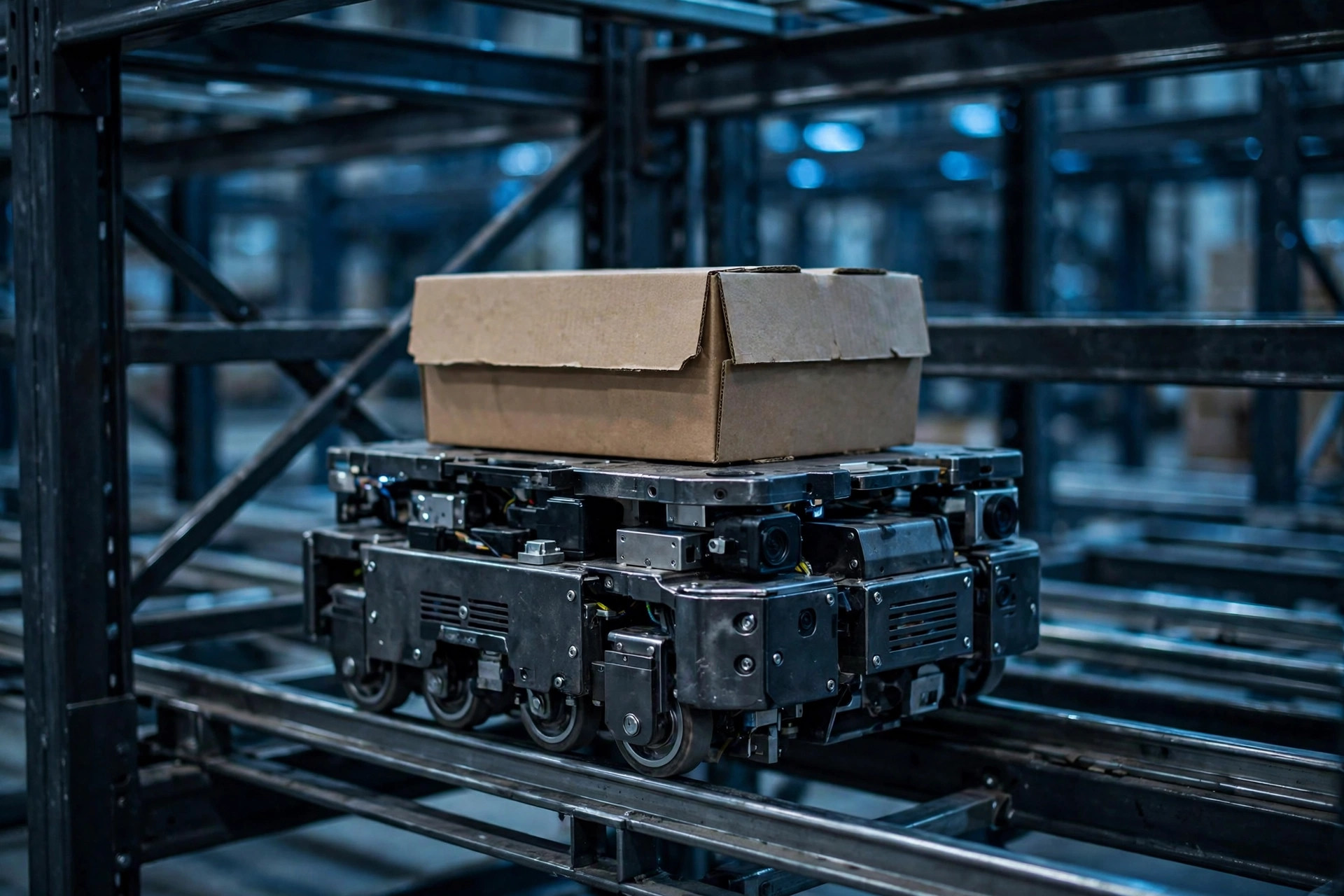
The four-way shuttle eats scatter for breakfast. The cars roam freely on their level, drifting to whichever aisle has work, covering for each other. High SKU counts, long tails, lots of broken-case picking — that's where shuttle utilization shines. The price is that the bottleneck moves: to the lifts. No matter how many cars you have, level changes all go through the lifts, and one lift's hourly pallet count (roughly 60–100, field-measured approximation; check vendor specs) is the ceiling for the whole level. I've seen projects where the sizing counted cars and forgot lifts. Come peak season the cars queued up waiting for a lift — the same ugly scene as Riverside's aisle queues, just relocated.
So the first line: concentrated flow, full-pallet moves, modest SKU count — stacker crane. Ten thousand SKUs and a long tail of broken-case picks — four-way shuttle. Don't make a stacker crane serve long-tail SKUs, and don't expect shuttles to carry concentrated heavy flow.
When a unit breaks, do you panic?
Nobody talks seriously about breakdowns in selection meetings, but breakdowns are the most honest line between these two systems.
When a stacker crane breaks, the whole aisle stops. Six aisles, one crane down, and you've lost a sixth of the day's capacity. Repairs mean waiting for the OEM's engineer, working at height — hours at best, a day or two at worst (field-measured approximation). Riverside hit this in peak season: one aisle down for most of a day, the outbound plan blown, emergency manual picking from high bays at multiples of the normal cost. Crane maintenance isn't cheap either — a year's service contract on one machine (per vendor quotes) could pay several operators' salaries, and a lot of buyers never put that number in the selection model.
When one shuttle car breaks, you barely notice. Dozens of cars on a level; the system quarantines the dead one and the rest pick up the slack. The car gets wheeled out and the warehouse's own electrician handles it — no OEM visit required. But shuttles have their own Achilles' heel: the lifts. One lift serves a level or several; when it goes down, every car on that level is stranded. So if you go shuttle, check lift redundancy: dual lifts on the critical levels. The extra money saves your life in peak season — and it's the line item integrators most often "forget" to mention.
Expandability draws the same line. Adding capacity to a stacker-crane system means adding aisles: civil work, rails, cranes, controls, the full package — basically a shutdown retrofit. Business grows 30%, equipment wants to follow, first you shut down for two weeks. With shuttles, adding capacity means adding cars and lifts. The racking stays, the system stays up, roll them in at night and they're working the next morning. For a company still growing and unsure what next year looks like, that line matters more than the unit price.
One more line people overlook: height. Stacker cranes only pencil out above roughly 20 meters — go tall and the steel and land cost per pallet position finally amortize. Put a crane in a building under about 12 meters and you've paid a premium for height you'll never use. Four-way shuttles typically top out around 8–10 meters; go higher and the cars' level-change time eats the advantage. How tall your building is basically decides who you can pick.
In the end, selection isn't about "advanced" — it's about fit. Under roughly 3,000 pallets a day, under 12 meters of clear height, over 10,000 SKUs with a long tail: don't touch a stacker crane, or you'll get Riverside 2.0. Full-pallet bulk, concentrated flow, tall building: shuttles can't carry that either — you'll just work the lifts to death. Integrators always pitch "our system is the most advanced," but advanced doesn't matter. What matters is what your flow actually looks like.
The Riverside warehouse is still running. Six-plus million dollars (per vendor quotes) of equipment, and it runs at full load for less than half the day. The owner told me later: if he could do it over, he'd map his SKU flow first and buy equipment second. What about you — what does a day of flow actually look like in your warehouse?