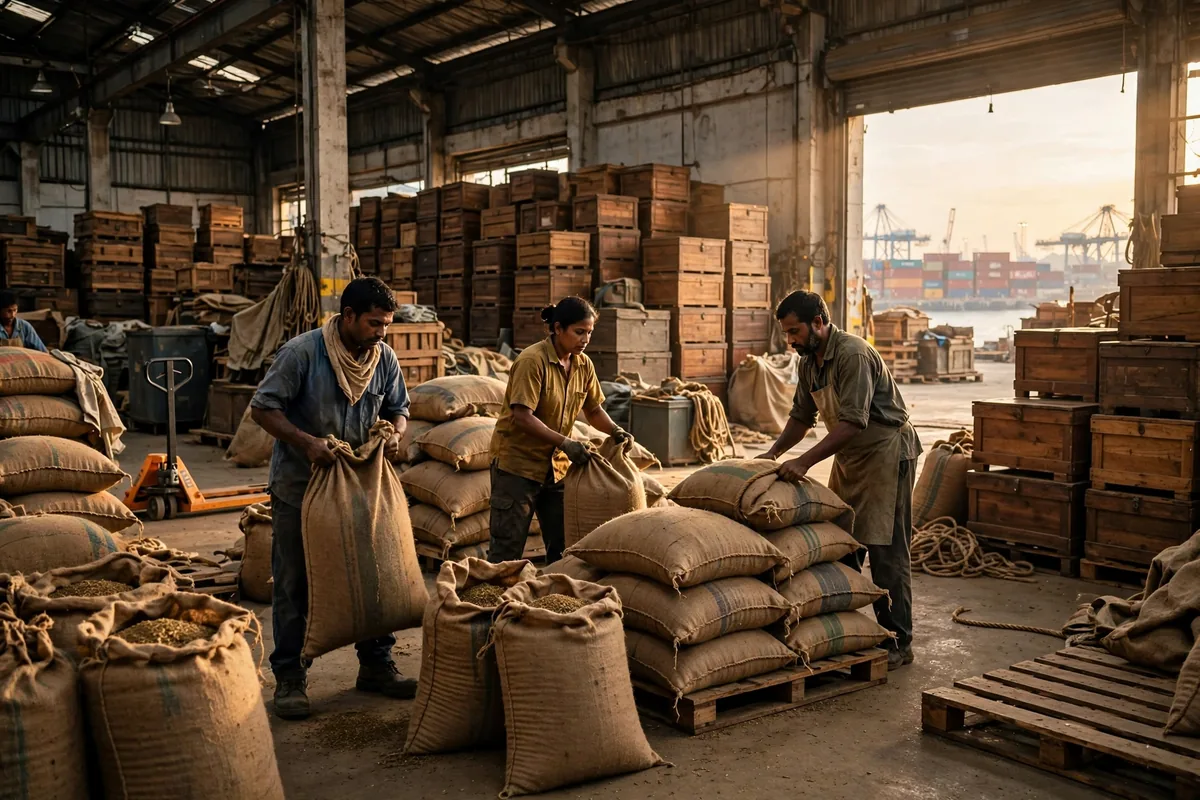
We had a client who lives and breathes sri lanka tea export warehouse logistics, and the first thing he told me was this: one tainted shipment wipes out ten on-time ones. The numbers behind his business look strong. In 2025, Sri Lanka exported 257.44M kg of tea, up from 245.79M kg in 2024, earning roughly $1.44–1.51 billion at an average FOB price of about $5.85 per kg. Iraq was the biggest buyer, taking 39.36M kg in 2025, up 14.9%. But pretty export figures mean nothing if the tea loses its character somewhere between the garden and the ship.
Sri Lanka is the world's largest producer of orthodox black tea, and the Colombo tea auction is the central sales mechanism, where a lot's value is often set the moment the hammer falls. A high auction price still has to survive the warehouse, the container, and the ocean. If the quality does not hold, the buyer does not come back. That is the real calculation inside sri lanka tea export warehouse logistics: the visible math is freight and rent, and the hidden math is quality.
Sri Lanka Tea Export Warehouse Logistics Starts With Keeping Flavors Apart
Tea fears two things: moisture and foreign odors. Tea from the Kandy gardens goes through primary processing, then sits in a warehouse waiting for auction and consolidation, and one humid stretch can dull a whole lot before it ever ships. The moisture routine is not mysterious: test moisture content before intake and refuse any lot above the limit, keep the warehouse ventilated and dry, raise the pallets off the floor, and leave a gap between tea chests and the walls. During the rainy season, add a twice-daily inspection round. I watched one warehouse switch off its dehumidifiers for three days to save power, and a premium lot came out damp, dropping a full grade at auction. The power saved did not cover a fraction of the loss.
Odor contamination is worse. Tea absorbs smells with alarming enthusiasm, and sharing a container with spices, coffee, or chemicals leaves the buyer opening a box of somebody else's aroma. Take a consolidated shipment as a hypothetical example: a tea exporter saved $800 on freight by sharing a container with a spice shipment, and when the buyer in Iraq opened it, the tea carried a foreign odor. The whole container came back. Eight hundred dollars saved, a full container's value plus freight lost, and a buyer who never ordered again. The house rule in sri lanka tea export warehouse logistics is simple: tea consolidates only with tea, and if the match is not there, wait for the next sailing.
Zoning inside the warehouse is the second line of defense against odor. Tea gets its own physically separated area, with dedicated forklifts and pallets, and a pallet that once carried spices never enters the tea zone. Retention samples matter just as much. Keep a sealed sample of every incoming lot, labeled with its batch number, because when a dispute arises, the sample is the evidence. I tell clients that keeping samples looks like a cost, but it is leverage at the negotiating table. When a buyer claims the tea is faulty, a sample on hand draws the line of responsibility in seconds.
The Colombo Consolidation Math in Sri Lanka Tea Export
The export mix shifted in 2025: bulk tea fell to 106.8M kg, tea in bags rose to 116.25M kg, and value-added tea reached about 59% of exports, an 11-year high. More bagged and value-added tea means the warehouse routine has to change with it:
| Tea type | Warehouse priority | Consolidation rule |
|---|---|---|
| Bulk tea | Moisture control comes first | Consolidate only with the same kind of tea, batches kept apart |
| Tea bags | Inner bags sealed, outer cartons protected from crushing | No heavy stacking on top |
| Value-added tea | Full batch traceability, retention samples sealed and kept | Palletized separately, paperwork complete |
Consolidation math has a visible side and a hidden side. The freight saved is visible. The risk of moisture and odor is not. As a hypothetical example, splitting one container across three batches saves roughly a fifth of the freight, but if one batch arrives damp, the inspection of the whole container is compromised. My rule before any consolidation is to check three things: whether the batch paperwork is complete, whether the moisture readings pass, and what the other cargo in the container actually is. If any one of those fails, I would rather not consolidate.
Auction lots and dispatch order have to line up as well. The Colombo auction lot number is the tea's identity card, and shipments leave in auction-lot order, with the lot papers, the moisture records, and the retention-sample numbers traveling with the goods. Take an exporter shipping three lots at once as a hypothetical example: the warehouse pallets each lot separately and labels them apart, so dock workers in Colombo load by pallet number and the lots never mix. Mixing lots looks like a small mistake, but when a buyer finds another lot's character inside the lot they paid for, the price of the whole lot goes back to the negotiating table.
Here is the counterintuitive part: faster warehouse turnover does not always mean more profit in the tea trade. Fast turnover sounds efficient, but tea that leaves the warehouse before its moisture readings are settled and its batches are sorted simply pushes the problem to the buyer's inspection at destination. Slowing down half a step, doing the testing and batching properly, brings the return rate down and repeat orders up, and the books look better for it. In this trade, speed bows to quality, and that is not a slogan. It is the margin.
Three Questions to Ask Before You Sign
Next time you negotiate a contract, ask these three questions. First, ask the warehouse operator: are the moisture and odor controls written into the contract, and who pays, and by what standard, if something goes wrong? Second, ask about consolidation: who is my tea sharing a container with, do I have a veto, and can I see the other cargo's documents in advance? Third, ask about batches: can the auction lot number, the moisture test records, and the retention sample travel with the shipment, so there is evidence if a dispute arises?
Get those three answers in writing, and you have understood half of this business. The other half is daily execution in the warehouse: test the moisture, check the consolidation sheet, separate the batches, keep the samples. Tea never complains, but buyers vote with repeat orders. One more careful day in the warehouse is one more reason the next order comes back.
By Susan, 3PL Sales Director