Our little warehouse cannot afford to burn money like that. When I first looked at the South Africa citrus export cold chain business, I thought it was simple: rent a few extra reefer containers, stuff the fruit in, done. Then I spent an afternoon talking to a friend who exports South African citrus, and I realized how naive that was. The most expensive leg of the South Africa citrus export cold chain is not the ocean voyage — it is the overland run from the orchards of Limpopo to the port of Durban. If that leg does not run smoothly, all the reefer containers in the world will not save you.
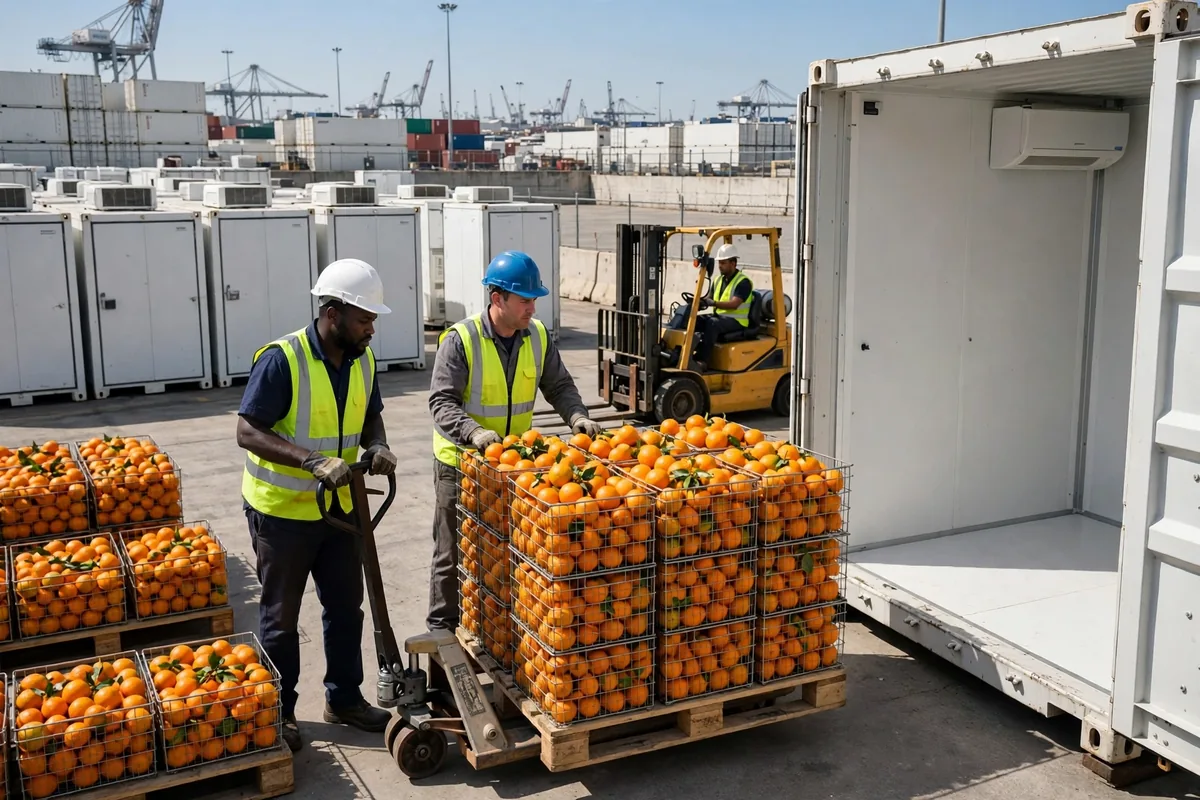
According to the Citrus Growers' Association of Southern Africa, about 40% of export citrus comes from Limpopo, the orchards sit about 850 kilometres from the port of Durban, and Durban handles nearly half of all citrus exports. About 850 kilometres does not sound far, but citrus is delicate cargo: once it is picked, it has to stay cold, and if the temperature breaks, the fruit arrives in Europe rotten. About 90% of the citrus moves by truck, which means the overwhelming majority of the fruit rides a reefer truck for that whole 850-kilometre run. Every extra hour a truck sits on the road is another hour of cold chain risk.
The South Africa Citrus Export Cold Chain Starts at the Orchard Gate
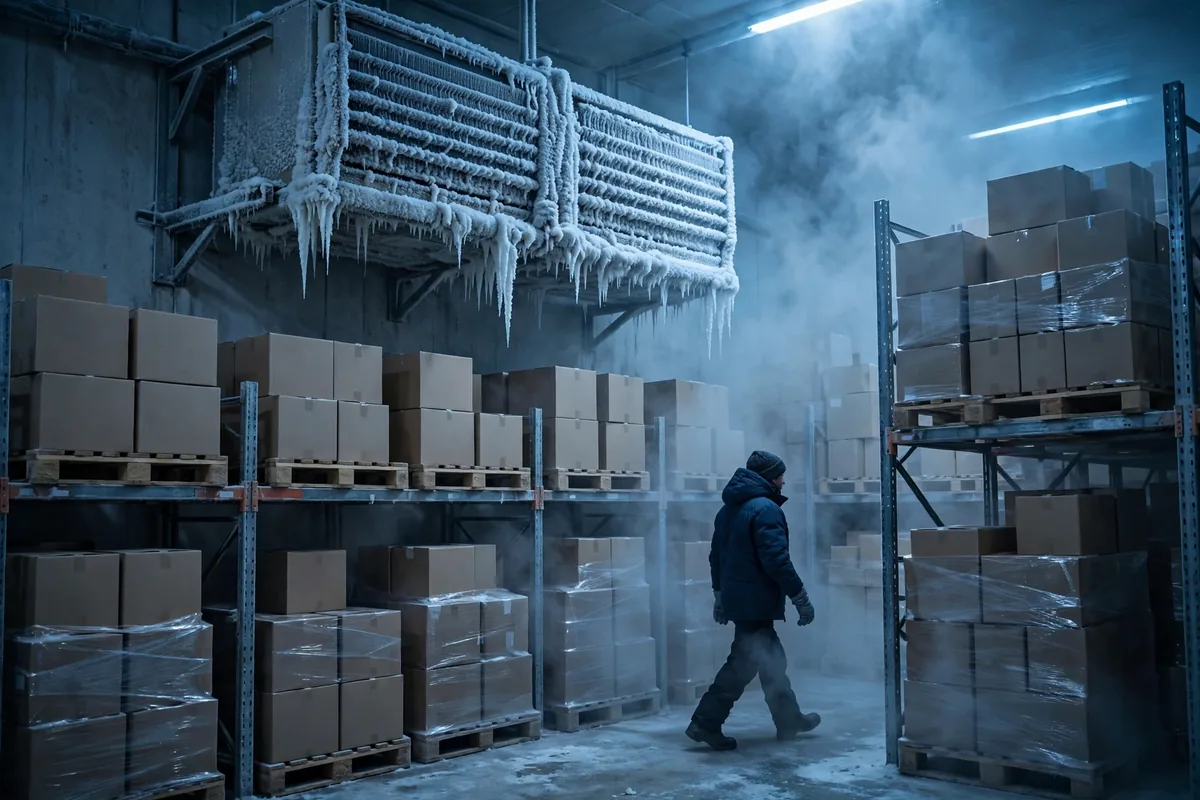
My friend's orchard is in Limpopo. When picking season arrives, the fruit comes off the trees and goes straight into a pre-cooling store beside the orchard to pull the field heat out, and only then is it loaded onto reefer trucks bound for Durban. He told me the cold chain is most afraid of one thing: a break. If pre-cooling is done badly, no reefer truck can rescue the fruit afterwards. If a truck breaks down on the road, the driver's first job is not to fix the truck — it is to keep the reefer running. That first kilometre at the orchard gate decides whether the 850 kilometres after it are worth running at all.
About 40% of export citrus coming from Limpopo means the orchards there are dense: when picking season peaks, whole districts harvest at once, and reefer trucks queue on country roads waiting to load. If the orchard's pre-cooling store is too small, picked fruit has nowhere to cool down and sits at ambient temperature waiting for a truck — and the cold chain is broken at step one. A small warehouse owner looks at this very practically: before you think about renting a bigger cold store, check how much fruit comes off the trees on a peak day against how much your pre-cooling store can handle in an hour. If those two numbers do not match, everything downstream is a hole waiting to happen.
Laid out flat, the chain is a four-leg relay, and each leg has its own job:
| Chain leg | Where | What it does | What breaks if it fails |
|---|---|---|---|
| Orchard pre-cooling | Beside the orchards in Limpopo | Cool picked fruit down fast | Field heat never removed, everything after is wasted |
| Reefer trucking | About 850 km to Durban | About 90% of fruit rides this leg | A temperature break on the road risks the whole load |
| Inland cold storage | Cato Ridge | Sorting, palletising, shipment preparation | Port storage forced to act as a buffer, trucks queue for space |
| Port handover | Port of Durban | Loading onto vessels | Vessels wait for cargo, schedules slip |
The table looks simple, but every row is money. Pre-cooling capacity too small, and fruit waits half a day at ambient temperature and loses quality. A truck stopped an extra hour on the road, and the risk climbs. No inland cold storage, and Durban's port stores have to absorb the whole chain's buffer — in citrus season, the trucks queuing at the port gate for cold store space can block the road. A small warehouse owner pricing a cold chain cannot price only their own segment; the four legs have to be costed together.
The Durban Cold Storage Bill for South Africa Citrus: Why the New Cold Stores Are Inland
Durban handles nearly half of citrus exports, and its port cold stores are stretched tight every citrus season. The 2025 season is expected to export 171.1 million cartons of citrus at 15 kilograms per carton, and with that volume all pushing toward Durban, the pressure on port warehousing is obvious. My first instinct was: build more cold storage right by the port, then. It took a while to understand why that is not so simple — land by the port is expensive and expansion is slow, and by the time a new store is built, several citrus seasons have passed. Port cold stores also juggle enough already: vessel schedules, customs, loading coordination. Asking them to take on sorting and palletising too means piling a second job onto a link that is already at full load. Work on the chain has to move upstream, to where there is land, space, and time, so the port can concentrate on being a port.
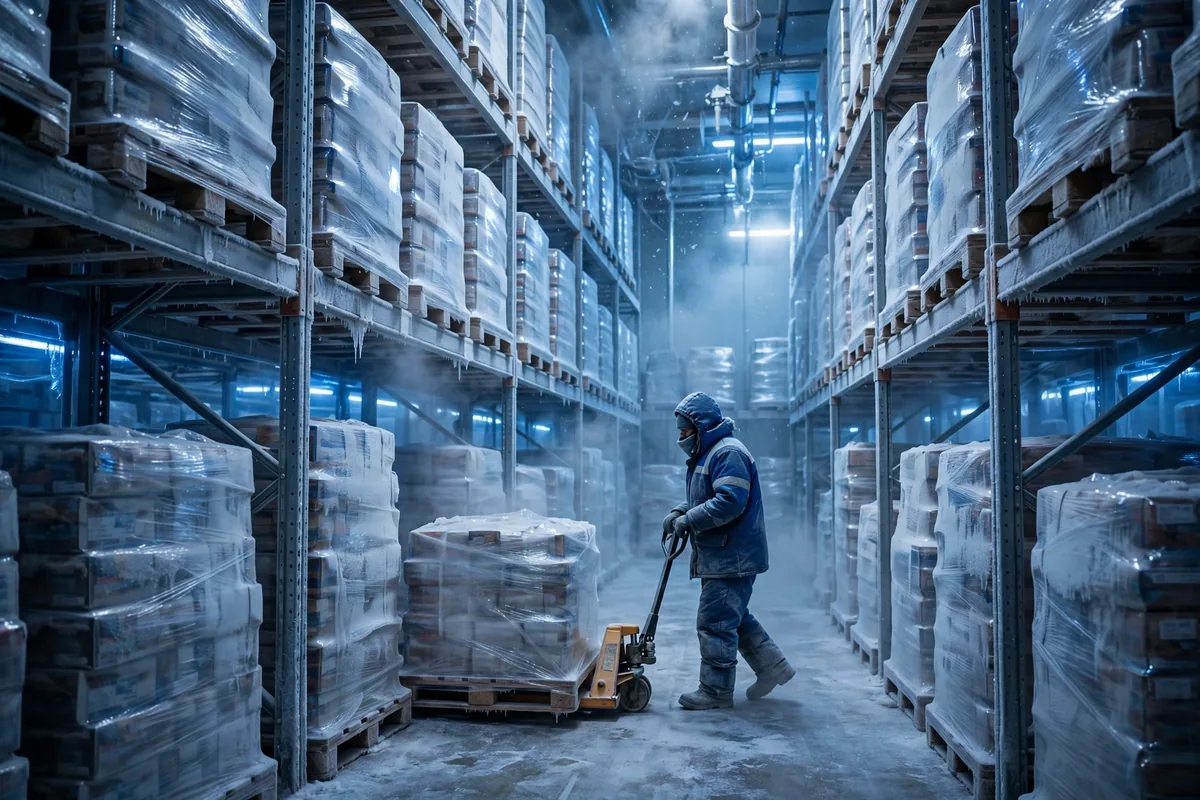
The genuinely interesting move is inland. New cold storage at Cato Ridge is changing how this chain plays: the FTP Insimbi Ridge cold store covers 33,000 square metres, and the Maersk cold store holds 10,000 pallet positions. Cato Ridge is still a distance from Durban, but it is much closer to the orchards. Fruit comes out of Limpopo, goes into cold storage at Cato Ridge for sorting, palletising, and shipment preparation, and then moves to Durban in full, ready loads. The port warehouse only handles the final handover to the vessel instead of acting as the storage pool for the whole chain.
Here is the counterintuitive call: a cold store a little further from the port makes the whole cold chain run more smoothly. However big a port-side cold store gets, it is still only the last link in the chain. An inland cold store takes the sorting, palletising, and pre-cooling work earlier, the pressure on the port drops, and trucks arriving at the port no longer queue for cold store space — they load and go. For a small warehouse owner, the practical lesson is plain: do not fight the big port for land. Follow where the cold stores are being built — wherever the fruit is stored, that is where your trucks should run.
Three Money-Saving Rules From a Small Warehouse Owner
First, do not save money on the reefer — spend it on never breaking the chain. One break in the cold chain can wipe out the value of a whole container of fruit, and the rent you saved will not come close to covering it. Pre-cooling, truck refrigeration, and cold store temperatures all need margin built in, not calculated to exactly enough. Exactly enough is just another way of saying it will break.
Second, watch the rhythm of the picking peak. The weeks when Limpopo's roughly 40% of output comes off the trees all at once are the weeks when trucks, storage, and vessel slots all have to be booked in advance — leaving it to the last minute is always expensive. The 171.1 million cartons are not spread evenly across the year; they surge in citrus season, and the port, the cold stores, and the trucks are all tight at the same time. Whoever locks in capacity early is the one who does not have to pay peak prices to grab it.
Third, adjust your routes to follow the new cold storage layout. With 33,000 square metres at FTP Insimbi Ridge and 10,000 pallet positions at the Maersk store in Cato Ridge, the way fruit moves from orchard to port has changed — and if your route does not change with it, you are running new roads on an old map. It used to be fruit straight to Durban cold storage; now it is Cato Ridge first for sorting and palletising, then consolidated loads to the port, with the port only handling loading. The route changed, and the timing of truck bookings, the way loads are built, and the rhythm of port handover all have to change with it.
The South Africa citrus business is not won by whoever has the biggest cold store. It is won by whoever's chain never breaks. From the orchards of Limpopo to the port of Durban is about 850 kilometres, about 90% of it by truck, and 171.1 million cartons have to travel that road. When the road runs smoothly, even a small warehouse gets a share. When it does not, no cold store, however big, can save you.
By Xiao Ma, Small Warehouse Owner