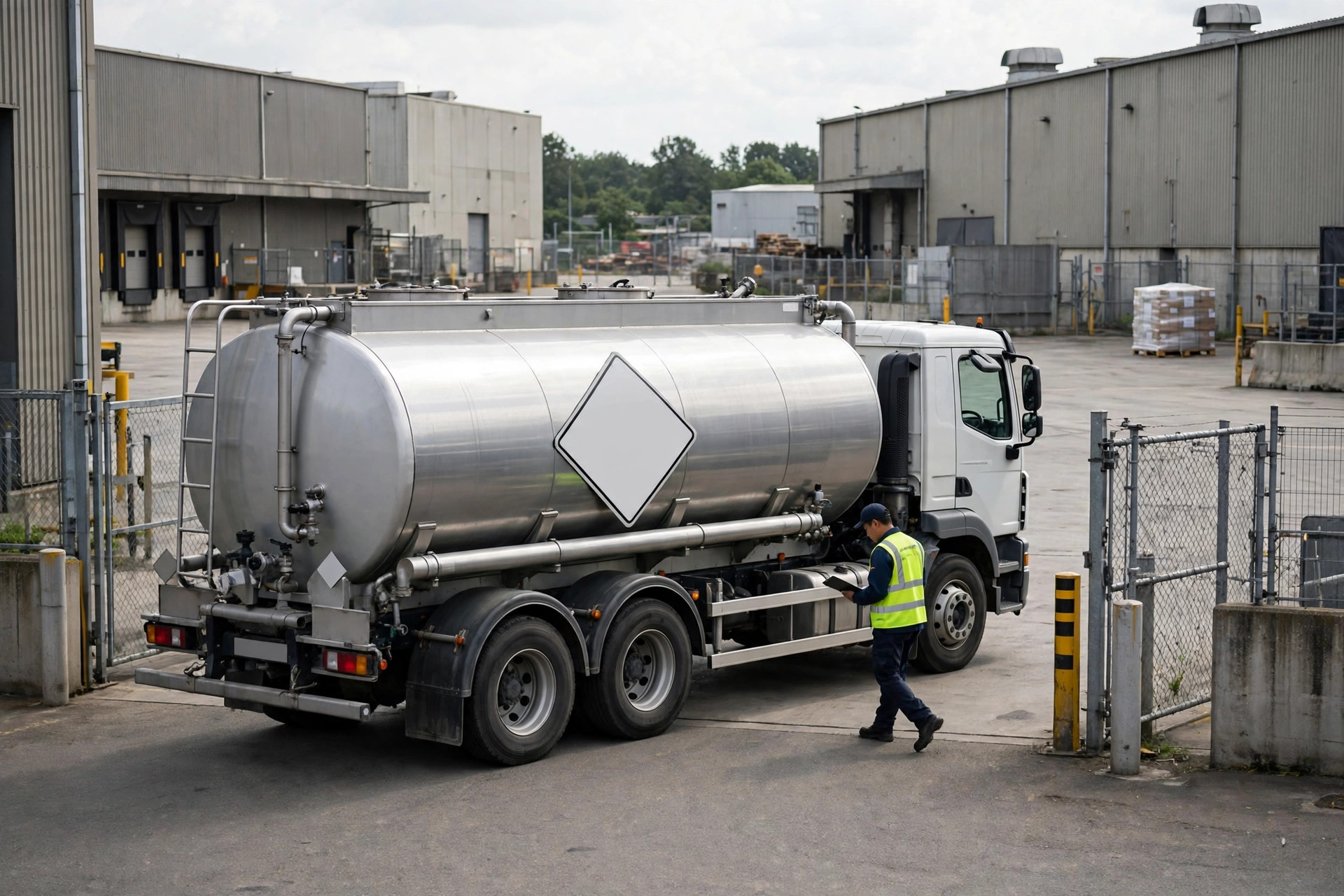
Let me tell you something. After all these years on the road, rolling into a warehouse with a dry van is easy — the guard glances at your paperwork, waves you through, done. Hazmat is a different animal. Fall of 2019, I was hauling a load of industrial solvents to a chemical warehouse outside Houston, Texas. Got to the gate, and the inspector walked around my truck twice with a clipboard: escort credentials, fire extinguisher, tires, valves, grounding clamp — item by item. That was the day it really sank in for me: a hazmat truck yard entry inspection is not just for show.
Here's what that tells you. In the U.S., when a hazmat truck enters a warehouse yard, nobody cares how much your load is worth. They care about what happens if something goes wrong — because one solvent spill or fire puts the whole yard at risk: the freight stacked nearby, the forklifts, the people working. So that entry checklist isn't really "paperwork." It's the warehouse buying itself insurance — and you, the driver and the escort, are the first line of that policy. If you drop the ball at the gate, everything downstream has holes in it.
Hazmat Truck Yard Entry Starts With People: The Escort
First, the escort. A lot of folks think the escort is just somebody riding along — sits in the passenger seat, signs a form at delivery, done. Wrong. Hauling hazmat in the States, the driver needs a CDL hazmat endorsement, and the escort needs hazmat safety training too, with the employer keeping the training records on file. The exact curriculum and refresher cycles vary by state and company, so check the latest FMCSA guidance and your company safety manual — I'm not going to recite regulations here, just talk about what actually gets checked at the gate.
True story. Spring of 2021, a buddy of mine — call him Chen — was hauling thinners to a warehouse in the Inland Empire. Got to the gate, inspector asked for the escort's training certificate. Turns out the last record on file was three years old; the company had changed safety managers and the new records never got filed. They held the truck at the gate for four hours while the company scrambled to send proof of makeup training. Missed the day's unloading window, the warehouse bumped the load to the next day, the carrier ate an extra day of parking, and the customer delivery slipped. Chen told me later those four hours were the longest of his career — just sitting in the cab, watching truck after truck roll through the gate ahead of him.
So the first checkpoint is people: the escort must be in the truck, credentials current, training records producible on the spot. The gate inspector looks at three things: is this the right person (matching the paperwork), are the credentials complete, and can you produce the records right now. Miss one, the truck doesn't go in. No negotiating — that inspector carries the safety of the whole yard on their shoulders, and no smooth talking changes that.
One detail people overlook: the escort's job isn't "riding along," it's supervision. From the moment you roll through the gate until the load is off and you're rolling out, that truck is the escort's responsibility. During loading or unloading, the escort stays put — watching the hoses get connected, watching the grounding clamp go on. Step away for coffee or a restroom break for more than a few minutes, and plenty of warehouses will pause the whole operation. Why? Because trouble loves the few minutes when nobody's watching. A valve not fully tightened, a fitting starting to weep — catching it a minute early versus a minute late is the difference between two completely different stories.
Where You Park and Who Watches: Staging and Loading Supervision
Pass the people check, and the next question is: where does the truck sit.
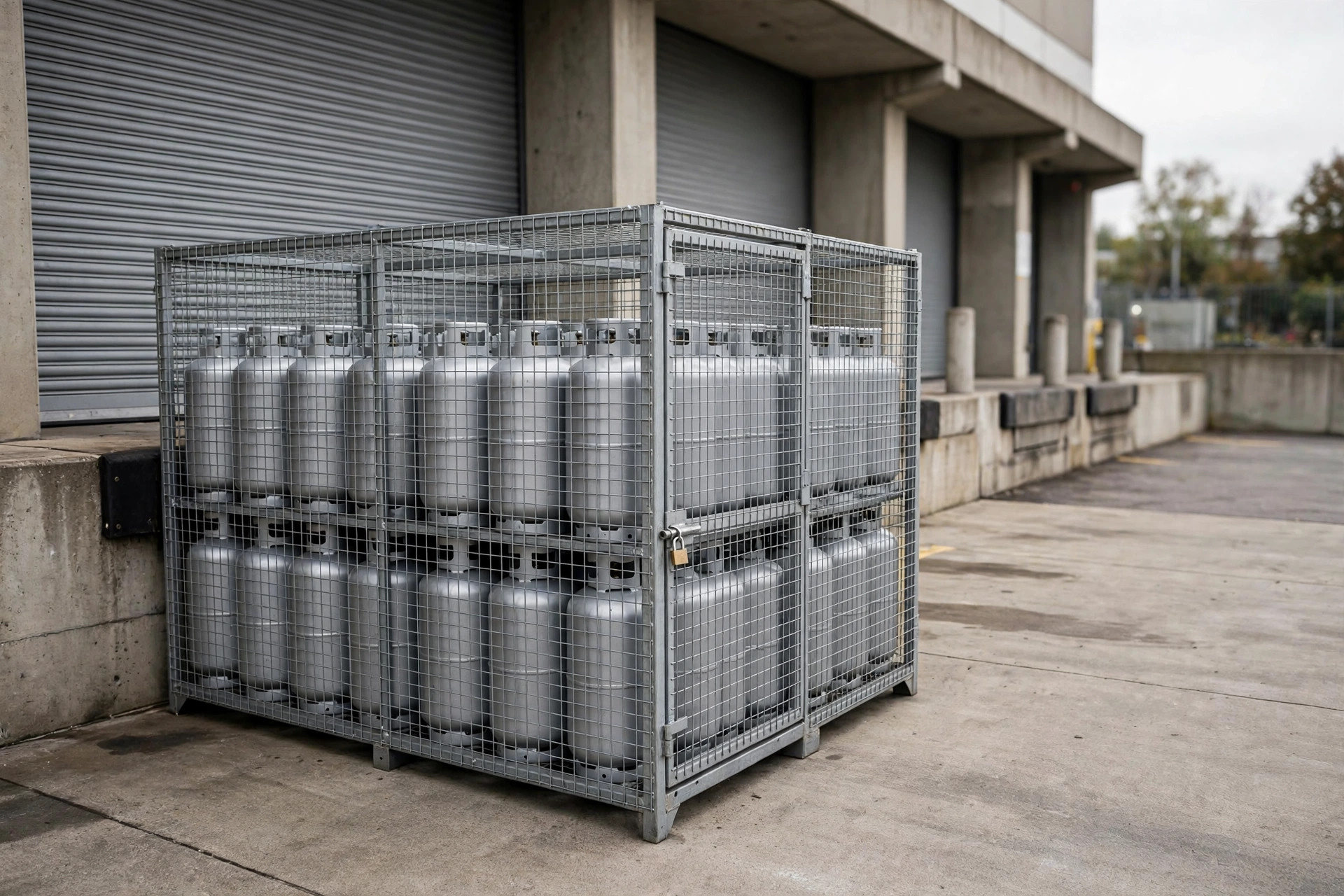
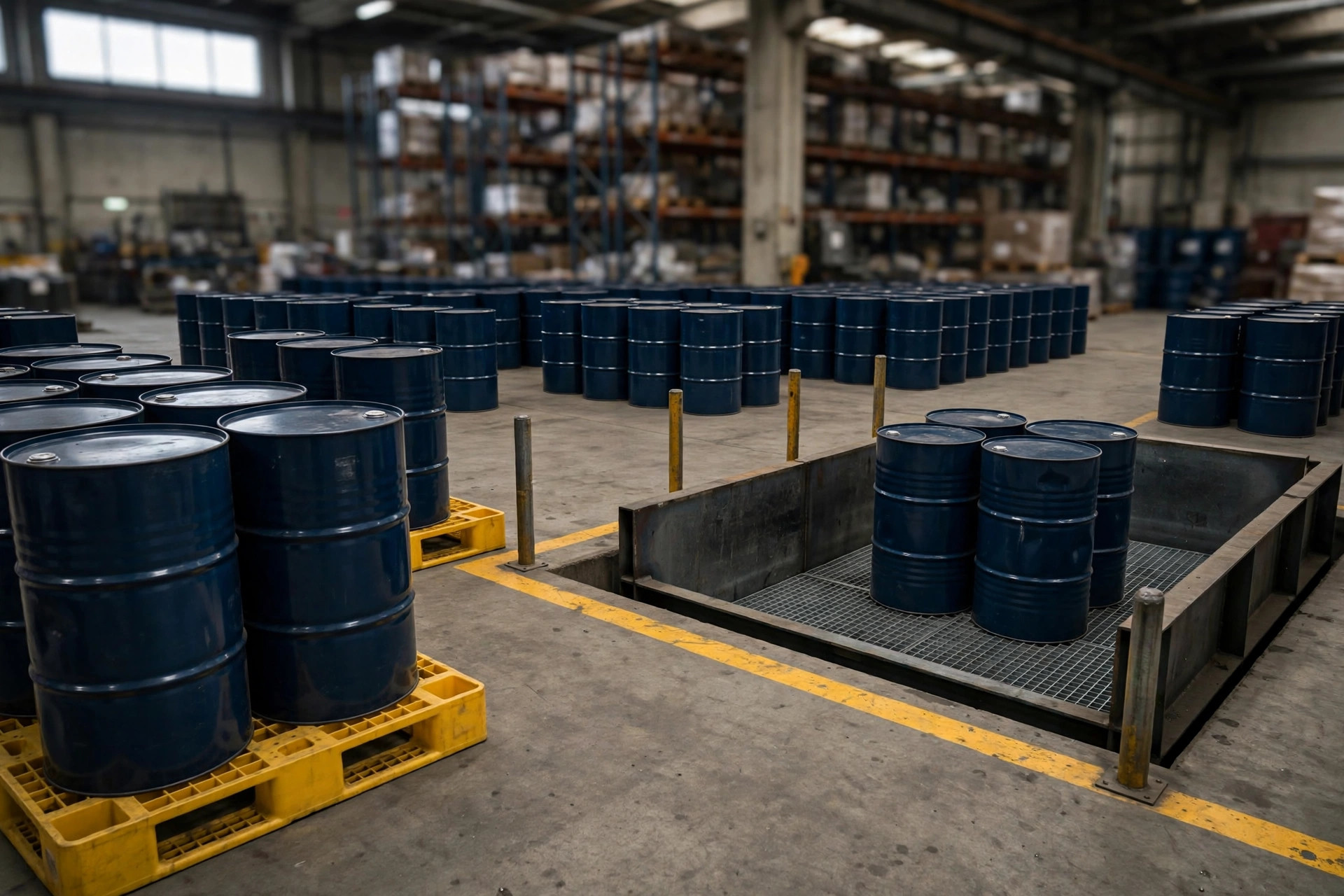
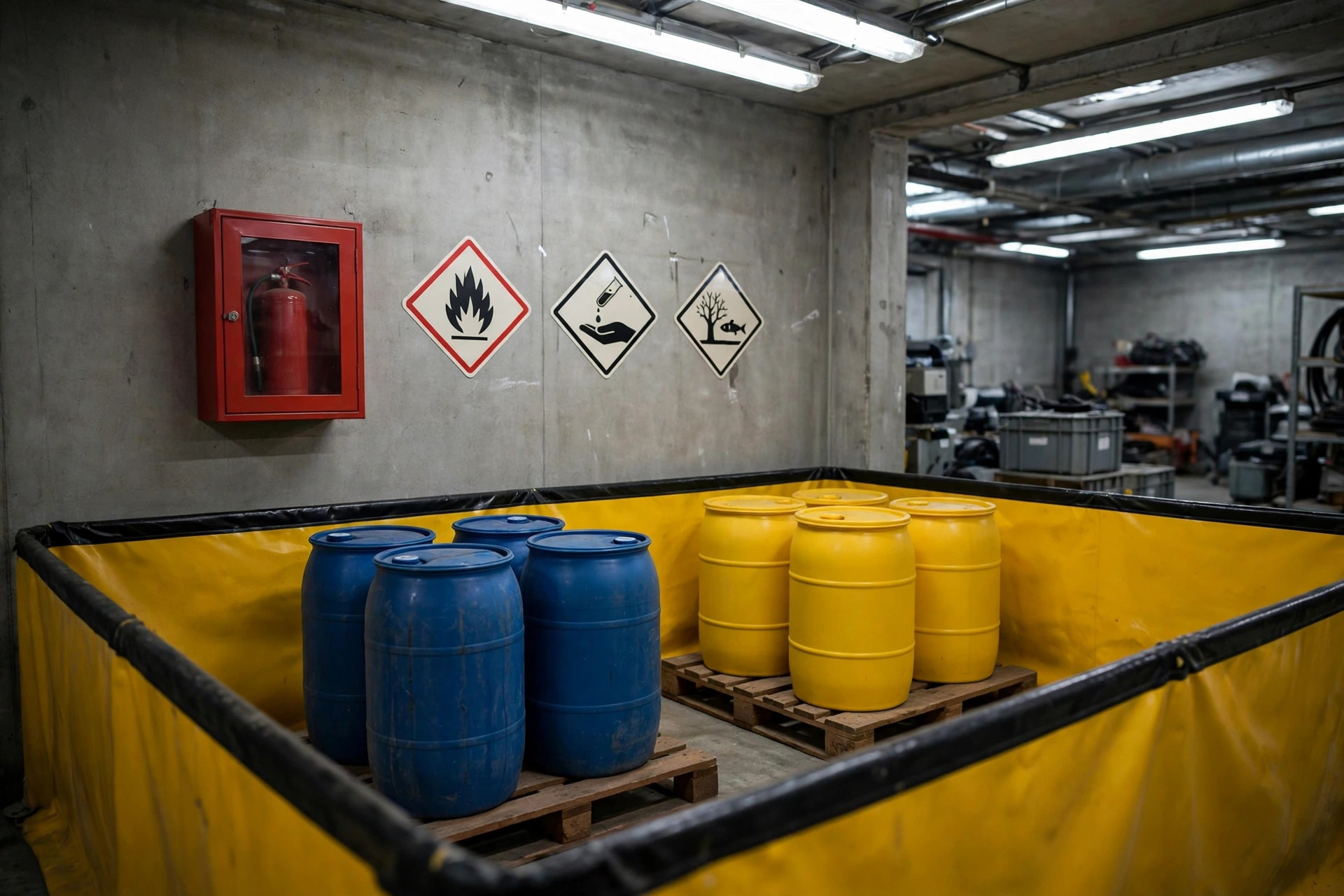
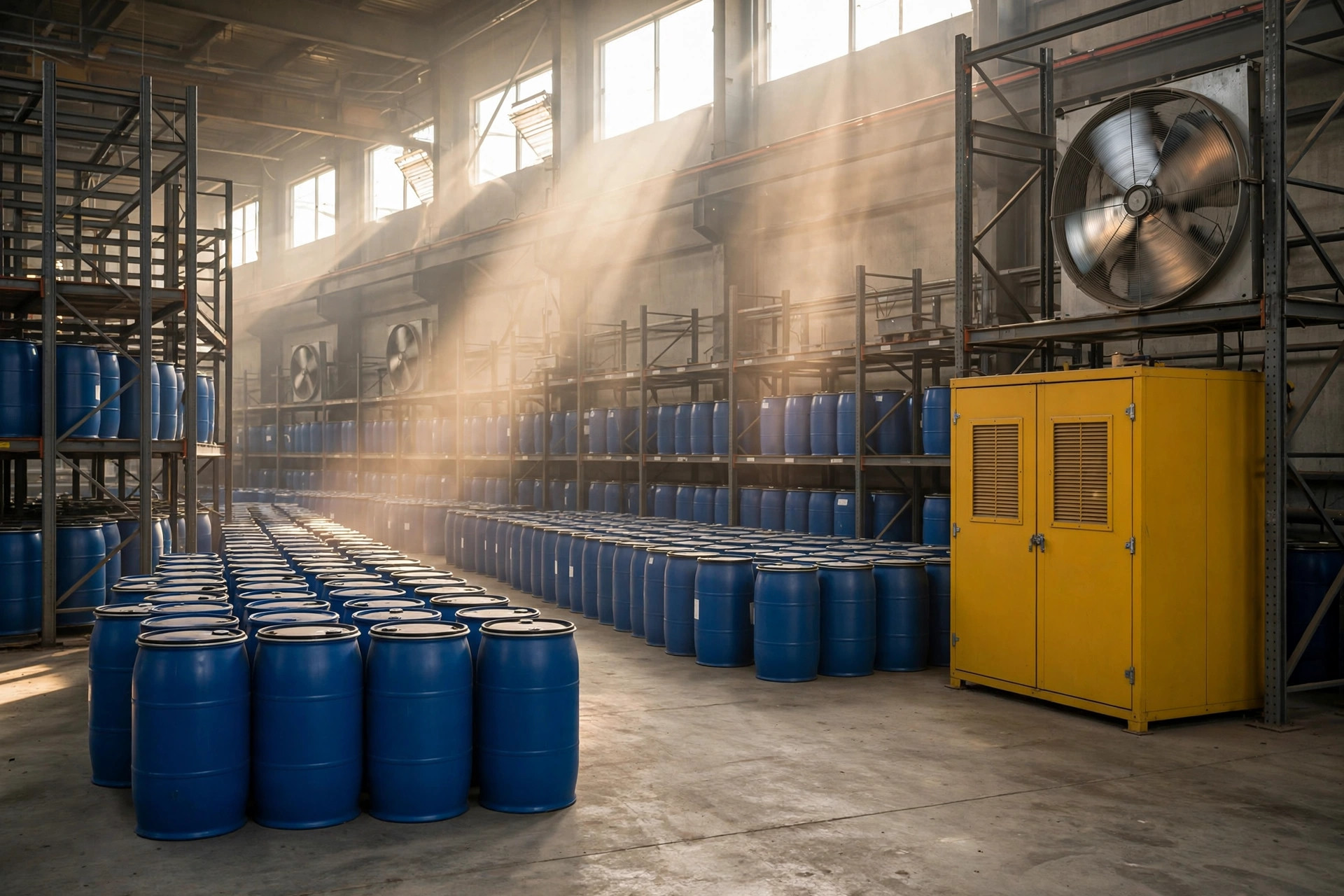
Hazmat trucks don't mix with regular freight trucks. That's ironclad. A proper chemical warehouse has dedicated hazmat staging spots in the yard: marked on the ground, set back from dock traffic and the office, no hot work nearby, no forklifts working right next to them for long stretches. Two reasons: separation, and room to work if something leaks — cleanup and evacuation need space.
I've seen the opposite. One smaller yard was tight on space, so hazmat trucks and dry vans shared the same lot, separated by nothing but a painted yellow line. One day a solvent tanker was parked there and a forklift driver, trying to save time, started swapping a forklift battery right next to it — and batteries throw sparks when you connect them. The safety officer happened to be walking by, shut the whole place down on the spot, and everybody sat through a half-hour safety meeting. After that, the hazmat spots got real barriers, the forklift exclusion zone got physical bollards, and the hot-work permit added a line: "confirm no hazmat vehicles in the area." A sign costs nothing to put up. After an incident, no amount of money buys back what you lost.
Loading supervision is the third checkpoint, and the easiest one to get lazy about. Hoses connected, pump running, product flowing, everything normal — that's exactly when people zone out. I'm telling you, during that half hour to an hour of transfer, the escort and the warehouse loader both need to be there: one watching the truck-side valves and gauges, the other watching the warehouse-side connections. The static grounding clamp goes on bare metal on the truck body, and you confirm it's showing good contact. The physics of static discharge got covered in an earlier piece — here it's just three moves: clamp, look, confirm. Skip none of them. A tanker loading at full flow builds up static with nowhere to go, one spark next to a load of solvent, and you do the math.
Then there's the gate-out nobody thinks about. Unloaded, hoses off, ready to roll — don't rush. Valves closed and reset? Fittings wiped with no residual drips? Staging spot clean? Walk around the truck one more time before you leave. Leaving a clean spot for the next truck is leaving yourself a clean record too — if anything happens with the next load, clear records are the only thing that speaks for you.
One Checklist for the Whole Hazmat Truck Yard Entry
Over the years I've boiled the gate-to-gate checks into one table. Run through it before you roll out, cooperate at the gate, follow it during transfer, verify again before you leave — and you'll sleep fine.
| Stage | Check item | Who |
|---|---|---|
| Before departure | Escort on board, credentials current, training records in the truck | Driver/escort self-check |
| Before departure | Fire extinguisher in date, tires sound, valves not weeping | Driver self-check |
| Gate inspection | Escort identity vs. paperwork, walk-around vehicle inspection | Warehouse inspector |
| Staging | Park in designated hazmat spot, wheels chocked, no hot work nearby | Escort with yard guidance |
| Transfer | Grounding clamp on and confirmed, connections drip-free, gauges normal | Escort + loader |
| Transfer | Someone present the entire time; step away too long and work pauses | Escort |
| Gate-out | Valves closed and reset, hoses off with no drips, spot left clean | Escort + loader |
Note: every warehouse's exact items live in its own safety manual — treat this as the general frame, then fill the gaps against the yards you run.
Looks fussy on paper. In practice a sharp inspector clears it in twenty minutes. But those twenty minutes catch real problems. I know an inspector with eight years at the gate — he's turned away expired credentials, an undercharged extinguisher, a bulging tire, and once a truck with every brake light out. He says a hazmat truck yard entry check was never about "is the paperwork complete." It's about "is it real" — real credentials, equipment that really works, people really alert.
Don't Rush It. Slow Is Fast.
One last honest word: the gate inspector is never afraid you'll be slow — they're afraid you'll rush. Rush the check and it becomes theater, and the hazard walks right in. Here's the counterintuitive part: the most dangerous stretch of a hazmat run isn't the highway miles or the half hour of transfer — it's the hours the truck sits in the yard with nobody really watching. On the road you're locked in; during transfer both sides are watching. It's the waiting in between when the truck gets forgotten.
So: run the checklist before you enter, and don't stray far from your truck once you're in. Slow work, fine work — hauling hazmat, slow is fast.
By Shifu Zhao, Trucking Veteran (15 yrs)