Last month, a client I'd worked with for three years asked me (I run a small warehouse): "Xiao Ma, we've got a batch of lubricants that needs two months of temporary storage. Can your place take it?" My heart skipped a beat — lubricants. Hazmat. My few-thousand-square-meter warehouse normally holds household goods and apparel. The word "hazmat" just sounds expensive.
But then I thought about it: if I could take this load, the rent premium over regular freight would be substantial, and the client would stick around longer. Look, my little warehouse can't afford to burn money — but it also can't afford to watch good business walk away. So I spent two weeks digging into the whole thing, and today I'm opening up the books.
First gate: segregation.
Hazmat can't sit mixed in with regular freight. You need a dedicated, segregated zone. What the fire marshal actually requires — distances, firewalls, ventilation standards — varies by jurisdiction, so go by your local fire department's latest requirements. I have to say that first, because numbers copied off the internet will get you in trouble.
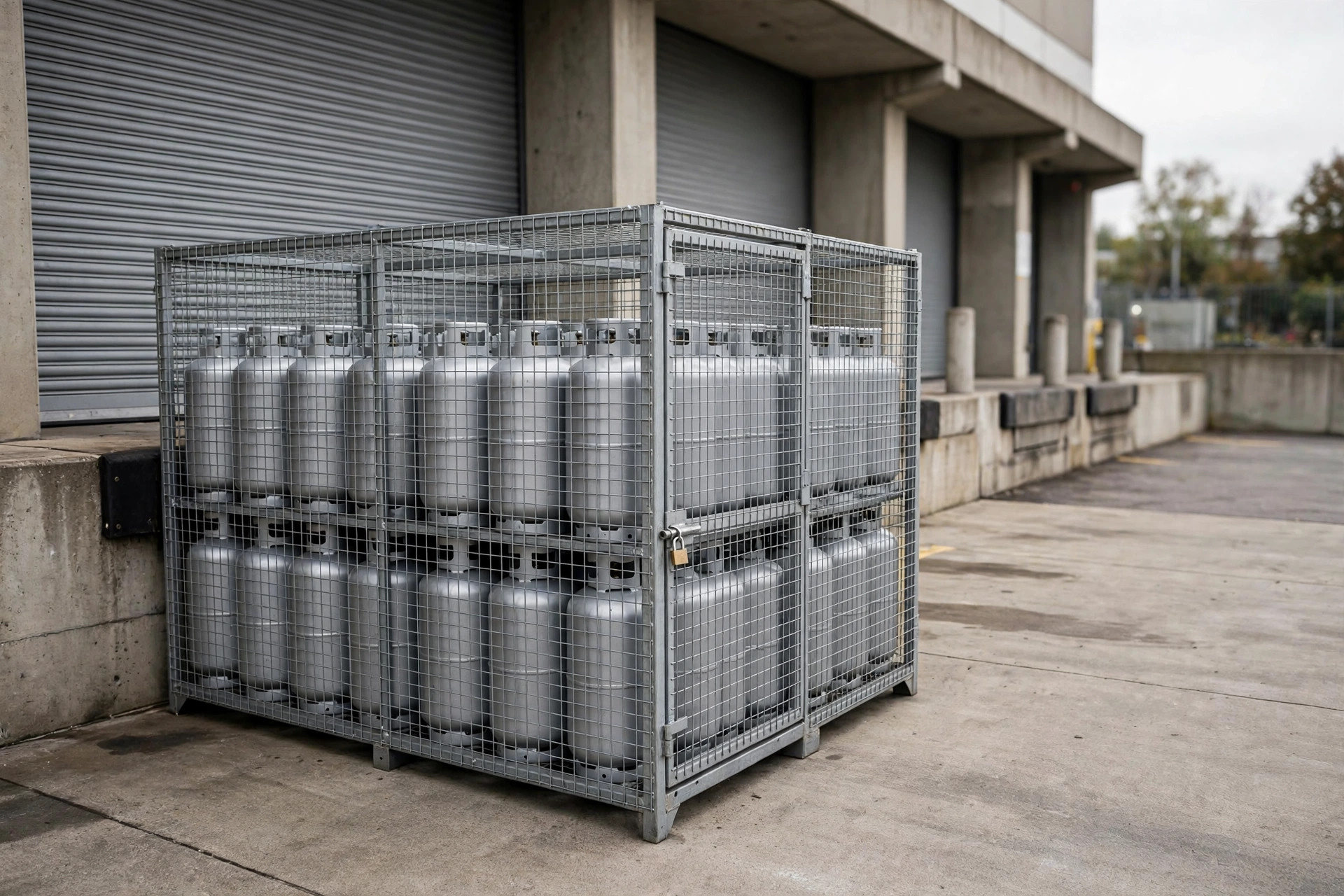
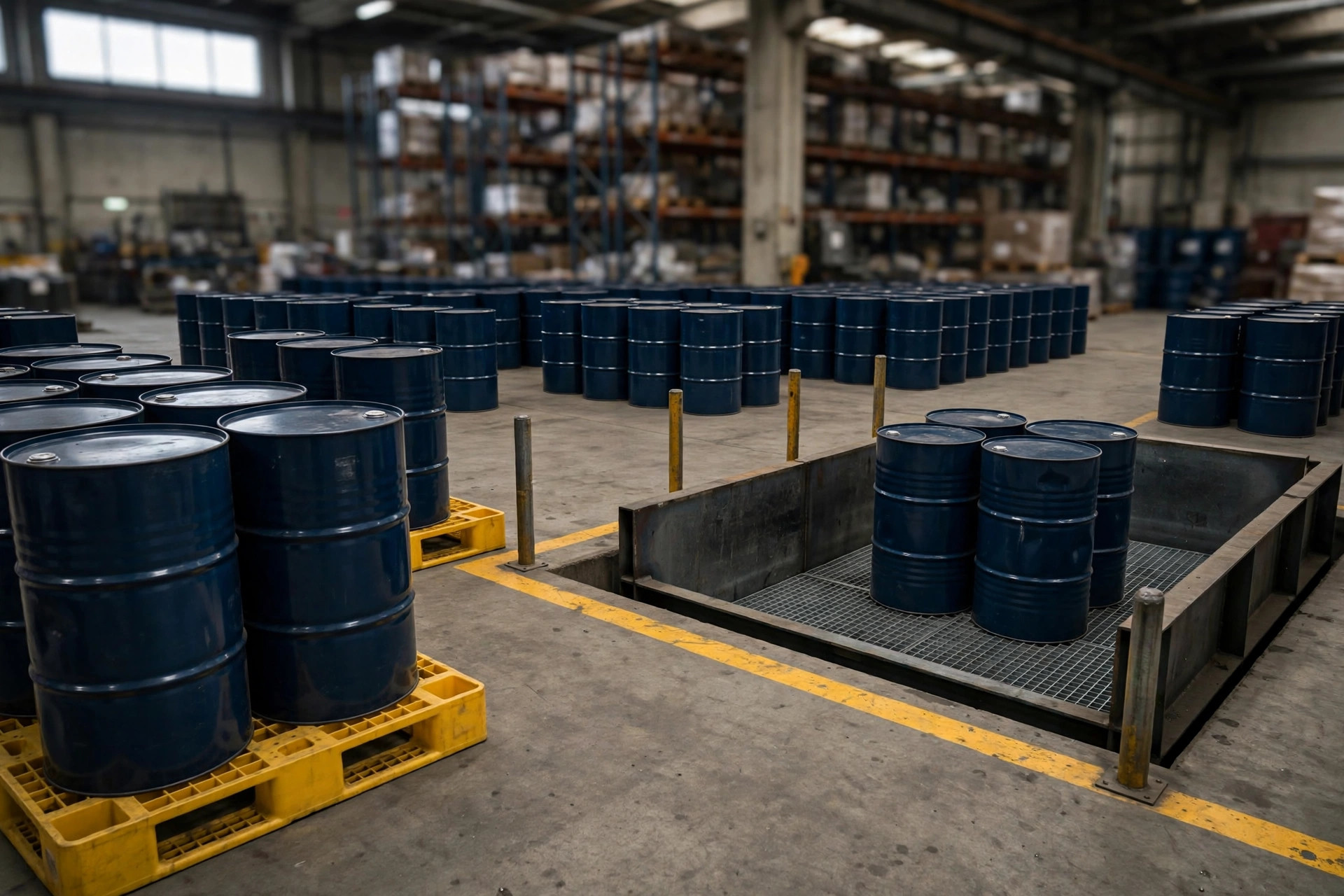
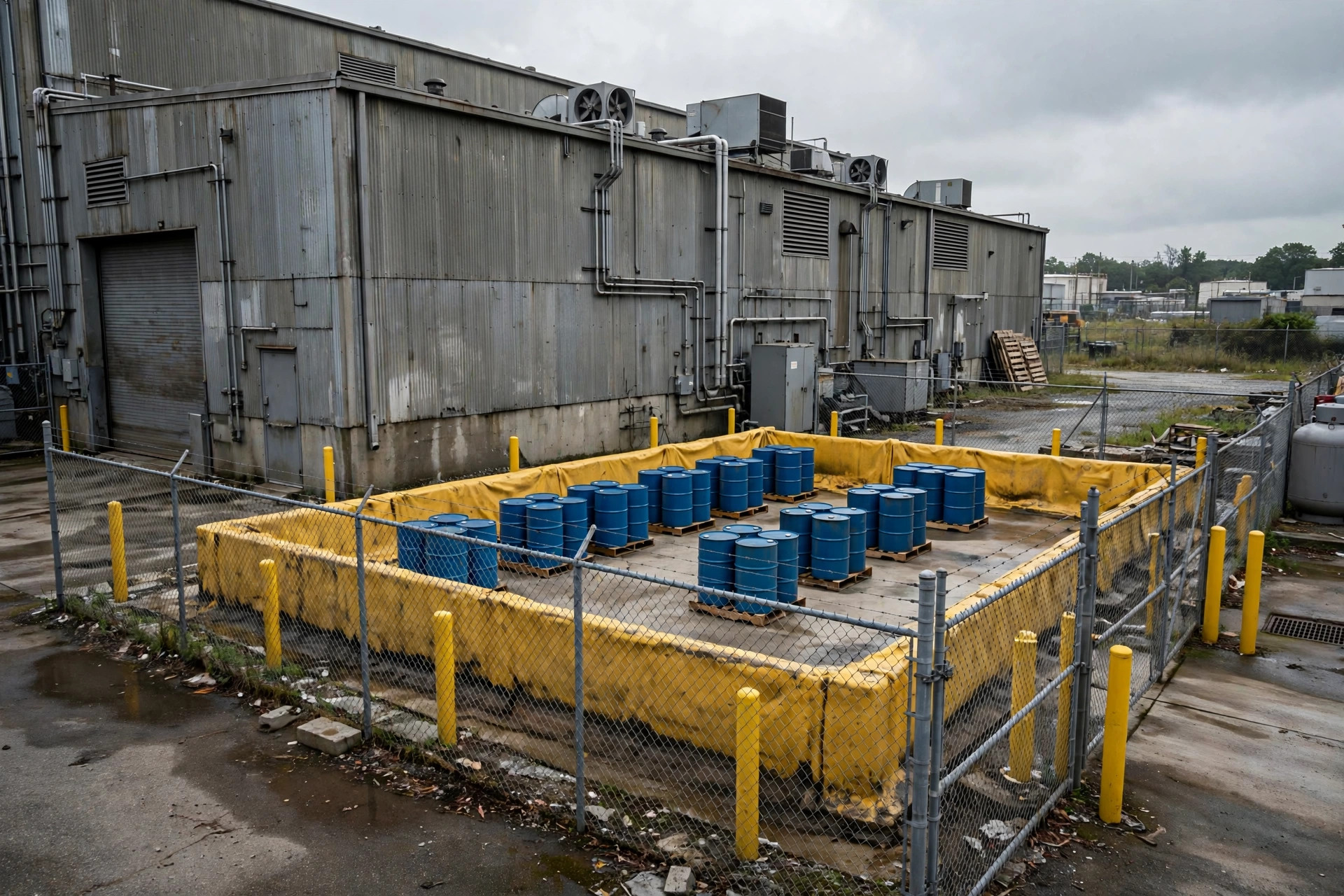
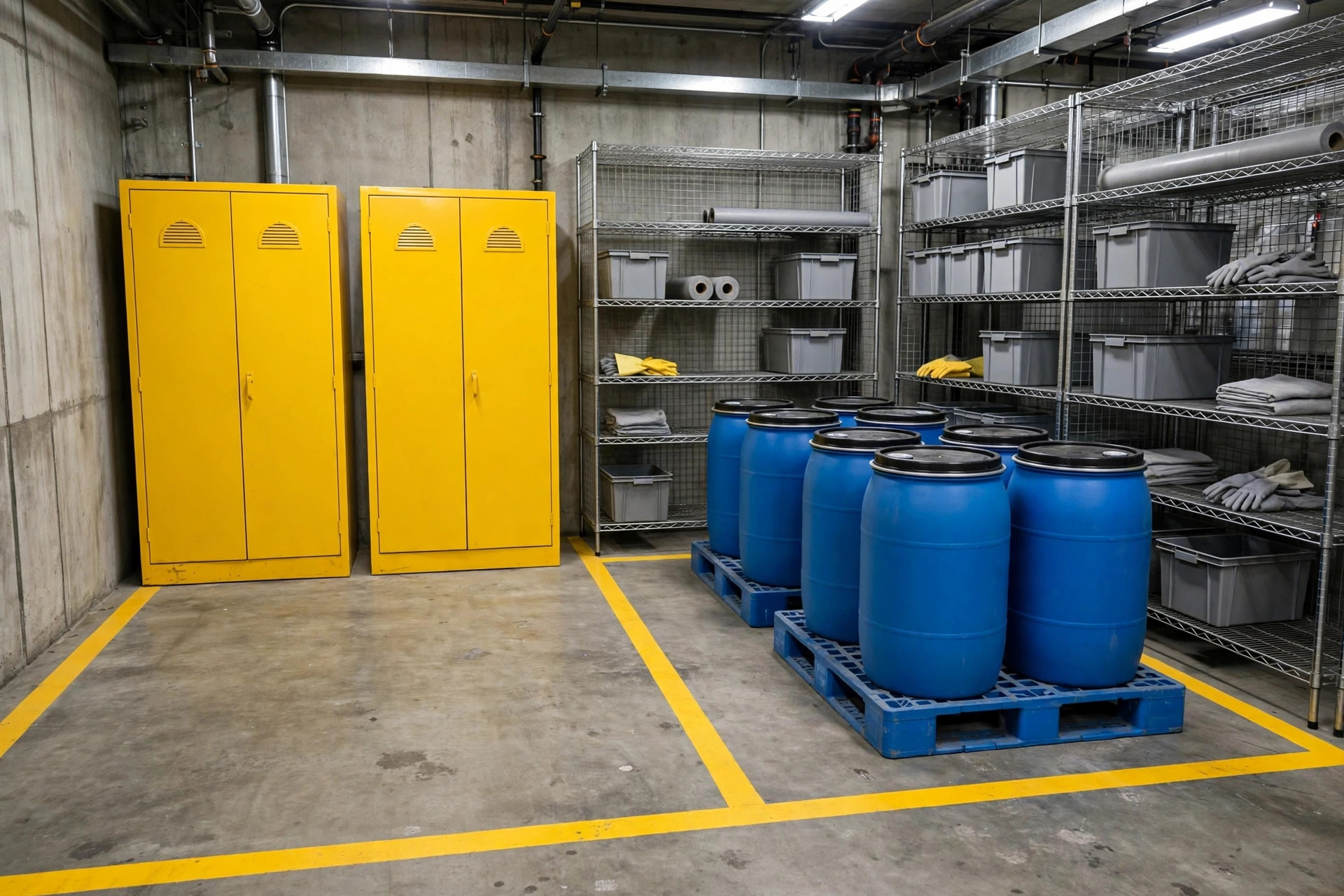
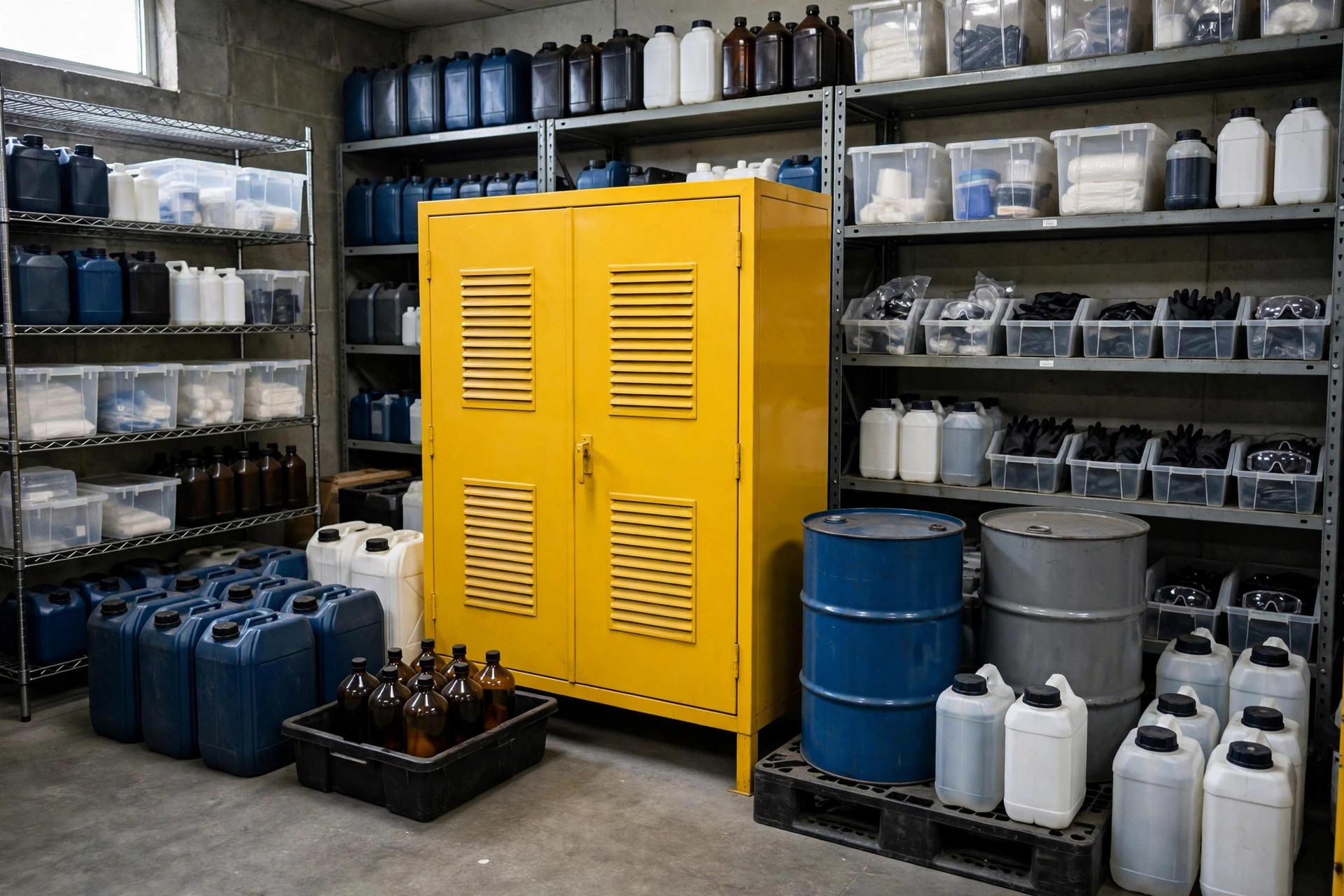
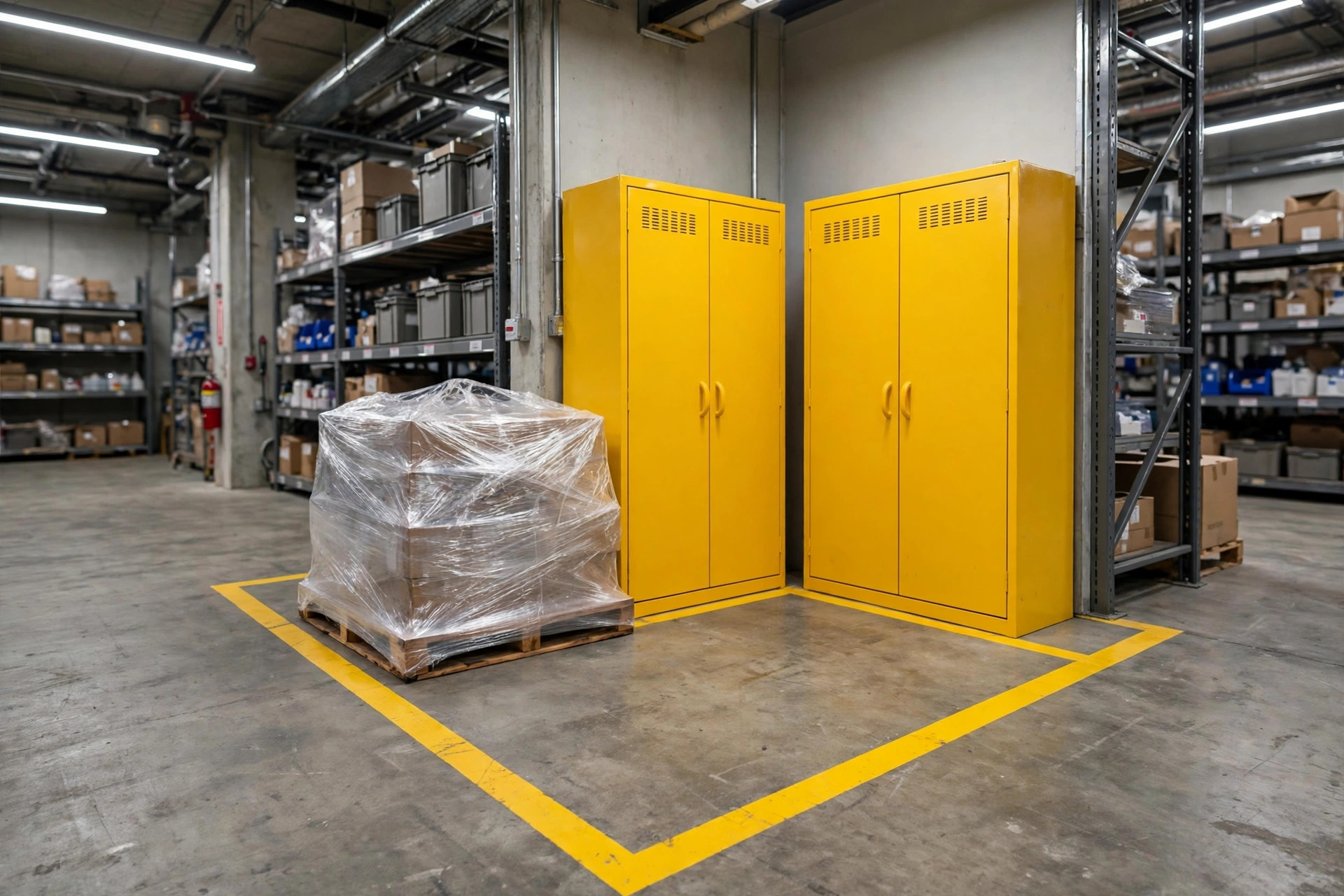
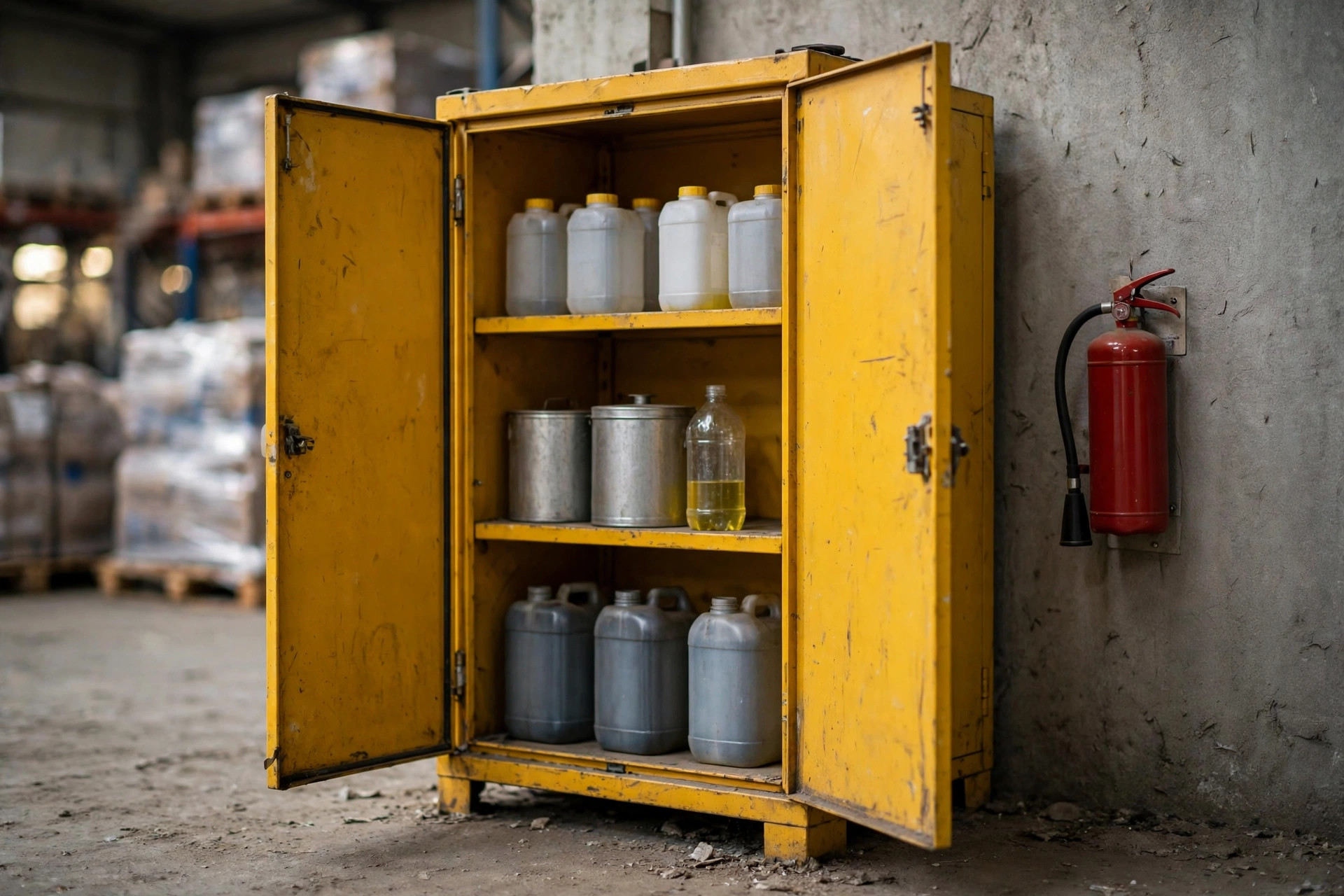
Our cheap workaround: no new construction, just rearranging. I cleared out the farthest corner of the warehouse, the spot farthest from the main aisle, set up two yellow flammable-safety cabinets, painted yellow lines on the floor to mark the zone, and added fire extinguishers and spill pallets. The cabinets were secondhand, inspected by a friend who does fire-protection work, confirmed compliant. The heart of this gate is simple: segregation plus signage plus fire equipment in place. Not "build a new building." The big-company playbook — a standalone hazmat facility — doesn't apply to us, and doesn't need to.
Second gate: permits.
Whether you need a special permit, and which kind, depends on what you're storing and how much. Lubricants and gasoline or solvents are completely different animals. My approach was thoroughly unglamorous: take the product's SDS (safety data sheet) and ask the local fire marshal directly, get everything answered in one visit. Don't guess, and definitely don't listen to the guy who says "that's how I did it back in the day" — local rules vary wildly, and copying someone else's homework in the wrong jurisdiction gets you burned.
The money-saving trick here is the order of operations: ask with the SDS first, then decide how much to invest. If your particular load isn't even on the regulated list, spending on modifications first is money down the drain. The consultation itself is free — it's just a trip across town. In our case, the marshal confirmed our load needed far less than I'd feared, which saved me from overbuilding.
Third gate: insurance.
This is the one small warehouses overlook most. A standard warehouse policy doesn't cover hazmat — if something goes wrong, the insurer can deny the claim in one sentence. I shopped around with insurance brokers: adding a hazmat rider costs a few thousand dollars more per year. Sounds painful, right? But do the math: the rent premium on a single hazmat load earns that back in a few months. This is money you don't get to skip. Skipping it is burying your own landmine.
One more thing I did that cost almost nothing: a thirty-minute toolbox talk with my crew — where the hazmat zone is, what never goes in there, who to call if a drum leaks. No certificates, no consultants, just everyone on the same page. The cheapest safety investment you'll ever make.
Small Warehouse Hazmat Storage: What the Three Gates Cost
Opening the books (disclaimer first: these are magnitudes — go by actual quotes and your locality's latest rules):
| Gate | Cheap workaround | Rough magnitude | Where the savings are |
|---|---|---|---|
| Segregation | Secondhand cabinets + floor marking + extinguishers | A few thousand USD | Don't build new; buy used cabinets |
| Permits | Ask the fire marshal with the SDS before spending | Mostly your time | Ask first, invest second — order matters |
| Insurance | Add a hazmat rider | A few thousand USD more per year | Get three broker quotes |
All three gates together: roughly ten thousand dollars or so in extra first-year cost for a small warehouse. And the rent premium on one hazmat load typically pays that back within half a year to a year. Once I'd run those numbers, I felt solid.
The Hazmat Decision Checklist: Check the Boxes Before You Commit
- Get the product's SDS; confirm the hazard class and what's regulated
- Take the SDS to the local fire marshal: permits needed? segregation standard? Ask everything at once
- Assess your own floor: can you carve out a compliant zone? Only talk modifications if you can't
- Ask the broker: what does the rider cost per year
- Run the total: modification cost + insurance < rent premium × lease term, or walk away. Walking away isn't shameful
The Counterintuitive Part: The Retrofit Isn't the Expensive Bit
Here's the counterintuitive truth: for a small warehouse, the most expensive part of taking hazmat business was never the few thousand dollars of modifications. It's taking a non-compliant load without realizing it and getting fined once. Fine amounts vary, but they'll exceed whatever that load earned you — and can put your license at risk. Retrofit money is visible on the books. Fine money is the hidden ledger, and the hidden ledger is what kills you.
So did I take the order? Yes. Two months, sealed drums, everything by the checklist above. The client has already asked about extending. That rent premium I mentioned? It covered the whole first-year compliance spend with room to spare.
So my conclusion is one sentence: a small warehouse can take hazmat business, but the order is non-negotiable — ask first, calculate second, invest third. Not a dime of compliance money gets skipped; not a dime of face-saving money gets spent.
Small warehouses have their own way of surviving: big companies have EHS departments; we have the fire marshal's phone number and an SDS. Walk the three gates properly, and even a small load can be eaten steadily — and slept on soundly.
By Xiao Ma, Small Warehouse Owner