
We have a client who sells outdoor lighting. He rents less than 5,000 square feet in our warehouse and does well on Amazon. Every month he'd bring in two or three small replenishment shipments from Shenzhen, each worth around $1,800, and every single one went through express clearance — fast, painless, no customs broker to deal with. Three years, zero incidents. He used to tell everyone that small-batch imports don't need a broker.
Then this April, one $2,600 shipment had a few cartons of camping lanterns with lithium batteries tucked in by the factory. The courier's brokerage agent took one look: lithium batteries fall under DOT review, and they can't go through the express channel. The whole shipment was diverted to a formal entry and sat in the airport's bonded facility for 11 days. He missed his spring promotion and went out of stock. Three years of "brokerage savings," wiped out in one shipment — plus a promotion slot fee down the drain.
He came to me afterward and his first words were: "Susan, why didn't you stop me?" I told him, honestly, this one's not on the courier. It's on never learning where the line between formal entry and express clearance is actually drawn.
The line has three parts: value, product, frequency
First: the value line, and $2,500 is the cliff. U.S. Customs draws a hard legal line for commercial goods at $2,500. Ordinary merchandise under that number can go through informal entry, and express clearance is essentially riding that channel. Over $2,500, you're in formal entry territory — no choice involved. There's also the de minimis duty-free threshold, which has been a moving target these past couple of years — check CBP's website for the current policy before you plan around last year's numbers.
The subtext of the value line: the entry type isn't really your choice. People treat formal entry and express clearance like two "services." They're not. They're two different legal channels, and your shipment value sorts you into one before you ever get to argue about cost.
Second: the product line, where most people get burned. However small the value, if your product touches a PGA — a Participating Government Agency — the express channel is effectively closed. Food and cosmetics go through FDA, lithium batteries through DOT, wood and plant products through USDA, anything with a radio transmitter through FCC. Courier brokerage agents either won't take these or take them slowly — they're a volume business, and nobody is going to wrestle FDA over prior notice for your one shipment.
So here's the iron rule: if your product category has PGA review, find a licensed broker and file a formal entry, even if the shipment is only worth a few hundred dollars. The dividing line isn't about money. It's about review.
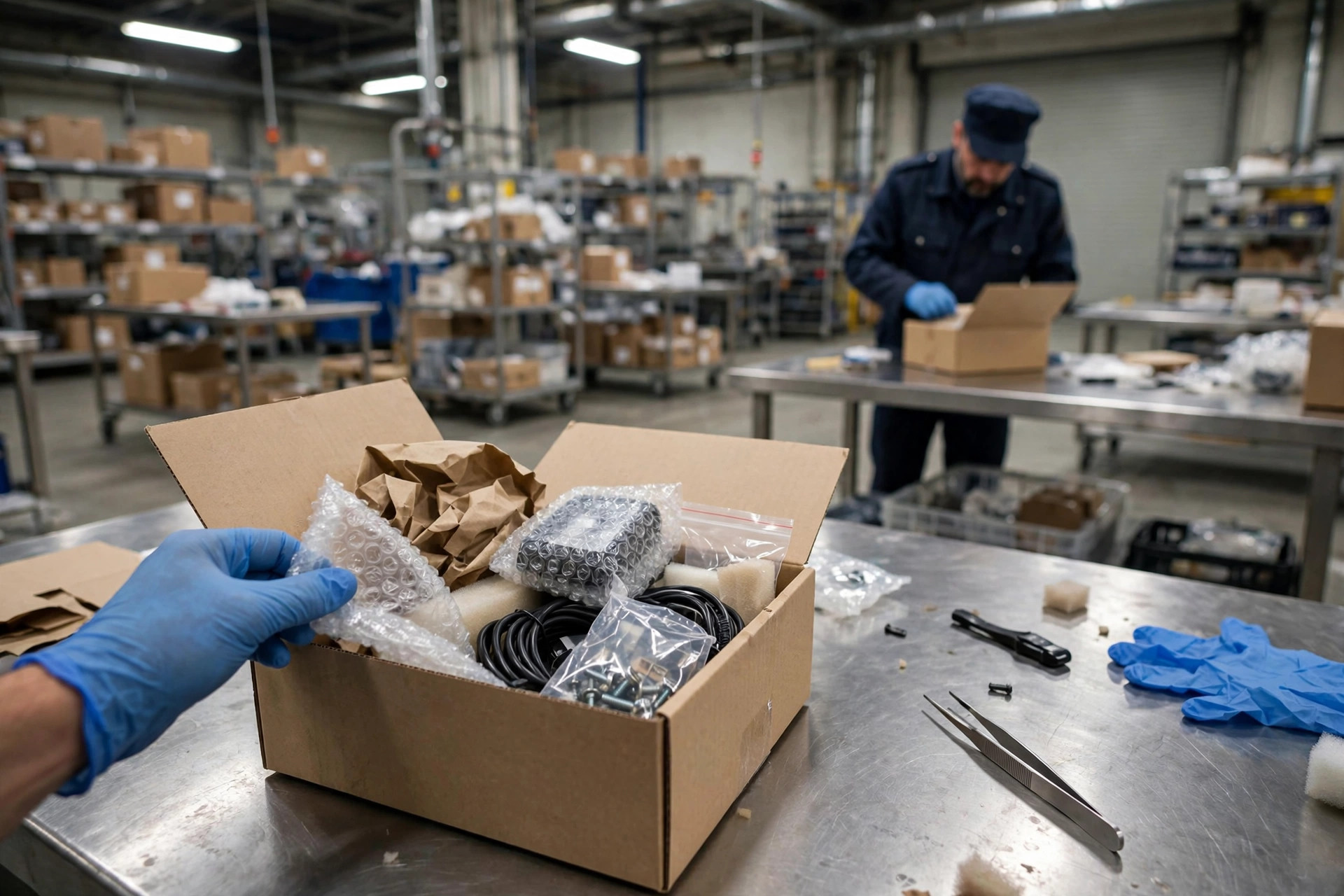
Third: the frequency line — don't play the splitting game. One shipment a month and three shipments a week are two completely different businesses. High-frequency small shipments through express look beautiful on paper: the per-shipment clearance cost amortizes nicely and transit times are stable. But the more frequent you are, the more likely CBP notices. Customs can consolidate multiple small shipments to the same consignee over a short period, and if they decide you were deliberately splitting to dodge duties, the penalties and exam costs will dwarf whatever tax you saved.
The dumbest move I've seen is splitting one big shipment into three small ones to ride the express channel. CBP has seen it all. It's literally their job.
And here's the blunt truth: get the entry type right and cost and timing fall into place; get it wrong and no cheap broker can save you. In my years selling 3PL services, I've watched too many clients squeeze 5% out of freight and lose 50% on entry type. Get the order right — channel first, price second, service third.
Formal entry vs. express clearance, side by side
| Formal entry | Express clearance | |
|---|---|---|
| Filed by | Licensed customs broker via ABI | Courier's in-house brokerage agent |
| Value range | No cap; commercial goods over $2,500 must go here | Low-value small parcels via the informal channel |
| PGA review | Handled normally — FDA, DOT, USDA, etc. | Limited; high-risk categories get stuck |
| Speed | Port/airport processing plus exams — controllable but slower | Typically 1–3 days door to door (exams excepted) |
| Cost structure | Broker service fee + duties + bond costs | Clearance baked into freight, per shipment or by weight |
| Import record | Complete entry record — usable for drawback, audits, compliance files | Thin records, weak traceability |
Don't ask me for exact fees — broker service charges and courier clearance quotes change every year. Get current quotes from your broker and your courier, and get three quotes against your actual value, product, and frequency. That beats any guide.
The smart play: run both channels
So where should a small-batch importer stand? My answer: don't pick a side. Run both. Mature importers are dual-channel: routine replenishment, low value, no PGA review goes express — fast and painless. First shipments of new categories, high value, anything touching a PGA goes formal — stable and compliant.
Here's the insider part most brokers won't volunteer: the complete entry records from formal entries are ammunition for future duty drawback claims and customs audits. I've had clients run 100% express for two years, then want to file drawback in year three — and discover they have almost no import records worth showing. The brokerage fees they saved came back to collect in another form. So even if 80% of your freight goes express, run the high-value shipments formal and keep a clean compliance file. Call it buying optionality with small money.
Second client story: an importer of snack foods. Each shipment a little over $2,000 — looked express-eligible. But FDA requires facility registration and prior notice for food. What a broker could have handled in one formal entry, he insisted on pushing through express to save a few dozen dollars. At the airport, the courier's agent said they couldn't file the prior notice. The whole shipment converted to formal entry plus exam: nine days. Snacks don't have a shelf-life problem, but he was chasing a Mother's Day promotion on his own site — the goods arrived, the traffic was gone, and the slot fee went with it.
So there it is: neither channel is better, only right or wrong for the shipment. And here's the counterintuitive part — small batch does not mean small risk. It's precisely the importers with small values, high frequency, and mixed categories who blow up on entry type most often. Don't bury a whole shipment's compliance to save one brokerage fee.
Don't just compare prices — ask your broker these three
My negotiation advice, last. When you're getting broker quotes, don't just compare the bottom line. First learn to read the quote: the service fee is the most transparent line on it. The real margin hides in "miscellaneous," "advances," and "expedite" fees. I've seen three brokers quote the same shipment with a 2x spread, and the entire difference was in how they defined miscellaneous. Make every broker break it down on the same template — service fee, duty advances, miscellaneous detail, exam surcharges. Anyone who can't break it down gets cut.
Then ask these three questions. One: "If this shipment went through the express channel, is there any PGA review risk on this product category — and will you confirm that in writing?" The ones who'll put it in writing are the ones who actually know. Two: "How does the bond work — single entry or continuous, and at what shipment volume should I switch?" This is the line item brokers least like to explain and the one that saves you the most. Three: "If we get examined, who follows up, how often do I get updates, and is there a written turnaround commitment?" The biggest cost in clearance isn't money. It's the information black hole.
Next time you're signing a contract or switching brokers, ask these three. Ask them, and the other side knows they're dealing with someone who understands the business — and the padding on the quote tends to squeeze itself out. These three questions are worth every dollar you pay the broker.
By Susan, 3PL Sales Director