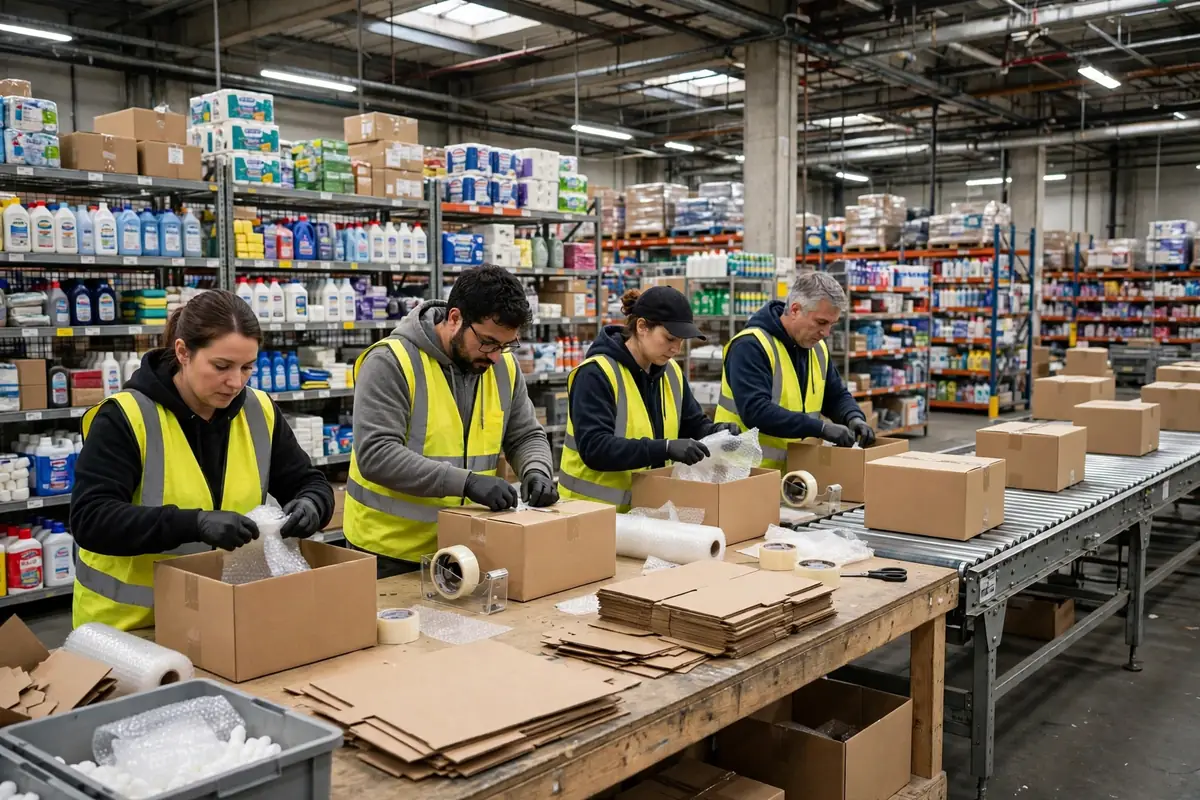
Let me complain first. Returns are the part of cross-border selling nobody posts about.
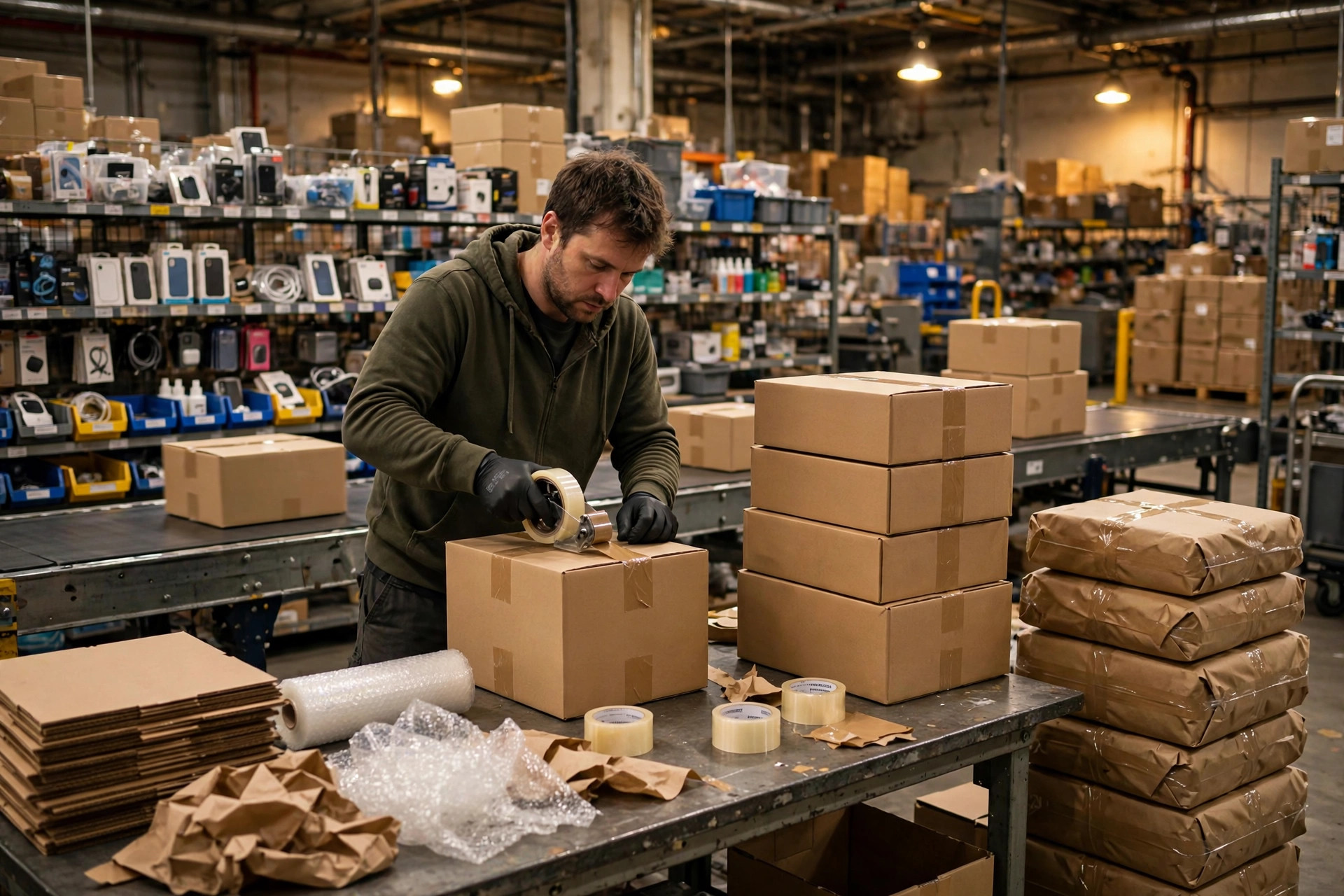
After Black Friday last year, a friend who sells small home goods spent three days buried in returns in Longgang, Shenzhen. More than two thousand units came back. Aisles blocked. His first words to me: I should never have shipped all of this back.
That is the classic trap with a shenzhen cross border returns warehouse. Sellers assume bringing everything back to Shenzhen saves money. For a lot of SKUs, the product loses money the moment it gets on a plane.
Returns need triage, not emotion.
How a shenzhen cross border returns warehouse should split returns first
My rule is simple. Sort every return into three buckets before anyone books freight.
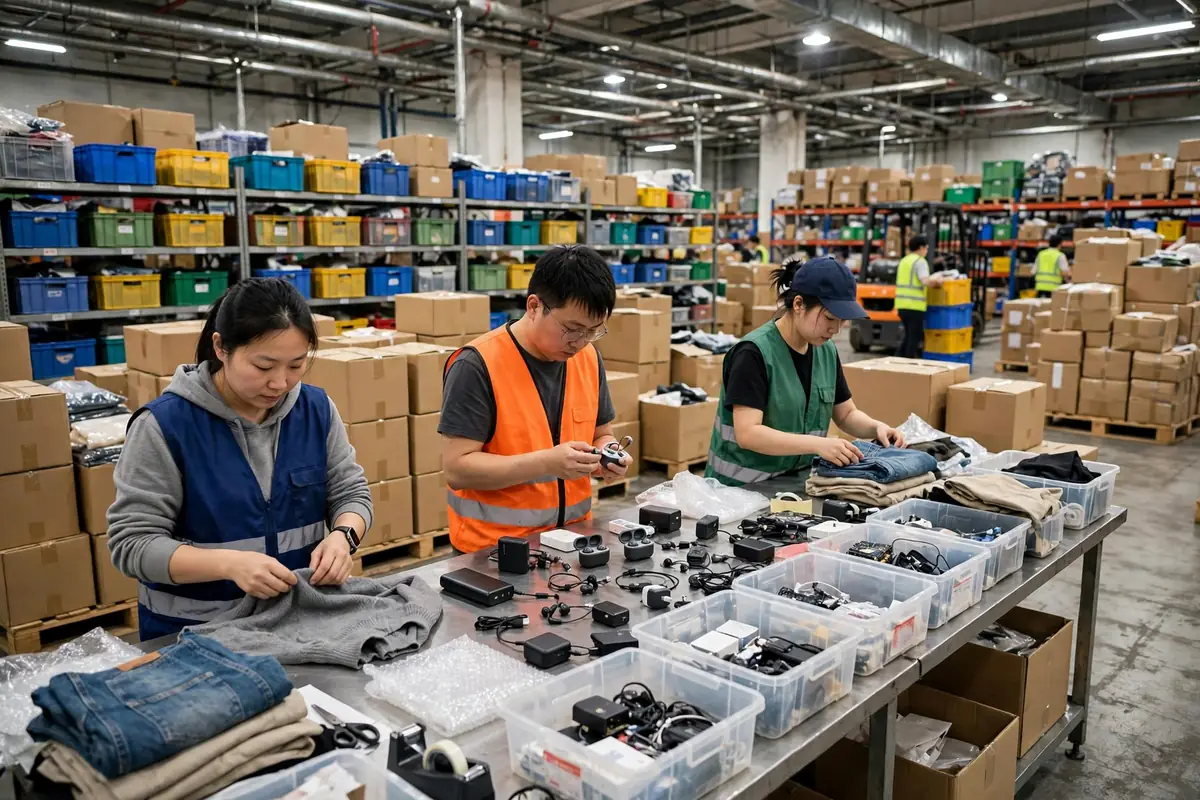
Bucket one: high value, light, resellable. Send it back. Earbuds, beauty devices, and small appliance parts fit here. They fetch a weak price locally overseas, but after refurbishment in Shenzhen they can rejoin the next batch.
Bucket two: low value, heavy, bulky. Do not send it back. Storage boxes, cheap hangers, and low-price plastic goods often cost more to move than they are worth. Shipping them home is paying freight to import your own trash.
Bucket three: damaged but repairable. This depends on local labor. If cheap, reliable refurbishment exists overseas, fix and resell locally. If not, destroy the goods or sell the lot to a liquidator and move on.
A concrete case. After peak season in 2024, a pet-supplies seller in Bantian, Shenzhen, received a wave of returned cat scratchers. Unit value was low, volume was high. They shipped everything back anyway. Freight and storage ate most of the margin, and after inspection half the units could not be resold at all. The owner later admitted destroying that lot overseas would have lost less money.
Contrast that with their returned pet leashes. Higher unit price, tiny volume, and most returns were simply the wrong color. Repacked in Shenzhen, they resold quickly. Same seller, same month, opposite outcome.
So the question is never "should returns go back?" It is "is this unit worth a plane ticket?"
Here is the rough framework I use now. This is a hypothetical example only; the numbers illustrate structure, not any warehouse's actual quote. Always check the provider's latest pricing.
| Type | Assumed unit value | Return-to-Shenzhen cost (hypothetical example) | Local handling cost (hypothetical example) | My call |
|---|---|---|---|---|
| Small high-value electronics parts | Higher | Medium | Local refurb labor high | Ship back |
| Bulky low-value home goods | Lower | Very high | Disposal or liquidation lower | Handle locally |
| Apparel size returns | Medium | Medium | Fast local resale | Try local first |
A good shenzhen cross border returns warehouse is not magic. Triage is magic.
Grading in Shenzhen: don't let good stock die at the inspection bench
Once goods arrive in Shenzhen, the real work starts.
Bad grading kills resale. Ship a scratched unit as new and the buyer leaves a one-star review. I have paid that tuition once. Never again.
My inspection flow has four steps. Boring, but non-negotiable.
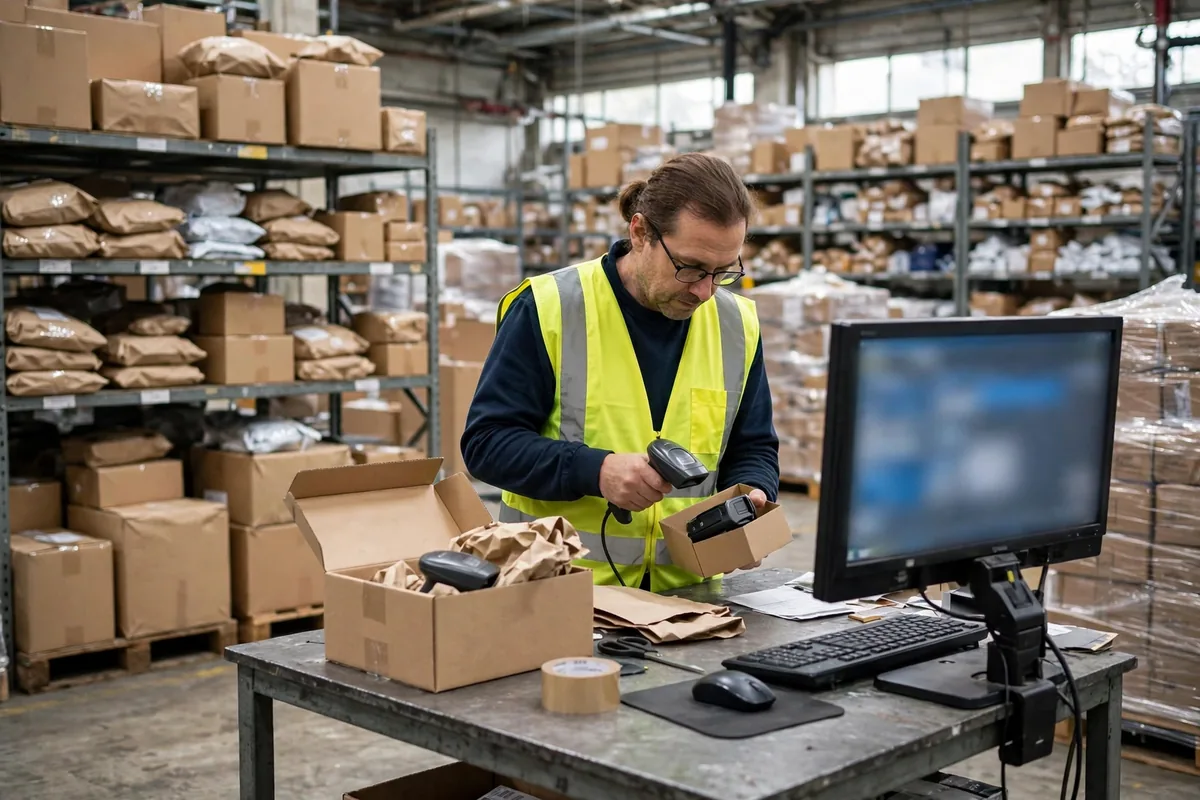
Photograph at unboxing. Record packaging damage and missing accessories immediately, so disputes later have evidence.
Test the actual function. Power on small appliances. Check zippers and stains on apparel. Count parts on home goods. Do not rely on sampling for returns. A returns pool is a problem pool by definition; sampling is gambling.
Grade into three tiers. Grade A is near-new: repackage and relist. Grade B has light marks: move it to a discount channel or bundle it. Grade C is scrap or parts only. Never force it back into a listing.
Recheck the listing before relisting. If a platform requires a condition label for refurbished goods, follow the platform's latest policy. Be honest about condition. The account is worth more than one batch of stock.
In 2023 I handled a small batch of returned Bluetooth earbuds. Return reasons were all over the place. The warehouse graded them carefully: Grade A back to the main listing, Grade B to clearance, Grade C stripped for charging-case parts. Overall recovery beat my old approach of relisting everything, and complaints dropped. Speed was not the win. Sorting accuracy was.
Here is the counterintuitive part: a returns warehouse competes on grading accuracy, not receiving speed. Grade wrong and you scrap good stock while listing bad stock as new. You lose on both ends.
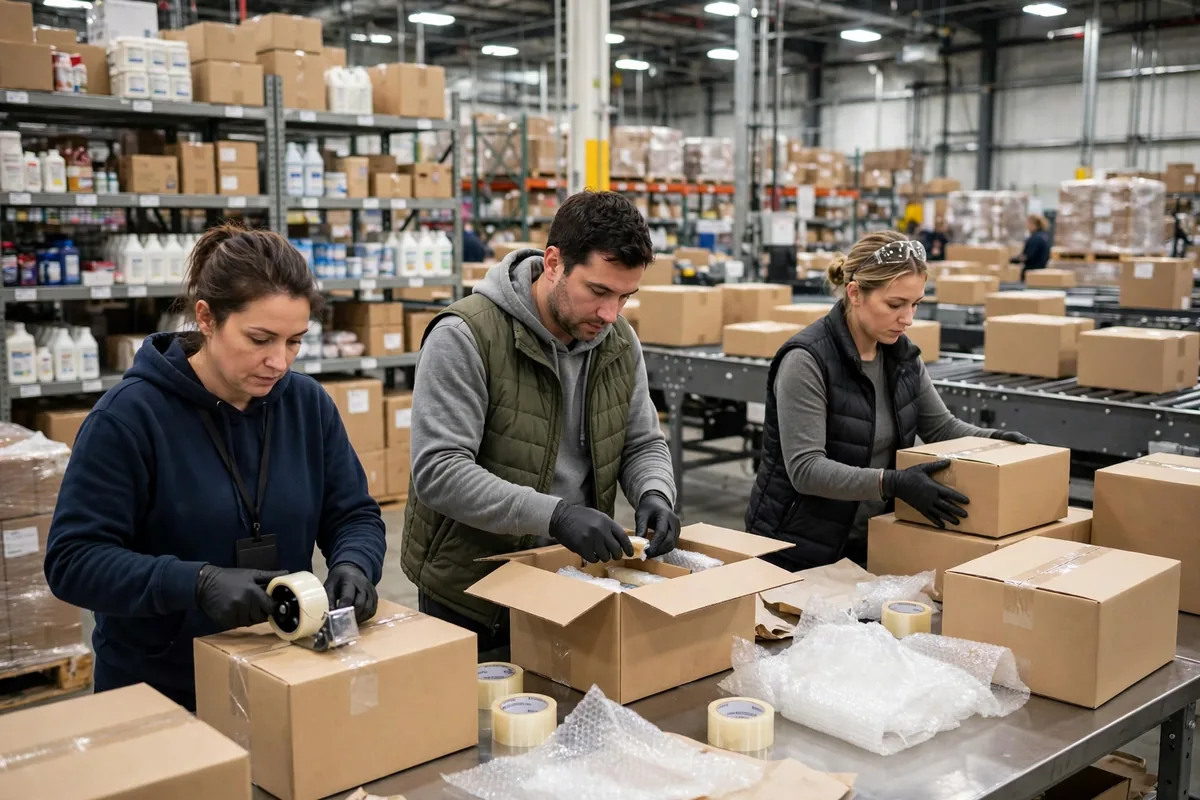
Peak season adds a staffing problem. Returns never arrive evenly. The two weeks after Black Friday, Christmas, or a major platform sale can overwhelm a normal crew. Five inspectors are plenty in a quiet month and nowhere near enough in that surge. I now pre-book a temporary labor pool and short-term overflow space with the warehouse. Never let returns block outbound shipping lanes. If outbound slips while returns pile up, account performance turns red before the returns are even cleared.
One more staffing detail: never let a new hire grade alone on day one. Pair them with a veteran, limit them to unboxing photos and accessory counts, and keep grading with experienced staff. A rushed rookie mixes Grade A and Grade B, and every mistake becomes an after-sales ticket.
In the end, returns are a separate business with its own math, not an annoying appendix to outbound shipping. Sellers who treat them that way stop bleeding quietly, month after month.
Two more habits save me money every season. First, keep liquidation channels warm before you need them. A couple of local discount wholesalers, a small livestream clearance team, and a workshop that buys flawed units for refurbishment: feed them small lots in quiet months and they will answer the phone during the surge, when B-grade stock needs to leave fast instead of occupying expensive rack space for a month. Second, review return reasons weekly. When size complaints dominate, the size chart is wrong. When "not as described" dominates, the listing photos oversold the product. I send the top return reason straight back to the listing team every month. Fixing one misleading photo prevents hundreds of future returns, which is cheaper than any warehouse negotiation. Returns data is a free product audit. Use it.
My closing advice is blunt: before you switch warehouses again, lock down your triage table, your grading standard, and your peak-season staffing plan. I have tested this myself, and it beats changing providers ten times.
By Ah K, E-commerce Seller (5 yrs)