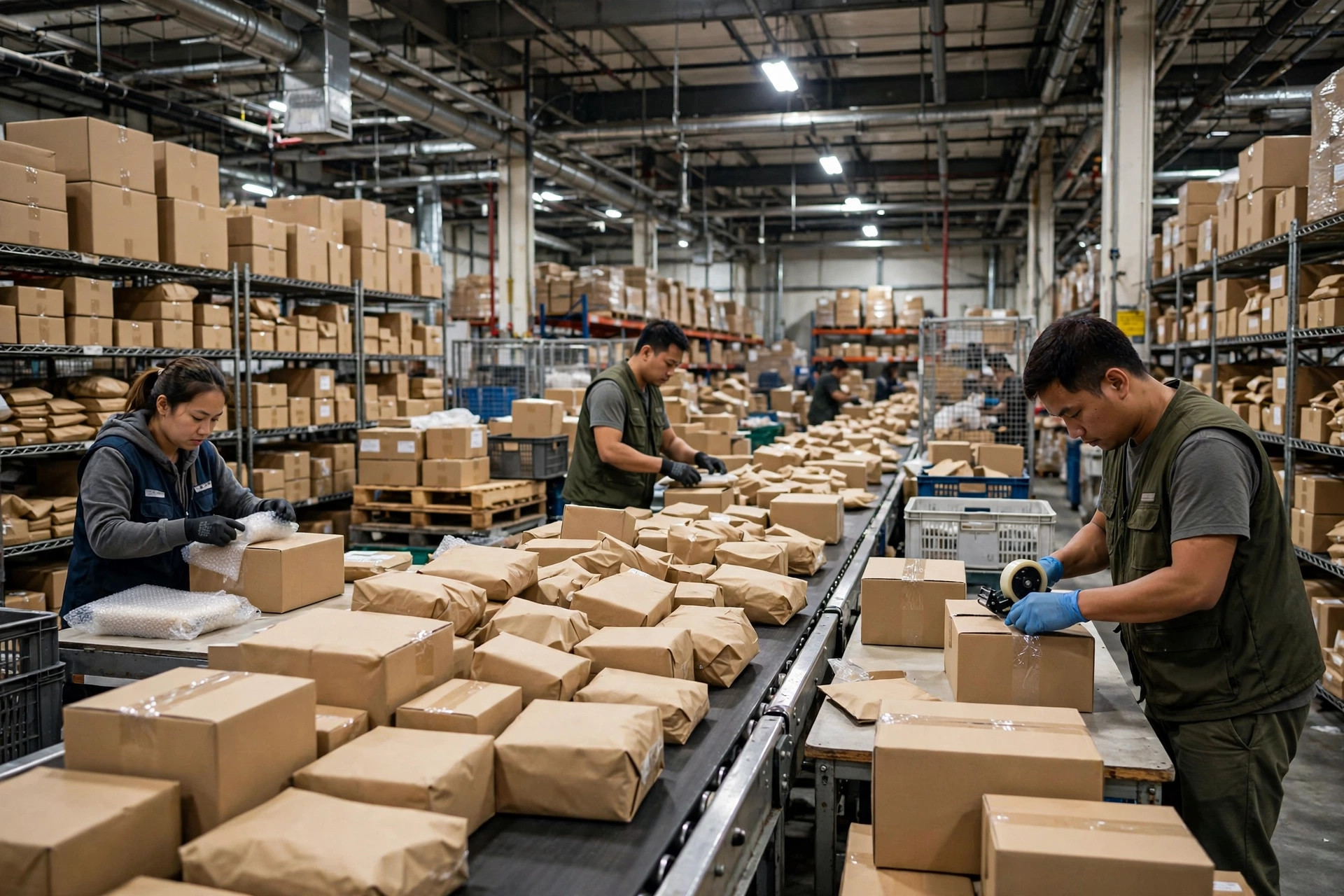
Let me complain first, because somebody has to: sellers coming from Amazon walk into Rakuten Ichiba expecting an FBA-style button, and there isn't one. That is the whole starting point of rakuten ichiba seller warehouse fulfillment. Rakuten Ichiba does not run one default, official, unified warehousing-and-delivery system that every seller simply ships inventory into. How your goods enter Japan, where they sit, who packs them, and who receives your returns — you assemble all of that yourself. This guide is how I assembled mine.
You have three roads, plus a fourth worth knowing. Ship orders yourself from China. Rent a small space in Japan and ship it yourself there. Or hand the job to a Japanese third-party logistics provider. The fourth is Rakuten-related logistics support, such as services in the style of Rakuten Super Logistics — platform-ecosystem support that can connect you with domestic Japanese fulfillment. I am not quoting prices or eligibility numbers for it here: those change, and the only safe source is Rakuten's latest official explanation.
Rakuten seller warehouse options: put all the roads on the table
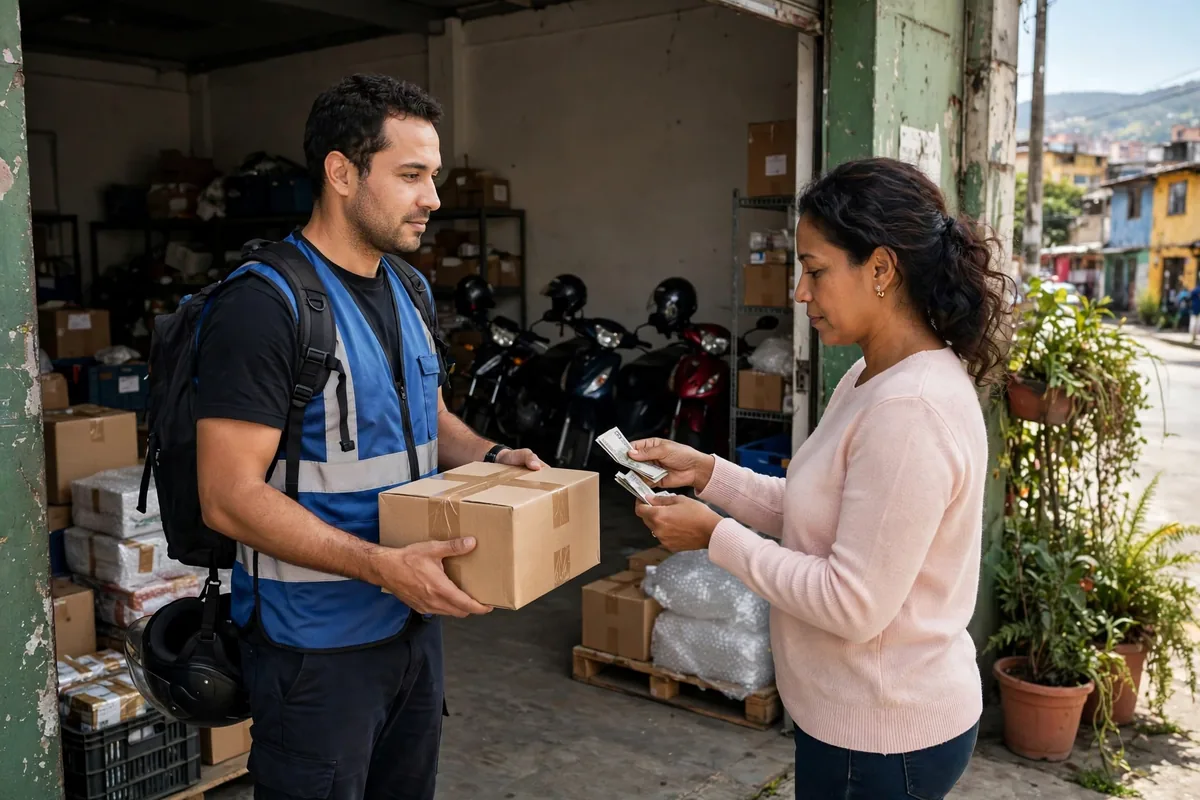
Scene one. A friend selling small home goods opened his Rakuten shop and shipped everything from Shenzhen to keep things simple. Then the reviews started mentioning slow delivery, in Japanese, politely and brutally at the same time. Japanese shoppers have little patience for a drifting parcel, and they judge packaging too — a thin mailer bag that nobody blinks at domestically reads as careless when it arrives slightly crushed. He moved his best sellers into a Japanese warehouse, and his reviews slowly turned around.
Scene two is my own shop, and I will label it honestly as a hypothetical example: imagine a light, small item that sells steadily on Rakuten every month, not expensive, but bought repeatedly. I ran it on direct shipping for a stretch. The warehouse rent I saved was real. But the share of messages asking "when will it arrive?" was visibly higher, and my customer-service time went into soothing people instead of improving listings. I moved that item into a local Japanese warehouse and kept only the long tail on direct shipping. The data spoke: tracking questions dropped off noticeably, and I stopped babysitting logistics chats every night.
Here is the comparison I actually use:
| Route | Best for | Upside | Watch out for |
|---|---|---|---|
| Direct shipping from China | Testing products, unstable volume, bulky low-frequency items | No inventory parked in Japan, no Japanese warehouse rent | Uncontrolled transit time, packaging standards hard to match, returns to China rarely make sense |
| Japanese local 3PL | Proven sellers with steady orders | Stable delivery, packing done to Japanese expectations, returns handled locally | Storage and handling fees, and a bad warehouse is expensive in communication time |
| Rakuten-related logistics services | Sellers who want platform-ecosystem support | Smoother fit with platform processes | Scope and fees follow Rakuten's latest official policy — verify coverage for your category yourself |
| Your own small warehouse in Japan | Volume big enough to justify staff, unusual products | Maximum control | Rent, people, and materials are all your problem; beginners, skip this |
Warehouse fulfillment standards in Japan: buyer expectations run your packing bench
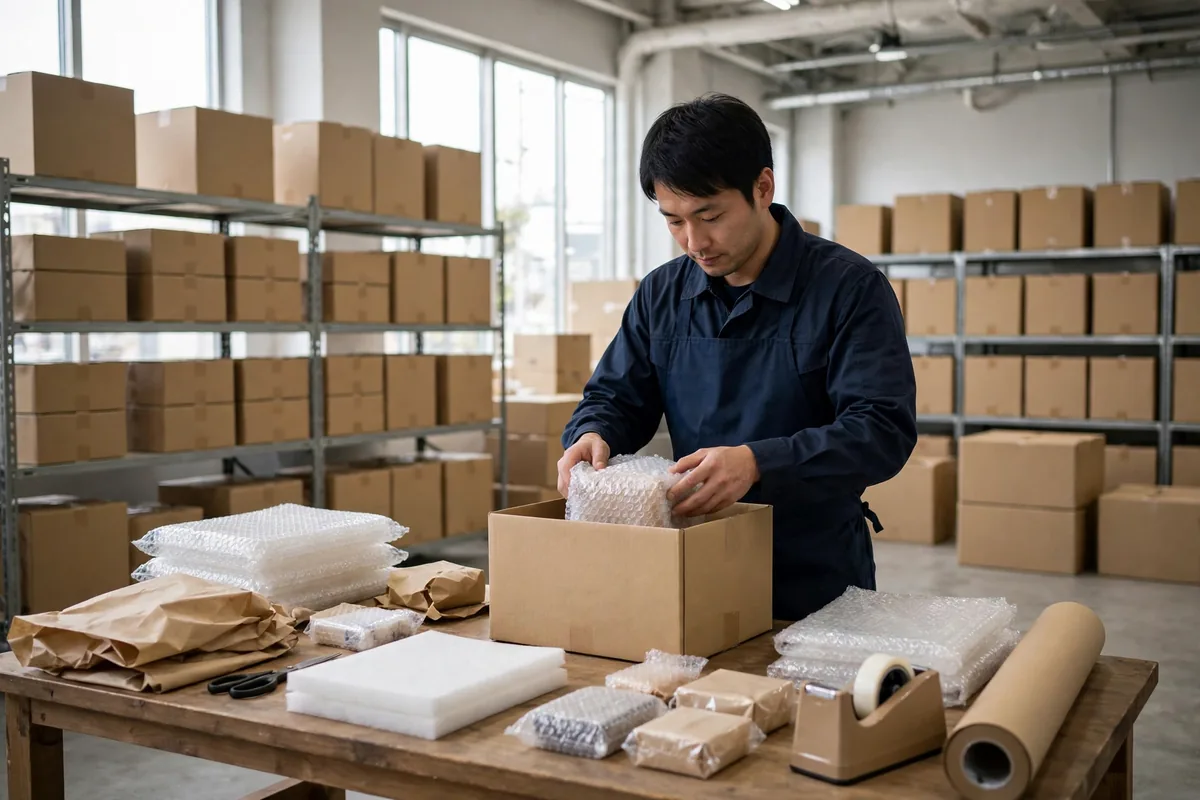
Before you argue about price, understand who sets the standard. Japanese shoppers were trained by a mature domestic e-commerce market. Fast delivery, yes. But also: a clean outer box, neat sealing, products that do not rattle inside, paperwork placed properly. In many markets that is a bonus. In Japan it is the passing grade.
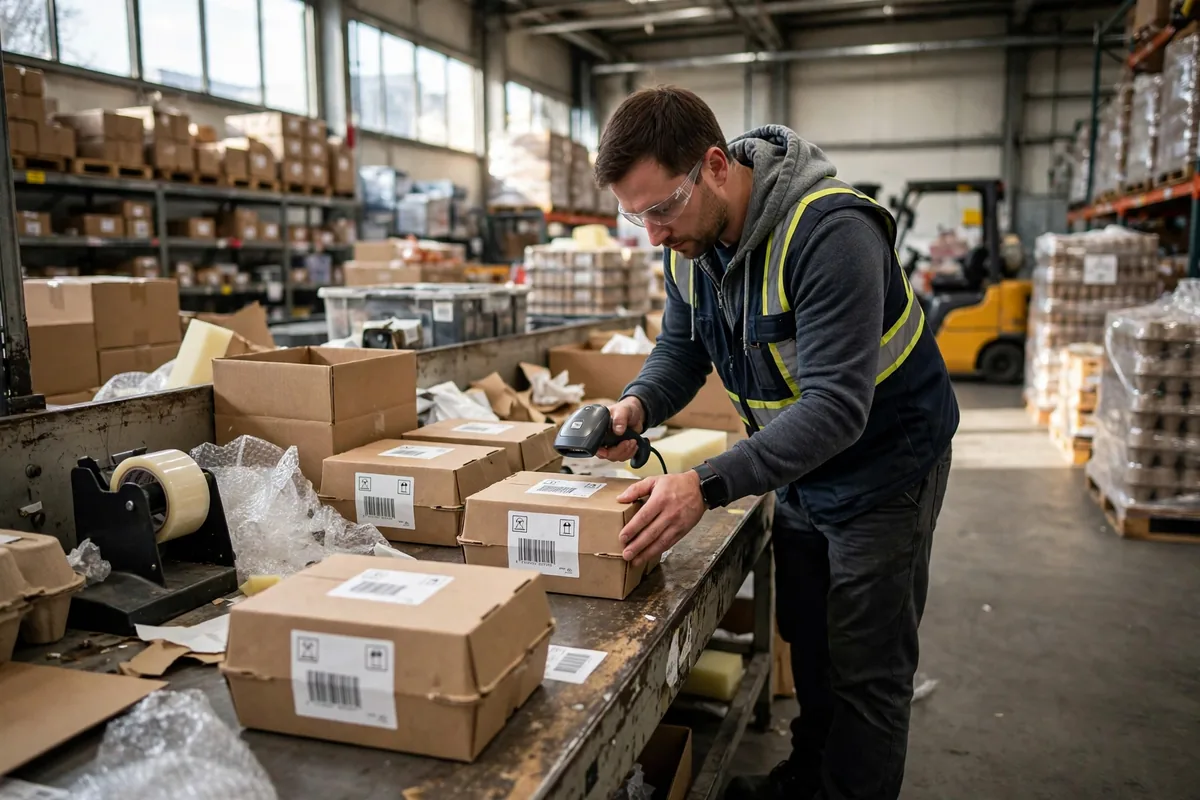
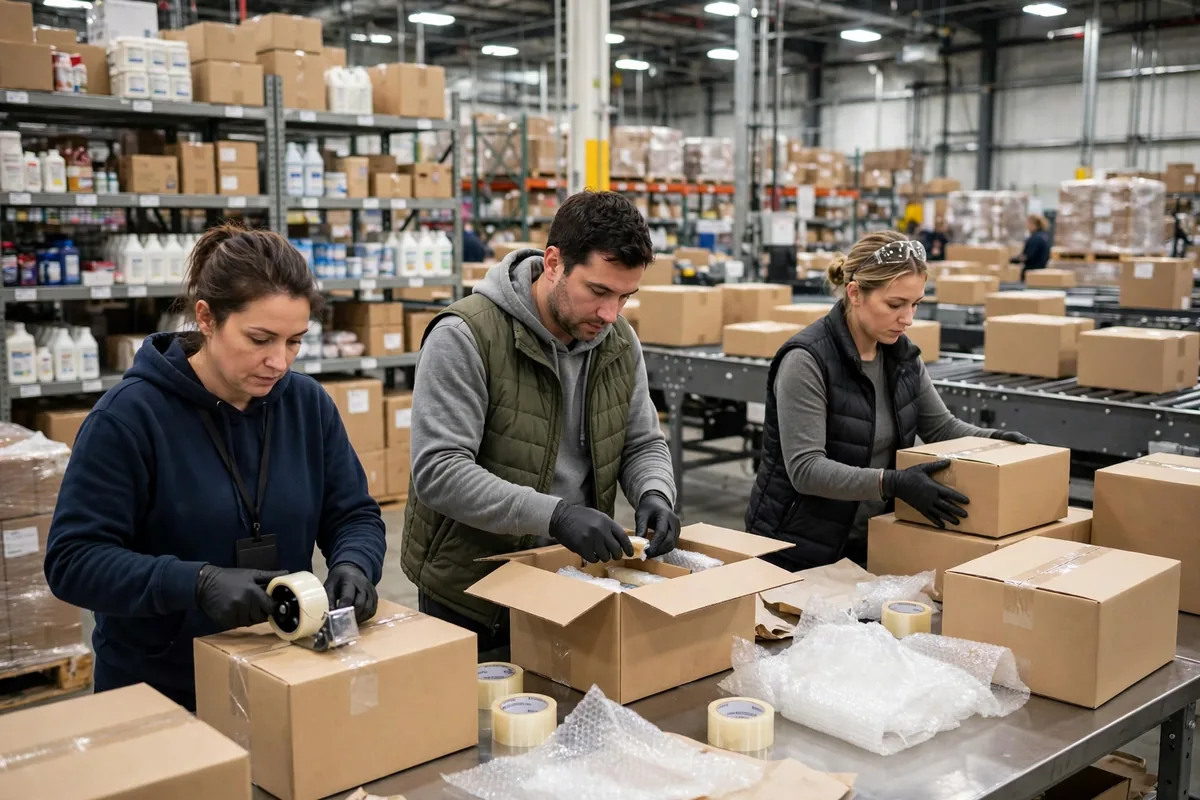
So when you evaluate a Japanese warehouse, do not open with price. Open with process. Is there one packing standard, or does every worker improvise? How are fragile items handled? Is there a check before dispatch? What happens in peak season? I got burned once when a partner warehouse hired temporary peak-season staff who packed loosely, and several orders drew complaints about insufficient padding. After that I turned my packaging requirements into a checklist detailed enough to tape to the packing bench. Sounds excessive. The Japanese market rewards exactly that.
Here is the counterintuitive part, and it is the trade-off I paid tuition to learn: stability beats raw speed. A warehouse that reliably ships within its promised window earns better reviews than one that sometimes delivers tomorrow and sometimes drifts for days. Buyers do not fear one extra day; they fear uncertainty. Chasing extreme speed gets exponentially expensive, while buying consistency — a clear cut-off time, a steady dispatch rhythm, fast exception alerts — costs comparatively little. Spend on consistency first.
Cut-off times matter too. Japanese warehouses run on a firm same-day dispatch cut-off, so your store operations must sync with the warehouse clock. Before any promotion, ask whether the warehouse can absorb the spike. I have watched a seller double orders on campaign day, overwhelm the warehouse, and ship late for three days — the campaign became a bad-review harvest. One capacity conversation before the sale beats a hundred apologies after it.
From direct shipping to a Japan warehouse: where I draw the line
When do you graduate a product from direct shipping to stocking it in Japan? I use a four-question framework, no mysticism involved.
First, order stability. A product that sells continuously over a period of time, not one riding a single traffic spike, earns the right to be stocked. Products still being tested stay on direct shipping, because a wrong bet parked in a Japanese warehouse bleeds rent and handling fees quietly, month after month.
Second, return rate and category. Apparel and similar high-return categories are a disaster on direct shipping — asking a Japanese buyer to mail something back to China is unrealistic, so you end up refunding and abandoning the goods. Stocked in Japan, returns land somewhere real, get inspected, and good units go back on the shelf.
Third, size and weight. The lighter and smaller the item, the smaller direct shipping's disadvantage. The heavier and bulkier it gets, the more domestic Japanese delivery wins. Every carrier quotes differently, so take your actual product dimensions and get real quotes. Never plan around somebody's "rough price."
Fourth, review sensitivity. A product you are pushing up the rankings lives and dies by reviews, and delivery plus packaging are exactly what reviewers mention. Those go into a Japanese warehouse first, even at thinner margins.
The dividing line in one sentence: use direct shipping to buy flexibility for unstable products, and a Japanese warehouse to buy reputation for stable ones. Run both, review monthly, move products across the line as data changes. My shop runs this hybrid today, and that hybrid is what rakuten ichiba seller warehouse fulfillment really means — not one system, but a deliberate split of risk.
Returns in the warehouse: do not let them become a black hole
Returns are where sellers stop paying attention, and where money quietly rots. If your stock sits in a Japanese warehouse, your returns go there too, so agree on four things with the warehouse before the first return arrives: who signs for returns, how thorough the opening inspection is, what standard a unit must meet to go back on sale, and how damaged items are handled and photographed for your records.
My own scar tissue: early on I never set an inspection standard, returned goods piled up untouched for months, rent kept ticking, and half of it missed its selling season. Now my rule is simple — returns get inspected and reported within an agreed window, good units go back on the shelf fast, and damaged units sit separately waiting for my call: mark down, dispose, or ship back. The decision is mine, but the information reaches me first.
One more detail most sellers waste: Japanese buyers write specific return reasons. If your warehouse matches the stated reason against the item's actual condition, you learn whether the problem is the product, your listing, or the delivery. That data improves your listing faster than a hundred guesses. Returns are not pure cost; handled this way, they are the cheapest product research you will ever buy.
Bottom line: on Rakuten, product and traffic only get you through the door; fulfillment makes people stay. Having no official unified system feels like a handicap, but it is quietly an equalizer — big and small sellers start from the same line, and whoever runs the Japanese warehouse side more carefully wins. Start with one proven product, get that loop working, then expand. This approach to rakuten ichiba seller warehouse fulfillment worked in my own shop, tested in real orders, not in theory.
By Ah K, E-commerce Seller (5 yrs)