I did not go to Seville because I had a grand plan for southern Spain. I went because a regular customer cornered me. He distributes olive oil and tableware across Andalusia, sends goods down toward the coast and up toward Madrid, and asked whether I could find him a small warehouse in Seville that was cheap and actually workable. My honest first thought was that the big operators play a completely different game there. They sign long leases, fill huge buildings, and spread their fixed costs across volumes I will never see. A small warehouse like mine cannot burn money that way, so I went to look with a different question in mind: not where the map looks impressive, but where a team of a handful of people can survive.
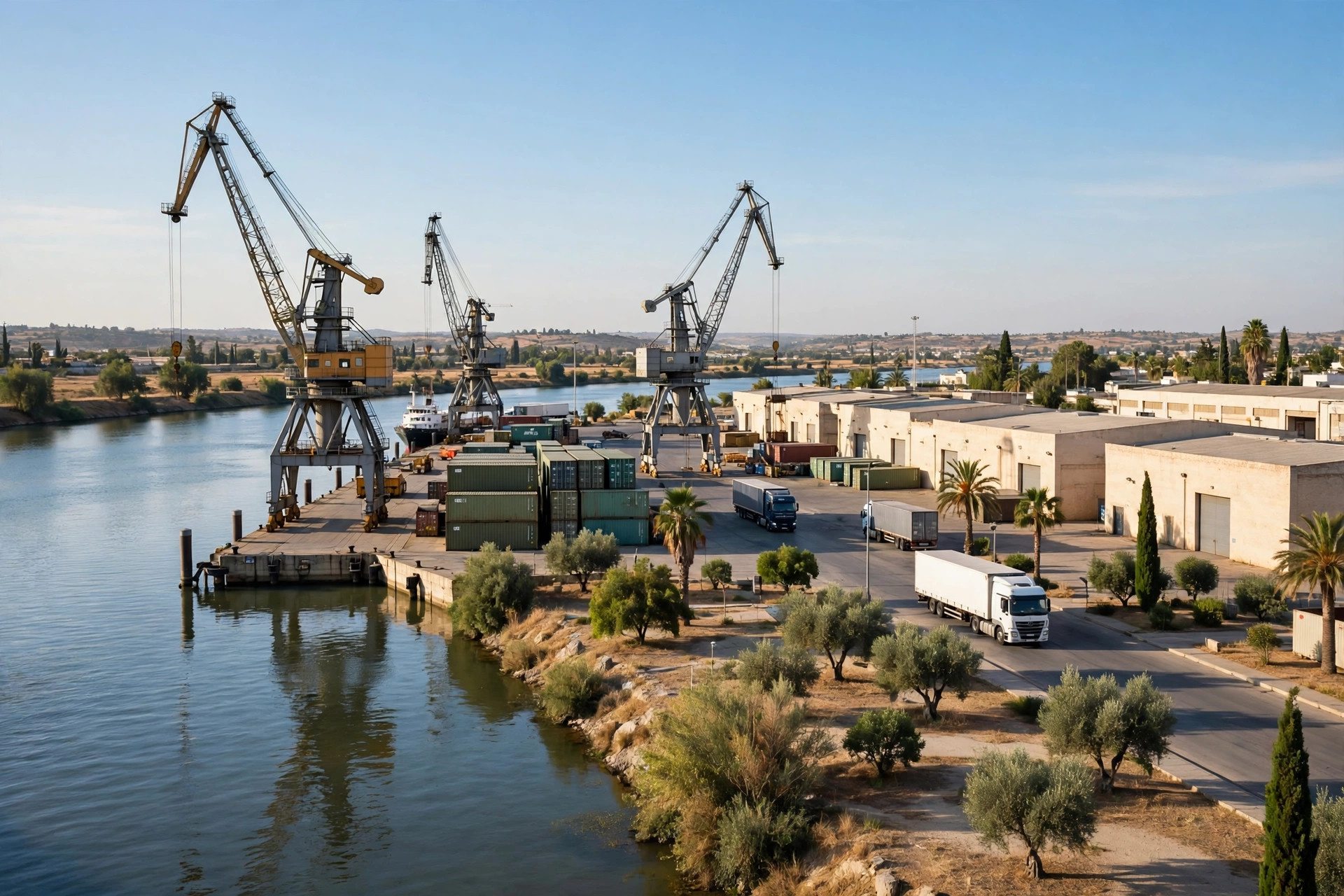
The first thing to get straight is that Seville is not a coastal city. The Guadalquivir river runs through it, and the river port sits inside the city, but this is not a deep-sea port where giant ships dock around the clock. Think of it more as an inland distribution hinge. Freight arrives, gets broken down into smaller loads, and fans out across Andalusia. For a large regional hub, that is a fine story. For a small operator, the real question is narrower: what does being near the river actually give you, and what does it quietly charge you for?
The riverfront looks great in photos, and that is the trap
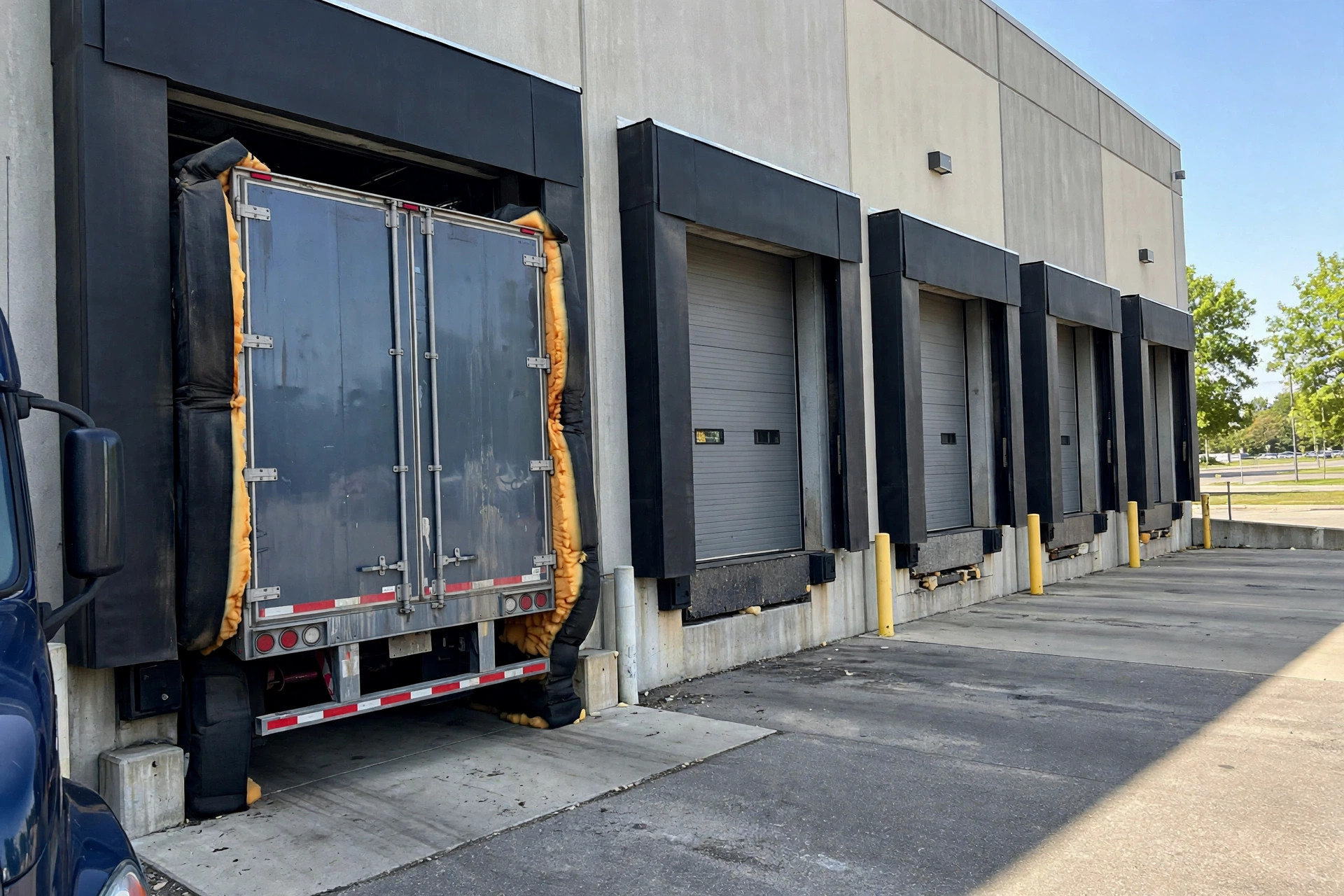
A riverfront warehouse photographs beautifully. You stand at the door, you see the water and the cranes, and a visiting customer immediately thinks you must be well connected. I walked one such older building with a friend, and on paper it ticked the boxes: decent height, a loading area right at the door, and a landlord who talked up the port advantage as if it were a discount. Then we spent a morning watching the place work, and the story changed. The access road was narrow, and during the morning rush trucks queued to get in and out. Drivers sat there burning fuel and paid hours while nothing moved. Worse, hiring was hard. Few warehouse workers live near the riverfront, so temporary staff had to travel in from far away, and in peak season plenty of them simply said no when they heard the commute.
Then there is the part small operators always underestimate: old buildings cost money in ways that never appear in the rent quote. Floor loading, fire protection, dock levellers, lighting, doors — each item sounds small until you add them up, and the first few months disappear into repairs. We cannot afford that kind of slow bleed, and we cannot afford to wait months while a building gets fixed up. A riverfront site suits a team with steady volumes and fixed schedules, a team that can spread those fixed costs thin. Our orders swing wildly — olive oil one week, tableware the next — and a riverfront lease would have locked us into a rigid shape before we had even started. It looked flexible on the brochure and felt rigid on the ground.
The suburbs are where a small warehouse actually stays alive
Drive out toward the southern suburbs, in the direction of Dos Hermanas, and the mood changes completely. Warehouses cluster together there, and the everyday infrastructure of trucking life is all nearby: repair shops, fuel, somewhere decent to eat. Workers live in the neighbourhood, they can walk to work, and they stay. One building stuck in my mind even though its rent looked higher than the riverfront option and the space was nothing special. It had two advantages no rent discount can buy: trucks could come and go at night, and the yard was wide enough for two vehicles to work side by side without blocking each other.
We did our own back-of-the-envelope maths, not the landlord's kind but the kind a small owner actually lives by. One extra delivery run a day, sustained over a three-week peak, more than covered the rent difference. That is the cheap workaround nobody puts in a brochure: sometimes the lowest rent is not the cheapest warehouse. The cheapest warehouse is the one that wastes the least of your day.
The suburbs gave us something else that turned out to be just as valuable: neighbours. When small warehouses sit close together, people know each other, and that network becomes a survival tool. One spring week, the warehouse next door landed a rush job that needed coastal deliveries for three straight days and ran short of trucks. We happened to have a spare vehicle, so we shared loads for two days and split the fuel and driver hours. Neither of us hired anyone extra, and neither of us turned work away. Big companies cannot operate like that, and frankly they would not want to — their procedures do not allow today to look different from yesterday. But flexibility is the whole point of being small, and the suburban cluster gives that flexibility somewhere to live. The suburbs have a drawback too, and I will not hide it: customers visiting for the first time think you are far away, so you have to explain delivery times clearly and prove them with real schedules, or they will assume a warehouse off the main road must be slow.
Three locations side by side, and the trade-off becomes obvious
After that trip I stopped comparing buildings one at a time and started comparing locations against the handful of questions that actually decide whether a small warehouse makes it: rent, hiring, access, and coverage. Riverfront, southern suburbs, and a highway corridor node are not good or bad in the abstract. They fit different kinds of work, and the table below is the version I wish someone had handed me before I started driving around.
| Location | Rent feel | Hiring and retention | Truck access | Distribution coverage | Best for | Biggest trap |
|---|---|---|---|---|---|---|
| River port side | Looks gentle, repairs extra | Hard, workers live far away | Morning queues on a narrow road | Good for river-linked distribution | Steady volumes, fixed schedules | Old-building fixes and access bottlenecks |
| Southern suburbs | A bit higher, far less hassle | Easy, workers live nearby | Wide yard, night access possible | Smooth coverage across southern Andalusia | Small warehouses with swinging orders | Customers think you are remote, so prove your times |
| Highway corridor node | In the middle, depends on the node | Depends on nearby housing | Fast on and off the highway | Good toward Madrid and the coast | Linehaul plus regional distribution | One jam at the node slows everything down |
Before signing anything, I would ask three questions, and I would answer them honestly, because different answers flip the conclusion. Where does most of your freight actually come from, the river direction or the highway direction? Where do your workers live, and can you still staff up in peak season? What time must your trucks leave, and is the road outside the gate jammed at exactly that hour? Answer those three and the table almost chooses for you.
Here is the counterintuitive part, the bit that surprised me most. The warehouse closest to the river is not necessarily the warehouse closest to your freight. And the warehouse with the lowest rent, once you count queuing, hiring, and repairs, is often the most expensive one you looked at. For a small operator, a site is not valuable because it sits near a landmark. It is valuable because it lets you run one more trip a day, keep two more people through peak season, and carry one fewer idle worker through the quiet months. That is a completely different scoreboard from the one big companies use, and we should stop grading ourselves on theirs.
So my advice to anyone like me is simple and cheap to follow: when you visit warehouses in Seville, do not start with the rent sheet. Spend half a day at the gate first. Watch how trucks get in and out, find out where the workers come from, and only then sit down to talk price. We will never beat the big players at size or scale, and we do not need to. A small warehouse has its own way of staying alive, and staying alive beats looking big every single time.
By Xiao Ma, Small Warehouse Owner