slug: santiago-chile-last-mile-delivery-warehouse-guide lang: en title: "Santiago Last-Mile Delivery: Where to Put the Warehouse So the Last Mile Pays" excerpt: "Santiago, Chile last-mile delivery warehouse location decides whether the last mile pays. E-commerce logistics here is worth about $2.1 billion, orders concentrate in Santiago, and a warehouse in the wrong place taxes every order." section: 仓储门道 subcategory: ops:overseas tags: ['santiago', 'last-mile-delivery', 'urban-warehouse', 'chile', 'ecommerce-fulfillment'] region: sa author: susan date: 2026-11-09
We had a client, a home-goods e-commerce seller, who came to us in early 2025 to talk about a Santiago, Chile last-mile delivery warehouse plan. Their logic was straightforward: Santiago dominates e-commerce logistics in Chile, the orders are all there, so lease one big warehouse and let it handle storage and delivery together. The site they liked was out in the suburbs — big floor plate, cheap rent on paper — and the client was pretty pleased with himself. "Susan," he said, "sign this warehouse and Chile is sorted."
I told him to hold off. We took three months of his real order addresses and plotted them on a map. The orders were packed tight inside urban Santiago, and that suburban warehouse sat a long drive from most of them. Yes, the rent was lower. But the extra miles every van drove, the extra driver hours, the failed first deliveries that had to go out a second time — all of that was waiting on a different invoice. That is the Santiago last-mile delivery warehouse trap in one sentence: people price the rent and forget the road.
Start with the size of the prize. Chile's e-commerce logistics market is worth about $2.1 billion (Ken Research, 2024 as the base year), and orders concentrate heavily in Santiago. When demand is that concentrated, warehouse location is not a real-estate decision, it is a cost-per-order decision. The closer the warehouse sits to the orders, the cheaper every order gets; the farther away it sits, the more each order pays a distance tax.
Santiago Last-Mile Delivery: Where Rent Is Cheapest, the Van Is Most Expensive
Here is the counterintuitive part, and it is the first thing I tell any client looking at Santiago: the cheapest rent usually produces the most expensive total cost. A suburban big-box lease looks good per square meter, but the last-mile van still drives the full distance. Fuel, driver hours, and empty miles from second delivery attempts do not shrink just because the rent did. Put the warehouse a little closer to town, pay a little more rent, cut a dozen kilometers off every route, and the cost per delivered order often comes down.
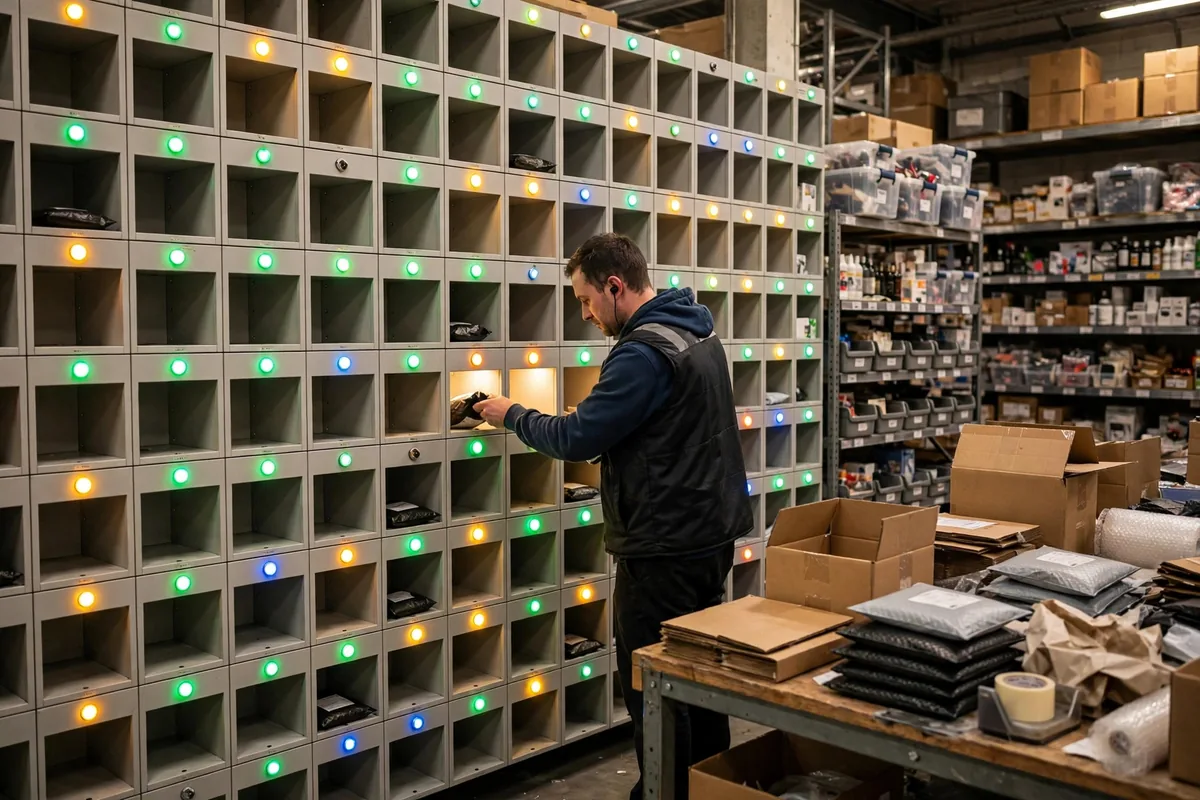
The local giants are betting exactly that way. In October 2025, Blue Express and Copec announced a $100 million investment: a 40,000-square-meter expansion of their main warehouse, with a target of tripling delivery capacity by 2030. At the same time, they already operate more than 3,200 pickup and return points, and are growing smart lockers from 200 to 500. Notice where the money goes. It is not all into the big warehouse. A serious share goes into points that sit closer to the customer. Letting a customer pick up on their way home is cheaper than driving to every doorstep, and the more return points you have, the shorter the trip back to the warehouse — and returns are where the quiet money leaks out.
Pickup points carry a second benefit your vendor will not volunteer: they absorb failed deliveries. A home delivery with nobody in means a second trip. A parcel sitting in a locker does not. For categories with high return rates, that alone can pull your after-sales cost down. So stop staring at the rent per square meter. The cheapest line on a quote is often the most expensive line on the annual bill.
There is one more angle clients usually miss: where your customers order from decides who your warehouse should sit next to. Selling e-commerce in Santiago means competing for the same dense urban orders that every platform and third-party carrier is chasing. In that fight, warehouse location is delivery speed, and delivery speed is conversion. Deliver a day late and the customer may simply order from someone else. That loss never appears on a quote, but it happens every month.
One Big Warehouse or a Hub and a Satellite? Run the Table
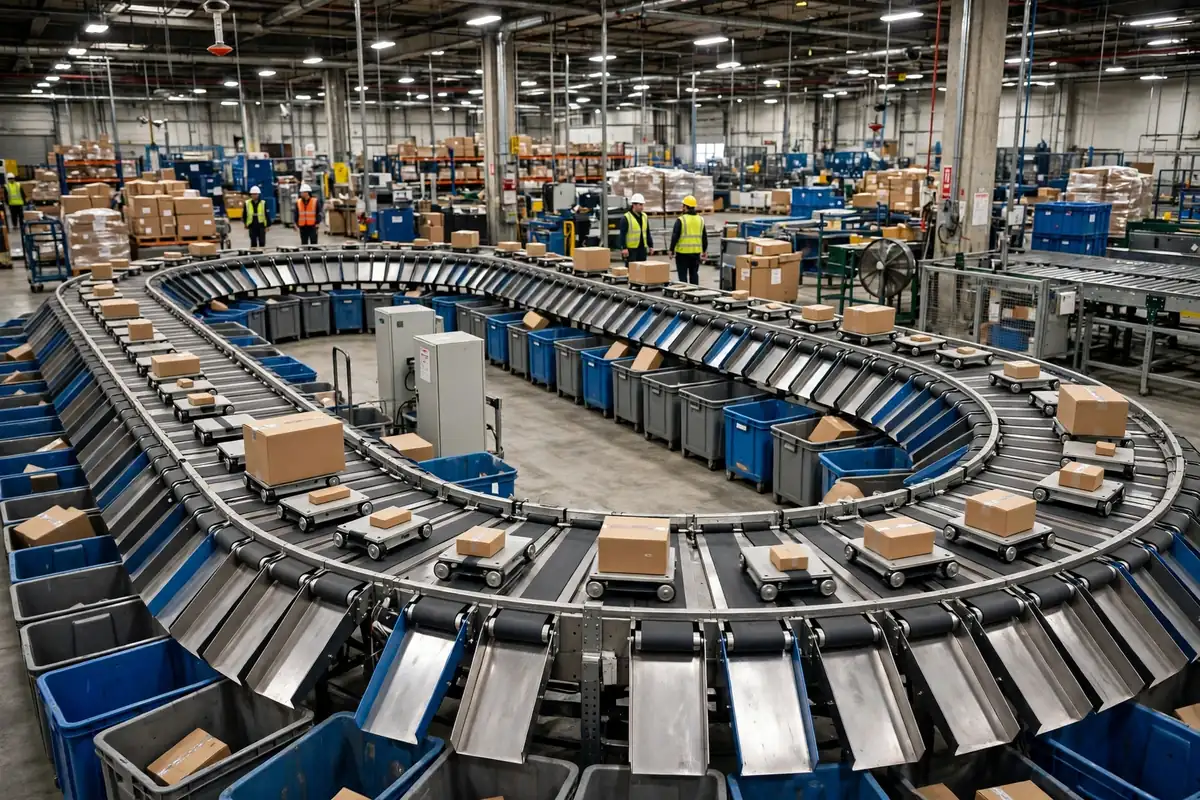
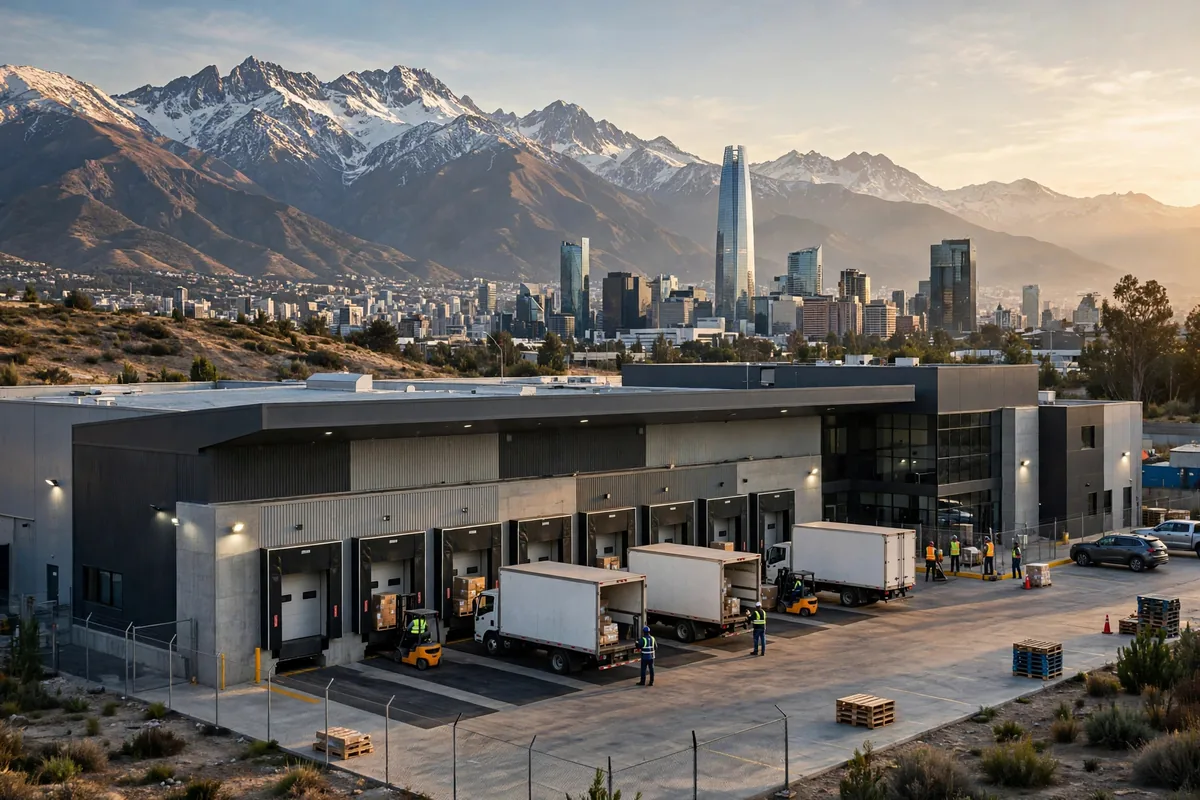
Our client ended up with a different setup: keep a main warehouse in the suburbs for storage and cross-docking, and add a small satellite warehouse on the edge of the city for same-day delivery. The idea is not new. Kuehne+Nagel built a 30,000-square-meter semi-automated distribution center in Santiago for Casaideas on exactly that logic — put the warehouse inside the demand, let semi-automation carry the inbound volume. In 2025 it handled 34.8 million inbound units and around 190,000 e-commerce orders. At that volume, headcount alone cannot carry the operation. Location plus semi-automation has to do it together.
| Factor | One big suburban warehouse | Main warehouse + city satellite |
|---|---|---|
| Rent per square meter | Low | Low for the main site, higher for the satellite |
| Last-mile speed | Slow, many second attempts | Fast, same-day delivery is realistic |
| Returns handling | Long trip back, slow | Collected nearby, fast |
| Peak-season flexibility | Scale by adding people and vans | Satellite fills first, main site absorbs the rest |
| Best for | Low volume, scattered orders | Sellers whose orders concentrate in the city |
When you run the numbers, do not stop at rent. Take a hypothetical example: 10,000 orders a month, saving $1 on last-mile cost per order, adds up to $120,000 a year. That is an illustrative example, not a quote — I use it to show where the big money hides. It hides in the per-order delivery cost, not in the rent.
That is not to say the suburban big box is useless. Megacentro's Mega Centro Emasa in Pudahuel runs about 190,000 square meters with 12-meter clear height. A facility of that scale is an excellent regional hub for storage and cross-docking. But use it as your only delivery warehouse and every order starts its journey outside the city. The last-mile bill will find you eventually. How do you decide whether to add a satellite? Look at one thing: how concentrated your orders are. The more they cluster inside urban Santiago, the faster a satellite pays for itself. If your orders scatter across the whole country, fix the main warehouse's cross-dock first.
Three Traps in a Santiago, Chile Last-Mile Delivery Warehouse Contract
Once the warehouse question is settled, the contract is next. For a Santiago, Chile last-mile delivery warehouse contract, I suggest getting quotes from at least four players — Chilexpress, Blue Express, Mercado Envíos, and Starken — on the same batch of orders. Same orders, four quotes, and the differences in how they price become obvious. When you compare, focus on three things:
One is the pricing basis. Is last-mile priced per parcel or per zone? How are surcharges for remote zones charged, and is there a cap? Some quotes look cheap on the headline rate and then make it all back on the surcharge page.
Then the returns terms. When a return comes back through a pickup point, who pays for the trip back, how many days until it reaches your warehouse, and who owns the damage decision? For high-return categories, this clause matters more than the delivery rate.
And peak-season capacity. Is the peak capacity ceiling written into the contract? Above the ceiling, do they surcharge or simply refuse orders? Losing orders at peak costs far more than paying a slightly higher rate in the quiet months.
None of these three will be volunteered by the salesperson. You have to ask. Anything not written into the contract becomes your cost when something goes wrong.
One more tip on comparing quotes: do not compare headline rates. Send every carrier the same real orders — last month's orders broken down by zone, weight, and service promise — and let each of them price that exact mix. Comparing the lowest rate without comparing the order mix is like comparing the price of apples to buy oranges. And if you sell on Mercado Libre, price Mercado Envíos separately. Its delivery promise ties into marketplace visibility, so a slightly higher freight bill can buy better exposure and conversion. That math belongs in a conversation with your operations team, not in a logistics-only spreadsheet.
Next time you negotiate a contract, ask these three questions: how exactly is the last mile priced? Who pays for a return from a pickup point, and how fast does it get back? And what is the peak-season capacity ceiling, and what happens above it? Get those three answered in writing, and you will know where the warehouse should sit and who should run it.
By Susan, 3PL Sales Director