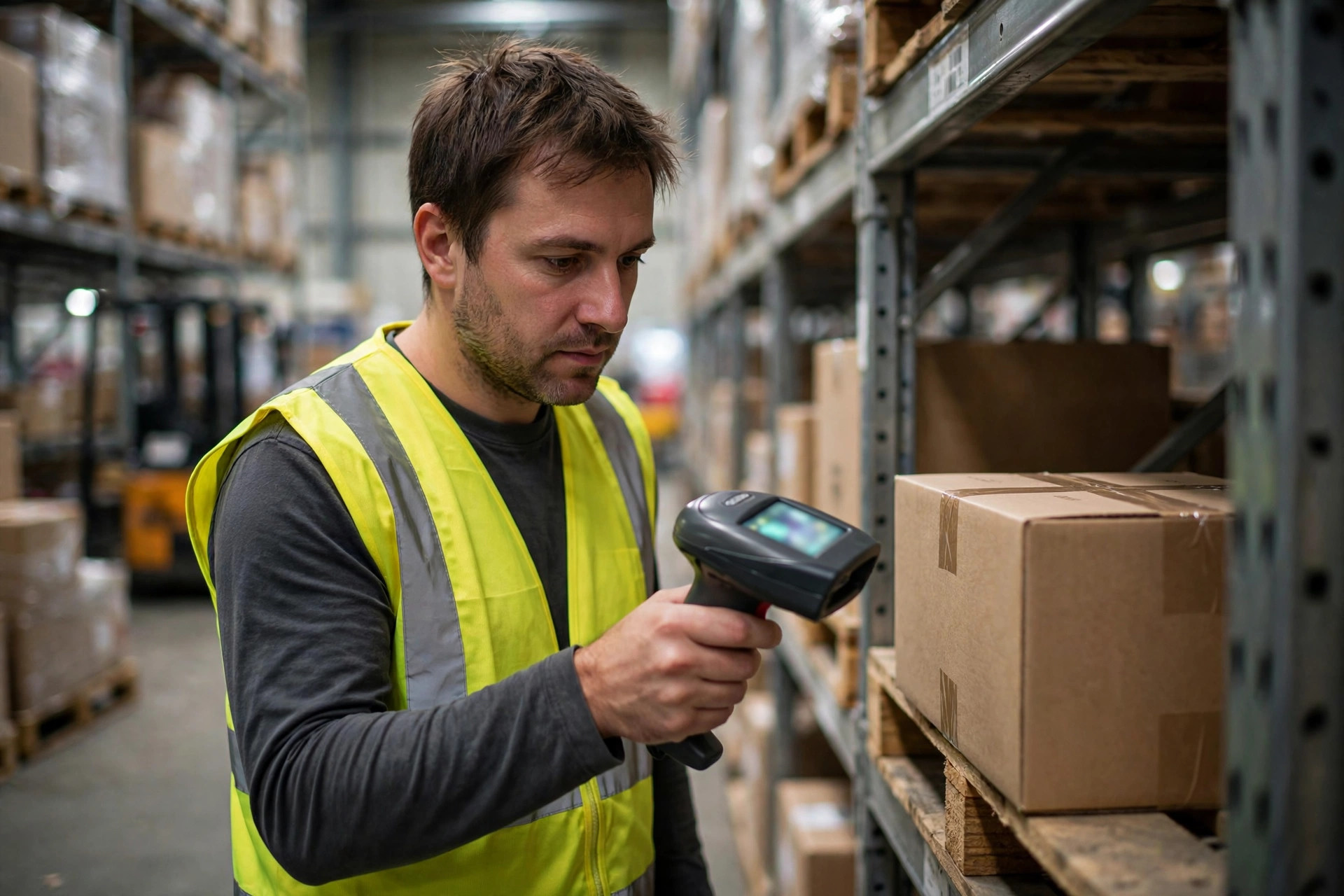
Have you ever counted how many times your pickers hit the confirm button in a single shift?
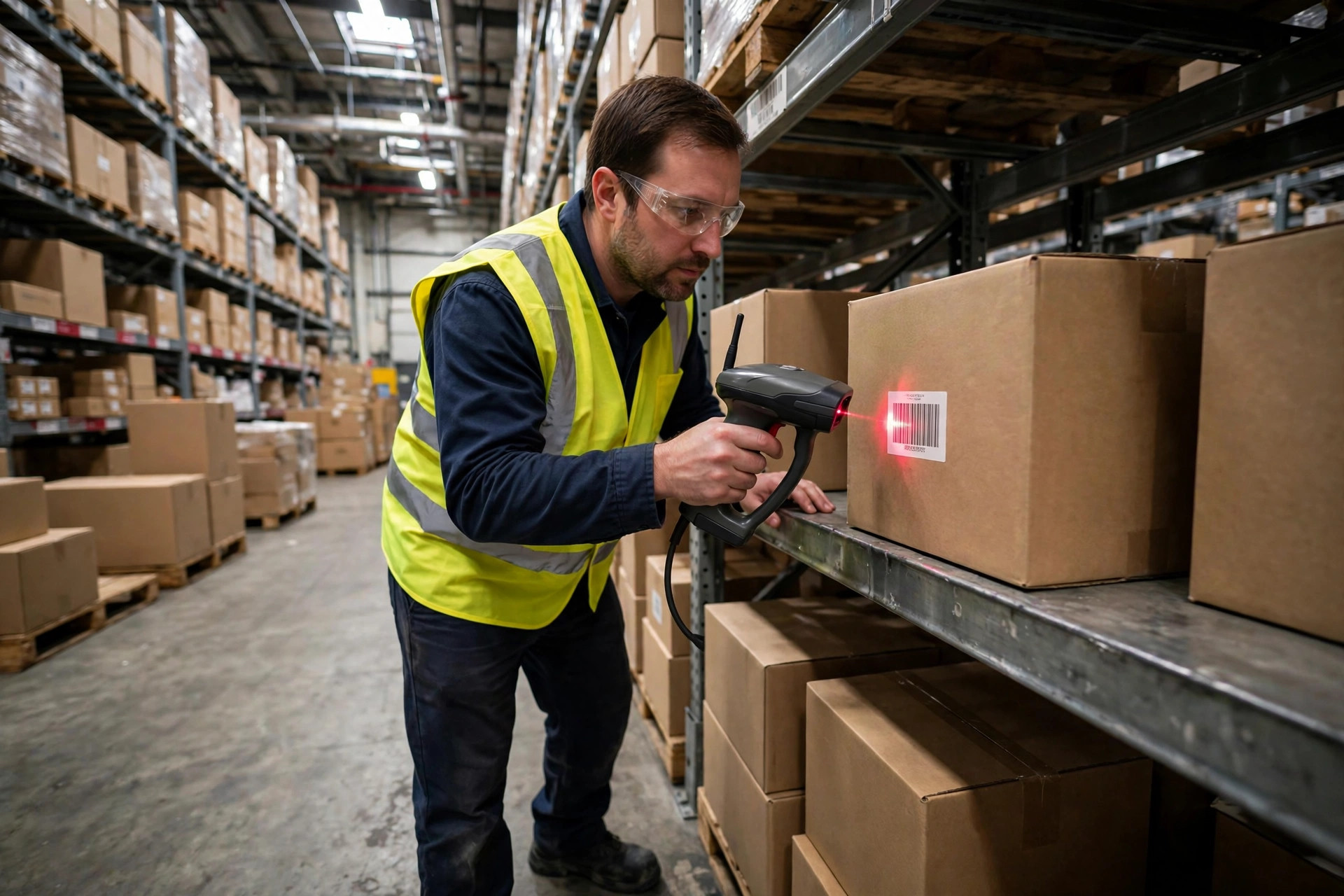
I ran the numbers back in 2023 at a 120,000-square-foot 3PL warehouse in Fontana, California. Every picker carried a Zebra MC3300 handheld, and the standard pick flow went like this: scan the location barcode, check the screen, key in the quantity, hit confirm, scan the item barcode, hit confirm again. Two confirm taps per order line, minimum. During peak season a picker handled around 1,500 lines a day — that's 3,000 taps on a single button per shift, and that doesn't count the re-taps after typos. Do the math over a year and your pickers' thumbs are busier than a full-time typist's.
Their pick error rate had been parked at around 1% for years. The ops manager tried everything: retraining, picking contests, motivational posters on the wall, even fines for mis-picks. Nothing moved it. So I told their IT team: stop fixing the people. Fix the screen.
That wasn't a throwaway line. When a human being taps the same button 3,000 times a day, attention drift isn't a discipline problem — it's ergonomics. And here's the ugly loop most warehouses are stuck in: the harder you punish mistakes, the less pickers report problems, and the more errors pile up. Training fixes "I don't know how." It does nothing for "my finger slipped."
They changed three things. Two months later, the error rate their own team was tracking had dropped to roughly 0.5%. Full disclosure: that's one warehouse's measured data, not a universal law — your number will be different. But I'll stand behind the direction all day: most picking errors are designed into the interface, not the picker. Anything a thumb hits 3,000 times a day will fail if the screen fights back even a little.
Make the confirm key huge — big enough to hit blindfolded with gloves on
The old screen looked like this: on a 4-inch display, Confirm, Cancel, and Back were squeezed into a single row, each about the size of a fingernail. In winter, with gloves on, nobody hit the right one reliably. Clip Cancel by accident and you're rescanning the whole order. Clip Back and everything you just scanned is gone. At thousands of taps a day, a mis-tap isn't a question of if — it's a question of when.
The fix was blunt: Confirm now fills the bottom third of the screen, big and green. Cancel and Back shrank into two small text links in the top-right corner. Not a single line of business logic changed — pure layout.
There's a trade-off here worth thinking through. The screen is only so big: a bigger button means less information per screen, and product descriptions now need a scroll. Their call was simple — at the pick step, a picker genuinely needs exactly three things: location, item name, quantity. Everything else is noise. The more fields you cram onto one screen, the more "complete" it looks and the more it fails. Smaller operators, take note: don't copy the big guys and stack a dozen fields on one screen. That's a screen for the office, not for the picker.
One more thing. Plenty of older warehouses still run terminal emulation on their RF guns — black screen, green text — and IT's first answer is always "we can't change it." In practice, the major vendors all ship screen-redesign tools now; Zebra and Honeywell include them. You can rebuild the buttons without replacing the system. Don't let "the system can't do it" end the conversation — most of the time, nobody's bothered to look.
Scan it and move on — kill the second tap
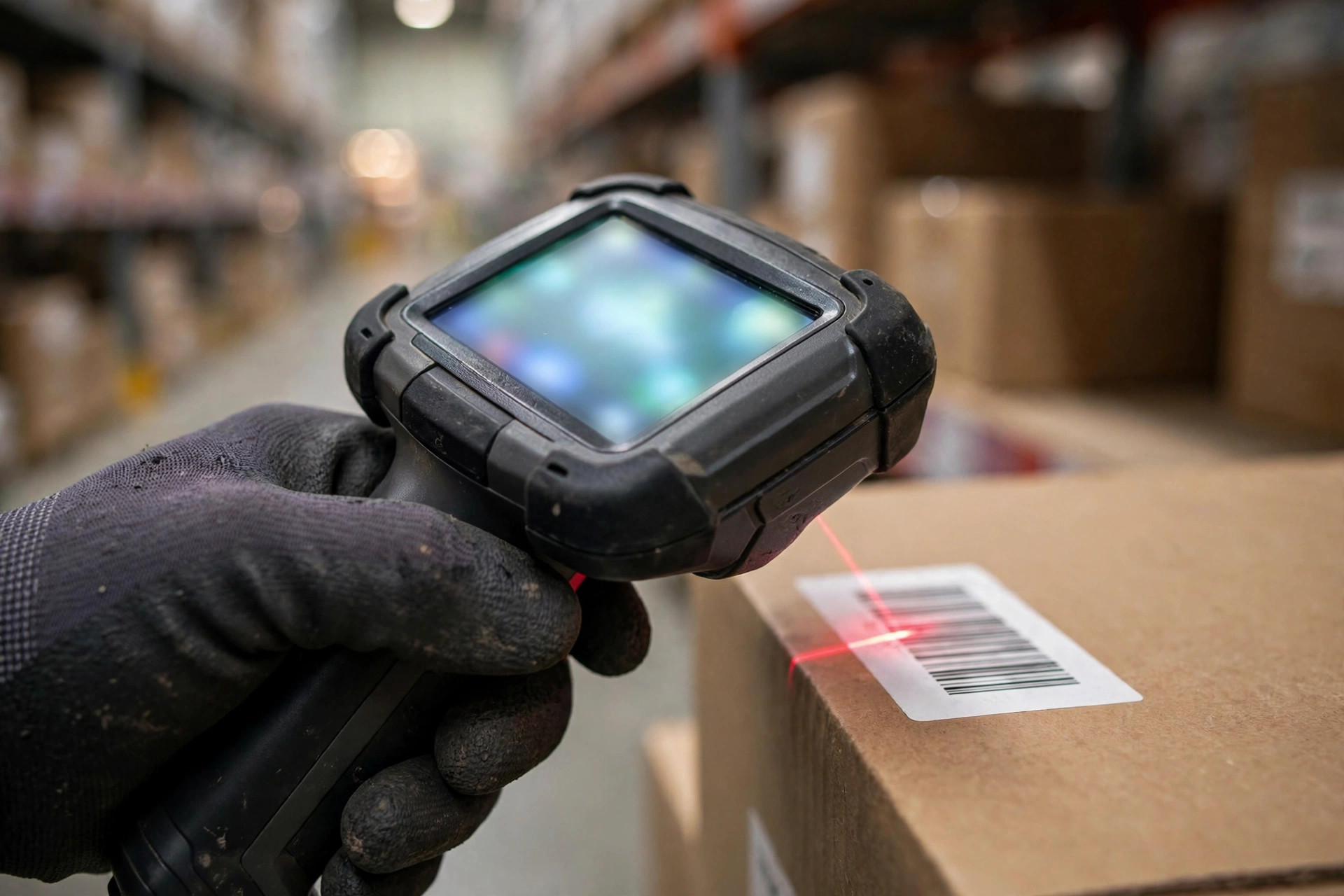
The second change was bolder: after the item barcode scans, the screen advances to the next line on its own. The confirm step disappears entirely. "Scan, then tap confirm" becomes just "scan." Hands stay off the screen, and eyes stop bouncing between the gun and the shelf. Don't underestimate that one tap — across 1,500 lines a day, that's 1,500 fewer taps and roughly half the mis-tap opportunities.
But this one comes with a precondition, and it's a judgment call a lot of people flinch at: a scan IS the confirmation, which means you have to trust your barcodes. If a label is wrong or someone scans the wrong item, the system won't save you. So the warehouse paired it with a barcode verification step at putaway. The logic is straightforward — move the cost of checking from the picking side (thousands of repetitions a day) to the putaway side (hundreds). Verification belongs wherever the volume is lowest.
If reporting a problem is a hassle, nobody reports it
The third change: a big red "Problem" button, pinned to every screen. Damaged item, wrong quantity, unscannable barcode, empty location — the old flow forced pickers to either guess or walk the gun over to a supervisor. Most of them guessed, because guessing didn't hurt their piece rate. Now one tap logs the exception, the supervisor's device buzzes in real time, and the picker keeps moving to the next line without breaking stride.
The payoff showed up somewhere unexpected — not in the error rate, but in cycle-count variances. Their inventory team told me that "the picker saw the problem but didn't report it" used to explain a big chunk of their discrepancies. Once reporting took a single tap, that category of variance dropped by roughly a third. Different metric, same root cause — keep the two numbers separate in your head.
All three changes together took less than a week of dev work. Money and time were never the barrier. The barrier was admitting the problem was the screen, not the people. And the math is not close: one mis-shipped order, counting the return, the reship, and the customer service back-and-forth, easily costs tens of dollars. The UI work is a rounding error next to that.
Before you roll anything out, lock down how you'll measure it — otherwise you'll never know which change did the work:
- Baseline first: track your current error rate (bad lines divided by total lines) for two weeks. No baseline, no proof.
- Pilot small: one device, one shift, two weeks, with another shift as the control group. Don't push it to the whole floor at once.
- Ship the three changes one at a time, a week apart. When the number moves, you'll know whose doing it was.
Tomorrow, walk into your warehouse, borrow an RF gun, put on a pair of work gloves, and pick twenty orders yourself. Count your confirm taps and your mis-taps. When you're done, you'll know what I know: at least half of those 3,000 taps were taps the interface made you waste.