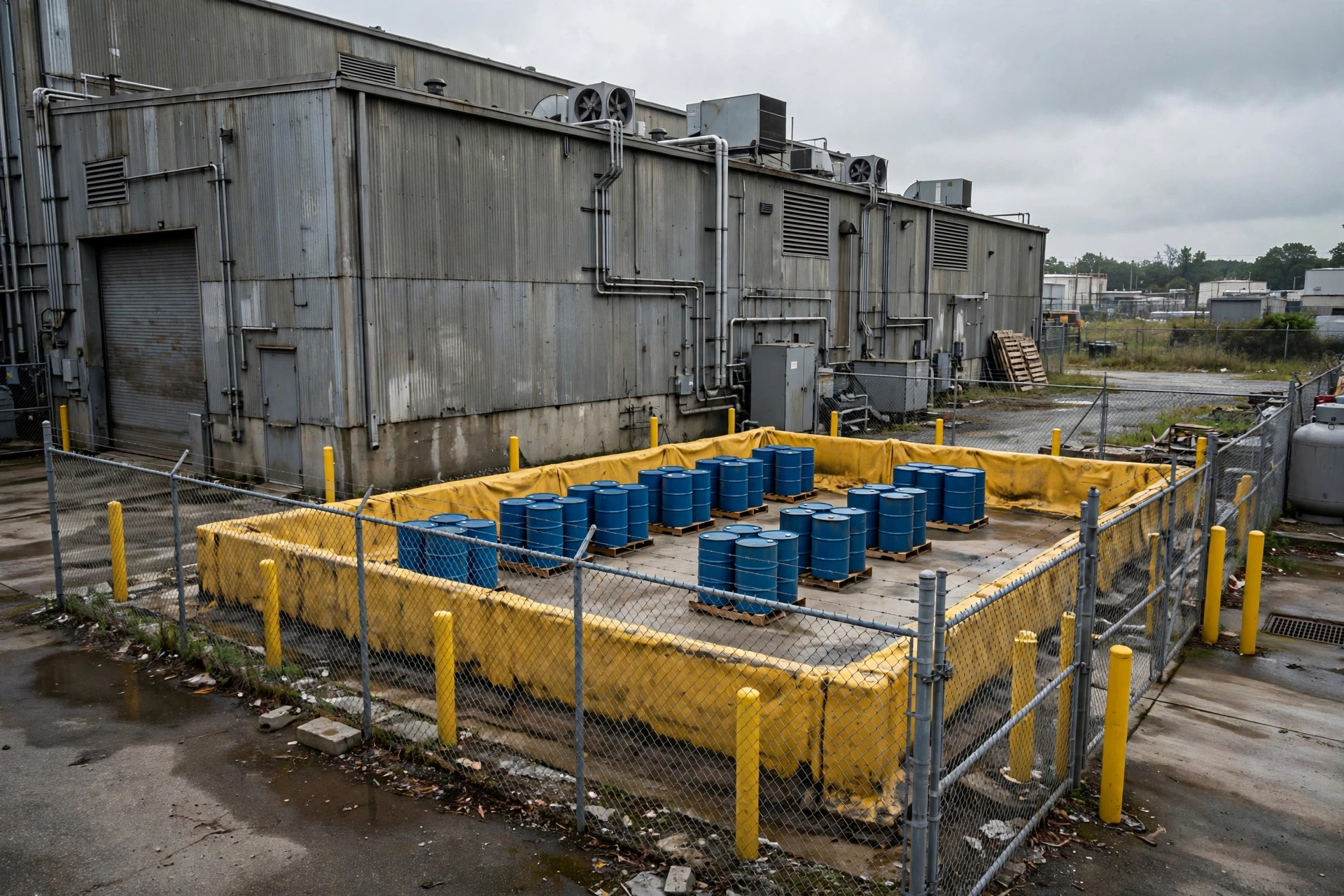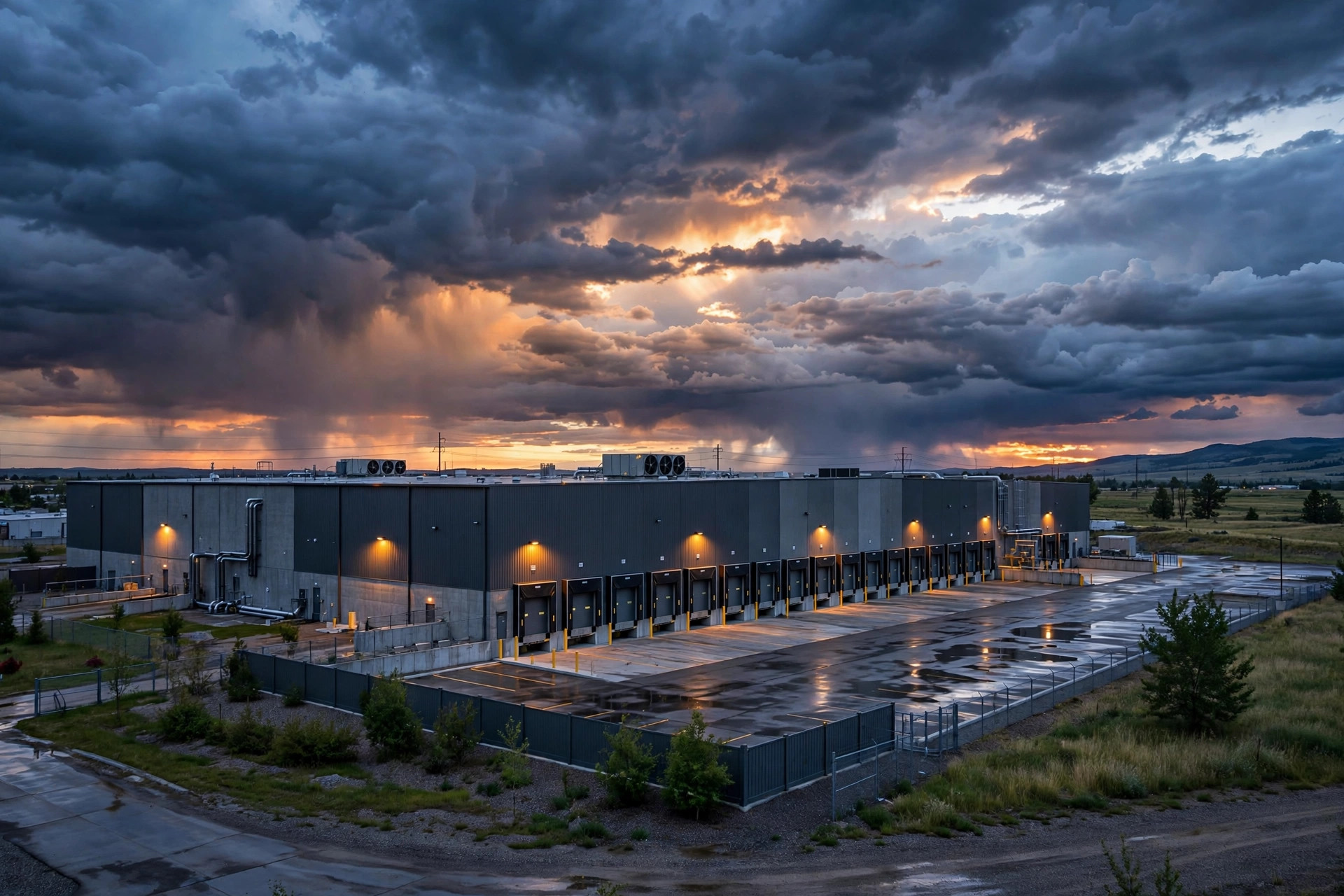
Same fire. Same warehouse. Two different policies on the table. The payouts differ by more than $600,000.
Back in 2021, I helped a friend look at his building in Fontana — a 100,000-square-foot warehouse built in 1998, with the original roof and a sprinkler system from the last century. An electrical fire took out the roof and half the racking. The rebuild estimate came in at just under $3 million. He filed the claim, the adjuster was perfectly polite, and then told him: we're paying actual cash value, so roughly $2.35 million. My friend was stunned. He had paid every premium on time. The coverage limit was right there in black and white. Where did $650,000 go?
It went to one line of fine print. He had bought an ACV policy, not an RC policy. And in my experience, nine out of ten warehouse owners never read that line before they sign.
Where the money actually goes
RC — replacement cost — means the insurer pays what it costs today to rebuild what burned, with materials of like kind and quality. ACV — actual cash value — means replacement cost minus depreciation. Your roof went up in 1998 and burned in 2021? The insurer prices a brand-new roof today, subtracts 23 years of depreciation, and hands you what's left.
The formula is that simple: ACV = replacement cost − depreciation. And every trap in this business lives inside that minus sign.
The valuation line hides on the first page of the policy, usually under "valuation" or "loss settlement." Most buyers look at exactly two numbers when shopping for coverage: the limit and the premium. Limit of $5 million, premium of a few tens of thousands a year — the numbers look right, so they sign. Whether that $5 million pays out at RC or ACV, nobody scrolls down one more line to check. In the policies I've reviewed over the years, ACV as the default is common — especially when a broker is sharpening the quote to win your business.

Run the numbers on my friend's building. Roof, sprinklers, and racking, at today's rebuild prices: just under $3 million. On an RC policy, minus the deductible, he rebuilds more or less whole. On his ACV policy, the adjuster depreciated the roof at 25 years of age against a 30-year expected life, the racking at 15 years, the sprinkler piping at 20 years — and the check came out at $2.35 million. That $650,000 gap wasn't the insurer cheating him. It was the contract he signed. He gave up that money the day he put his name on the declarations page.
Three things your broker won't volunteer
First, the depreciation schedule belongs to the insurer, not your accountant. The 39-year straight-line schedule on your books is a tax matter. The adjuster uses actual age divided by expected useful life: a 25-year-old roof with a 30-year life gets depreciated more than 80 percent. Racking, sprinklers, electrical, refrigeration — every asset class has its own lifespan in their tables. In an older building, everything you own is a discounted item on that table.
Second, the coinsurance clause stacks on top of ACV. Many property policies require your coverage limit to reach 80 to 90 percent of the true replacement cost; fall short and the payout gets reduced proportionally — even on a partial loss. Older buildings walk straight into this one: the limit was set ten years ago, construction costs have climbed hard since, and the limit no longer tracks reality. After a fire, ACV takes its depreciation cut first, then coinsurance takes its proportional cut. I've seen a case where the two cuts together left the owner short of even the debris-removal bill.
Third, an RC policy isn't a blank check either. RC comes with a rebuild-first rule: the insurer advances you the ACV amount, and you only collect the difference after you actually complete the repairs and submit the invoices. If your cash flow is broken and you can't fund the rebuild, what lands in your account is ACV money anyway. So before upgrading to RC, ask yourself an honest question: if the worst happens, can I front the construction cost? If the answer is no, the practical difference between RC and ACV shrinks — fix the cash-flow problem first.
How to check your policy, and what RC really costs
Checking takes ten minutes tonight. Pull the first page of your policy, find the valuation line, and read whether it says replacement cost or actual cash value. Can't find it? Email your broker one sentence: "Is my policy paying replacement cost or depreciated value? Please confirm in writing." The words "in writing" do all the work. Brokers will promise anything verbally; at claim time, only the paper trail counts.
What does upgrading to RC cost? At equal limits, RC premiums typically run 10 to 30 percent above ACV — get your own quote, markets move. I suggest doing the math this way: the extra annual premium times ten years, versus the several hundred thousand you might leave on the table after a fire. For owners of older buildings, the arithmetic usually answers itself.
But here's the trade-off brokers rarely mention upfront: when an older building moves from ACV to RC, the insurer will usually demand improvements first. A roof past 20 years, aging electrical, a sprinkler system below current standard — any of these can become preconditions for the upgrade. The retrofit is its own bill. So get the premium quote, then get the remediation list, and add them together. That's the true cost of upgrading. Don't decide on the premium delta alone.
Your annual policy checklist
At every renewal, walk through this list. Thirty minutes, once a year:
- Valuation confirmed: does the policy say RC or ACV, in writing — not from memory
- Limit adequacy: have a contractor or your broker re-estimate rebuild cost at this year's construction prices, and check it against the coinsurance requirement
- Deductible: the exact number, and whether you can actually cover it out of pocket
- Age of roof, sprinklers, electrical: anything past 20 years, ask the insurer proactively whether they want remediation records on file
- Endorsements: is there a replacement-cost endorsement attached, or are you sitting on default ACV
- Broker confirmation in writing: every renewal, one email stating the valuation basis and how the limit was set — filed away
The single most useful thing you can do this week: photograph the first page of your policy, send it to your broker, and ask — RC or ACV, please confirm in writing. Once the reply lands, then decide whether to upgrade. Don't let the fire be the first time you read your own policy carefully.