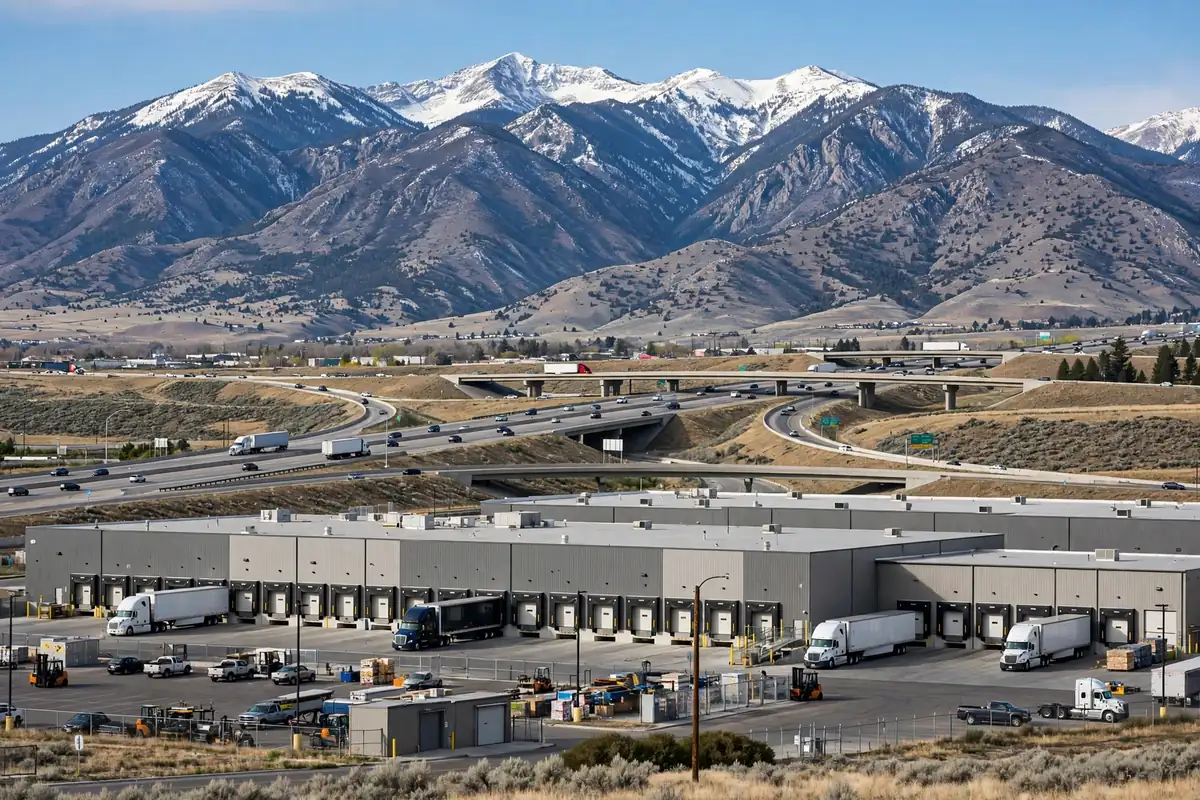
Let me tell you something. The first time I took Reno seriously, I was eating a burger on the shoulder side of Interstate 80. Snow had stacked traffic up over Donner Pass, and an old driver next to me said, stop staring at California, move the freight to this side of the mountains and the math changes completely. That is how reno nevada warehouse market logistics got into my notebook, and it never left.
After all these years on the road, I judge a warehouse town by three things. Do trucks move smoothly, does winter shut you down, and where do your customers actually live. Reno is interesting because it hugs California yet sits across a state line. This side is Nevada, with a different tax and land setup than California, so rent and labor math come out different. For current tax and rent figures, check the latest official and market published numbers. I will not hand you dead numbers. Just remember this: the same freight, stored on opposite sides of that mountain line, carries a completely different cost structure.
The reno nevada warehouse location math: close is close, and separate is separate
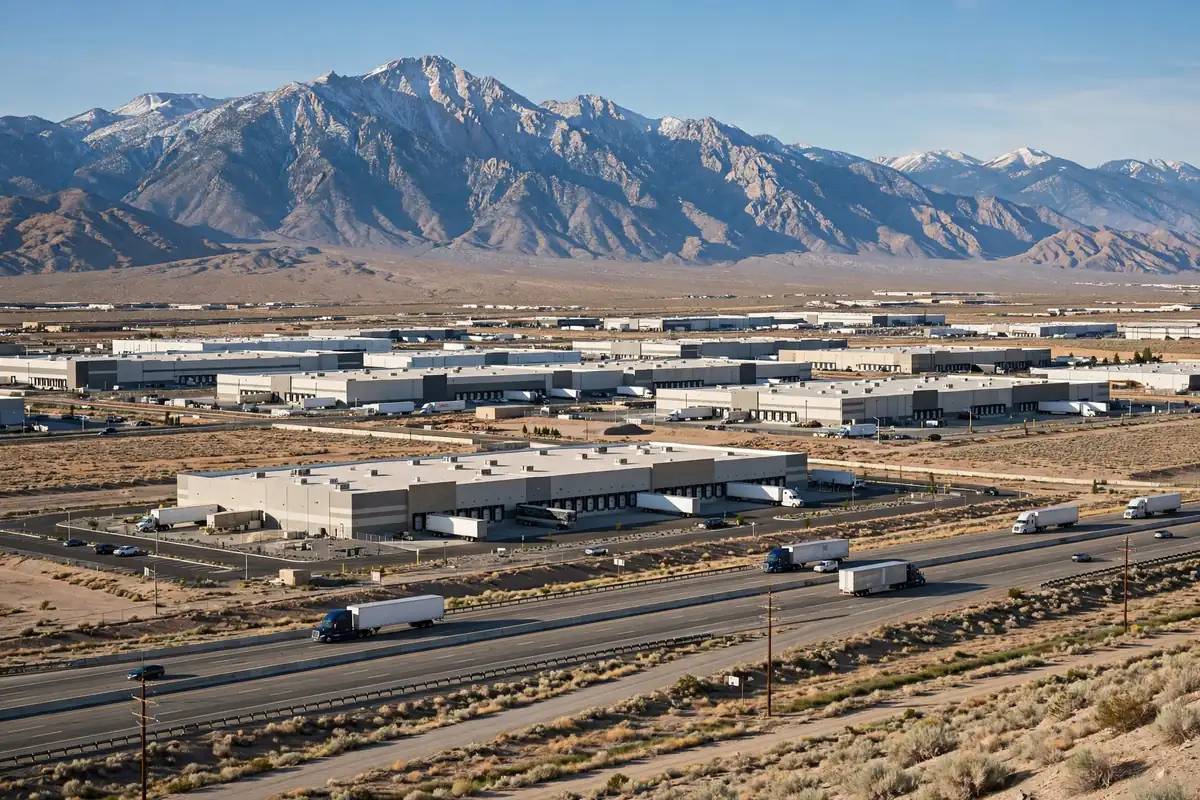
Drivers talk about the Tahoe Reno industrial area for a reason. The parks are not fancy. They are practical. Highway access is close, truck courts have room, and a loaded rig can turn without a ten minute fight. Warehouse people know the real test of a park. It is not the front gate. It is whether things stay orderly at three in the morning when trucks are queued.
Reno sits on the I-80 corridor. West over the pass is Northern California. East runs toward Utah. That position covers a lot of ground. Illustrative example, for scenario illustration only: freight leaving Reno can be planned on next day or second day schemes toward Northern California, southern Oregon, and the Salt Lake City direction. Whether a given promise holds depends on lane, weather, and carrier schedules, so use the latest carrier published information as your reference. I am only teaching the math here.
Here is a shipper I watched learn this. Illustrative example, for scenario illustration only: an outdoor goods seller kept everything in California. Peak season rent climbed, labor got scarce, and orders buried the building. He moved bulky, slow turning stock to Reno and kept only fast movers in a small California site. Reno shipped inland and Northern California orders, California handled local rush orders. He told me the fixed cost pressure eased and peak season stopped being a daily argument with the warehouse. I am not giving you his numbers, because your volume is not his volume. Steal the method instead: split fast freight from slow freight and cost them separately.
Here is the counterintuitive part. Close to California does not mean a cheap copy of a California warehouse. The mountains are there, and the weather is there. Run Reno on sunny day promises and the first winter closure will have you calling every customer to apologize. The right way to use Reno is as a regional warehouse for Northern California, Oregon, and Utah, with slack in the promise and a backup plan for the lane.
I-80 and Donner Pass: the winter exam for warehouse market logistics in Reno
Every West Coast driver knows Donner Pass. Calm most of the year, it turns fast in winter. Heavy snow, chain controls, and sudden closures are normal life up there.
One run stays with me. Illustrative example, for scenario illustration only: an urgent auto parts load was headed for California in the middle of winter, and the shipper called me three times in one day. Snow was heavy over the pass and controls were not lifting. I told him plainly, the truck is not refusing to move, the road is refusing to let it, and forcing it risks the freight and the driver with no second chance. That load sat one extra day in Reno, then went out first when the road opened. The shipper was annoyed, then he got it. One day late beats one wreck in the mountains every time.
What does that teach you. If you put a warehouse in Reno, a winter plan is not decoration. It is survival. Agree the winter rules with your warehouse and carrier before the season: when to hold freight, when to reroute, who notifies customers, and what they say. Do not hold that meeting after the road closes. Meetings held in a storm only produce blame.
Stock should follow the weather too. Before winter, tighten replenishment on your fastest Northern California items and stop betting everything on one open day over the pass. How much to move is your own sales data question, not my guess.
Be honest on transit math. This is the frame I use with shippers, as an illustrative example for scenario illustration only, not a real transit promise:
| Direction | How to run the math | Biggest variable |
|---|---|---|
| Northern California | Short haul, next day schemes plan well | Winter pass weather |
| Oregon | Smooth lanes, good for regional split | Carrier schedule density |
| Utah | Steady trunk run east on I-80 | Long haul driver scheduling |
| Southern California | Needs routing and transfers, do not overpromise | Distance and handoffs |
See the point. Reno is strong to the north and east. It does not cover the whole West Coast next day. If a salesman tells you a Reno building delivers the entire coast tomorrow, walk away. He is selling a signature, not a warehouse.
Reno against Phoenix and Salt Lake City, and the seasonal gift nobody prices
Shippers always ask me, Shifu, why not Phoenix, why not Salt Lake City. Fair question. I have run all three, and each has its own life.
Salt Lake City runs well east and north and makes a fine inland hub. But if most of your customers sit in California, every load travels extra mountain miles west, and both time and money suffer. Phoenix guards Arizona and the edge of Southern California, yet summer heat is brutal, and cooling a building and staffing it cost real money. Northern California and Oregon are simply far from Phoenix.
Reno wins on one word: near. It sits against the Northern California market while its cost structure lives on the Nevada side. It loses on one word too: mountains. Winter uncertainty is higher than the other two. So my answer never changes. Customers in Northern California, Oregon, and Nevada itself, look at Reno first. Customers deep inland, Salt Lake City is steadier. Customers stacked in Southern California and Arizona, Phoenix fits better. There is no champion city. There is only a fit.
One more thing gets underpriced in Reno, the seasonal stagger. Illustrative example, for scenario illustration only: e-commerce peaks at year end shopping, auto parts follow repair and travel seasons, and outdoor goods ship hardest in spring and summer. When the freight inside one park peaks in different months, labor and dock doors do not explode in the same month. When you tour a park, ask what kind of freight lives there and whether the busy months collide. Colliding parks will cut service in peak season. Staggered parks can lend each other hands in slow months. No brochure prints that. You learn it by running the road.
My closing advice to shippers is three plain sentences. Do not compare rent alone; write winter backup lanes, carrier schedules, and peak staffing into the contract papers. Start small, run one or two product lines through a full winter, and expand only when the math is proven. Never promise customers a full day you do not have, especially in winter.
After all these years, I trust one line. Pick the warehouse right, and drivers curse less and shippers pay less in damage and apologies. The reno nevada warehouse market logistics question was never about the cheapest rent. It is about whether your freight, your customers, and your lanes fit the place. If they fit, Reno is a good home. If they do not, the cheapest building in Nevada is just an expensive lesson. As the old saying goes, distance tests a horse. A warehouse, you only know after one winter.
By Shifu Zhao, Trucking Veteran (15 yrs)