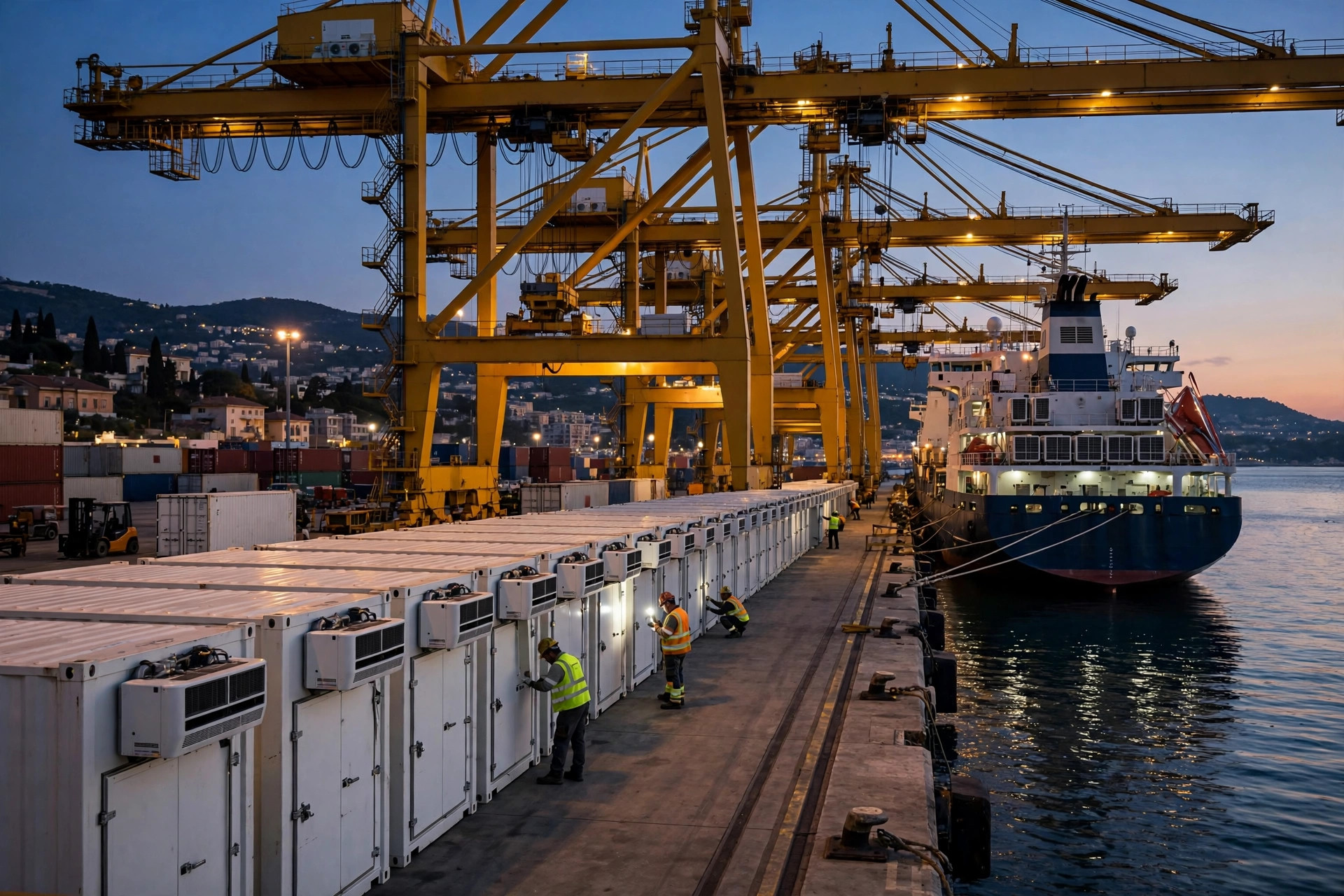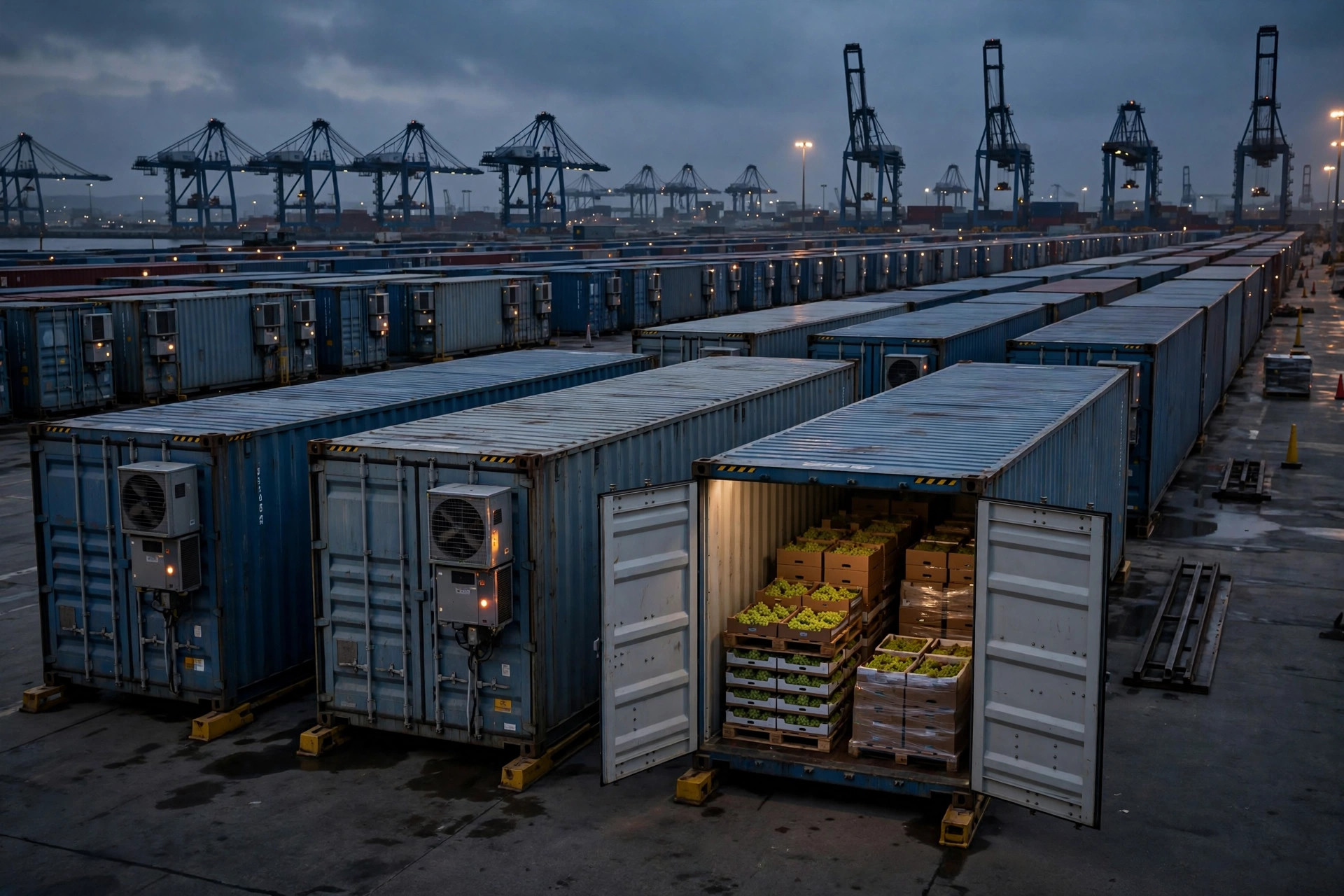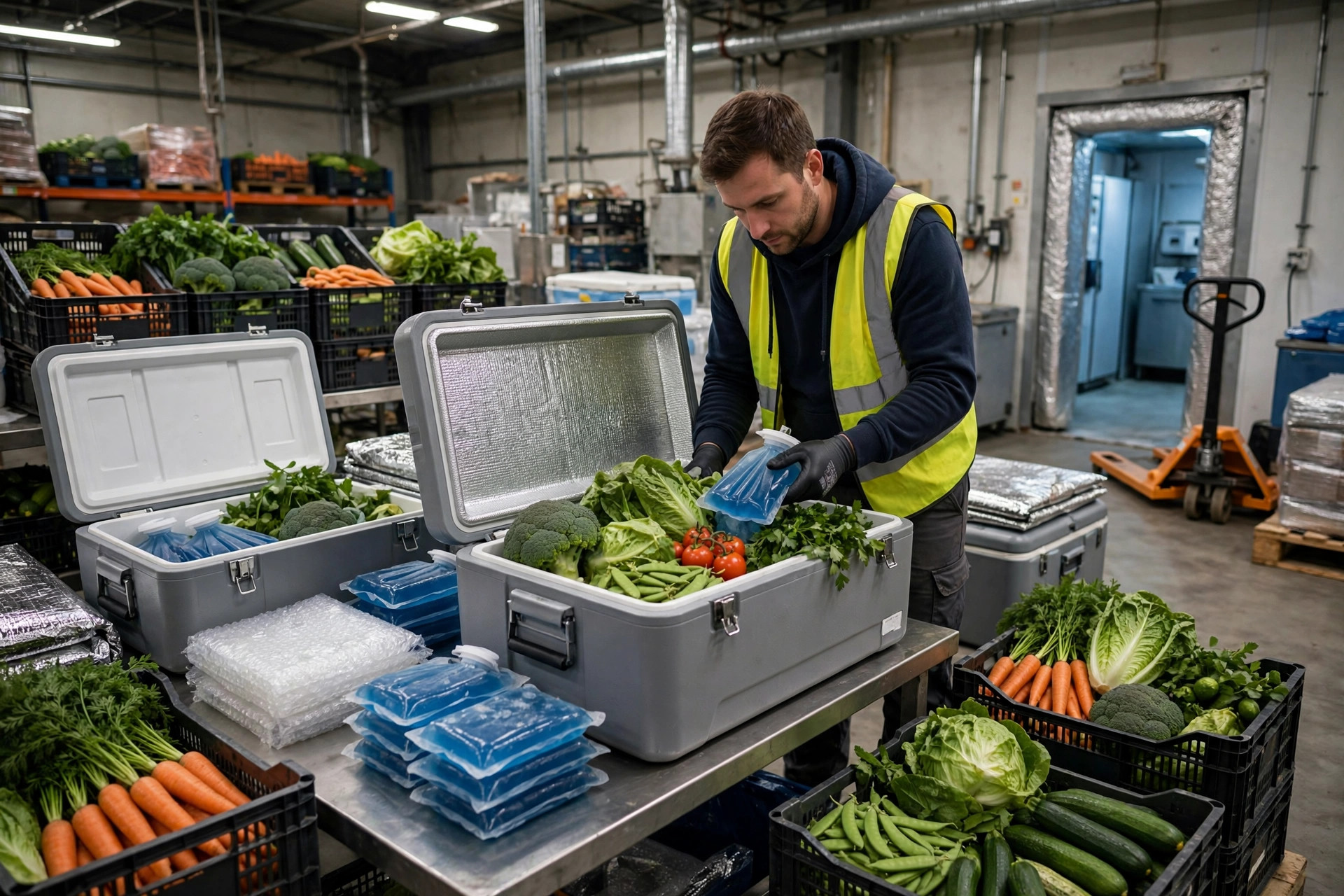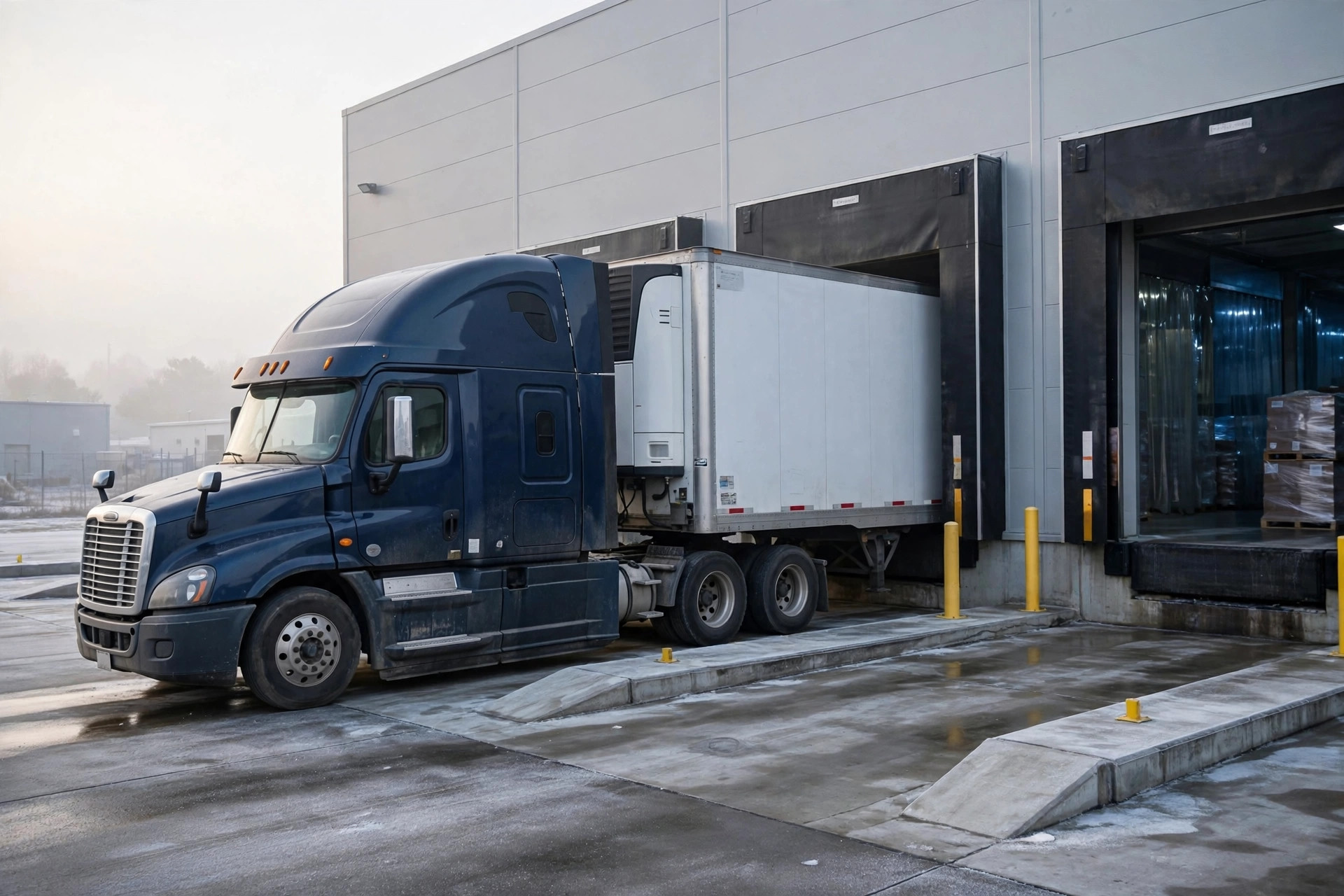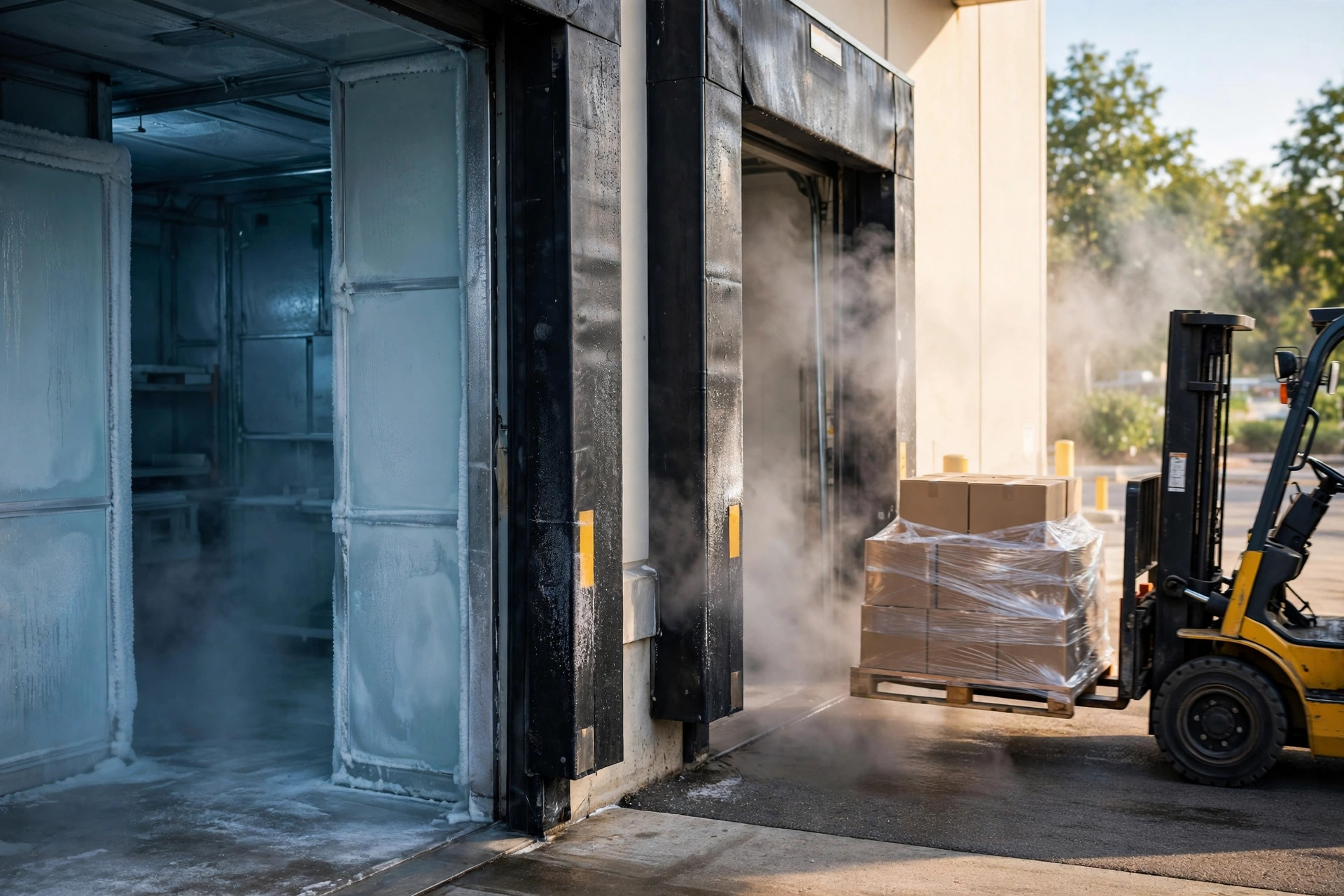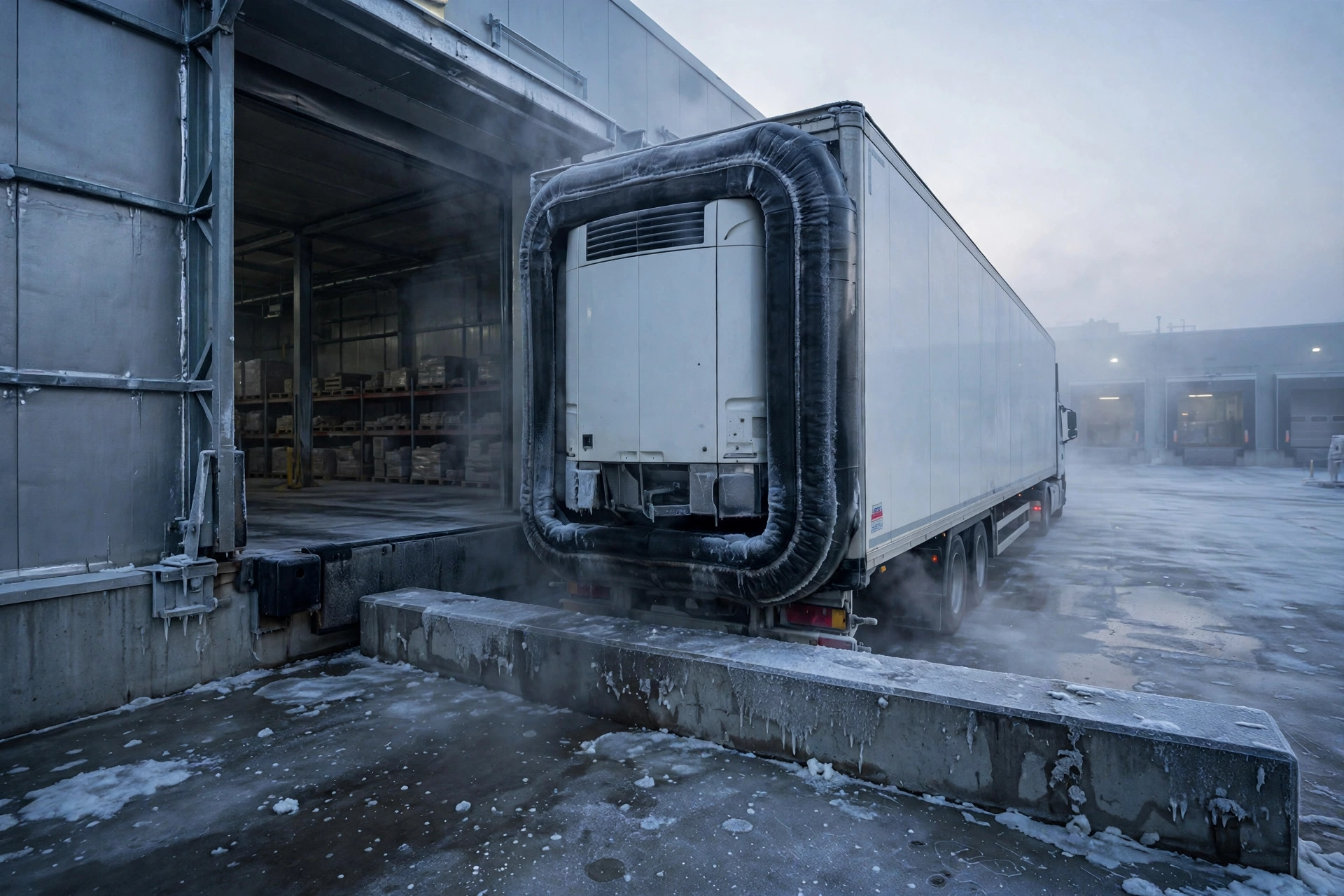
In August 2019, I was standing on the dock of a 3PL cold storage facility in Rialto, California. 120,000 square feet. Minus 18 degrees inside the freezer, over 40 degrees outside. A reefer had just backed in, the dock seal squeezed against the trailer, the driver running the refrigeration unit at full blast with the doors wide open. I aimed my temperature gun at the seam where the trailer met the building — the unsealed gap along the bottom edge read 11 degrees. That day, a full load of fresh chicken sat in the open for more than forty minutes. The customer rejected the entire shipment. The book loss was north of $30,000.
The cold chain almost never breaks on the highway. It breaks on the dock, in those few minutes when a trailer backs in. I call the three meters between the trailer and the freezer the temperature bridge. A break doesn't happen slowly — it happens right there, in those minutes. Here's how to kill it.
Is That Seal Actually Compressed?
There are three common ways to seal a dock door, and they rank in exact reverse order of price: the foam dock seal, the dock shelter, and the inflatable seal.
The foam dock seal is everywhere. The driver backs in, foam blocks get compressed by the trailer's rear frame, and you get a physical barrier. Cheap, durable, simple to maintain — and its effectiveness depends entirely on how well the driver backed up. Backed in crooked, didn't compress fully, or crushed the foam out of shape, and there's a gap between the seal and the trailer. Warm air pours through a gap of a few centimeters; cold air escapes. The classic failure I've seen in too many facilities: five or six years of aging foam, cracked and split, and nobody bothered to fix it. Pure decoration.
The dock shelter is a step up. It's a frame-and-fabric structure; the trailer backs in and the fabric's inner lining hugs the sides and top of the trailer. The sealing area is larger and it's more forgiving of imperfect backing, which makes it good for docks with mixed trailer types. The downside is that the fabric itself doesn't insulate — heat penetrates it, it's only a matter of time. So shelters suit fast-turnaround chilled operations, not long open-door work in a freezer environment.
The inflatable seal is the best performer. Once the trailer stops, the bladder inflates and wraps the gap between the trailer and the dock completely shut. Zero air movement. It's the standard for freezer operations. But it's also the most fragile: the inflation pump fails, the bladder gets punctured by a trailer rivet, or the driver pops the doors before you're done inflating — I've seen all of these. And it needs reasonably consistent trailer dimensions; very tall or very short rigs don't seal well.
How to choose? My rule is simple: if you're running a freezer, go straight to the inflatable seal and don't cheap out. For chilled goods (around 0–4°C), a shelter plus strict operating discipline is enough. For general food distribution with mixed trailer types, a foam seal with a regular inspection and maintenance program is the best value. The real trade-off isn't price — it's how temperature-sensitive your product is, and whether your loading rhythm can accommodate the equipment's temperament.
Those Twenty-Plus Minutes of Open-Door Work — Who's Actually Keeping Time?
A seal is static. The real killer is time. The moment the doors open, heat exchange between the trailer and the dock begins, and cold air bleeds out faster than most people realize.
Our rule was a 20-minute red line per trailer: from doors-open to doors-closed, the whole unloading had to finish inside 20 minutes. Not a suggestion — a red line. The person holding the stopwatch wasn't the driver or the forklift operator; it was the dock supervisor, and these days many facilities use a door-interlock timer that starts counting the second the door opens and alarms on overrun. Your number should be set to your own product and trailer insulation — follow your documented operating standard — but there must be a line, and somebody must be watching it.
Where people stand matters just as much. My pet peeve during unloading is a crowd gathering between the trailer and the dock, chatting. Every extra body loitering in the doorway, every pass through the strip curtains, is another brick in the temperature bridge. The rule is crude but it works: two people max in the unloading zone, forklifts on a fixed route, pallets go straight from the trailer into the cooler — no staging on the dock. The dock is not a storage location, and a cold chain dock definitely isn't.
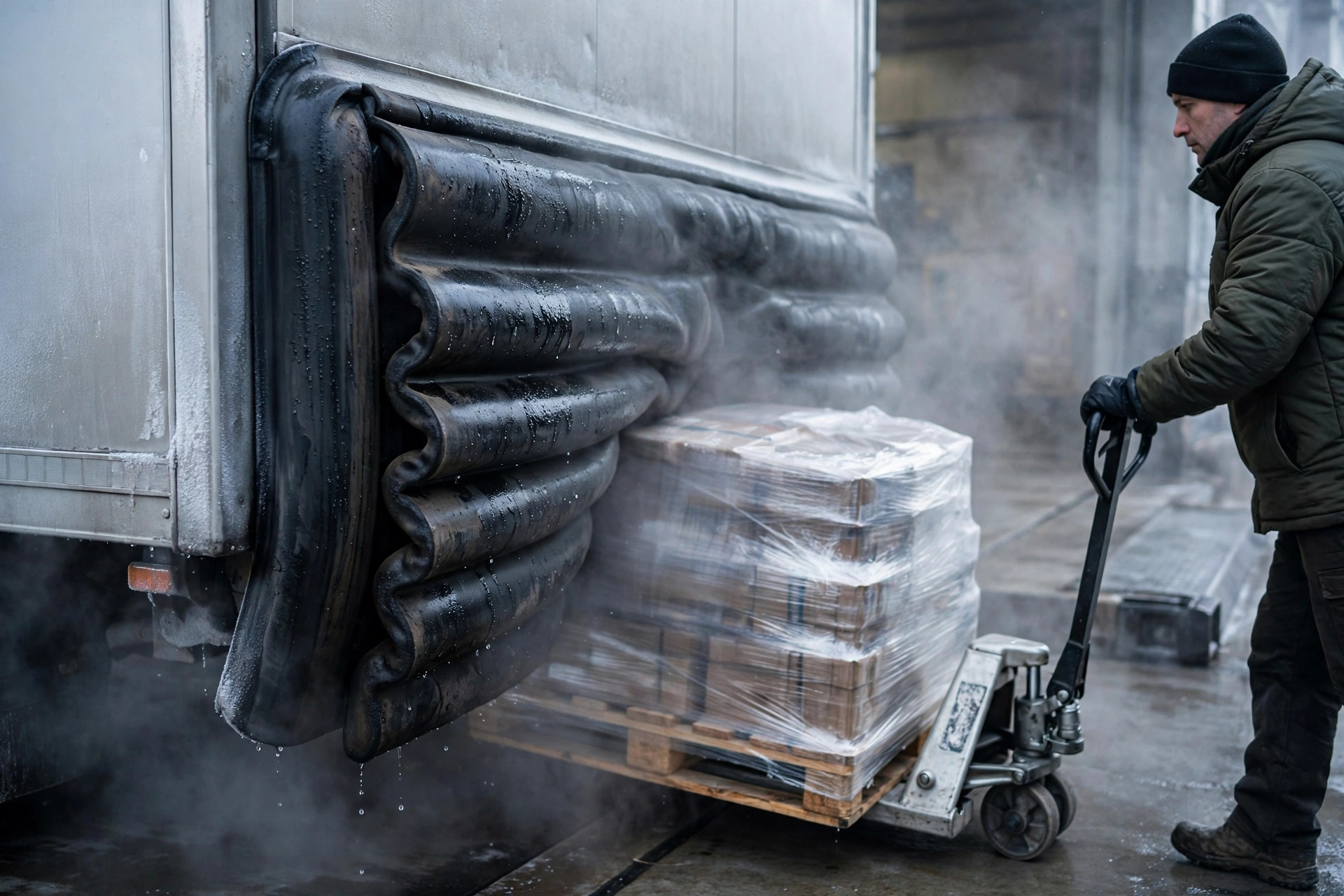
One detail that gets ignored: the reefer's refrigeration unit has to be pre-cooled before arrival. If the driver only fires it up at your gate and you open the doors while the trailer is still warm, you're dumping a box of warm air straight onto your dock. Our practice was this: on the appointment confirmation, the unit had to bring the trailer down to 2 degrees below target before the doors could open, and the dock supervisor checked the trailer's temperature display first. No target temperature, no doors. It costs a few minutes a day and buys back the temperature stability of an entire load.
Was the Temperature Actually Logged, or Just Written Down?
Temperature logging is one of those things that 90% of warehouses do properly for about two weeks and then start faking. The paper form looks immaculate. The actual temperatures were never read.
Done right, there are three logging points: the trailer temperature at arrival, the dock temperature every 15 minutes during unloading, and a spot-check of product temperature at completion. Those three numbers form a chain, and any break shows exactly where it happened. Done by hand, it falls apart within weeks. Temperature sensors are cheap now — mount probes at the dock, feed the data into your system automatically, and let people watch alarms instead of thermometers. I'd never advise a cold storage operation to skip this: a set of probes and a gateway costs a fraction of one lost load.
And the cost of a break is something most people underestimate. The product loss is only the first bill. Rejected goods come with handling and disposal fees — that's the second. The third is the customer's confidence in your facility, and the future business that quietly goes elsewhere. That's the most expensive one. After the 2019 incident we did the math: if the dock had had automatic temperature logging, the overrun alarm would have sounded at the 20-minute mark, the driver would have been told to close the doors and let it cool down, and that load of chicken would probably have survived. Over $30,000 of loss, against the cost of a seal upgrade and a timing discipline. It wasn't even close.
The Anti-Bridge Checklist
Compress everything above onto one sheet and pin it to the dock office wall:
- Match the seal to the product's temperature sensitivity: inflatable seals for freezers, shelters for chilled. Inspect every seal quarterly for aging and damage.
- Pre-cool every reefer before arrival. The supervisor checks the trailer's temperature display before the doors are allowed to open.
- Set a red-line time per trailer (say, 20 minutes), with an automatic timer and an overrun alarm. On timeout, close the doors and let the temperature recover.
- Limit the unloading zone to two people, fixed forklift routes, no staging on the dock — pallets go straight into the cooler.
- Log three points: trailer temperature at arrival, dock temperature every 15 minutes during unloading, product spot-check at completion. Automate wherever you can.
- Run a break drill once a month: pick a random trailer, simulate an overrun and a temperature alarm, and see whether the team actually follows the procedure.
Three meters of dock. The shortest stretch of your cold chain, and the easiest to break. When was the last time someone at your facility stood between the trailer and the dock door and checked with their own eyes that the seal was actually compressed?