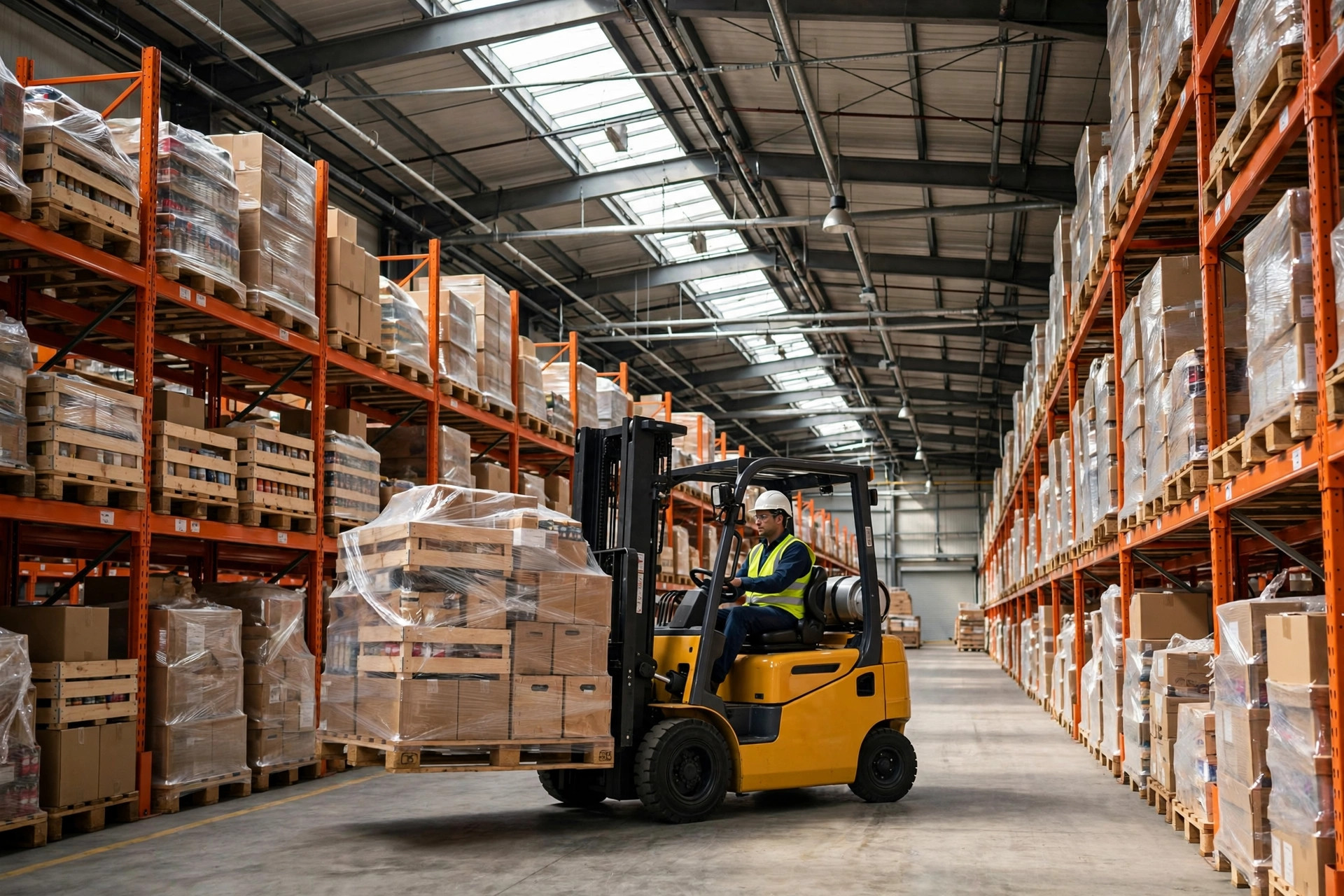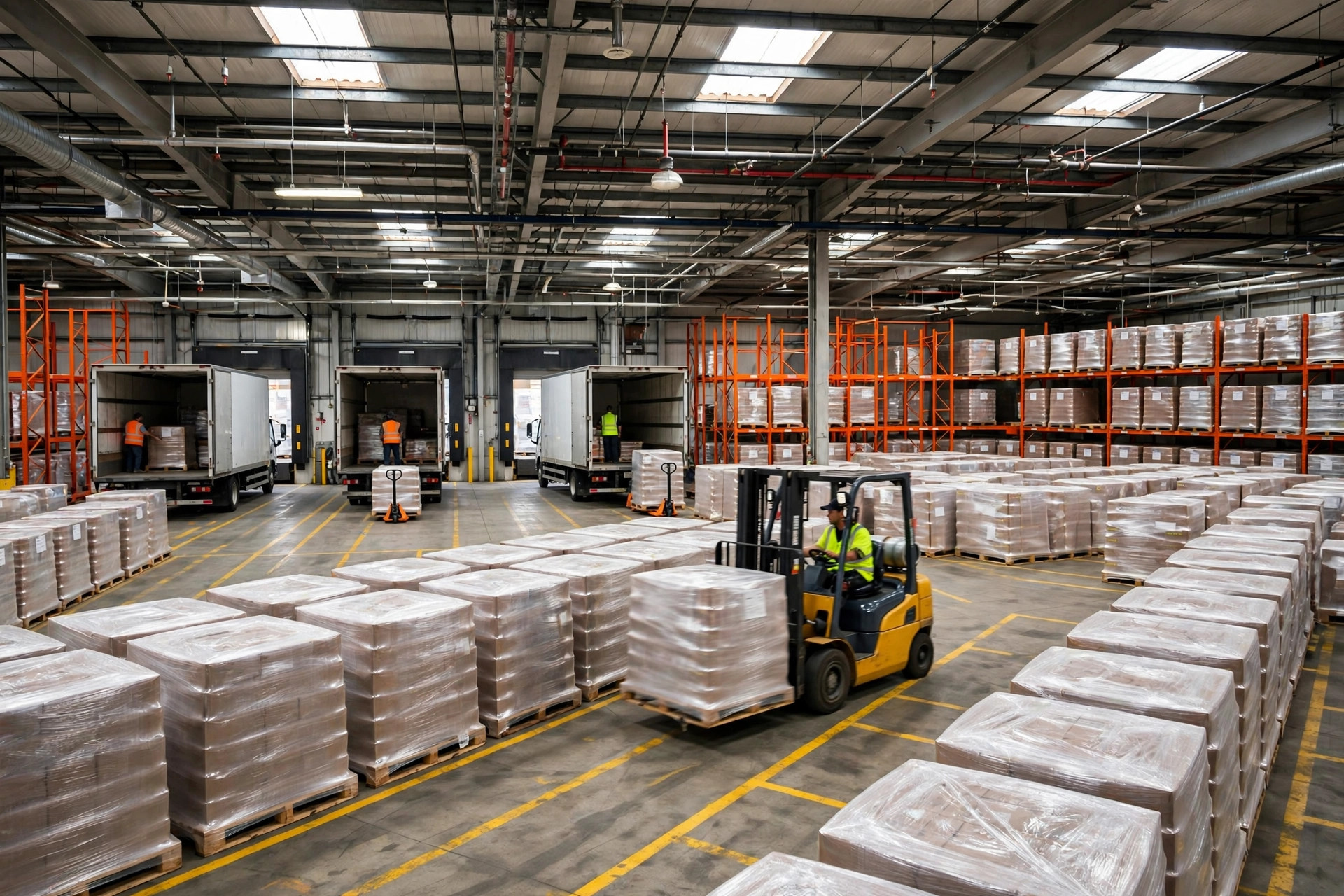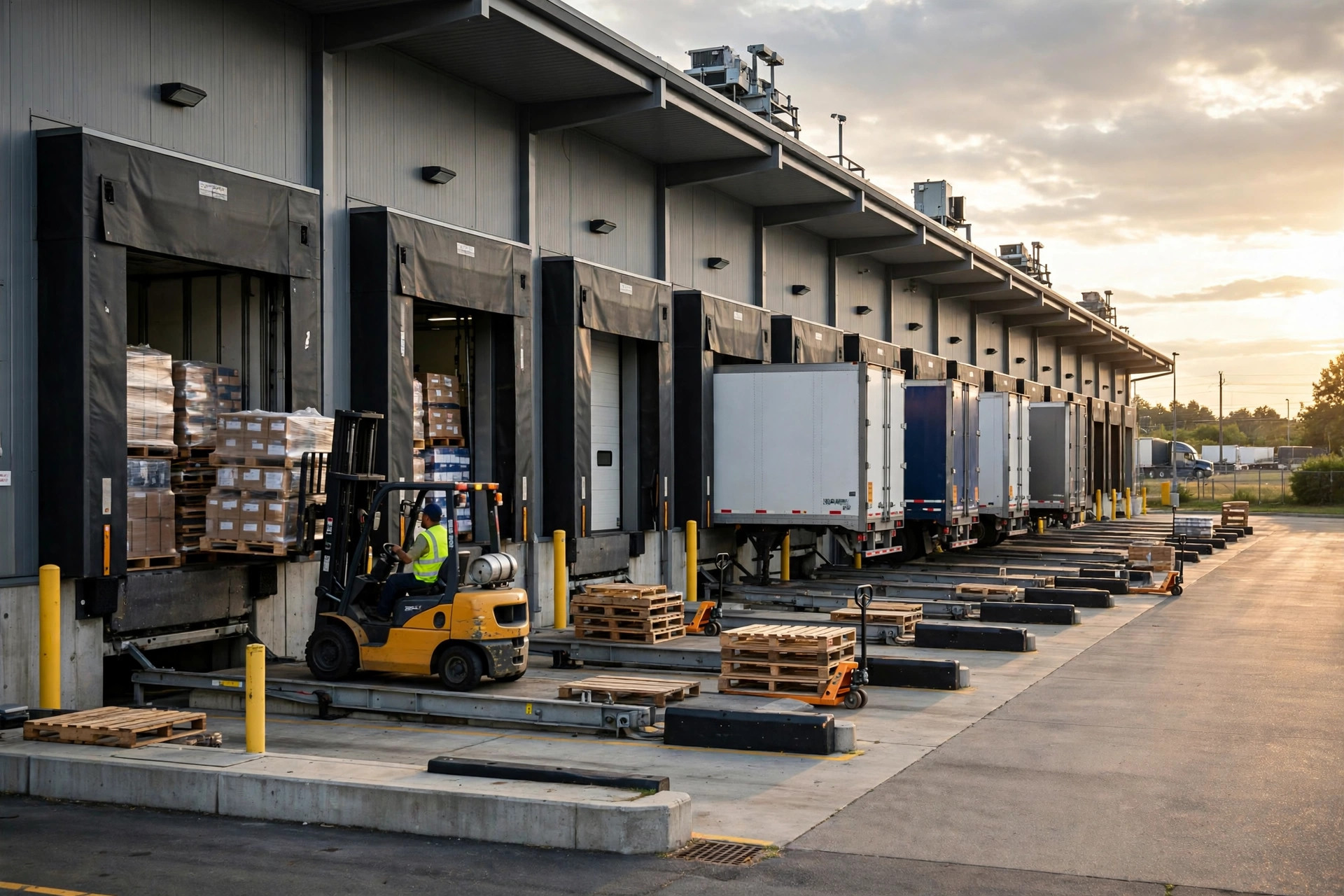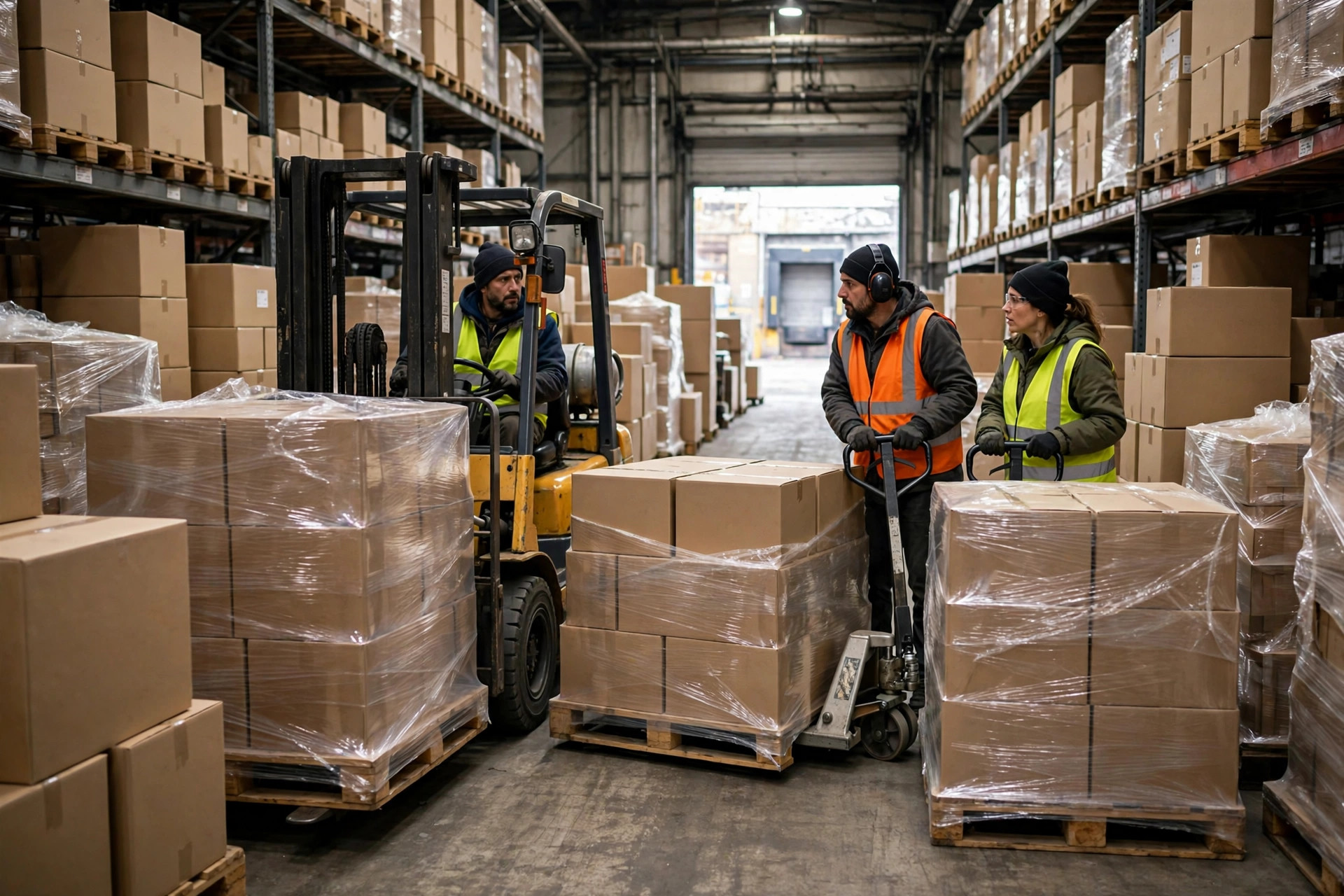
Let me be honest up front: our warehouse is 3,000 square meters, twelve people total, and last peak season my receiving lead and my putaway lead cornered me outside my office. One said, "Their pallets are blocking the aisle, we can't put anything away." The other said, "If we don't unload, the trucks back up at the dock — you deal with the drivers." I peeked into the warehouse: the main aisle was choked with just-received pallets, leaving a gap barely wide enough to squeeze through, and my putaway guy stood there with his hand pallet jack — wall in front, forklift behind. It was, as we say back home, an extremely awkward scene.
That's when it hit me: this fight had nothing to do with character. It had everything to do with the road.
Before You Write Anyone Up, Look at Your Aisles
Don't laugh — our place is small. Seven or eight people across receiving and putaway, everyone knows everyone. By all logic, there shouldn't be drama. But last peak season, with 400-plus pallets landing per day, receiving and staging shared one main aisle barely two meters wide. The receiving crew unloaded and stacked wherever they could — not out of laziness, there was literally nowhere else to put things — and the putaway crew couldn't get their pallet jacks through. Both leads took turns complaining to me, same script every time: "It's not that we won't cooperate. They took the road first."
My first instinct was very "management": write people up. Fifty bucks per blocked aisle. Guess how that went? Two months of fines, same fights, and the write-ups just brewed more resentment. One veteran finally said to me quietly: "Boss, the aisle is this wide. Fine me all you want — can I make a pallet disappear?"
That shut me up. When receiving and putaway fight, nine times out of ten it's not a people problem. It's a flow problem. You're fining the laws of physics, and physics doesn't care about your write-ups.
Big Warehouses Catch the Same Disease — the System Just Costs More
You might think this is a small-warehouse problem, that big facilities with all that space don't deal with it. Let me tell you about a big one.
This spring I toured a friend's 3PL warehouse in Dongguan — over 50,000 square meters, seriously impressive. Receiving docks on the east end, high-bay racking on the west end, so the putaway forklifts basically run a marathon across the building every day. Here's the kicker: they'd spent a six-figure sum on a WMS, and the system dispatched putaway tasks with beautiful precision — precise enough that a forklift would drive halfway there and discover the aisle completely blocked by receiving pallets. In the system: "task in progress." In reality: parked, driver scrolling his phone, waiting for the road to clear.
I asked their ops director what the thinking was during layout design. He laughed bitterly: the only math on the drawing board was maximum storage density — one more row of racking, that much more rent per year. As for "how people and goods actually move," it all looked fine on paper. Then reality showed up, and receiving and putaway flows started their daily duel in the main aisles.
Counter-intuitive truth number two: a warehouse can look perfect on storage utilization and still score zero on flow. Every square meter looks productive on the blueprint while hundreds of labor hours quietly evaporate into waiting and detouring. Big warehouses can do the rent math just fine; they can't see this invisible bill. We small guys see it clearly — because with twelve people, one hour of waiting is one hour of work that simply didn't happen.
Three Cheap Cuts: One Weekend, a Few Thousand Bucks, Problem Solved
I came home and took three cuts at our own flow. Every cut drew blood. Every cut was cheap.
Cut one: make the aisle one-way. A few rolls of yellow floor tape — tens of bucks a roll — and I painted a single-direction arrow for "receiving → QC → putaway." Received pallets move forward only. No U-turns, no going against traffic. Forklifts take the outer loop, pallet jacks take the inner lane. Everyone minds their own lane. Day one, people kept walking it backwards out of habit; I stood at the aisle entrance playing traffic cop for half a day. By day two, it flowed.
Cut two: split staging in half, A/B rotation. Our old staging area was one big patch of floor — first come, first served, total chaos. Now racking and barriers divide it into Zone A and Zone B: while A is being unloaded, B is outbound-only for putaway picks; when A fills up, they swap. Total cost: one roll of tape and two hand-lettered signs. My handwriting is ugly. It works.
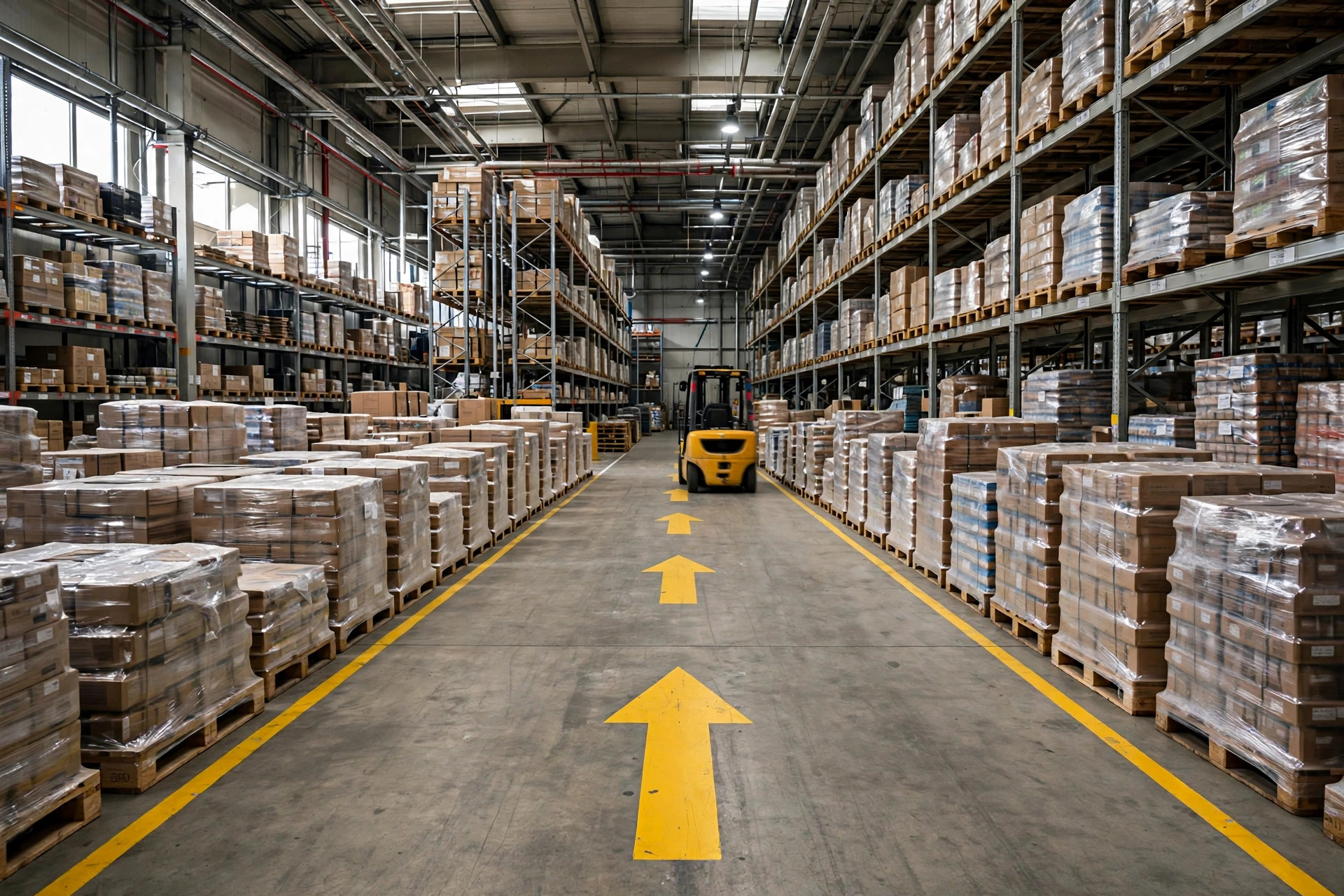
Cut three: move the fast movers next to receiving. This was the ruthless one. We relocated our twenty or thirty highest-velocity SKUs to the two rack rows closest to the receiving area. A putaway trip used to cross half the warehouse; now it's a two-minute walk. Plain truth: make the goods walk less, and people stop fighting. Moving those slots took the whole crew one Saturday. We were wrecked — but nobody's complained about "the long walk" since.
All three cuts: under ¥10,000 (roughly fourteen hundred bucks, give or take), done in a weekend. The results? Putaway lead time went from "morning receipts still sitting there at quitting time" to "same-day in, same-day put away." Receiving and putaway haven't had a single fight since. During the busiest days of peak season the aisles stayed clean, and the two leads were joking with each other again. The money I saved on write-up forms alone could buy the team bubble tea for a month.
The Math: Three Approaches, Side by Side
Fellow operators always ask me how to actually fix a flow problem. Here's my table, built from our own scars. Treat every number as a rough magnitude, not gospel:
| Approach | Cost magnitude | Time to results | Who it's for |
|---|---|---|---|
| Do nothing, manage by fines and yelling | Zero — plus daily internal bleeding | Never | The self-deceiving |
| Hire consultants to redesign the flow | Tens to hundreds of thousands | Months | Big warehouses with money but no time |
| Grassroots tune-up: one-way lanes + A/B staging + slot moves | A few thousand | One weekend | Small warehouses like ours |
See it? If you're under ten thousand orders a day and under ten thousand square meters, a flow problem does not deserve a consulting engagement. You'd spend big money solving something a grassroots fix handles — and shut down operations to accommodate their drawings. Bad trade.
And here's a bill most people get backwards: widening aisles and enlarging staging costs you a point or two of nominal storage capacity on paper. Looks painful. But aisles are the warehouse's blood vessels — clog the vessels and all that square footage is decoration. The invisible money you save — waiting, detouring, damage, people quitting over stupid fights — is worth far more than a point or two of capacity. We small warehouses can't afford to burn money, so we're the ones who do this math most carefully.
Three Questions to Diagnose Your Own Flow
Three questions. Take them home, check honestly:
One: do received pallets ever sit on putaway's must-pass route? If yes, your flow is already sick. Don't wait — split your staging into A/B now.
Two: how much of a putaway worker's day goes to waiting and detouring? Shadow someone with your phone timer for half a day and you'll know. If the crew spends its time waiting on people and roads instead of moving goods, it's time to redraw.
Three: is your main aisle a one-way street or a street market? Two-way mixed traffic plus people-and-forklifts mixed together — fights are just a matter of time. One roll of floor tape fixes it. Don't wait until it becomes a safety incident to feel regret.
Here's the thing: flow problems don't care how big your warehouse is. They care whether you're willing to give the road some room. Big warehouses can afford consultants with drawing boards. We can't — but we have eyes. We walk the floor every day; our feet know exactly where it jams and where it winds, better than any drawing. The big-company playbook isn't for us, and we're not jealous. Small warehouses have their own way of surviving: clear the road, and people stop fighting.
By Xiao Ma, Small Warehouse Owner