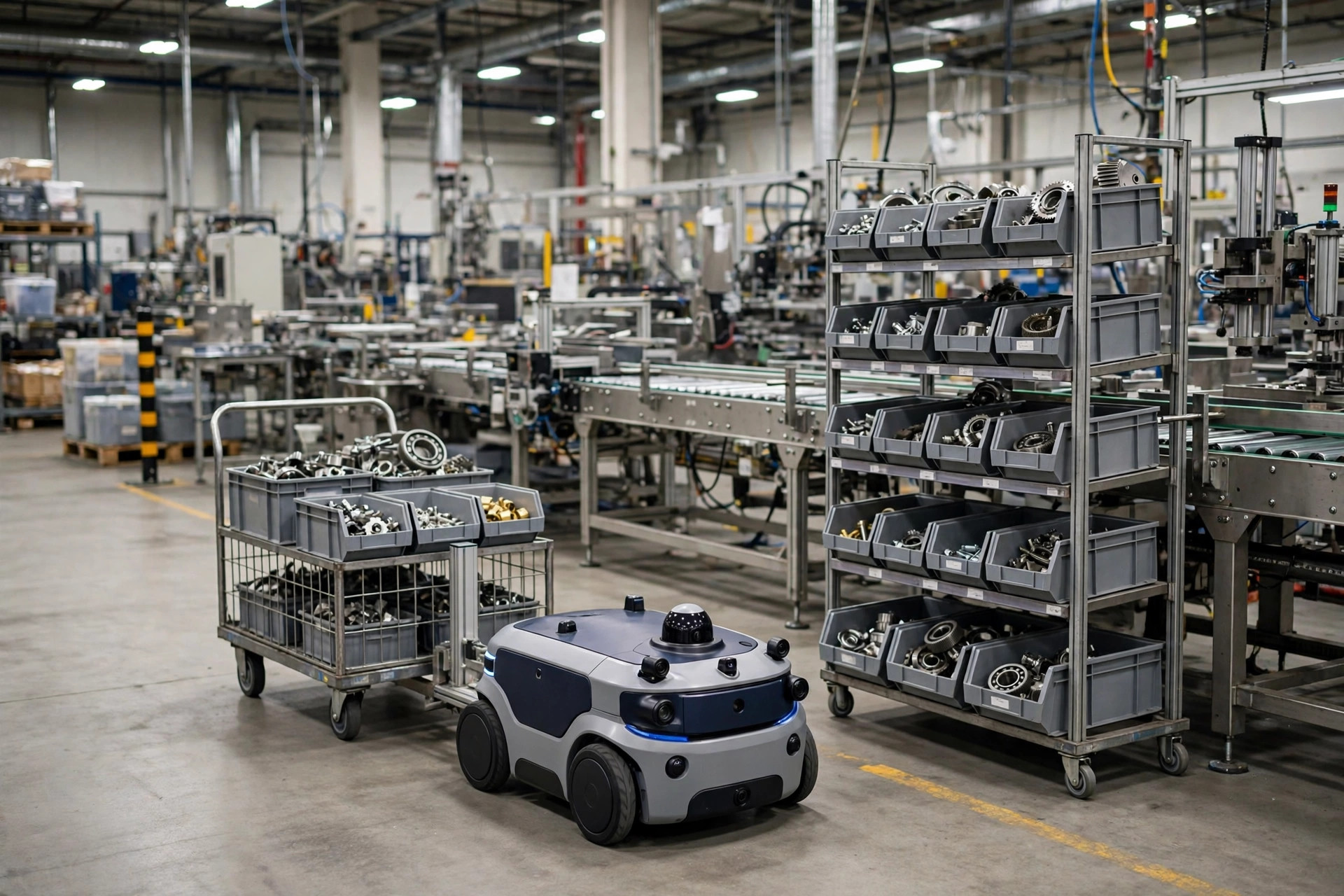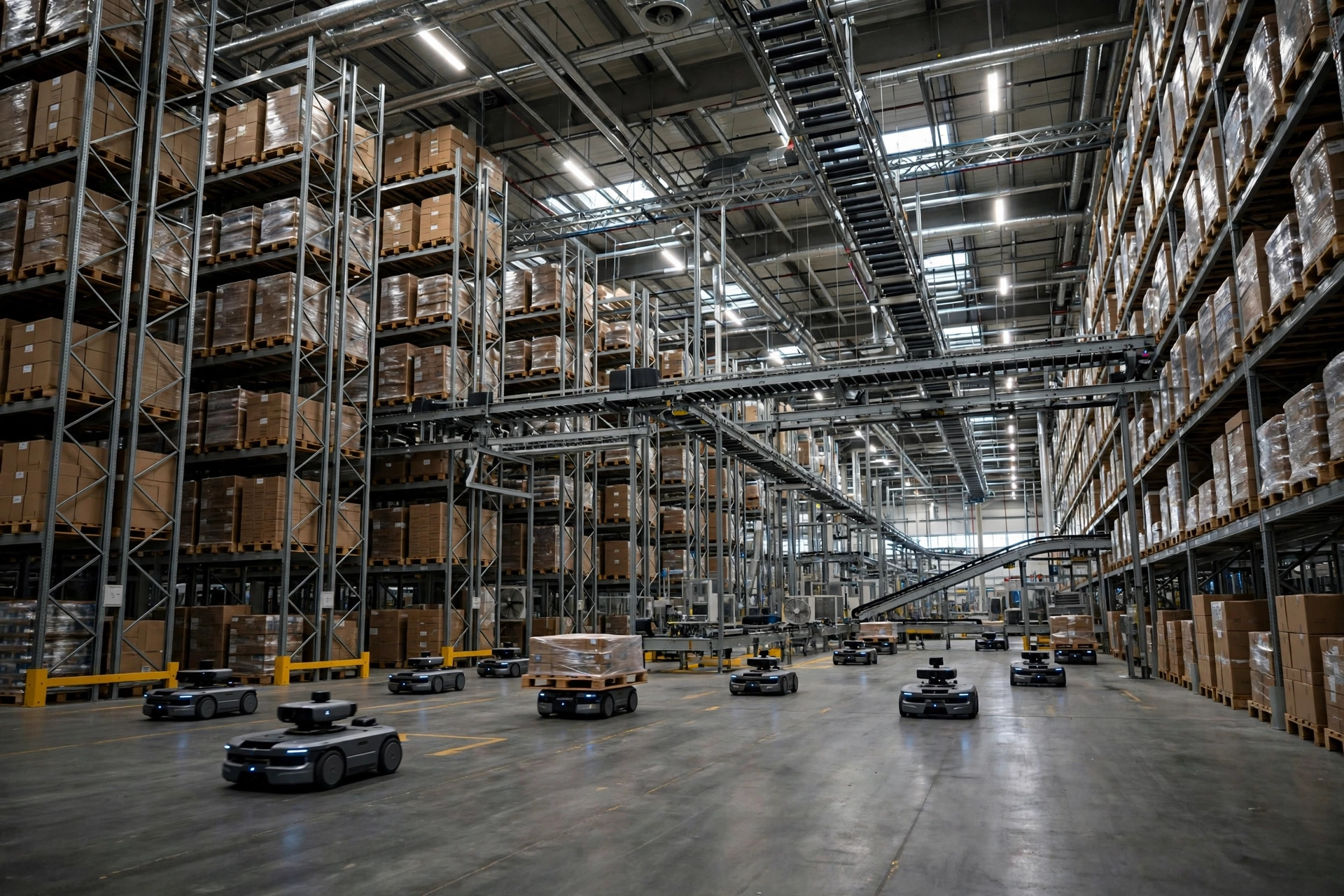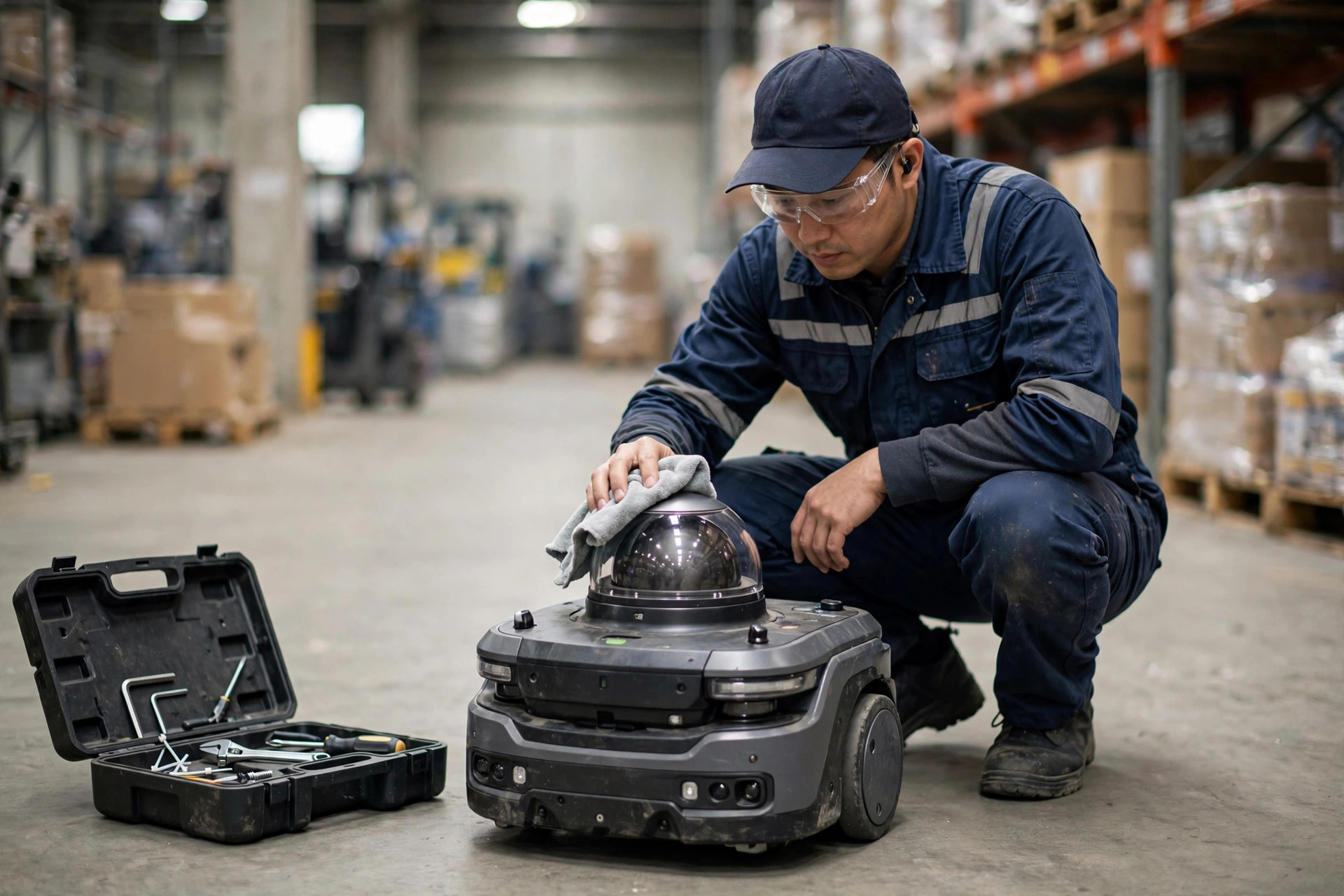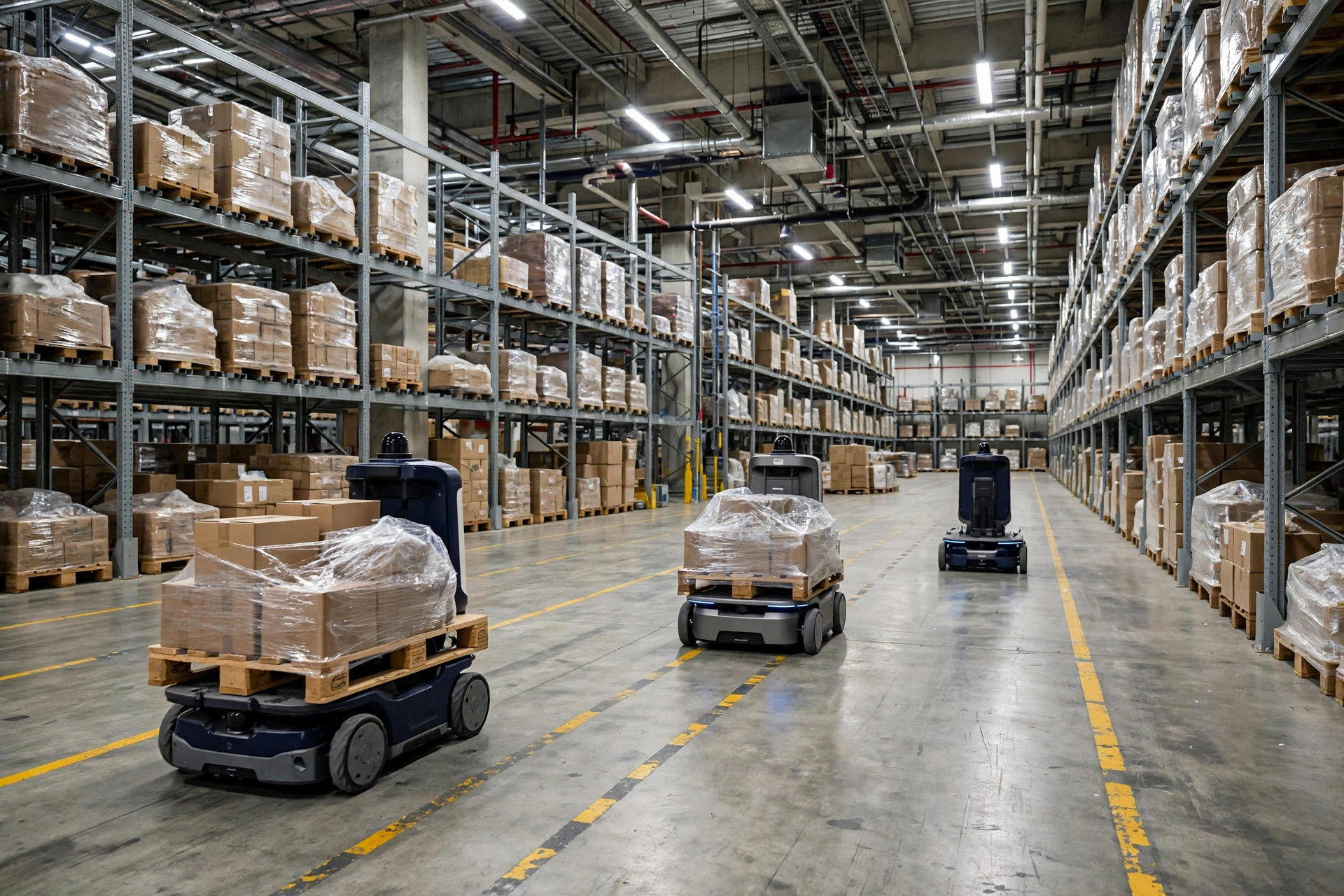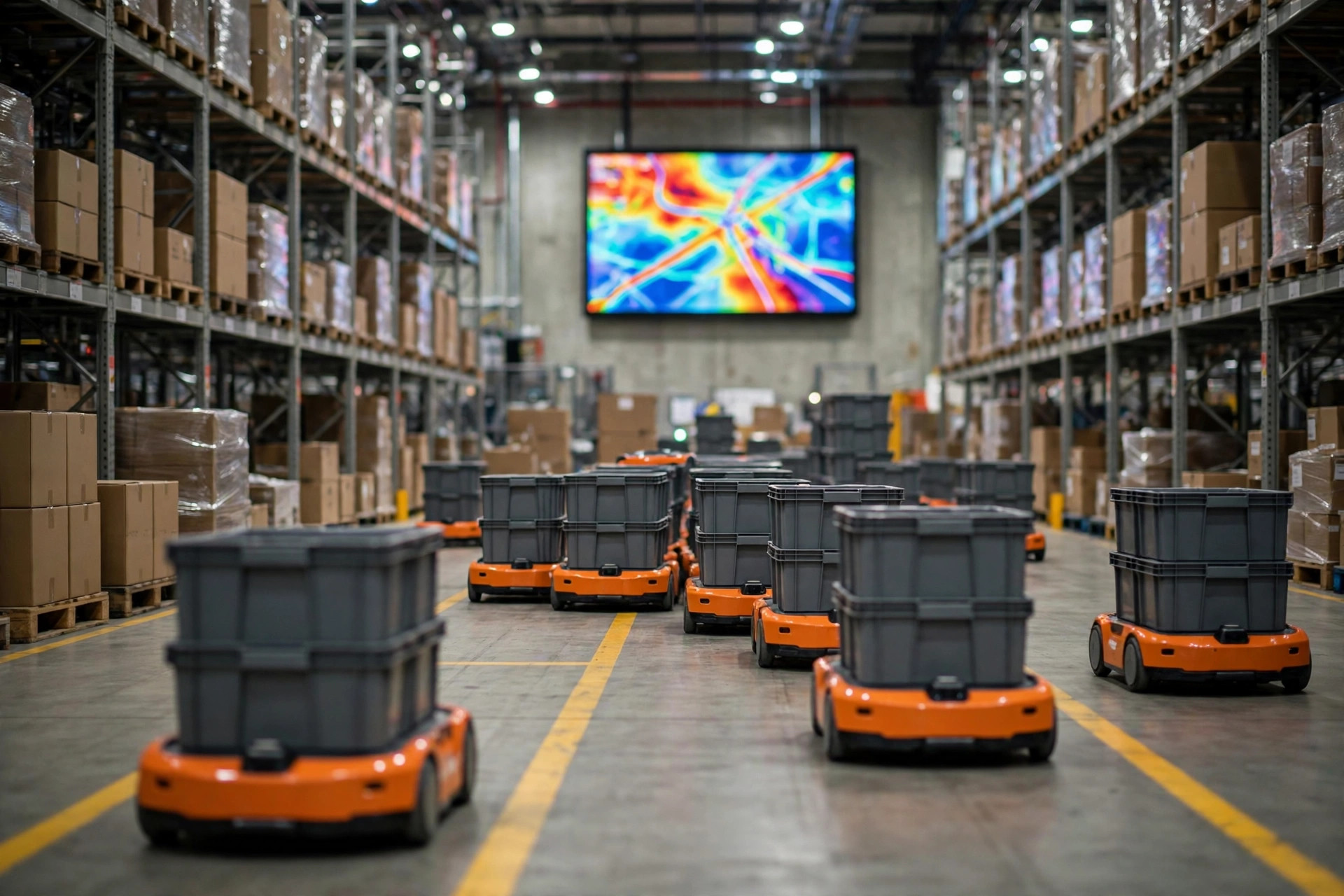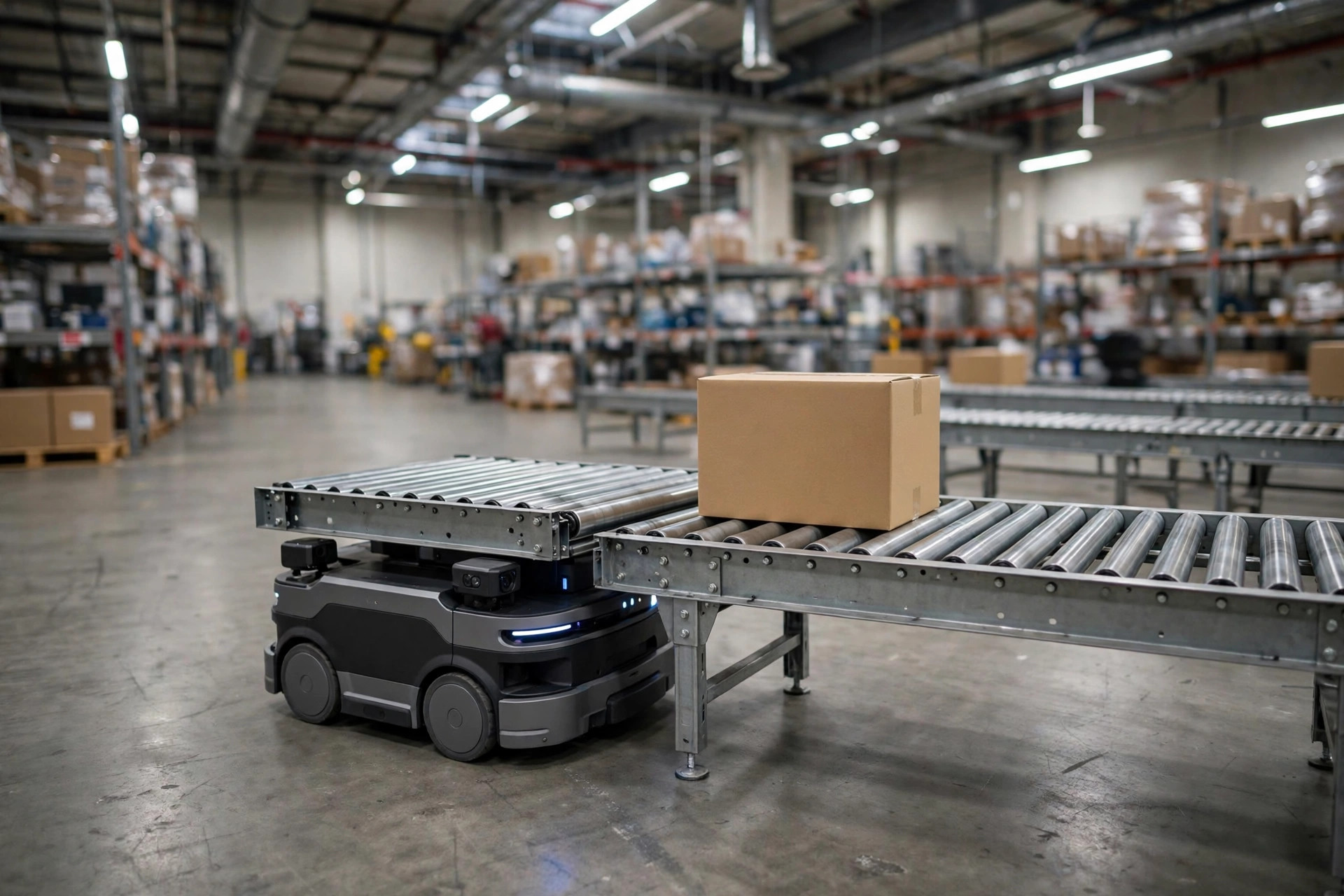
The robots never lie. But they remember things that stopped being true weeks ago, and they act on those memories with complete confidence. I watched it happen in the fall of 2022 at a 3PL outside Fontana, California — 120,000 square feet, forty AMRs running goods-to-person. One of them slammed to a stop in the middle of an empty aisle, spun in place twice, then took a long detour around nothing at all. The logs told the story: the robot could "see" a row of racking that had been torn down two months earlier. The RCS map was still living in the past.
RCS — the robot control system — holds the map every AMR in the building navigates by. Charging docks, keep-out zones, travel lanes: all of it lives in that file. Most operations teams treat the map as a build-once asset. That is the original sin of every AMR deployment I have ever walked into. Warehouses are alive. Racking moves. Peak season fills aisles with temporary pallets. Somebody repaints the floor. If the map does not keep up, your robots end up working in a parallel universe, and the strange behavior you see on the floor is only the symptom.
Reading the symptoms before they become outages
A stale map announces itself in three ways, and I have seen all three in the wild.
First, lost localization. An AMR knows where it is by matching lidar scans against the map. Move the racking and the scans stop matching; the robot genuinely does not know where it is anymore. Best case, it spins for a few seconds and relocalizes. Worst case, it throws an alarm and waits for a human to come rescue it. At the Fontana site, we were seeing double-digit localization alarms a day at the worst point, and the goods-to-person zone went dark for half an hour during peak.
Second, the scenic route. Pallets staged temporarily in an aisle get memorized as a wall. Peak ends, the pallets leave, the wall stays on the map. The robots keep driving around a wall that does not exist, day after day. Run the numbers on a single main aisle: an extra 30 meters per trip, 200 trips a day per bot, six extra kilometers per bot per day. Multiply by forty bots. You are burning electricity and tires to avoid a ghost.
Third — the nasty one — cascading alarms from a phantom obstacle. One bot gets stuck because of an outdated map. The bots behind it queue up. The RCS declares congestion and starts rerouting everything, and the reroutes make it worse until the whole zone sits still. On the supervisor screen it looks like a system-wide failure. The real cause might be a painted floor line from last week's construction work that never made it into the map.
My verdict is blunt: in an AMR operation, map maintenance is an operations job, not an IT job. Refuse that, and everything downstream is pain.
There is one more change that teams always underestimate: floor work. A recoated epoxy floor, fresh paint, even new floor mats with different reflectivity all change what the lidar sees. The map is the same map, but the robot's world looks different, so localization starts drifting — mysterious slowdowns and shuddering with "nothing changed" on the floor. My rule: any floor work, racking moved or not, gets an incremental map update when the work is done.
Triage first, then the five-step drill
Not every change deserves the same response. I grade changes three ways. Grade A: more than two rows of racking moved, a main travel lane rerouted, a new wall or column — full remap. Grade B: a slot or two shifted, temp staging cleared, minor floor patching — incremental update. Grade C: relabeled slots, changed carton stack heights — no map change at all, just a note in the WMS. A lot of warehouses either treat Grade C like Grade A and burn a whole night remapping, or treat Grade A like Grade C and pay for it three months later.
The update drill itself is five steps, in this order, no skipping.
One, freeze the floor. Two hours before the update: no racking moves, no temp staging. It sounds obvious, yet more than half of the map-update incidents I have seen trace back to the floor changing again mid-update.
Two, pick your window. For a forty-bot building I take the back half of night shift and block two hours. A full remap of 120,000 square feet takes about an hour including human review; an incremental pass takes twenty minutes. Clear the affected zone and mark it keep-out in the RCS before you start.
Three, update, then verify by hand. When the scan finishes, do not publish. Walk the critical points yourself: charging docks, elevator landings, fire lanes, mixed-traffic zones where forklifts and AMRs share space. I learned this the hard way — after one incremental update, a charging dock had drifted half a meter on the map, six bots failed to dock all night, and the morning shift started with dead robots.
Four, dry run with empty bots. Before publishing, send two empty bots through the entire affected area on the new map. Watch for unexplained slowdowns, hard stops, detours. Only then publish fleet-wide.
Five, watch the first shift like a hawk. After go-live, monitor the RCS alarm log for the full first shift — specifically localization losses and route-replan spikes. If either jumps, roll back. Do not debate it.
Temporary staging deserves its own note. Staging pallets in aisles during peak is a fact of life; fighting it is pointless. What works: designate dynamic staging zones on the map, clear them at end of shift every day during peak, and run an incremental update right after clearing to erase the "walls." Temp pallets are not the problem. Failing to erase them from the map is.
Version control will save you one night
Every map gets a version number — I use date-plus-sequence, like 20261008-01. Keep the last five versions in the RCS, and make rollback a ten-minute operation. That is a hard requirement in every project I touch. Run a rollback drill quarterly; do not discover during a real incident that your backup map file is corrupted.
Early 2023, an e-commerce warehouse in Ontario pushed an incremental update, and twenty minutes after publish, alarm volume tripled — the new map had misclassified a temporary forklift lane as drivable, and AMRs were nose-to-nose with forklifts at the intersection. The shift supervisor rolled back to the previous version following the drill: eight minutes, peak orders unaffected. Without versions and without practice, that night costs a full shift of throughput. Rollback is not a contingency; it is a production tool.
One more thing teams always miss: when the map changes, the WMS location master has to change with it. Racking moved, slot codes stayed the same, but the coordinates on the new map are different. If the WMS still holds the old coordinates, the robot arrives and the system says "location does not exist," and the task dies. My rule: any racking move updates the WMS coordinate fields the same day, driven by the same change ticket as the RCS map.
If you take one thing from this piece, make it this: every Friday before end of shift, send someone walking the AMR main travel lanes with the week's floor-change list. Ten minutes. Check whether the map still matches reality, and update first thing Monday if it does not.
And here is the uncomfortable question underneath all of it: if your robots started misbehaving tomorrow morning, how long would it take your team to prove the map is innocent? If the answer is "we'd have to guess," the map is already stale — you just haven't felt it yet.