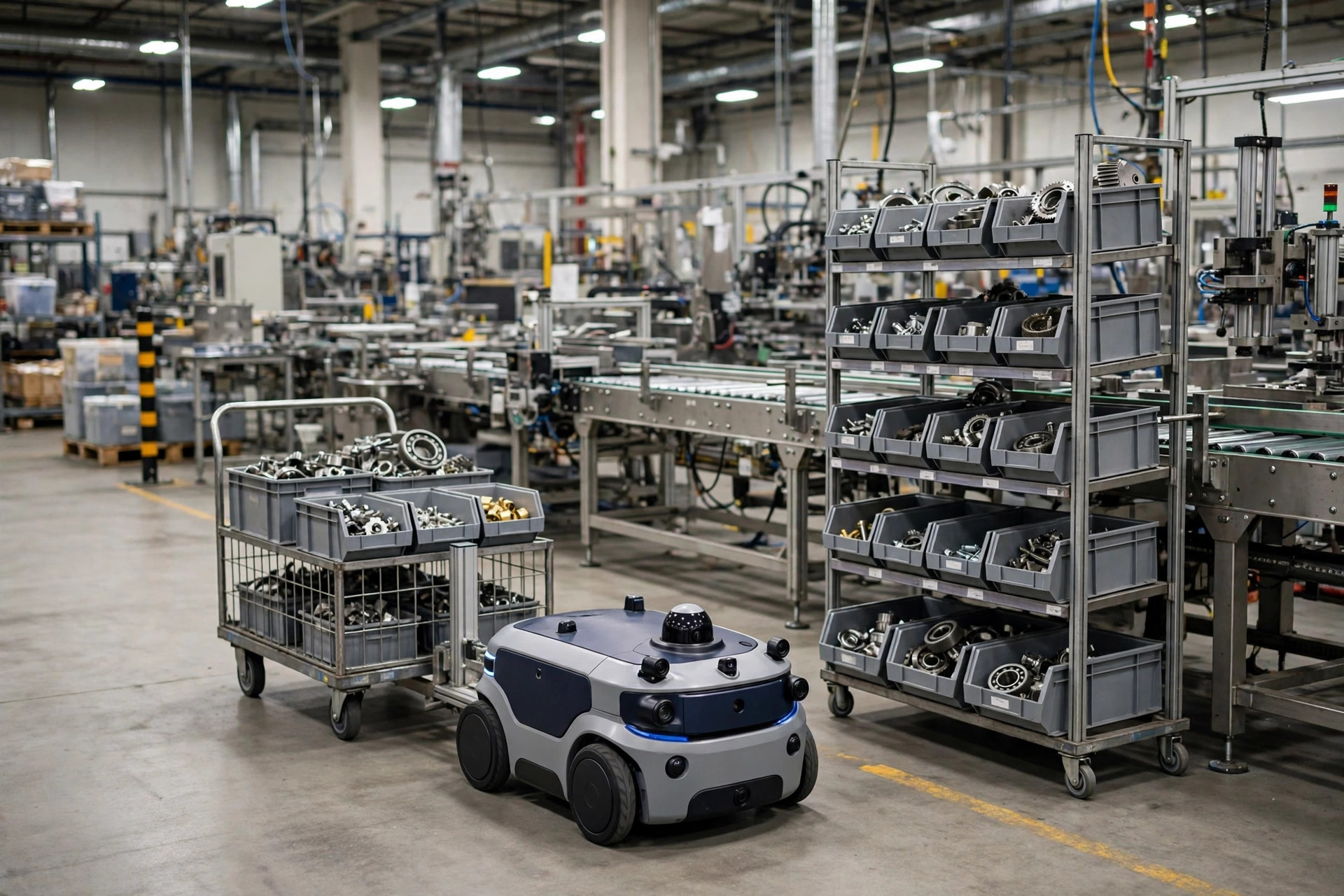
We small warehouses could never burn that kind of money — that was the first thought in my head the first time I stood next to an RCS robot and watched its LiDAR dome spin.
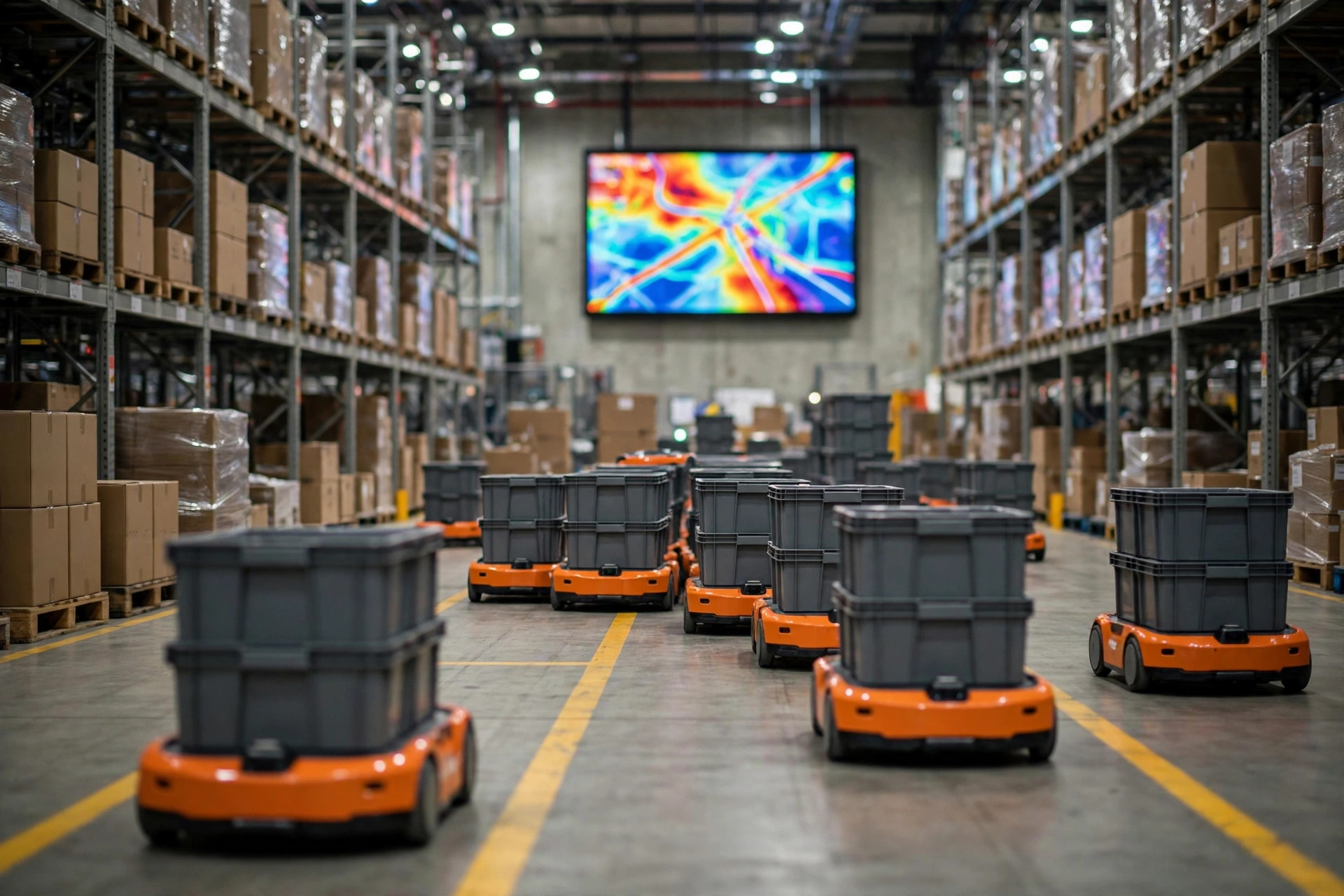
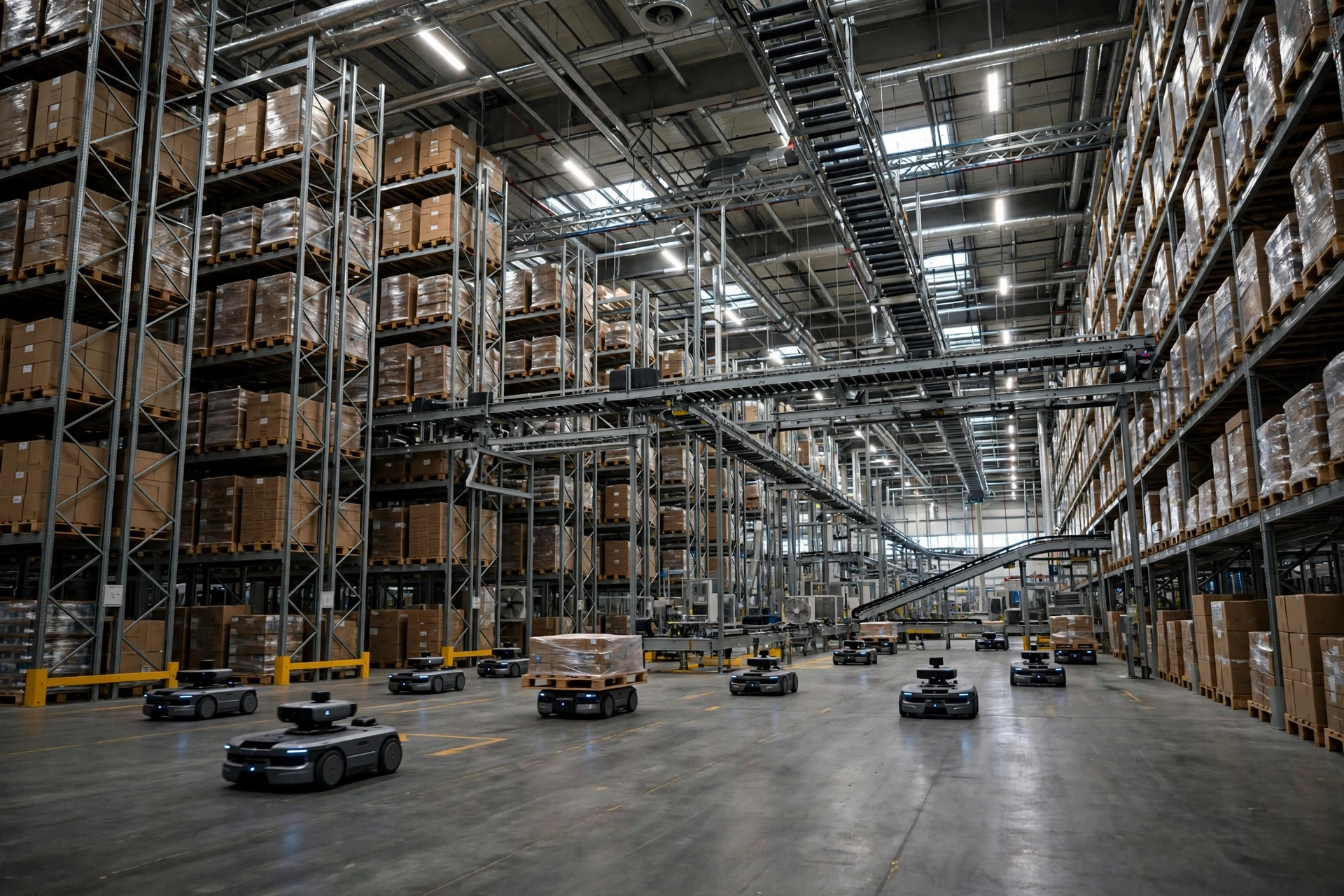
Last year I toured a big distribution center in Carson. Dozens of AMRs were weaving between the pick zone and the aisles on their own, and before the shift started, an engineer walked a checklist down the whole fleet: wipe the LiDAR, press the safety edges, check the tires, test the e-stops. Fifteen minutes, done. My immediate thought: could a small warehouse like mine ever afford this ritual? I chewed on it for a month. The answer: the checklist I can afford — the money-burning part I can't. And honestly, inspection was never about money. It's about whether it hurts enough when you skip it.
Full disclosure: my little 3,000-square-meter warehouse doesn't run AMRs yet — forklifts and pallet jacks do the job fine. But this inspection logic works just as well on a forklift. And who knows, if business picks up and I lease a couple of AMRs one day, I'll already know the drill. Learning it early costs nothing.
LiDAR: The Robot's Eyes — A Little Dust Makes It Half-Blind
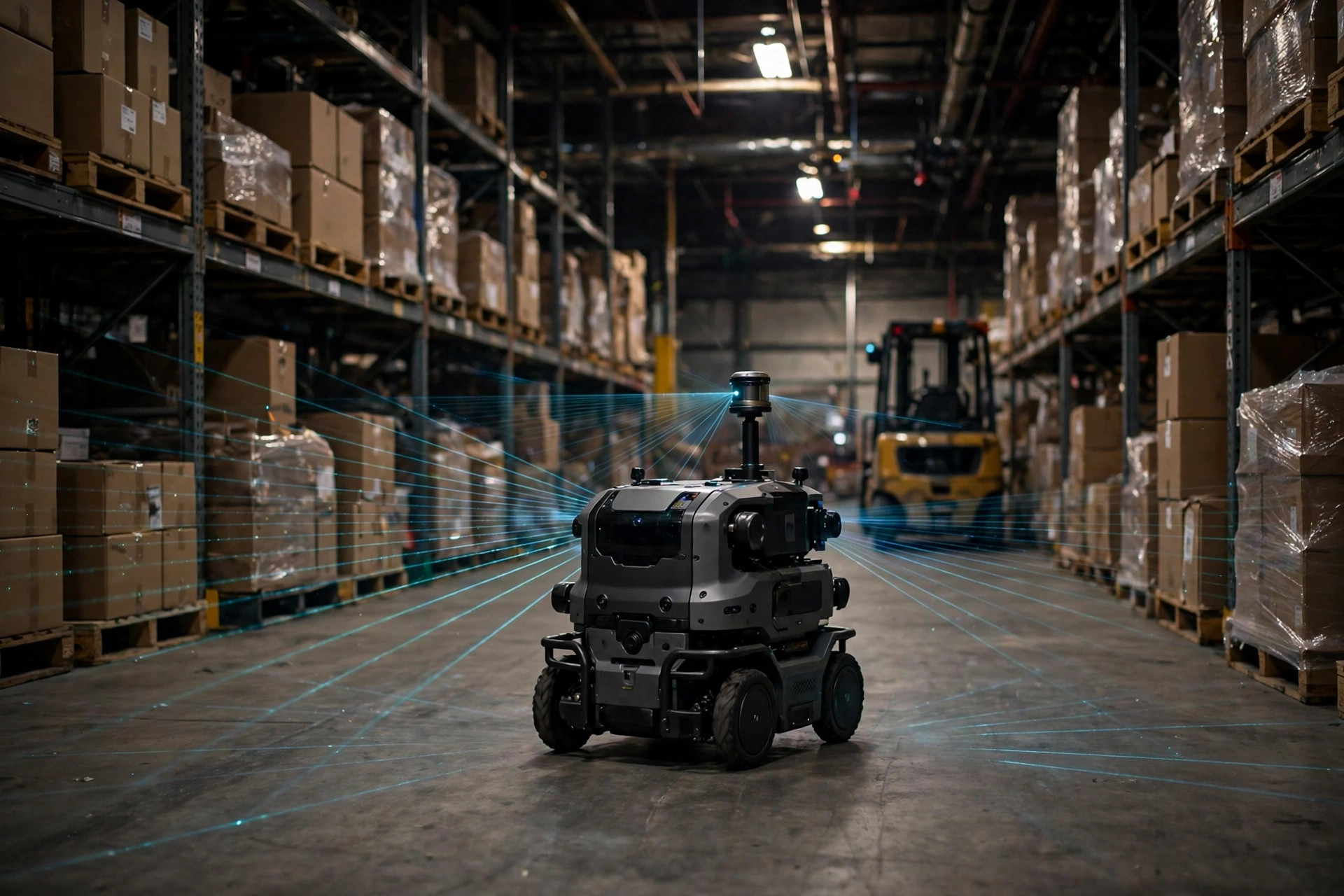
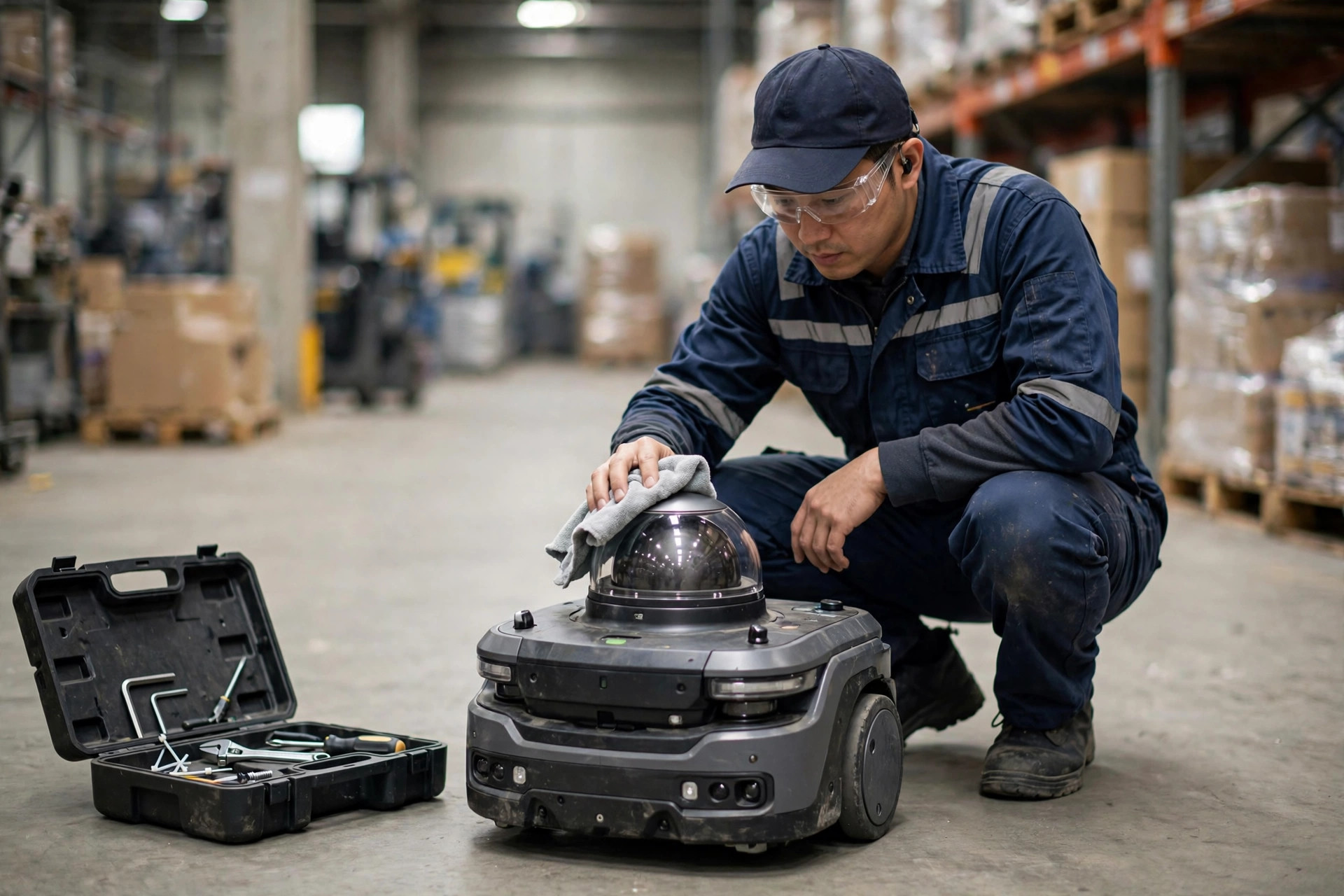
That spinning "little mushroom" on top of an AMR is the LiDAR — the robot's eyes, how it sees the road and dodges obstacles. The engineer at that big DC told me something that stuck: most of the robots sent in for repair aren't broken. They're dirty, loose, or knocked out of alignment. "Dirt" causes more failures than "damage," by a lot.
Warehouses are dusty places. A film of dust on the LiDAR cover is like a person wearing filthy glasses: near field looks okay, but long-range obstacle detection shrinks, the robot panic-stops for nothing, and in bad cases it just goes "blind" and squats in the middle of the aisle with the whole lane blocked behind it.
The down-to-earth fix: every morning before the shift, wipe the cover with a clean soft cloth. Fifteen seconds. No wet rags, no blasting it with an air gun — it's an optical part, treat it like it's delicate. While you're there, give the mounting screws a wiggle; tighten anything that moves.
One Homely Checklist to Rule the Whole Fleet
The big DC's checklist was printed, laminated, and hung on the charging-area wall. My warehouse doesn't have that kind of swagger, so I converted it into a phone-notes version. Here it is. Fifteen minutes before the shift, walk it:
| Item | The cheap way to check it | How often | What happens if you skip it |
|---|---|---|---|
| LiDAR cleaning | Wipe the dome with a clean soft cloth, wiggle the mounting screws | Daily | "Half-blind": phantom e-stops, dead stops mid-aisle, blocked lanes |
| Safety edges / bumper | Press all the way around the body, confirm it springs back and triggers a stop | Weekly | It won't stop when it hits a person or a rack — that's an accident report |
| Charging contacts | Wipe with a soft cloth, look for scorch marks or bent pins | Daily | It won't charge, and the robot "starves" mid-aisle |
| Tire wear | Check the tread, compare against a tape marker line | Weekly | Drifting, slipping, localization wander that kisses the rack feet |
| E-stop buttons | Press each one, reset, confirm the robot actually stops | Daily | You slam it in an emergency and nothing happens |
| Body sensors | Wipe the dust off the front and rear obstacle sensors while you're at it | Daily | Same disease as the LiDAR: false alarms grown from grime |
Looks long on paper; once you've done it a few times it's fifteen minutes. The operative word is "daily" — skip three days and you might as well have skipped the whole thing.
Before You Lease AMRs, Ask Three Things
We can't buy them, but we can lease them — plenty of integrators rent AMRs by the month, maintenance included. Tempting. But before you sign, three questions:
First, whose job is the daily check? Some leases make daily inspection the tenant's job, with the integrator only doing quarterly deep service. If nobody wipes the dust and a robot dies, whose fault is it? Get it in writing, or you'll argue about it later.
Second, how fast do spares arrive? A small warehouse lives or dies on one or two robots. One dead robot, one day of backed-up orders. Ask whether common spares (tires, edge strips, charging contacts) sit in a local depot or ship from the factory — a few days' difference feels like a lifetime.
Third, who pays for integration? AMRs need your network and your systems; the interface work with your WMS/WES and any network upgrades usually aren't in the rent. Get that number before you sign, or the robots arrive and surprise — there's an "entry fee."
Ask these three, and leasing is genuinely cheap. Skip them, and whatever you saved on rent comes back as arguing time.
The Cost of Skipping: Let Me Do the Redneck Math
We small warehouses don't talk ROI. We talk "does it hurt."
A true story I heard from a fellow operator in Ontario a couple of years back: their AMR's LiDAR dome went two months without a wipe — dust thick enough to write your name in. One night shift, the robot went "half-blind" in an aisle, missed a carton sticking out of a pallet, and drove straight into a rack foot. The rack held, but the robot's front end cracked and it went back to the factory. One repair bill would have paid for several years of diligent inspection at a warehouse our size — never mind the blocked aisle and the delayed orders that night.
The other math is even more down-home: the safety edge feels useless right up until the day it isn't, because its entire job is to never be needed. But the day something gets hit, the difference between having it and not having it is the difference between "close call" and "work stoppage investigation." Big warehouses can eat that cost. We can't — which is exactly why a small warehouse should watch this thing even more closely.
The Counter-Intuitive Bit: Time Isn't the Real Cost of Inspection
Everyone thinks inspection costs those fifteen minutes of labor. Wrong.
The real cost of inspection is the little voice in your head that says "nah, not necessary." The robots run fine every day — who wants to crouch down and wipe dust every morning? Big DCs force it with process: the checklist gets signed, missed signatures hit your review. We small warehouses have no process. All we have is "does it hurt": just think about how many years of inspection one repair bill buys, and those fifteen minutes suddenly feel cheap.
And here's the even more counter-intuitive one: AMRs aren't killed by crashes. They're killed by grime. Crashes are rare; dirt is daily. All that fancy maintenance, and in the end it comes down to a soft cloth. Ironic, isn't it? A fleet worth serious money, and its weak point is a rag.
Small Warehouses Have Their Own Way of Surviving
We can't copy the big-DC playbook wholesale, and we don't need to. They've got dedicated engineers, maintenance software, spare-parts rooms. What do we have? Eyes, phones, and fifteen minutes.
My three homely tricks, for fellow small-warehouse owners: first, photo log with your phone — snap the key spots every inspection (tire wear, contact scorching) and keep them in an album; comparing photos beats trusting your memory. Second, tape marker lines — stick a strip of tape on the tire as a wear marker; when the tread wears down to the line, change the tire, no data-logging needed. Third, hang the checklist at the charging station — whoever plugs in does the check; assign it by habit, not by willpower.
Big warehouses manage robots with systems. We manage them with eyes and phone albums. Homely, but it works.
Small warehouses have their own way of surviving — spend money where the blade is sharpest, and the sharpest blade is five words: don't let the robots die.
By Xiao Ma, Small Warehouse Owner