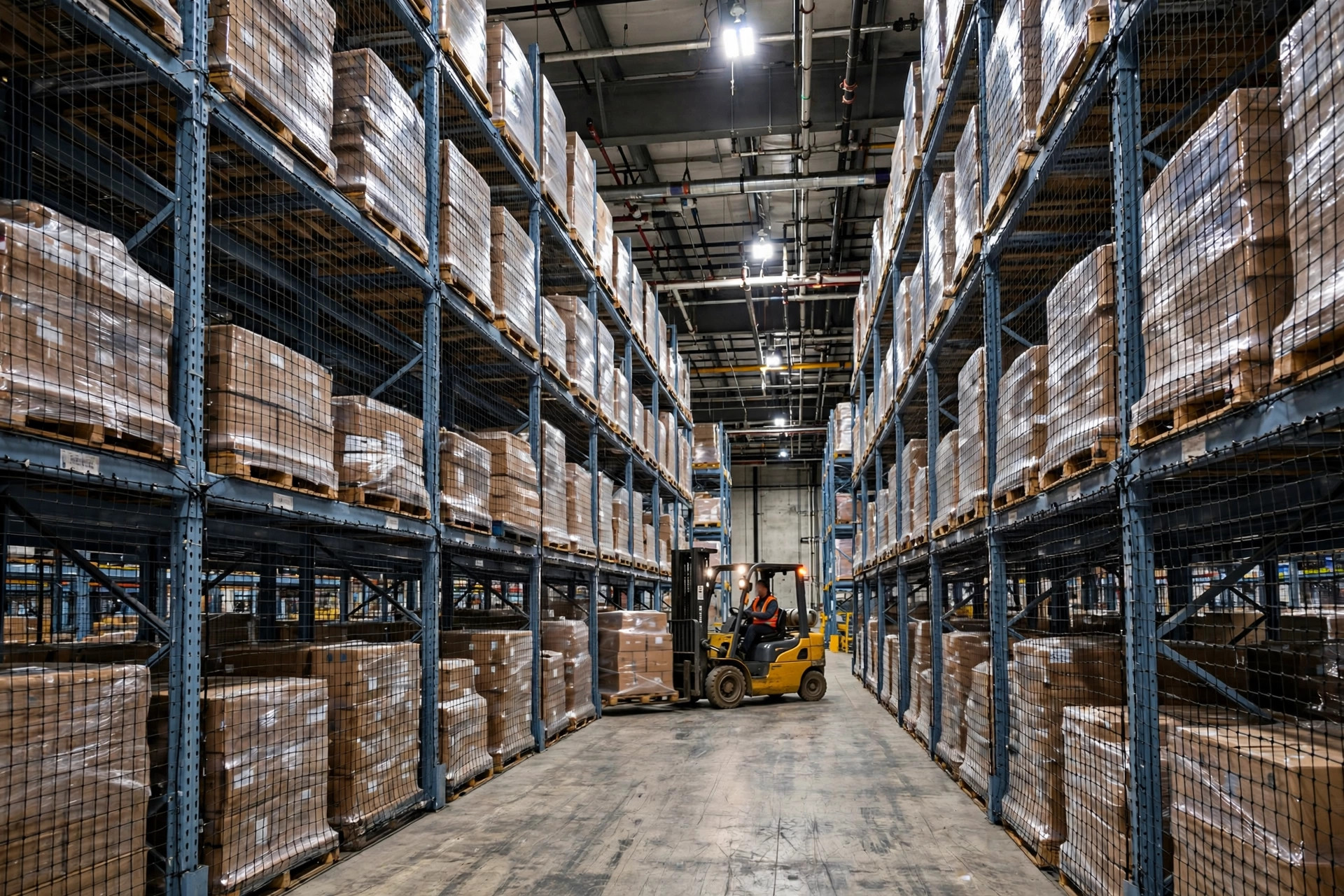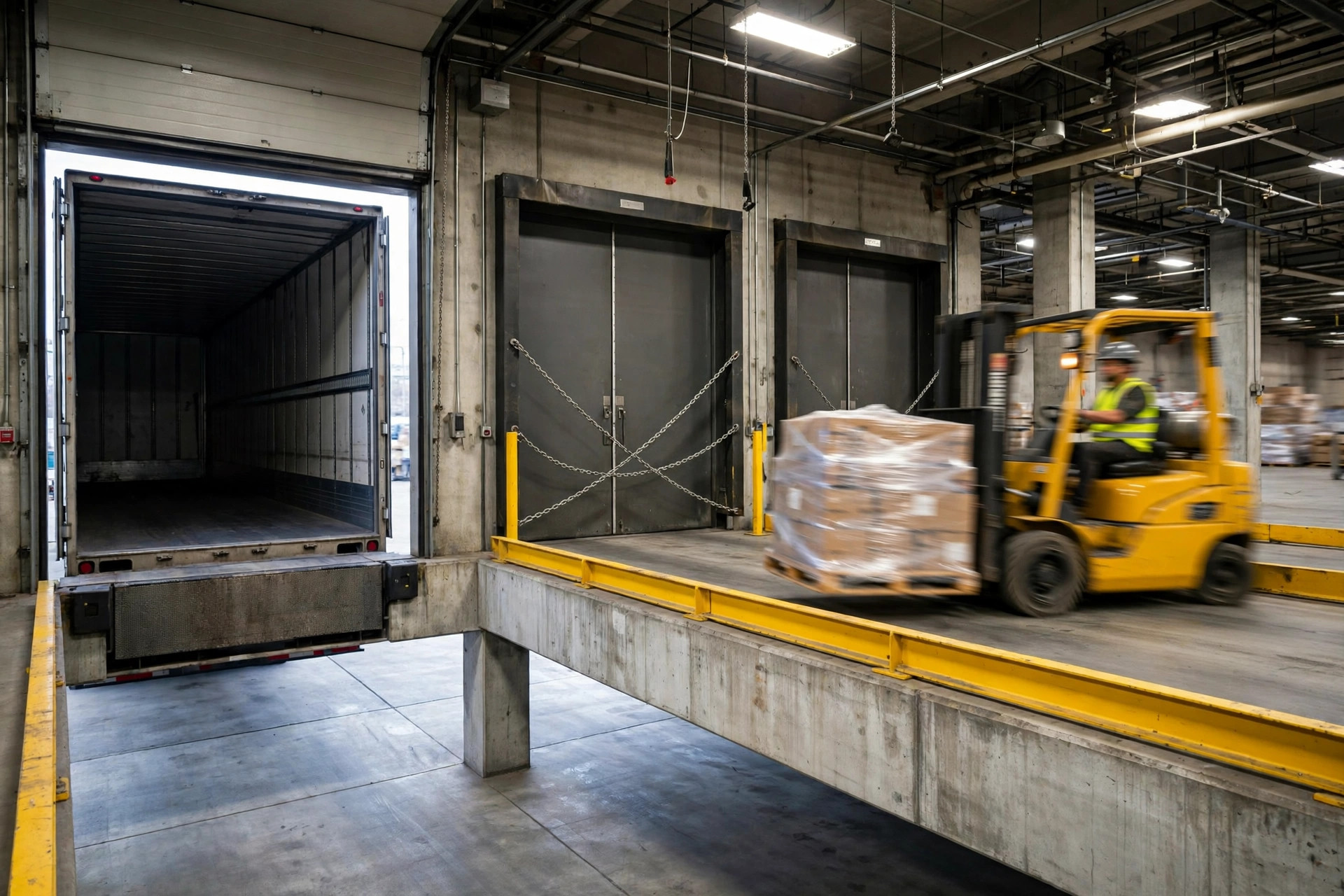
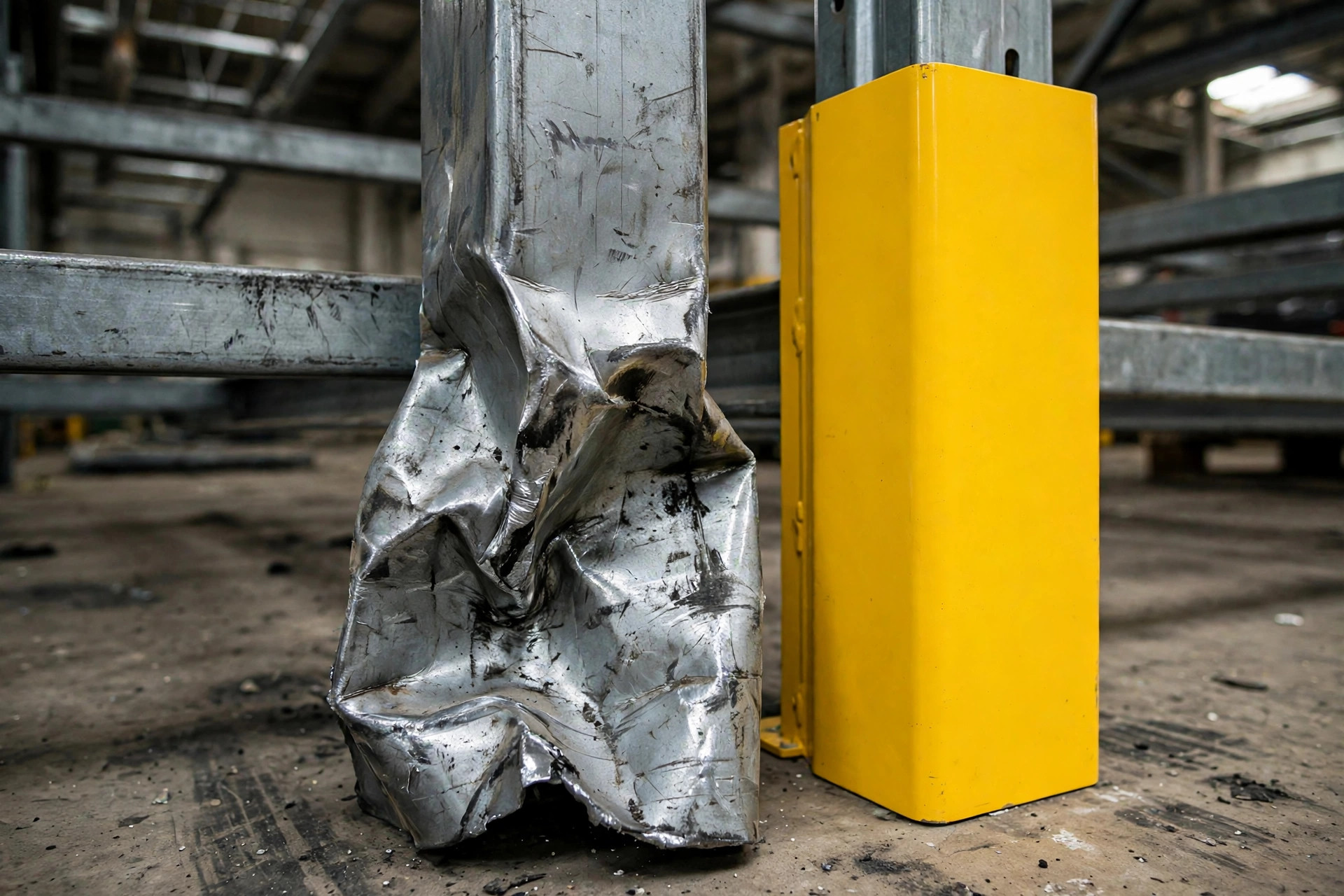
Summer of 2023, at a 3PL warehouse in Ontario, California handling e-commerce fulfillment, a night-shift rookie with less than a month on the job backed a forklift straight into the end upright of a rack aisle. The upright didn't fall — it just took a fist-sized dent. Nobody reported it. The night supervisor glanced at it and said, "We'll deal with it tomorrow." The next afternoon, the beam clips on that upright let go, and an entire level — more than a dozen pallets — came down. Nobody was standing underneath, thank God. Damaged goods, major rack repairs, and three days with that aisle shut down: the bill came to just under $200,000. Then OSHA walked in and wrote a citation on top of it, for missing safety protection.
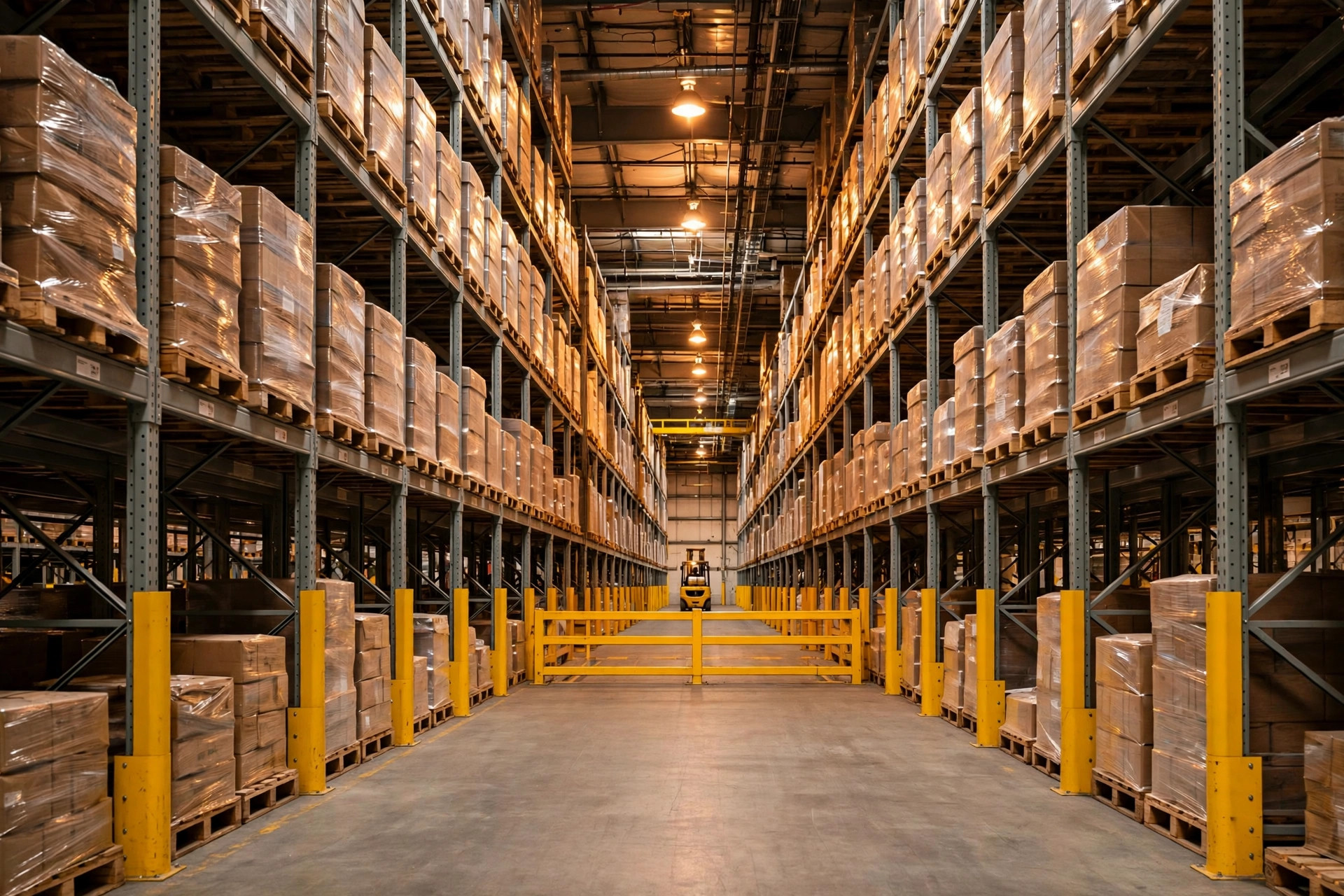
Ever since, I have a habit: the first thing I do at any warehouse isn't checking system reports — it's walking the racking and looking at the base of every upright. Eight out of ten warehouses have column guards installed. Fewer than half installed them right — too short, in the wrong spots, or a flimsy plastic shell that's basically decoration. A guard installed wrong is the same as no guard. It won't take the hit for you when it counts.
Know the three types before you buy
There are three mainstream types. Don't buy the wrong one.
Polyethylene sleeve guards: plastic shells that slip over the upright. Cheapest, tens of dollars each. They handle scuffs. A real forklift hit shatters the shell and bends the upright anyway. These belong only along pedestrian walkways where forklifts never go.
Steel wrap-around guards: bent steel plate wrapping the base of the upright, usually 12 to 24 inches tall. This is the mainstream choice — it takes a low-speed forklift bump. Check the steel thickness when buying; too thin and it's no better than the plastic shell.
Anchor-mounted standalone guards: bolted to the floor independently of the upright, so impact force goes into the concrete instead of the rack. Aisle ends, corners, any high-risk spot — this is what those need. Costs more, pays for itself the first time something hits it.
How tall: guards should cover everything a fork or counterweight can reach — 18 to 24 inches minimum as a rule; 36 to 42 inches at aisle ends. Anything under 12 inches is psychological comfort, not protection.
Where they're mandatory: every aisle-end upright, every exposed upright at a turn, uprights near charging stations and packing benches, and any upright a forklift passes dozens of times a day. Rule of thumb: if a forklift can reach it, guard it. No exceptions.
Installation is three steps: first, clean the floor at the upright base and mark the position; second, set the guard — for steel guards, drill the concrete and set anchor bolts, torqued to the manufacturer's spec, not by feel; third, push it and kick it — if it doesn't budge, it's done. Re-check the bolts every quarter and tighten what's loose.
Guardrails: where they go and how tall
Guardrail is the bigger sibling of the column guard: a guard protects one upright, a guardrail protects a whole zone. It belongs at dock ends, stairwell and mezzanine edges, in front of electrical panels and fire equipment, and anywhere pedestrian walkways cross forklift traffic. Anywhere people or expensive equipment might meet a forklift, there should be a rail between them.
Height and color: industrial guardrail typically runs 18 to 24 inches tall with two horizontal rails, in high-visibility yellow. The yellow isn't decoration — it's so a forklift driver can spot it from a hundred feet away. Posts every 8 to 10 feet, anchored to the floor. When a section gets bent, replace the whole section — don't straighten it and hope. Straightened steel has already lost its strength.
Where OSHA draws the line: OSHA 1910.22 requires aisles and floors be kept safe and clear; 1910.176 covers safe material handling and storage. I won't quote clause language from memory — check the current standards on OSHA's website for exact wording and penalties. But the logic of the red line is simple: employers must provide a safe workplace. A bent upright left unrepaired, protection that should have been installed but wasn't — when something happens, that's a willful violation, and penalties stack per day. A serious violation starts in the five figures; check OSHA's current penalty schedule for the exact number.
The math: the best safety money you'll ever spend
A steel column guard costs tens to a bit over a hundred dollars; a 10-foot guardrail section runs a few hundred. Outfitting a 50,000-square-foot warehouse — guards plus guardrails, material and labor — lands in the low thousands to low tens of thousands. Get a vendor quote for your exact number.
Now the other side of the ledger: replacing a single upright is a few hundred to a thousand dollars in parts and labor. A full level collapse like the one I described — damaged inventory, major rack repair, three days of a dead aisle — just under $200,000, before the OSHA citation and next year's insurance hike. And if someone had been standing underneath, we'd be talking criminal liability, possibly reaching the owner personally.
My call is clear: of everything you can spend on warehouse safety, column guards and guardrails have the highest return per dollar. No matter how tight the budget, this line item doesn't get cut. Small warehouses especially can't gamble on this — big operations have safety people walking the floor every day; one bad incident can shut a small shop down for good.
Monthly self-check: 8 items
- Any dents or deformation on uprights, any chipped paint (chipped paint usually marks an impact point)
- Guards shifted, cracked, or with loose bolts
- Guardrail posts still vertical, none bent from hits
- Rail connectors tight
- Aisle-end guard height — below fork height means it's decorative
- New temporary staging areas: are the nearby uprights now protected?
- Guards near charging and packing areas intact
- Every forklift scrape logged last month — has that spot been repaired or upgraded?
Photograph everything after the walk. If OSHA ever visits, that's your evidence of diligence. No records means no inspection happened, as far as they're concerned.
Tonight, take 20 minutes and walk your warehouse. Phone in hand, photograph every exposed upright with no guard or a wrongly installed one. Tomorrow morning, that's your fix-it list. Don't wait for OSHA to find the problems for you — by the time they do, there's another line on the bill.