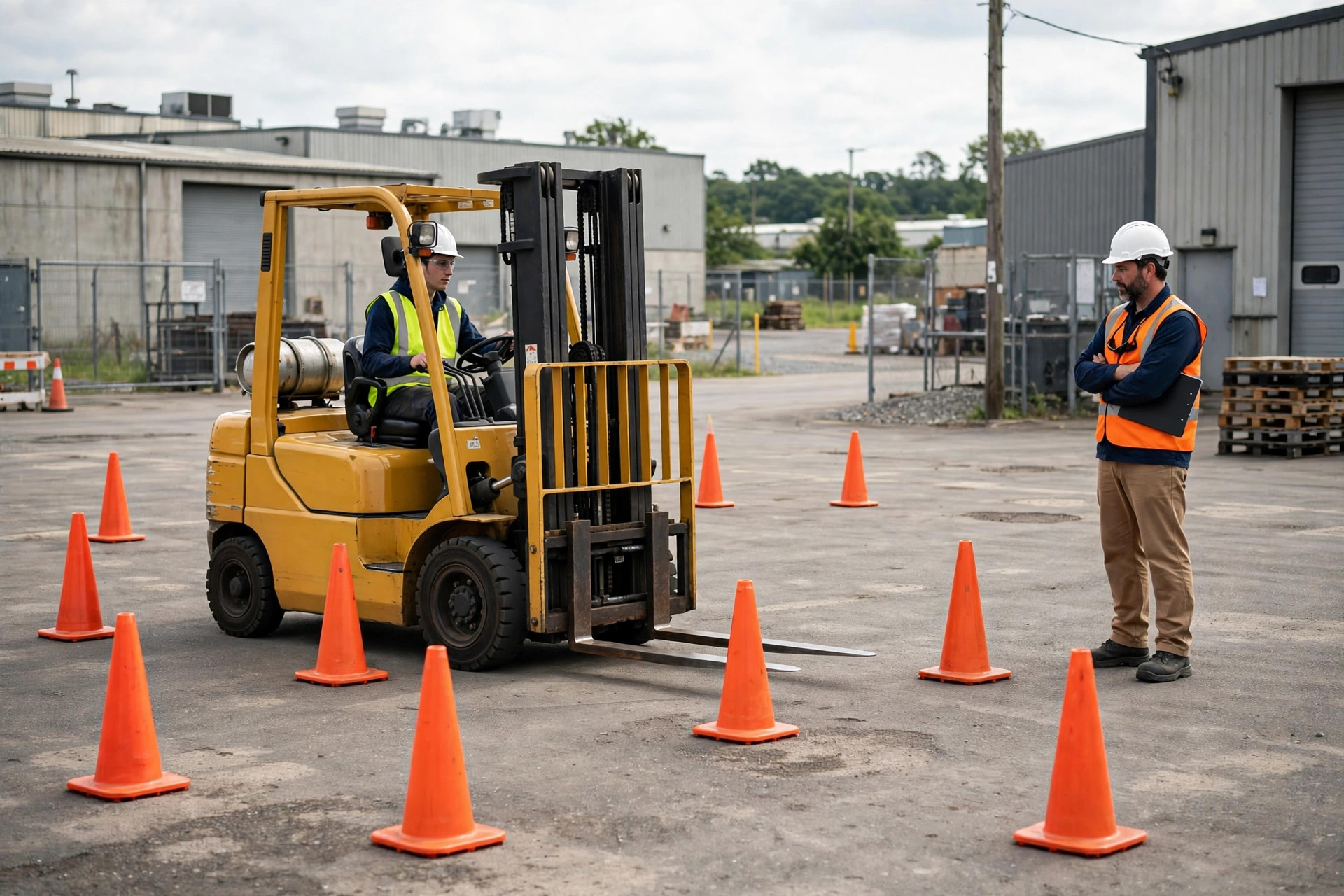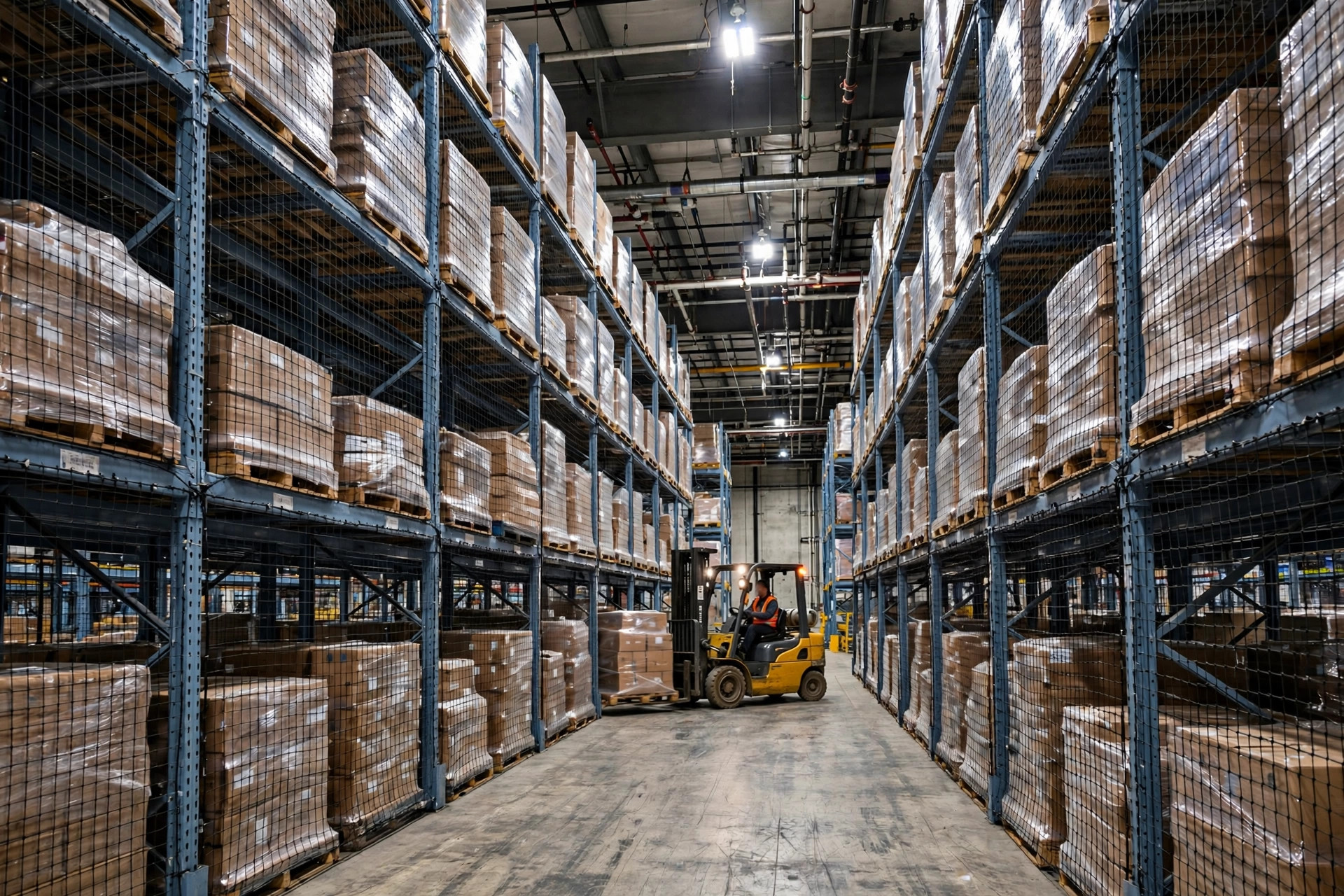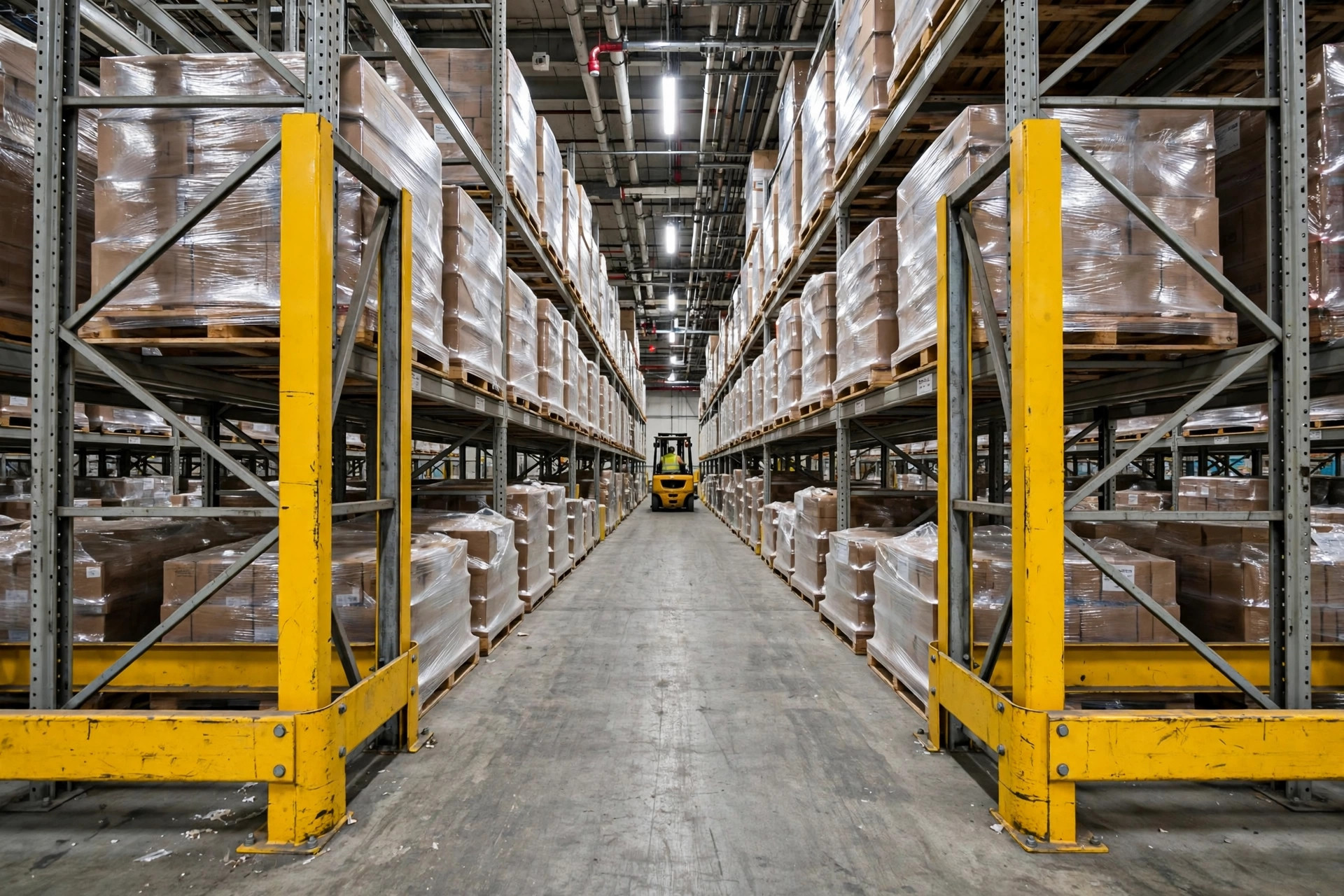
Last summer I was walking a 3PL warehouse in Mira Loma — a little over 90,000 square feet, peak season in full swing — when the warehouse manager stopped at the end of the first row and nodded toward a rack upright. "Take a look, Lao Mi. A forklift clipped it turning last week. It's a little bent."
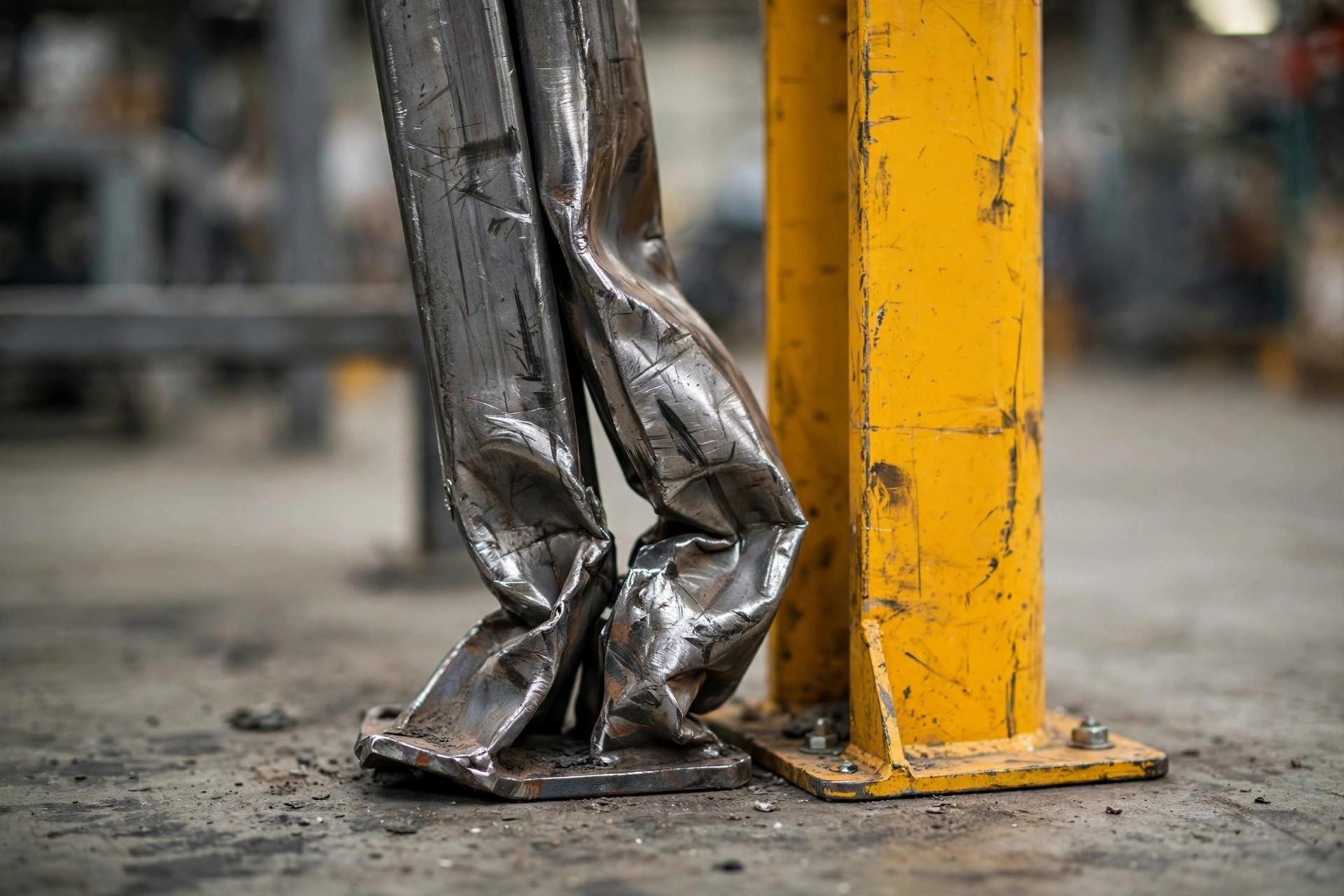
I crouched down. About a hand's width above the base plate, one leg of the upright had a visible dent pushed inward, the paint scraped clean off, bare metal showing through. He was still smiling. "Just a scratch, right?"
I told him to stop smiling.
In a pallet rack, the upright is the leg the whole structure stands on. Every load rating on that rack was calculated assuming those legs are straight. Bend one leg and the load stops traveling straight down — it shifts off-center. At best, that bay loses a big chunk of its capacity. At worst, the whole row goes over. In twenty years I've seen more than one rack collapse, and almost every story starts the same way: "It was just a tap."
Let me clear up a common misconception first. OSHA does not specify how tall a column guard must be, what the clearance should be, or what gauge of steel to use. There is no such number in the regulations. OSHA's General Duty Clause requires employers to provide a safe workplace, and rack impact protection falls under "reasonable measures" — an inspector looks at whether you've done something, not at a tape measure. The industry references are the Rack Manufacturers Institute (RMI) guidelines and ANSI MH16.1. That's as specific as I'll get on standards; the exact numbers belong in your rack manufacturer's installation specs, not in a blog post.
So what actually goes wrong inside a bent upright? Two things.
First, capacity doesn't drop in a straight line. Once the steel dents locally, the upright goes from concentric loading to eccentric loading — the load now bends the column instead of just pressing it. Bending moment changes everything: the same pallet can impose far higher stress on a dented upright than on a straight one. It looks like a small dent from the outside. Structurally, it's a different column now.
Second, collapses cascade. A row of pallet rack is one connected system. When one upright fails, the beams throw their load onto the neighbors, which were already near full capacity, and the whole row can come down in seconds. The most expensive accident in a warehouse is never the bent upright itself — it's everything the upright takes down with it, plus the downtime.
Where the Money Actually Goes
Impact protection comes down to two products, and they're not interchangeable.
Column guards are body armor: they wrap the upright and take the hit for it. Crash barriers are perimeter defense: they stand in front of the rack so the forklift never reaches the upright at all. If the budget only covers one, my verdict is barriers on the end uprights and guards on the interior ones — because row ends face every forklift entering or leaving the aisle, which means both the highest hit probability and the hardest impacts.
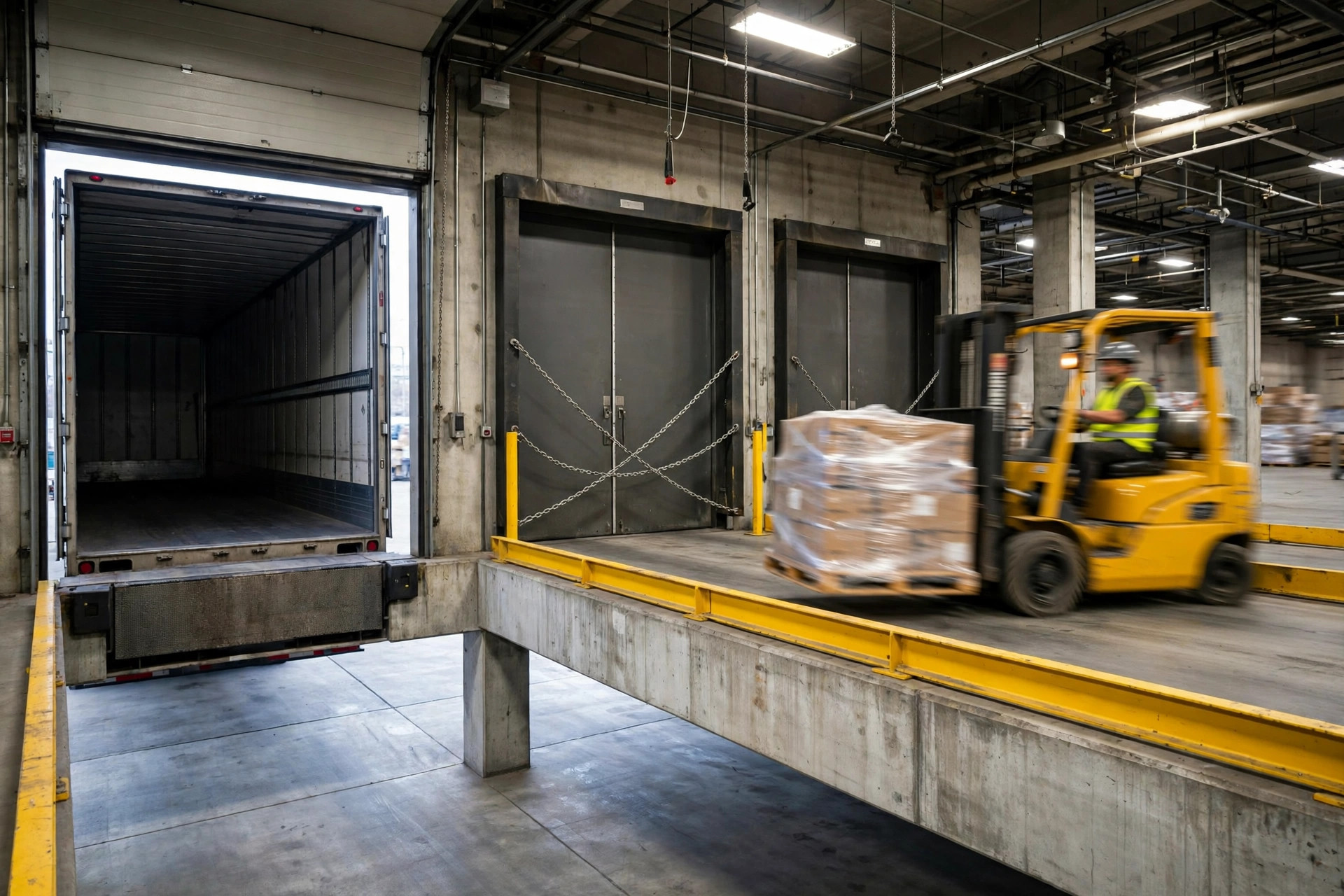
Where do they go? Four locations, no exceptions: every upright at the end of an aisle, uprights at aisle turns, uprights near the receiving docks, and uprights flanking any openings forklifts drive through. In 2023 I walked a warehouse in Ontario where management had guarded only half the row ends — the other half was "next quarter's budget." Three months later an unguarded end got hit, and the bill for the upright replacement plus the shutdown cost more than guarding every row end in the building twice over. Since then my line to clients is simple: half-protected is unprotected.
Installation matters as much as placement. Guards and barriers must be anchored to the floor independently, with expansion bolts into the concrete slab. Never just clip them onto the upright or tie them to a beam to save time. The impact energy has to go somewhere, and that somewhere is the ground. If the guard hangs off the upright it's supposed to protect, a forklift hit takes both of them down together — you've just added a counterweight to the collision. After installation, push it, kick it: if it doesn't move, it passes. Crude test. Works.
One trade-off I have to be honest about: guards and barriers stop scrapes and glancing blows. They do not stop a fully loaded forklift at full speed. No guard on the market does. So hardware is always the second line of defense — the first is speed limits and driver training. One without the other is locking the door while the window stands open.
What to Do Tomorrow When You Find a Bent Upright
Inspection doesn't need to be elaborate, but it needs a rhythm. Mine: once a month, walk the main aisles and look at every upright from the base plate up about three feet — dents, cracked paint, loose anchor bolts. And after any forklift incident, check the uprights at that spot the same day. Don't wait for the monthly walk.
When you find a deformed upright, the procedure is three steps and none of them are optional. Step one: unload that bay. Step two: lock the location out, tag it, make sure nobody puts product back up there. Step three: bring in the rack manufacturer or a qualified rack installer to assess it. Until then, nobody touches it.
Here's the trap I have to call out by name: do not hammer the dent back out. People actually do this. You can make it look straight, but the internal damage and stress concentration in the steel don't go anywhere. A "repaired" upright is more dangerous than a bent one, because nobody watches it anymore. A deformed upright gets replaced, full stop — and the old one goes to scrap, not back into inventory. Don't let anyone talk you into saving it.
The checklist, ready for tomorrow morning:
- Walk your main aisles and count how many row-end uprights have no guard or barrier. Make the list.
- Crouch at every upright base: dents, cracked paint, loose anchor bolts — photograph anything you find.
- Bent upright found? Unload first, lock it out second, call the manufacturer for assessment third. No hammers, no welding, no improvising.
- Write "report every impact" into your forklift operators' safety training, and enforce it. Most neglected dents survive because a driver was afraid to report them.
- Put a line for impact protection in next year's budget. Guards are cheap. One collision isn't. You can do that math yourself.