Let me start with the ledger. A pick-assist AMR costs roughly $40,000 to buy outright (illustrative figure — always get your own vendor quote). The same class of robot on a RaaS subscription runs about $1,200 a month (also illustrative). Over five years, renting costs you $72,000 — 1.8 times the purchase price.
Read that again. Renting robots is, over the long run, simply more expensive. So the next time a salesperson tells you RaaS is "cheaper because there is no upfront investment," ask them to put the five-year total on the table before continuing the conversation.
That said, buying is not always the right answer either. Below is the rent-vs-buy TCO framework I use when advising 3PLs. Plug in your own quotes.
Where the Money Actually Goes
Per pick-assist AMR, five-year horizon. All figures below are illustrative assumptions used to demonstrate the calculation method — actual numbers depend on your vendor quotes.
| Cost item | Buy (self-owned) | Rent (RaaS subscription) |
|---|---|---|
| Equipment purchase | ~$40,000, one-time | $0 |
| Deployment and integration (site engineering, WMS integration, map tuning) | One-time, illustrative $8,000 | Usually bundled into the subscription by most RaaS vendors |
| Monthly subscription | None | Illustrative $1,200/month |
| Operations: spare parts, software licenses, on-site support | Illustrative $400/month | $0 — vendor's responsibility |
| Total 5-year cash outflow | ~$72,000 | $72,000 |
| Residual value after 5 years | Thin secondhand AMR market, illustrative $5,000 | $0 |
| Who bears the risk | You: technology obsolescence, downtime, parts shortages | The vendor: swap-for-new clauses go in the contract |
Interesting, isn't it? With this set of numbers, renting and buying break even at five years. That is exactly why RaaS vendors can charge what they charge — they are betting your robots will never run at full utilization for five straight years.
So the real question was never "is renting cheaper than buying." It is: how many productive hours per year will your robots actually run? Utilization is the only variable that matters in this equation.
Situation 1: Volatile Demand — You Need Extra Bots for Peak Season
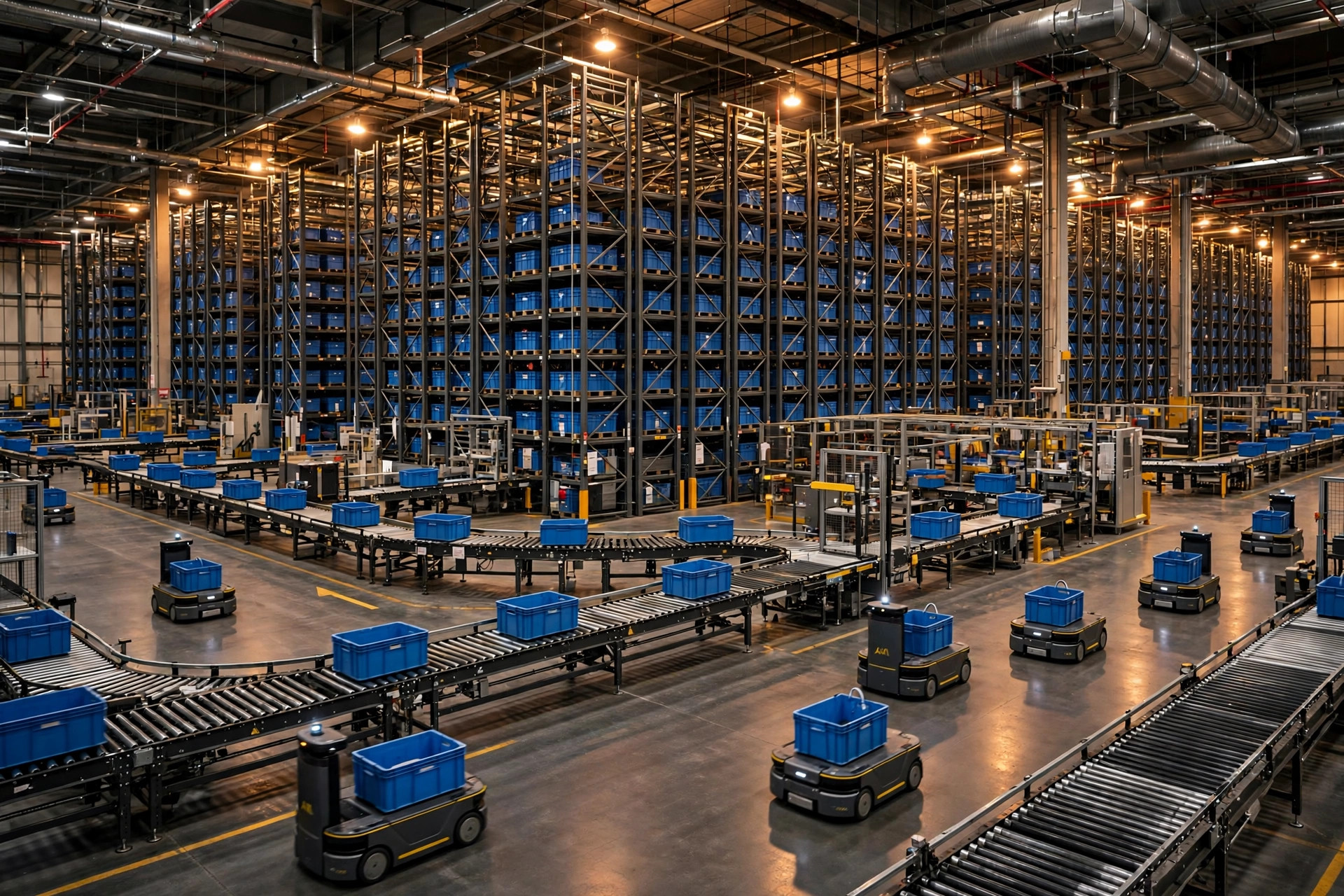
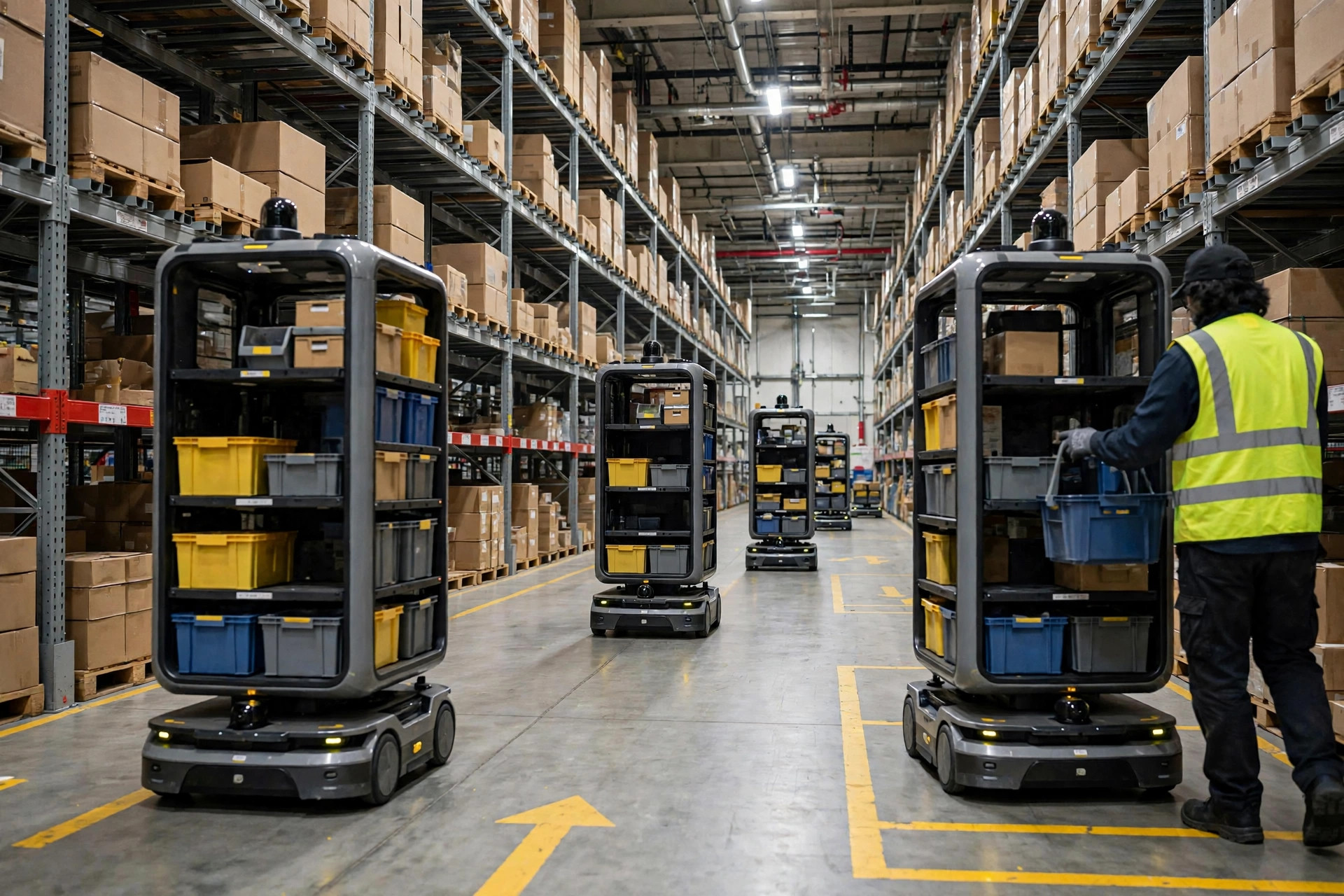
In May 2023, DHL Supply Chain expanded its partnership with Locus Robotics to deploy 5,000 Locus Origin AMRs across its global warehouse network — billed at the time as the industry's largest AMR deal (Locus press release, May 10, 2023). By March 2026, the partnership had passed one billion warehouse picks (Robotics and Automation News, March 9, 2026).
Why didn't DHL just buy? Because what it needed was elasticity. When peak season triples order volume in a region, the robot count has to scale with it — and scale back down when the surge ends. Under RaaS, DHL adds and removes bots by the month. Buy those extra 20 bots instead, and they sit idle eight months a year while depreciation, insurance, and the floor space they occupy keep billing you. An idle robot burns depreciation every single day.
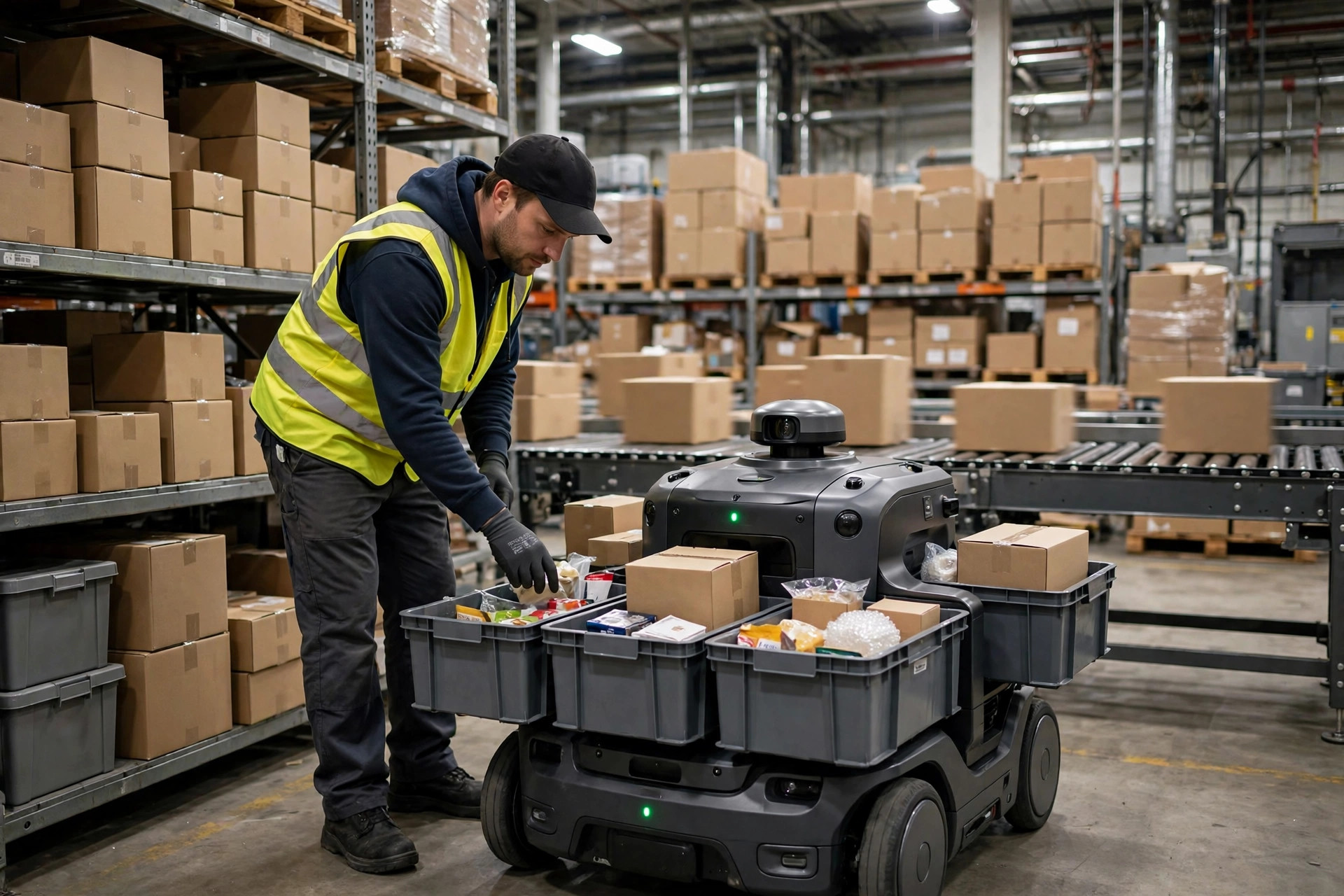
Run the small math: a warehouse needs 40 bots year-round and 60 for a four-month peak. Option A: buy 60; the extra 20 sit idle eight months. Option B: buy 40, rent 20 for four months. Using the example figures, Option A's idle holding cost for those 20 bots (depreciation plus tied-up capital) comes to roughly 20 × $40,000 × 8/60 ≈ $107,000. Option B's peak rental costs 20 × $1,200 × 4 = $96,000 — before counting the floor space and insurance the idle bots consume. The bigger the swing, the bigger renting's edge.
The rule is simple: if your peak demand exceeds average demand by more than 30%, rent the peak portion. Always. No second calculation needed.
Situation 2: Your Business Is Uncertain — and the Payback Period Outlasts Your Contracts
Many 3PL customer contracts run three years; warehouse leases run three to five. An AMR's payback period, per the formula below, is about 4.2 years. When the contract ends and the customer leaves, the robots stay — and the next customer's product profile and process may make them useless. The secondhand AMR market is thin; you will sell at a loss if you can sell at all.
What RaaS really sells here is not robots — it is an exit option. Subscription terms can align with customer contracts: customer stays, bots stay; customer leaves, bots go back. Technology risk works the same way. Each AMR generation gets cheaper with better navigation; the $40,000 robot you buy today may be obsolete in three years. Buying means betting the technology roadmap stays frozen for five years. Renting transfers obsolescence risk to the vendor — who can absorb it across thousands of units, which is why they dare take it.
Here is the counterintuitive part: a RaaS subscription is, at its core, an insurance-plus-flexibility premium. It feels expensive because you see the premium but not the risk it covers. When the risk is real, the premium is money well spent. When the risk does not exist — stable business, a clear technology path — that premium is pure waste. Whether the money is wasted depends on your risk, not on the vendor's price list.
Situation 3: Cash Is Tight, but Growth Cannot Wait
Fifty robots: $2 million out the door if you buy; $60,000 a month if you rent. For a growing 3PL winning new customers on 60-day payment terms, that $2 million in capex can decide whether it can take the customer at all. RaaS turns capex into opex — the bots start picking the month they arrive, revenue starts flowing, and cash flow stays in a positive loop.
One more calculation most people skip: the U.S. Bureau of Labor Statistics puts the 2024 median wage for hand laborers and material movers at $18.12 an hour — about $37,700 a year full-time, before benefits and overtime. A round-the-clock picking position easily costs over $50,000 a year in labor. One AMR's annual subscription (illustrative $14,400) is less than a third of one labor position. RaaS's real competitor was never "buying robots" — it is "keeping hiring people." If you cannot staff your picking stations or turnover is brutal, the math for renting is positive before you even start. First solve whether you have the capacity, then argue about the price.
The Conclusion: One Formula, Do It Yourself
Break-even months ≈ purchase price ÷ (monthly rent − monthly self-owned operating cost)
With the example numbers: $40,000 ÷ ($1,200 − $400) = 50 months, about 4.2 years.
Plug in your vendor quotes: if the result is shorter than how long you plan to run the fleet, buy. If longer, rent. That is all. Ignore the sales stories; let the numbers talk.
By Lao Zhou, Logistics Cost Analyst