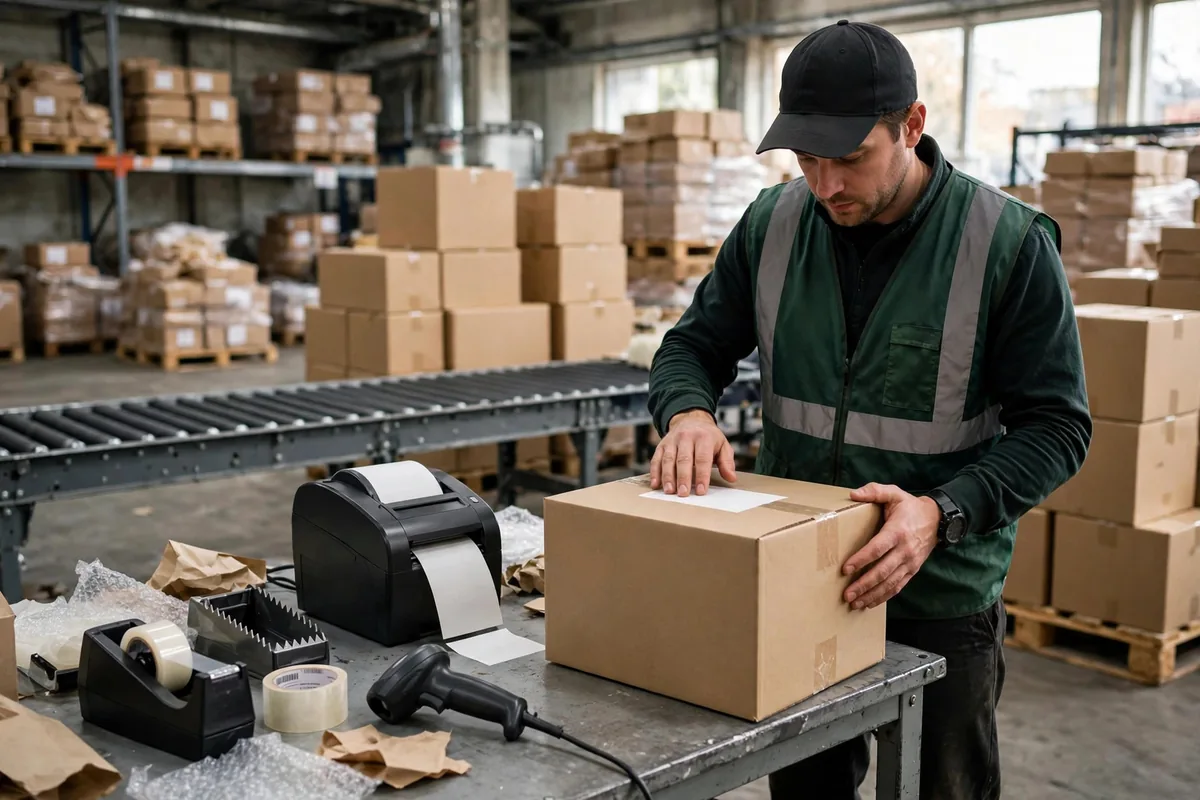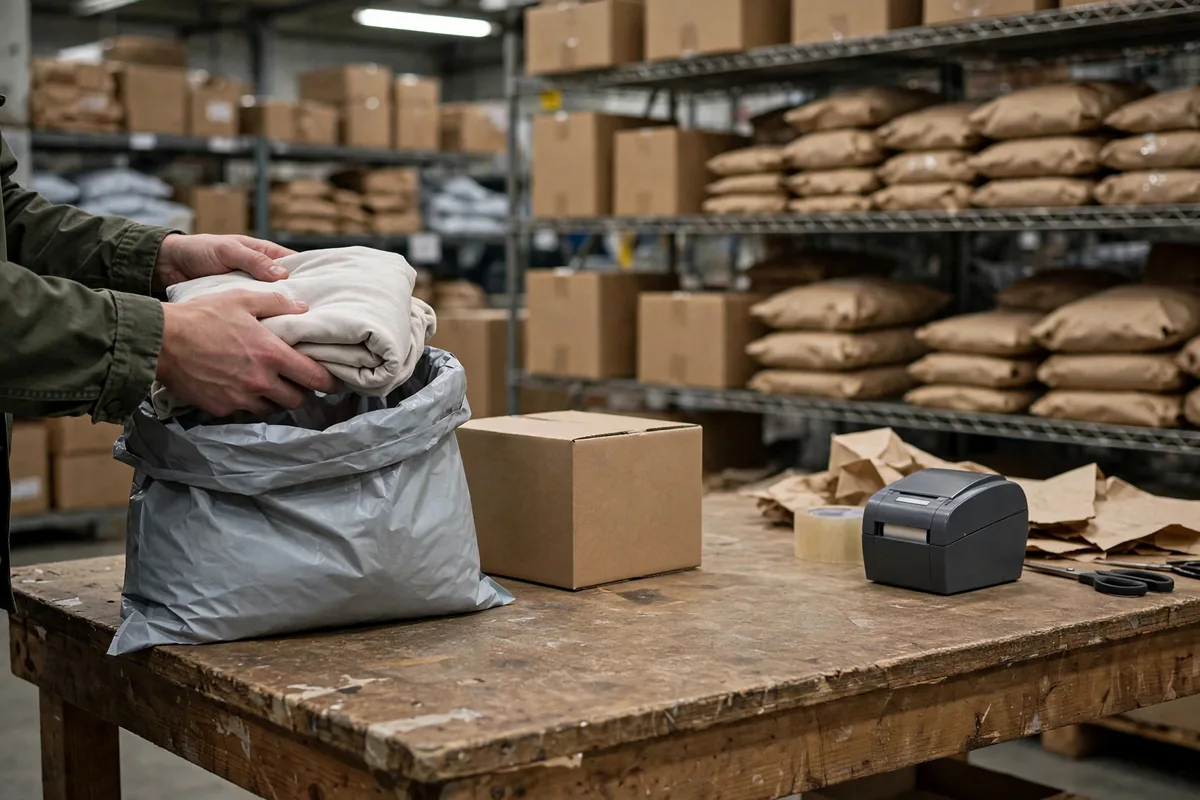
I nearly spit out my coffee reconciling last October's shipping bill, the month I finally sat down and priced poly mailer vs box shipping side by side.
The same hoodie cost a few dollars to ship in a poly mailer — and more than double that in a box. At 300-plus orders a month, picking the wrong packaging was burning close to two thousand dollars a month. I had already learned this lesson the hard way when I started selling apparel in 2023. Then I switched product categories and walked straight into the same trap again.
Poly mailer vs box shipping is not a preference question. It is a math question with two different answers depending on what you sell. The mailer wins on dimensional weight. The box wins on protection. Get it wrong and the cost shows up in freight and damage claims, not in the few cents of packaging material.
Poly Mailer vs Box Shipping: Where the Mailer Actually Saves Money
US carriers bill parcels on dimensional weight: length times width times height in inches, divided by 139, gives you the dimensional weight in pounds, and you pay whichever is higher — actual weight or dimensional weight. That 139 divisor is what the major US carriers publish for their commercial rates; the exact scope and rounding rules vary by carrier and change over time, so check the carrier's official site for the latest policy before you quote anything.
Take a 0.6-pound hoodie. Fold it into a 10-by-13-inch poly mailer and the bag hugs the product, so dimensional weight barely matters and you mostly pay on actual weight. Put the same hoodie in a 12-by-10-by-4-inch box and the math flips: 480 divided by 139 is about 3.45, rounded up to 4 pounds. You are paying to ship four pounds of a hoodie that weighs 0.6 pounds. That is the box's hidden tax.
In May 2024 I ran these numbers for a friend selling hoodies out of Los Angeles. He was shipping everything in boxes, 800-plus orders a month, and dimensional weight was eating nearly half his freight bill. Switching the apparel to mailers dropped his per-order shipping down a whole tier overnight. His words: he had spent two years working for the carrier for free.
But mailers are not a cure-all. A bag has no rigid structure. Whatever is inside takes the full beating of the sort line — the drops, the pressure, the conveyor belts. Soft goods take it fine. Hard goods do not. That dividing line matters more than the savings.
When the Box Is Non-Negotiable
I run a three-tier rule, taped to the side of our packing bench. Every new packer memorizes it on day one.
Tier one, mailer every time: apparel, socks, scarves, fabric accessories, phone cases — anything soft, flat, and hard to break. Apparel is the mailer's home turf. Shipping a single T-shirt in a box is throwing money away.
Tier two, it depends: cosmetics, hand cream, small appliance accessories, light goods that come in their own retail box. These items do not shatter, but they deform and their corners crush. My rule is price-based: under 30 dollars, a heavy-duty mailer plus a layer of bubble wrap; over 30 dollars, use a box.
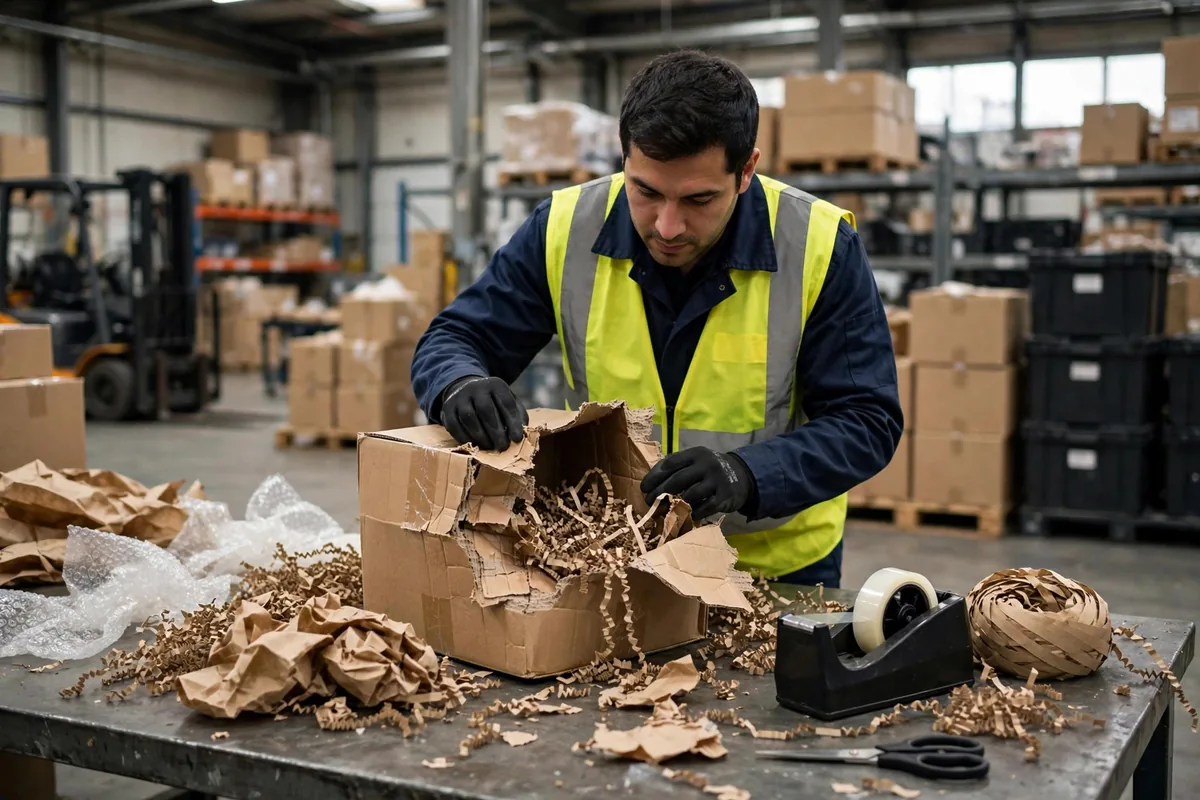
Tier three, box, no discussion: ceramics, glass, liquids, anything with hard sharp edges, anything high-value and fragile. In March 2025, a friend selling ceramic mugs tried to save money shipping 28-dollar mugs in mailers. The damage and refund claims came back in a wave, and the freight he saved did not cover a fraction of what he paid out. One broken mug costs you the product, the freight, the refund processing, and a one-star review.
Here is the counterintuitive part: mailers can cost you more on returns than boxes do. A box survives being opened — the returned item goes back in a fresh box and sells again. A mailer is destroyed the moment the customer tears it open, so every return means new packaging and a fresh quality check. If your category has a high return rate, run the mailer math with return costs included, not just outbound freight.
The Sealing and Labeling Mistakes I Have Made
The easiest place to lose a mailer shipment is not the bag. It is the seal and the label.
The adhesive strip looks solid, but in a cold warehouse in winter it loses grip. During peak season in December 2024, we had bag mouths peeling open on the sort line and garments falling out — lost parcels we had to refund. Now we run a strip of packing tape across every seal. It costs a few cents per order and the loss rate dropped immediately.
Labels are the other trap. The smooth film of a mailer lets label corners lift, and a label a scanner cannot read means manual sorting and a slower delivery. I tape down all four edges of every label with clear tape, and I pick matte-finish mailers over glossy ones because labels stick better. Never put the label on the bulging middle of the bag — place it on the flatter lower half and your scan rate visibly improves.
Multi-item orders are a third trap. Stuff two garments into one mailer and it balloons into a ball, dimensional weight climbs right back up, and you would have been better off splitting the shipment or using a box. My rule is one item per mailer. More than one item goes in a box, and I do not feel bad about the packaging cost.
The Annual Math: Poly Mailer vs Box Shipping in Real Numbers
The table below is a worked example using assumed rates I picked for illustration — not real carrier quotes. Your rates will differ, so check the carrier's official site for the latest policy and plug in your own numbers. What matters is the size of the gap, because that gap is the whole point of the poly mailer vs box shipping decision: the money is not in the packaging aisle, it is in the billable weight.
| Item | Poly mailer | Box |
|---|---|---|
| Packaging cost | $0.15 | $0.85 |
| Billable weight | ~1 lb (actual weight) | ~4 lb (dimensional weight) |
| Freight (assumed $2.50/lb) | ~$2.50 | ~$10.00 |
| Total cost per order | ~$2.65 | ~$10.85 |
| Damage claim risk | Low (apparel) | Very low |
The gap is $8.20 per order. At 300 orders a month — 3,600 a year — that is $29,520 a year. And that is before counting the warehouse space boxes occupy and the extra seconds each box takes to pack. Run the same table with your own volume and your own rates, and the answer falls out immediately.
The math cuts both ways, though. If you sell fragile goods, a single damage claim on a mailer shipment can wipe out the savings from dozens of orders. There is no universal answer here, only your answer.
My approach: for every new category, run a 50-order split test — half mailers, half boxes — for two weeks, and compare freight, damage, and returns before writing the rule into the packing manual. Do not switch everything on a gut feeling before the data comes back.
This one I have tested myself, and it works: packaging is not a belief, it is arithmetic. Use the bag where the bag wins, use the box where the box wins, and once the math is clear, the carrier stops collecting your money for nothing.
By Ah K, E-commerce Seller (5 yrs)