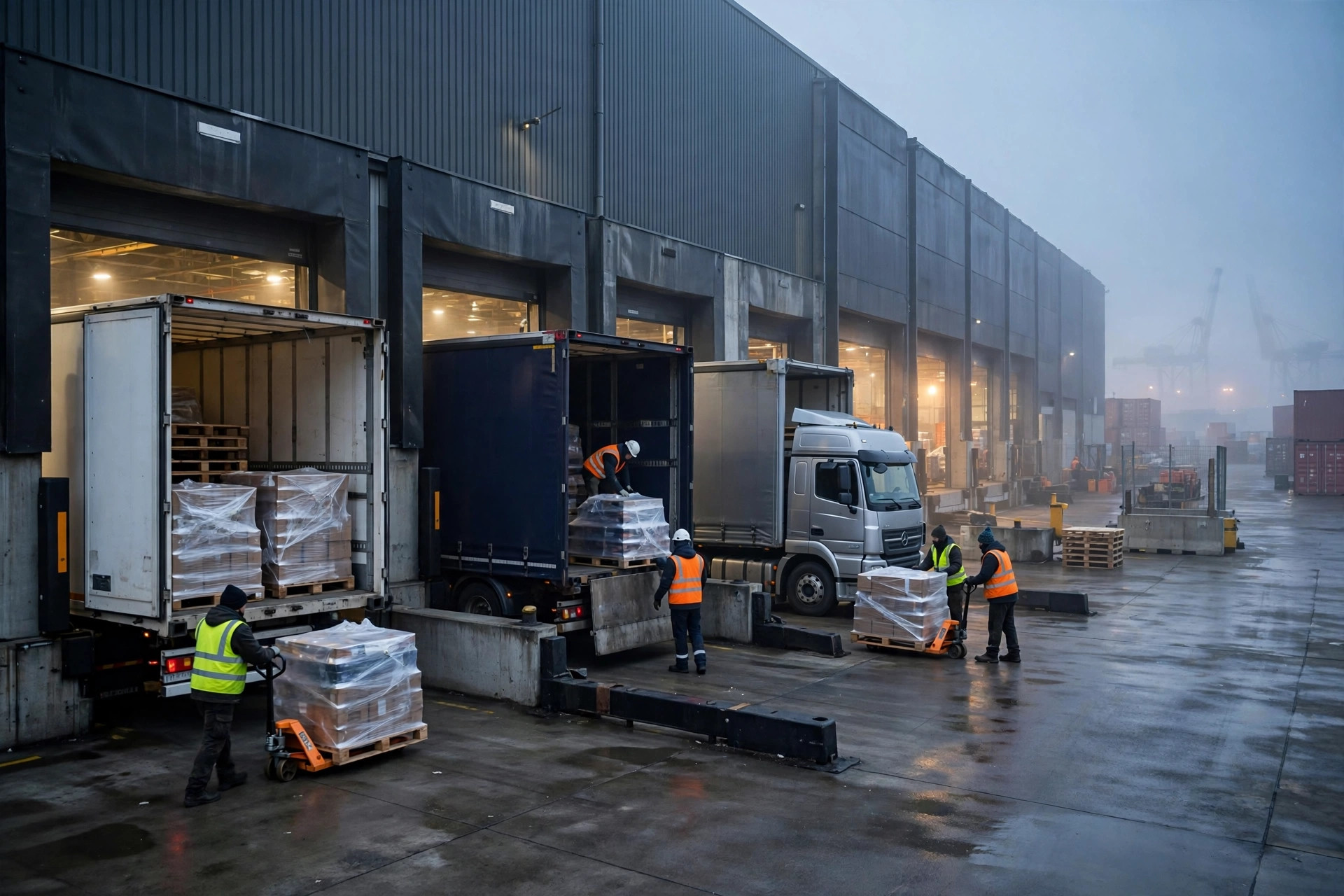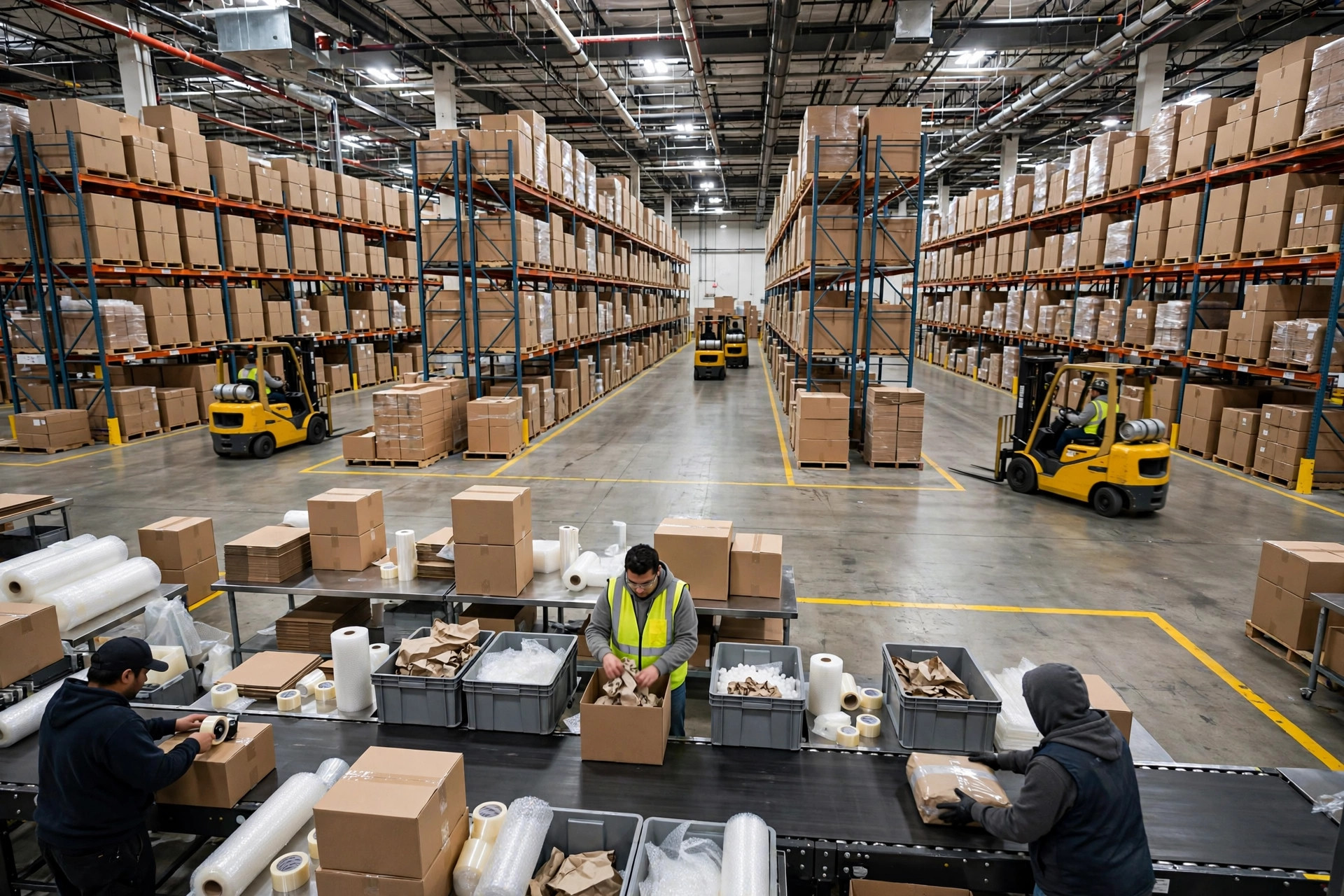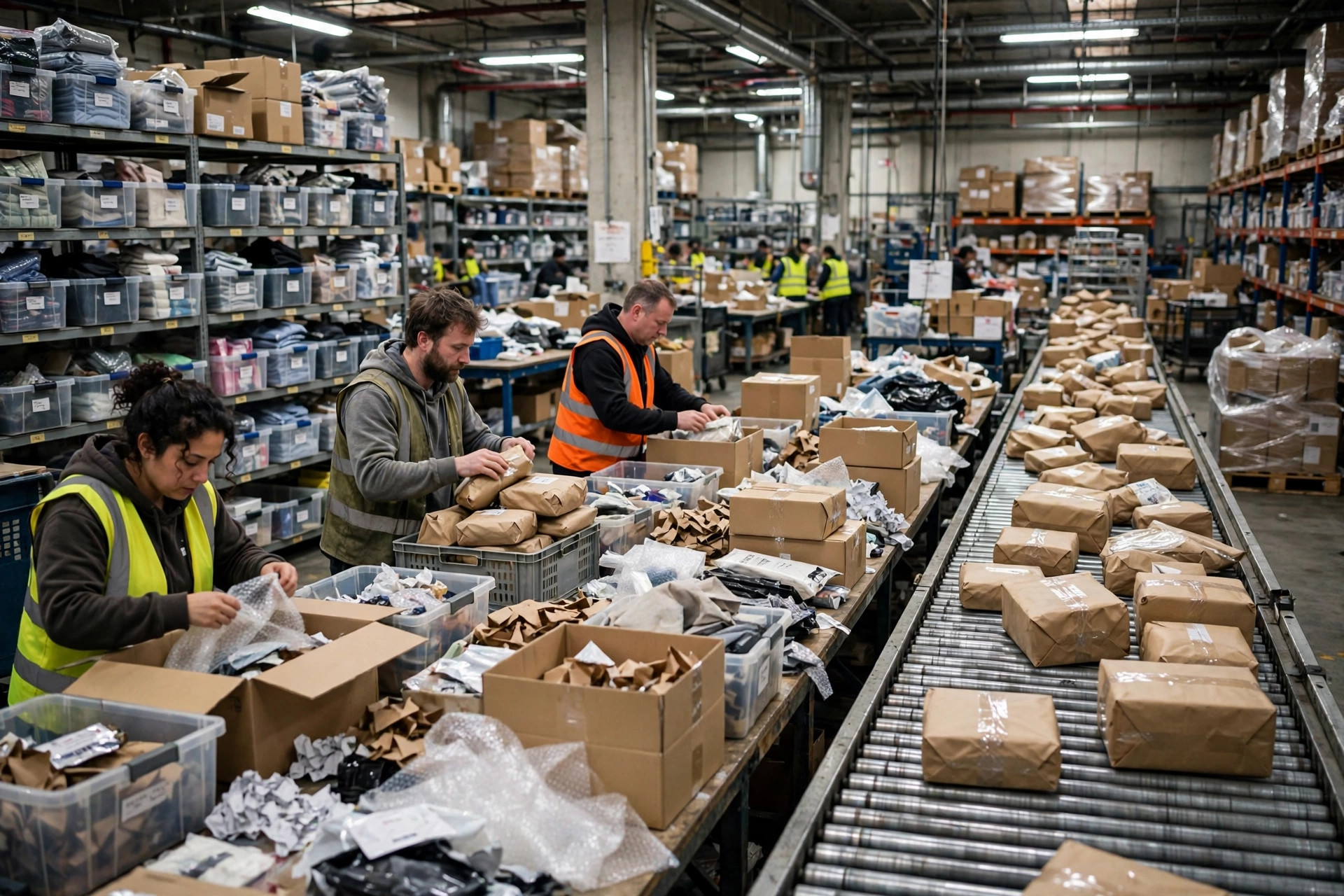
Do the math before you fall in love with the map. A Poland warehouse shipping EU-wide, VAT included, looks like an easy win: lower rent than Western Europe, competitive labor costs, and a central location reaching Germany and France to the west and Central and Eastern Europe to the east. But in the ledgers I have reviewed, that "obvious win" is exactly where year-end surprises hide. This article is not about the Warsaw local market. It is about one thing only: when a Poland warehouse serves as your European fulfillment hub, how do VAT, returns, and distribution trade off? Tax rates and filing rules change by country, so treat official sources as authoritative.
Shipping EU-Wide from a Poland Warehouse: Three Ledgers, Not One
European fulfillment cost is never one number. It is three ledgers stacked together. The first is compliance: VAT registrations, filings, bookkeeping, and audit trails. The second is fulfillment: storage, picking, packing, linehaul, and last-mile delivery. The third is reverse logistics: return flow, inspection, restocking, or disposal. Too many sellers compare only the second ledger, conclude Poland wins, and sign. By year-end, the first and third ledgers have eaten everything the second one saved, plus management time on top.
I always force all three ledgers onto one page before comparing options. Low rent is real, but if your return rate is high, your destination countries are many, and your average order value is low, fixed compliance and reverse costs per order will dilute Poland's advantage fast. If returns are low, destinations are concentrated, and volume is stable, a Poland warehouse is a good calculation. The answer is never in the phrase "Poland is cheaper." It is in your own order structure.
VAT: Registration and Filing Nodes Cannot Be Judged by One Country
Consider a cautionary case. In spring 2025, a Shenzhen seller of small home goods stocked a Poland warehouse and shipped to Germany, France, and the Czech Republic. The first two months ran smoothly. In the third month, the problem surfaced: sales shipped from a Poland warehouse to different countries are not "one warehouse, one set of books." Registration, dispatch, and destination countries each create filing nodes, and invoices, customs records, and sales records must reconcile across them. The seller had prepared documentation at a Poland-only pace, and catching up took three weeks, disrupting peak-season replenishment.
The lesson is simple: on the day you decide to ship EU-wide from a Poland warehouse, draw the filing map first. Which countries require registration, which sales go through a union filing scheme, which shipments count as local-warehouse dispatches, and what filing cycle and document checklist each one implies — list all of that before discussing stock levels. Rates and thresholds must be checked against each tax authority's official published rules; last year's peer experience is not a substitute.
It also helps to split VAT cost into fixed and variable parts. Registration and bookkeeping are fixed costs, and they only get thinner per order if volume keeps up as destination countries multiply. Filing errors — back taxes, penalties, and lost time — are contingent costs: invisible until they happen, painful when they do. If volume is still small but you have already spread across seven or eight destination countries, narrowing the country list beats expanding the warehouse.
IOSS or Local-Warehouse Shipping: One Comparison Table
This is the table worth doing properly. The same goods reaching European consumers can travel two main routes: direct cross-border shipment under IOSS, with no Poland stock, or stock first entering a Poland warehouse and then shipping onward to each country. Neither route is universally better. The table below compares them for the same goods and destination mix. Figures are an illustrative model, not market quotes:
| Factor | Direct shipment (IOSS) | Poland warehouse dispatch |
|---|---|---|
| Cash tied up in stock | Low, no large advance stock | High, stock must be bought and held first |
| Delivery speed | Slower, cross-border leg less controllable | Faster, warehouse closer to customers |
| Return handling | Long return chain, high handling cost | Shorter return, but inspection and restocking sit in your warehouse |
| VAT filing complexity | Relatively centralized | Rises sharply as destination countries multiply |
| Best fit | Light goods, low returns, test listings | Proven bestsellers, stable volume, returns that can be resold |
Read the table, and the choice makes itself. Test listings, new products, and categories whose return rates you have not yet measured should start with direct shipment, then move to Poland stock once volume is stable. Proven bestsellers with stable volume and controllable returns should move to a Poland warehouse, where speed converts into repeat purchases. The most expensive mistake is doing it backwards: heavy Poland stock for an unproven product that then returns in large numbers, so rent, returns, and filing costs hit at the same time.
Here is the counterintuitive point: IOSS looks like the "easy" option, but for high-return categories it can be the more expensive one. A direct-shipment return must travel back across borders, stacking freight, customs handling, and time costs until returning one item can cost more than the margin on it. A local-warehouse return still costs money, but the goods are already inside Europe, and the chance of reselling them is far higher. When costing returns, do not stop at "return rate." Calculate "returned goods that can actually be sold again."
Returns: The Cost Most Budgets Leave Out
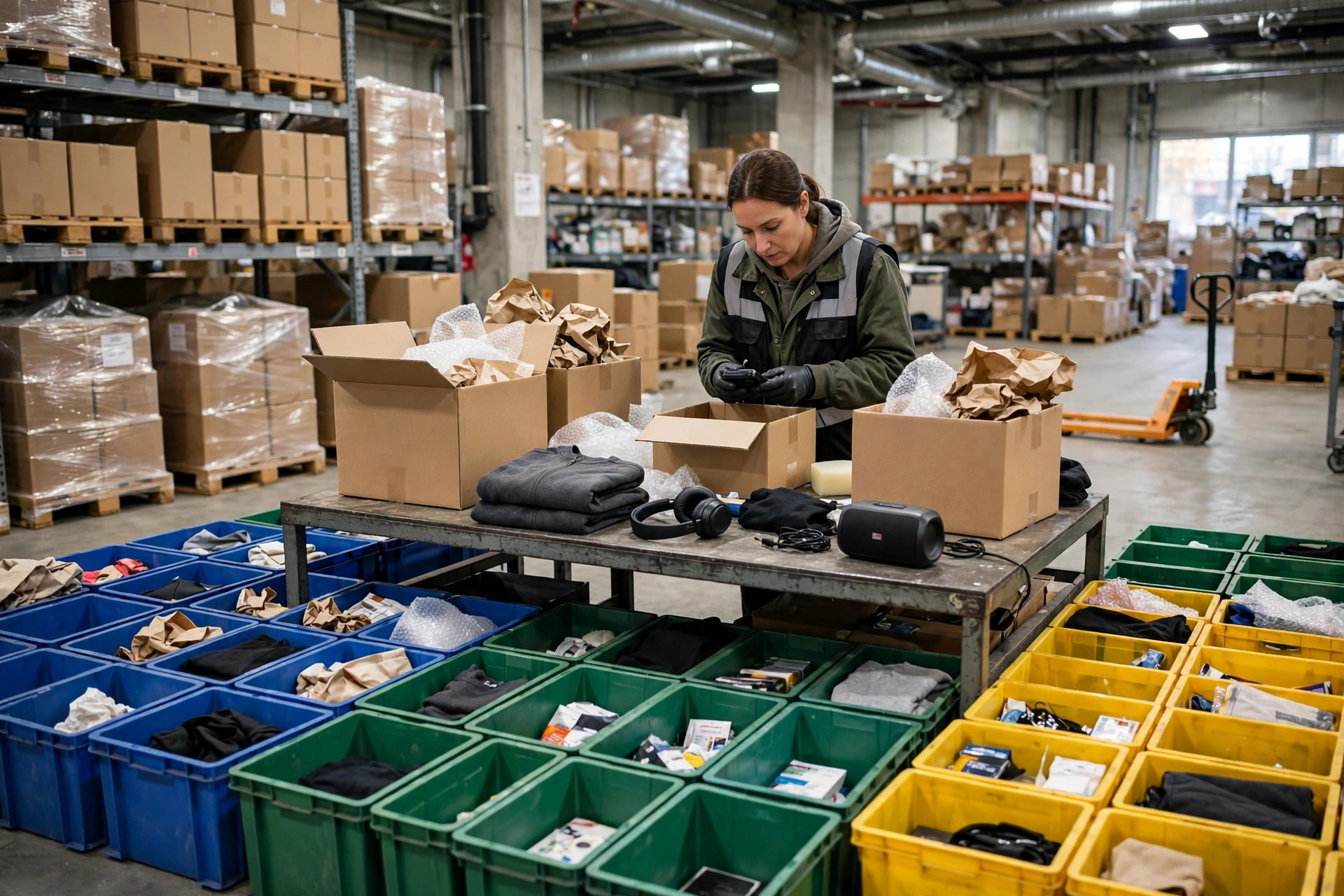
In autumn 2025, an apparel seller shipping from a Poland warehouse into Western Europe saw peak-season orders surge — and returns surge with them. Getting goods back was only step one. What followed was the real cost: opening and inspecting, washing and pressing, re-checking quality, and restocking, every step consuming labor; damaged items had to be discounted or written off, and seasonal styles that missed their window could only be cleared at a loss. The seller's original budget had counted returns as one line — "return freight." At year-end review, inspection and restocking labor, markdown losses, and slow-stock clearance together ran several times the return freight alone.
So cost returns across the full chain. My checklist has five lines: return freight, inspection and handling labor, restocking cost, markdown or write-off loss, and capital tied up plus slow-stock risk. Miss one line and the budget is fiction. Three levers matter most: describe size, material, and real product photos clearly to cut returns at the source; write return-grading into warehouse procedures so resalable items go back on the shelf the same day; and set clearance prices for end-of-season styles early, rather than discounting in a panic after the season has passed.
Distribution to Western vs. Central and Eastern Europe: A Time-Cost Calculation
Distribution direction changes the calculation. Shipping west, order density is high and last-mile networks are mature, so delivery times are reliable — but customer expectations for speed and return experience are also higher, and service costs must be budgeted upward. Shipping into Central and Eastern Europe, volume is more dispersed and last-mile timing varies more, so safety stock must be wider, tying up more inventory capital.
A workable approach is tiering. Serve core Western European countries directly from the Poland warehouse to protect speed. For longer-tail Central and Eastern European countries, check volume first: enough volume justifies a Poland distribution lane, while a handful of weekly orders does not — direct shipment or consolidation is cheaper. Every additional lane adds fixed cost, and volume too thin to absorb it is pure loss. Delivery promises should be tiered too: tight timing only where you can hit it consistently, wider timing with a perfect record elsewhere.
A Calculable Conclusion: Three Numbers Decide Whether Poland Fits
No slogans at the end — just three numbers you can calculate yourself. The first is stable monthly order volume: the higher it is, the thinner fixed VAT and warehousing costs spread per order. The second is return rate multiplied by the share of returns that can be resold: high returns that come back resalable are survivable, while high returns mostly ending in write-offs mean Poland stock is money thrown away. The third is destination-country count multiplied by per-country compliance cost: every added country lifts fixed cost, and if volume lags, cut countries first.
Run those three numbers and the conclusion writes itself. Stable volume, controllable returns, and concentrated destinations make Poland warehouse shipping EU-wide profitable. Unstable volume, high hard-to-resell returns, and scattered destinations mean narrow first, validate second, expand last. Do the math in that order, and a Poland warehouse earns money instead of becoming the most expensive lesson in your year-end review.
By Lao Zhou, Logistics Cost Analyst