Holiday gift set warehouse fulfillment is where a clean single-item operation goes to fall apart. I say that every year, and every year it still happens. A gift set bundles three headaches into one box: you have to kit it right, ship it without a mistake, and take it back in a way that does not torch the whole margin.
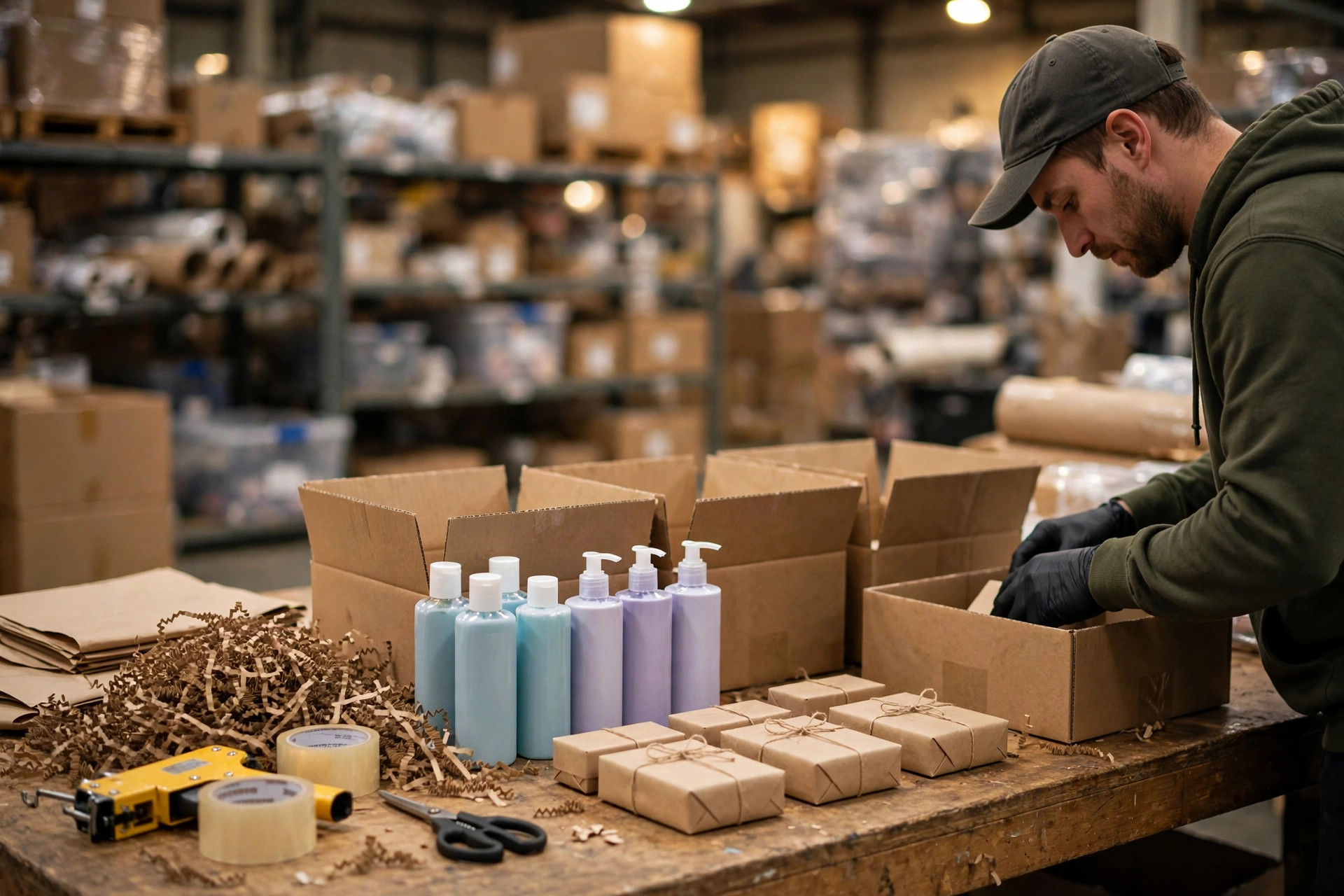
Last November, I helped a small California shop look at its warehouse. Normally it sold single hand creams and scented candles. For the holidays it launched a three-piece set: hand cream, candle, and a small towel. Sounds simple, right? The first week was a mess. Three big bins sat on the packing table, workers grabbed by feel, the wrong candle scent went in constantly, and nobody noticed when towel colors got mixed up. Buyers opened the box, found the wrong item inside, and left the review right under the listing. Returns followed close behind.
That is the difference between a single item and a gift set. Get one single item wrong, you lose one item. Get one gift set wrong, the whole box is wrong. The buyer does not think, "Oh, just the candle scent was off." They think the shop is sloppy. Platforms do not care whether you were busy or tired. Once the return rate climbs, traffic drops with it. So the holiday season is not a test of hand speed. It is a test of whether the packing table has a checkpoint that stops mistakes.
Holiday Gift Set Fulfillment Starts at the Kitting Table
Kitting looks like manual labor. It is actually an accounting job. My tested trick is a pick sheet taped right in front of the packing table. It lists only three things: what goes in the set, how many of each, and what the wrong version looks like. Workers do not memorize anything. They pick from the sheet and tick each item off. That one sheet turns "from experience" into "from the list," and a new hire can do it on day one.
There are only two sensible ways to kit, so do not overcomplicate it. Pre-kit before peak: assemble whole sets, label them, and ship the finished box. It is fast, but it eats space, and if one component runs out, the whole batch stalls. Kit on demand: assemble after the order comes in. It is flexible, but a busy packing table makes mispicks more likely. What I do is split it: pre-kit the bestseller, kit the rest on demand. The bestseller will not sit unsold, and the slow movers will not get stuck behind a stockout.
Then there is the trap most people fall into: the accessories. Box, insert, ribbon, greeting card — miss one and the whole set cannot ship. I watched one shop stock two thousand set boxes and print only eight hundred greeting cards. By day three of peak, they stopped dead. Stock accessories by set quantity plus a little waste allowance, not by single-item logic. Platform rules change every year, so check the official policy for the latest requirements instead of gambling on last year's experience.
Holiday gift set warehouse fulfillment fails most often on this half-finished stocking: the main items are there, but one small part is missing. A set is not single items added together. It ships as a complete unit, so any missing part blocks the whole set. Check every component by dividing it by the number of sets, and top it up before peak starts.
Mispicks Are a Process Failure, Not Bad Luck
I never blame a mispick on a worker's slippery hands. Slippery hands are the result. An unlocked process is the cause. The more items a set holds, the less you can trust your eyes. Scents, colors, and sizes that look alike become impossible to tell apart when the table is busy.
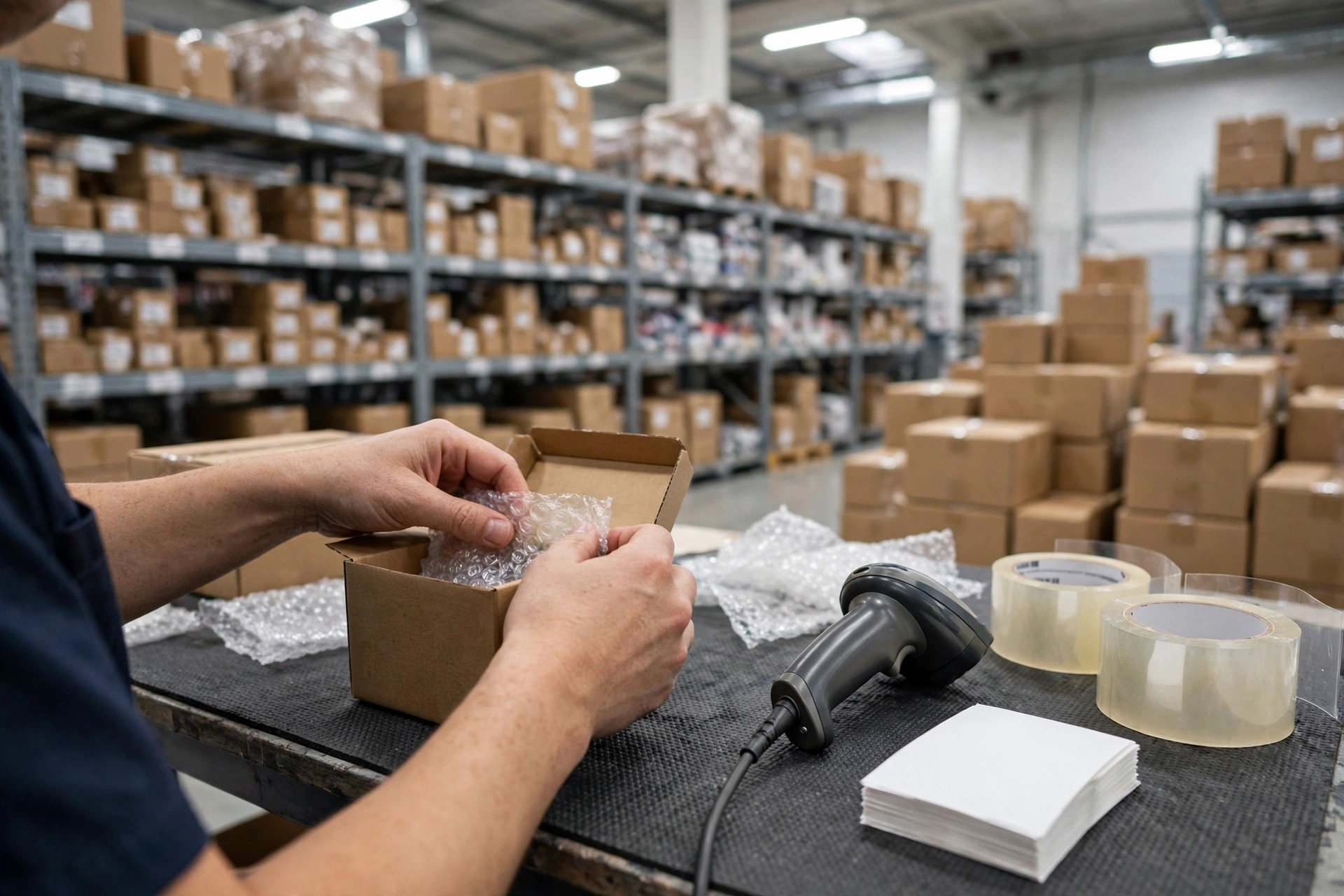
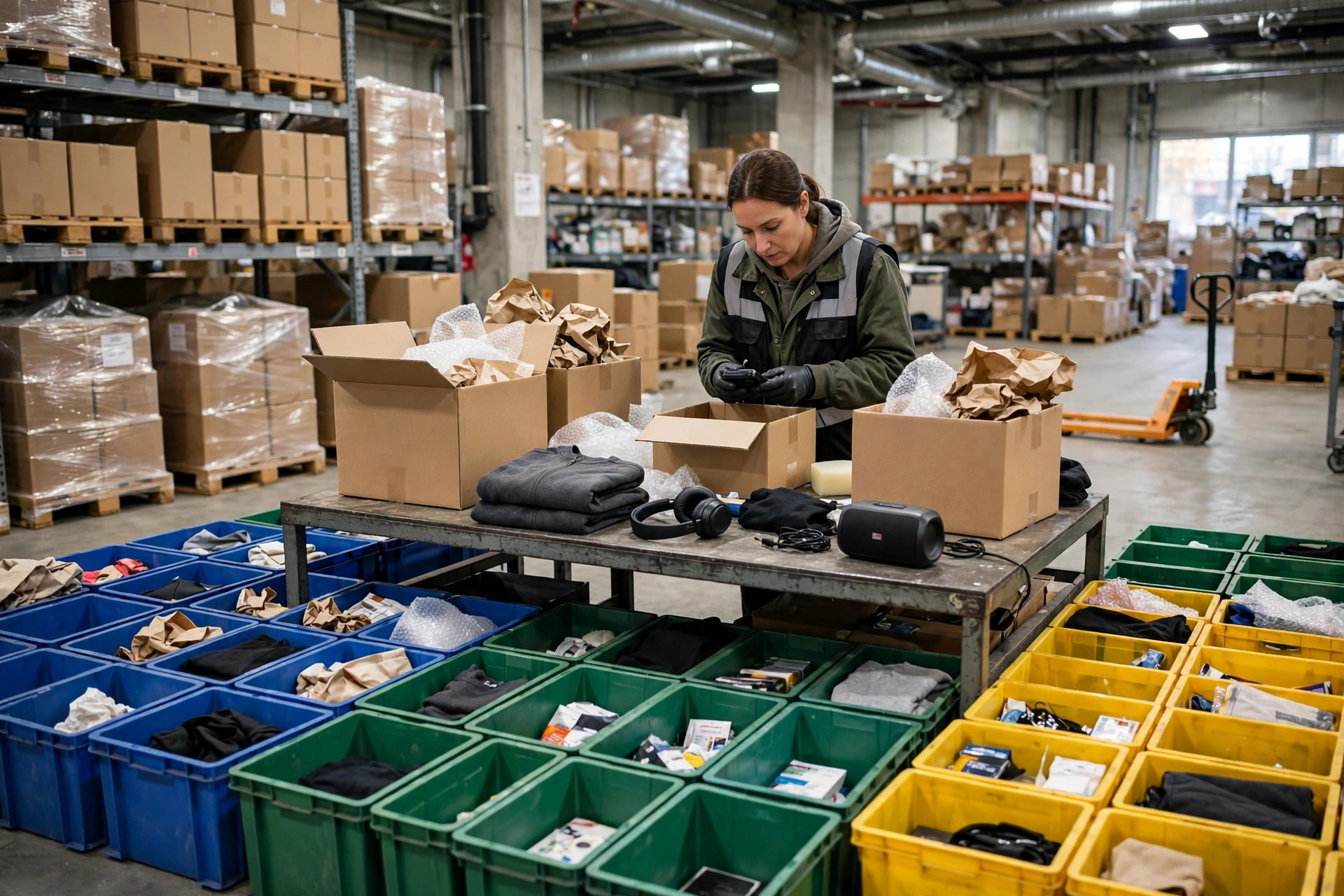
The fixes are boring, and they work. First, separate lookalike items by color zone on the table instead of mixing similar scents and colors in one bin. Second, scan every component before sealing the box, and let the system block a wrong pick instead of letting a worker guess. Third, take an open-box photo before sealing, so a dispute has evidence: if a buyer says something is missing, you can show the photo. Those three steps cost under a minute per order. They save the cost of returns, replacements, and bad reviews.
Here is a lesson I learned the hard way. One year I stored two nearly identical sets on neighboring shelves, differing only in ribbon color. Peak got busy, a whole batch shipped as the wrong version, and buyers received the cheaper set. My inbox filled with complaints. Since then, lookalike sets always sit apart, and their labels use different colors. In a warehouse, the danger is not having too many items. It is having items that look alike.
| Stage | Common failure | What I do | Extra time |
|---|---|---|---|
| Kitting | Grabbing by feel, mixing scents and colors | Pick sheet on the table, tick each item off | About 30 seconds per order |
| Checking | Eyeballing the box once and sealing it | Scan every component, system blocks errors | Under a minute per order |
| Returns | Writing off the whole returned set | Break it down, inspect, restock what can sell | About 2 minutes per order |
Holiday gift set warehouse fulfillment rewards the checkpoint, not the shortcut. Skipping a scan feels faster in the moment, but one mispick brings a return, a replacement, and a bad review, and that costs far more than the minute you saved. Speed should come from a smooth kitting setup, not from skipping the check.
Holiday Gift Set Fulfillment Returns Are Where the Money Leaks
Most sellers count gift-set profit only on what ships, not on what comes back. I have run that math, and returns are where the holiday season really bleeds. A single item comes back, you inspect it, and it can sell again. A gift set comes back with a torn box, a wrinkled ribbon, and a used greeting card, and often the whole set is unsellable.
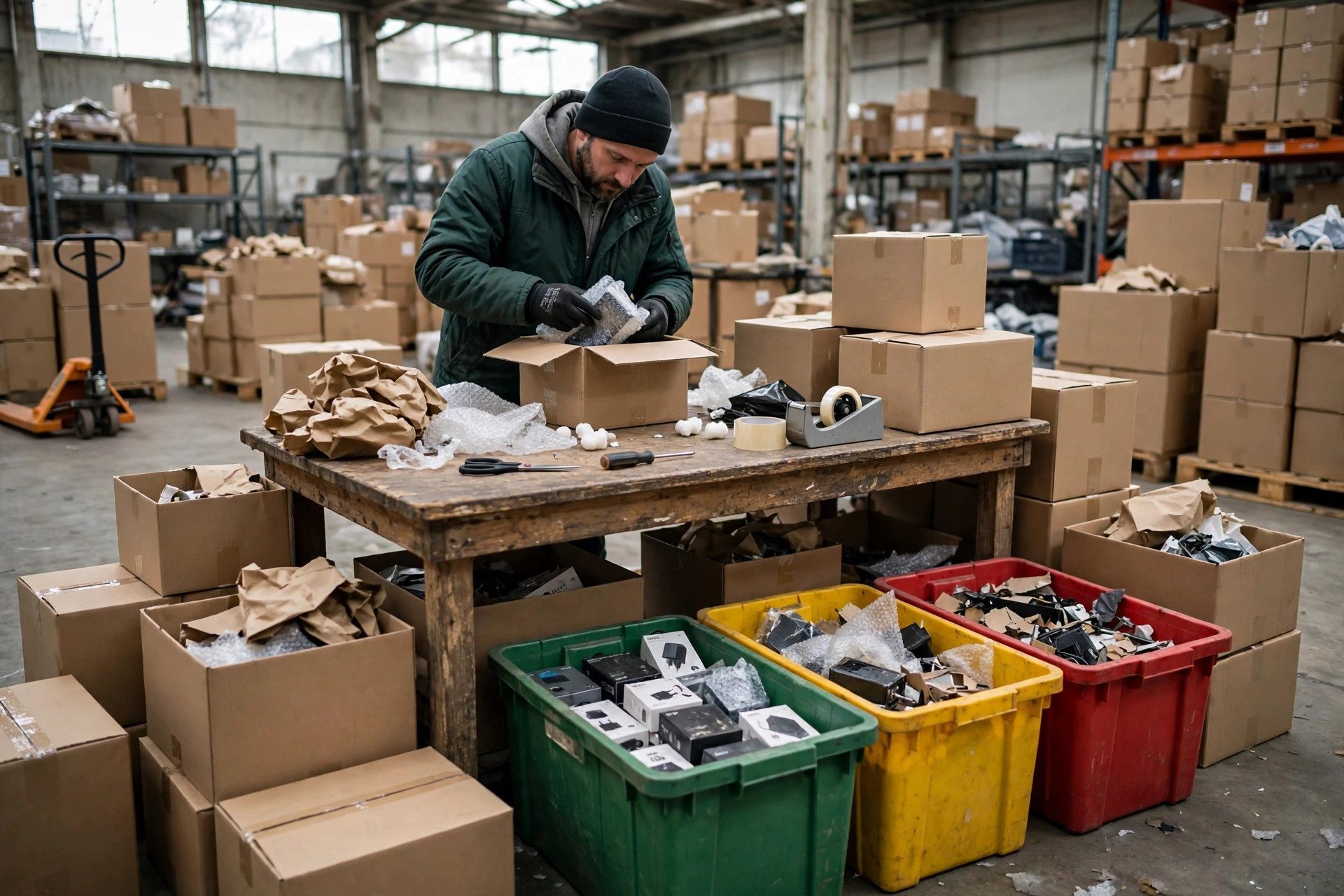
My rule is to break every return down before writing anything off. Open the set and inspect each piece: unopened items go back on the shelf, intact boxes are kept for the next use, and only truly damaged items are written off. Once you break it down, most of a returned set's value can usually be rescued. The counterintuitive part is that faster return handling loses less money. Leave returns piled in a corner for two weeks, and items go out of season, boxes get damp, and nothing is rescuable anymore.
Plan the return before you sell the set. Pick components that also sell on their own. Then a returned item does not need a special sales channel — it goes straight back into single-item stock. Never create a component that exists only inside the gift set. When it comes back, it will sit in the warehouse waiting for next year. At the end of the season, the warehouse should hold items that can still sell, not souvenirs.
Holiday gift set warehouse fulfillment is ultimately judged by how cleanly it ends. Shipping well is not the skill. Getting returned stock back into sellable inventory is. The earlier the returns process is set, the less clearance pressure hits at the end of the season, and I repeat that to myself every year when the season closes.
A Gift-Set Checklist You Can Actually Copy
Before the season starts, I run through this checklist, and I do not start selling until every line is true. Is the pick sheet on the packing table? Are lookalike sets stored apart? Are accessories stocked by set quantity? Is scan-checking turned on? Is the returns breakdown process decided? Each line looks basic, but behind each one sits a real loss I have already paid for.
A gift-set business, in the end, is not won by the prettiest box. It is won by the packing table that does not make mistakes. A beautiful box shipped wrong, returned often, is worth nothing. Lock down kitting, checking, and returns, and the season can make money steadily instead of turning into daily firefighting at the packing table.
This trick I have personally tested: lock the process first, then chase sales. Otherwise, the more you sell, the bigger the mess.
By Ah K, E-commerce Seller (5 yrs)