Start with the bill. One 40-foot box of sawn timber, moving from a forest concession in southern Congo-Brazzaville to Pointe-Noire and on to a buyer in Asia, carries port and warehousing costs that often outweigh the ocean freight leg. Shippers haggle over the sea freight dollar by dollar, while nobody opens up the port side of the invoice. That money is wasted — not because the price is high, but because nobody did the arithmetic. Pointe-Noire is the Republic of Congo's only deep-water port and the throat through which the country's oil and timber leave. Warehouse, port and corridor have to be costed as one system; cost them separately and every line comes out wrong.
Pointe-Noire, the total bill first
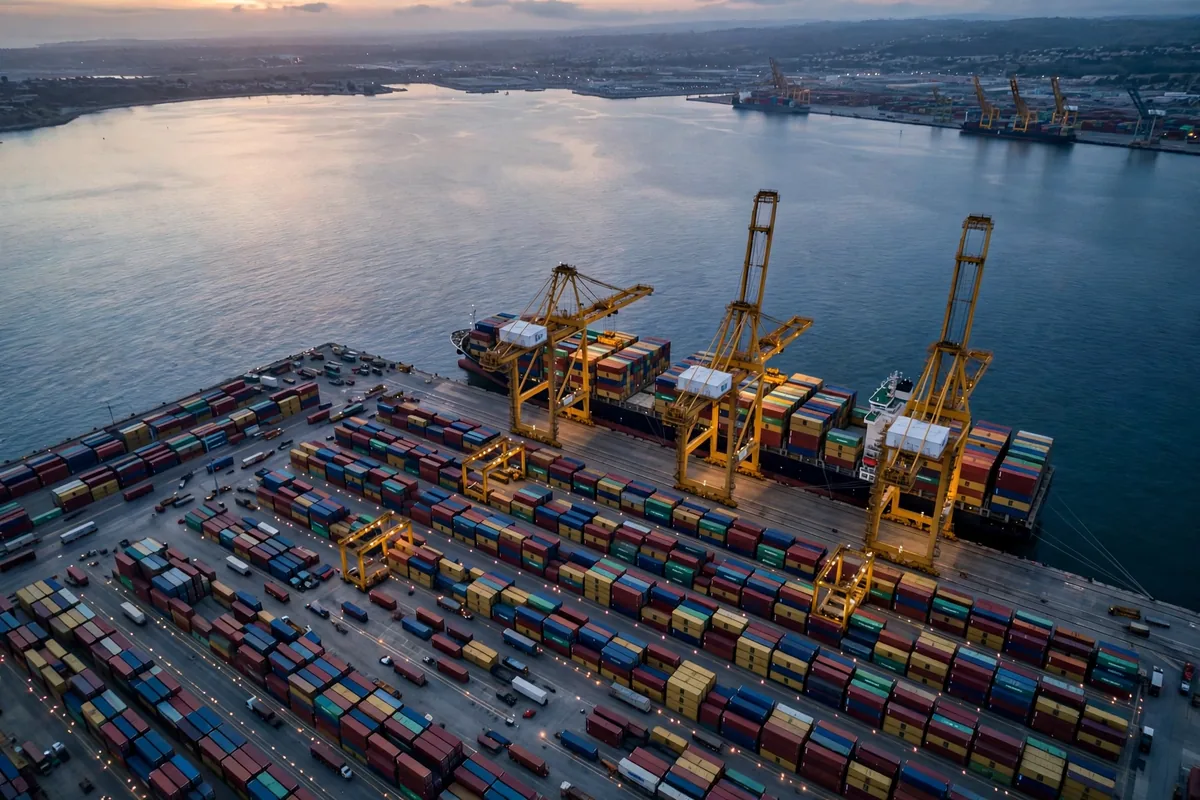
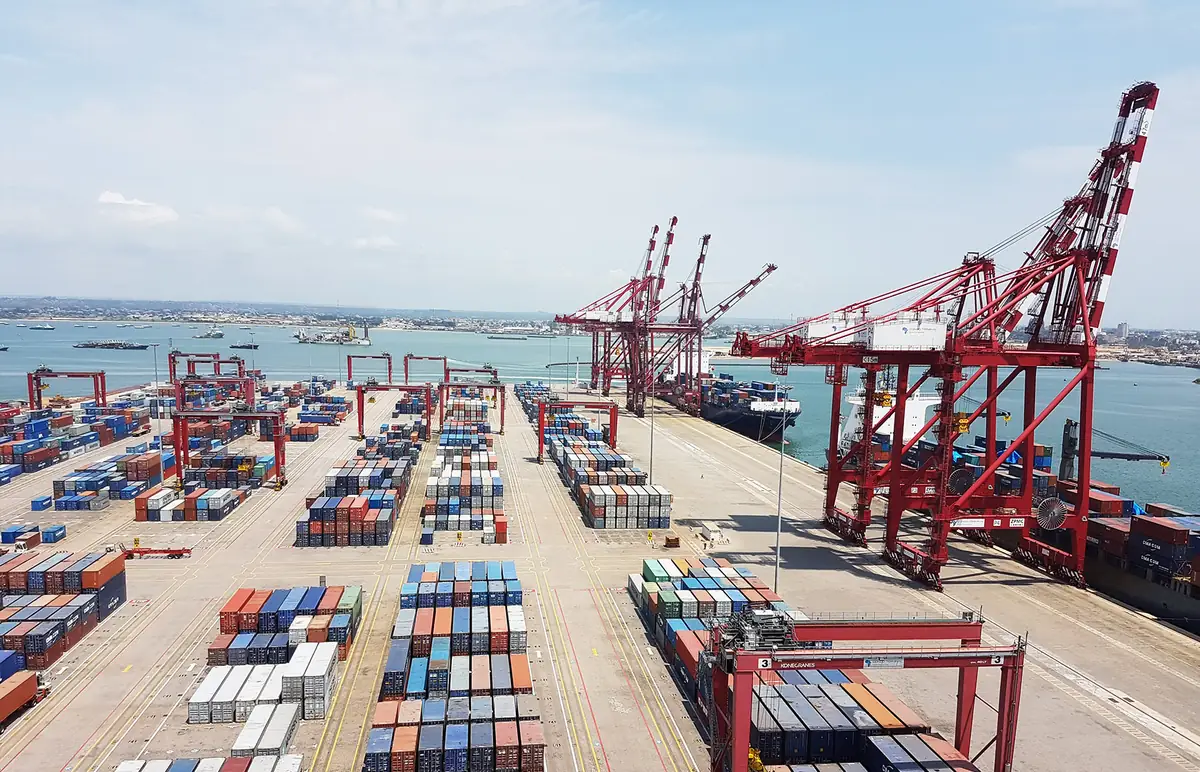
Congo Terminal, the operator of the port container terminal, reported in January 2026 that it handled 1,219,164 TEU in 2025 — the first year past 1.2 million boxes. On the same basis, volume was about 200,000 TEU when the concession began in 2009, reached 1,003,734 TEU in 2021, and has stayed above one million TEU a year since 2022. Sixfold growth in sixteen years is a serious number on the West African coast.
But record throughput does not mean your cargo moves fast. That is the first counterintuitive point. The terminal is expanding, and the bottleneck is moving with it. The new Môle Est terminal carries investment of about €400 million: a 750-metre quay, 17 metres of draught, 26 hectares of yard, four ship-to-shore cranes and twelve fully electric yard cranes, scheduled to open in 2027. The operator's design capacity rises from one million to around 2.3 million TEU. Once the quay can take the ships, the choke point shifts to yard turnaround and the inland corridor — the vessel berths, the boxes sit, and the bill looks just as bad.
Crude oil accounts for roughly 80% of the Republic of Congo's export revenue, on World Bank figures, and timber is the second export category. Crude from the offshore fields moves out through the Djeno onshore terminal near Pointe-Noire, oilfield equipment and spares pass through the port, and timber comes down from inland forests by road and rail to load here. One port carries two lifelines — energy and forestry — so the warehousing playbook has to split by cargo, not by habit.
Timber and oilfield kit are not the same warehouse
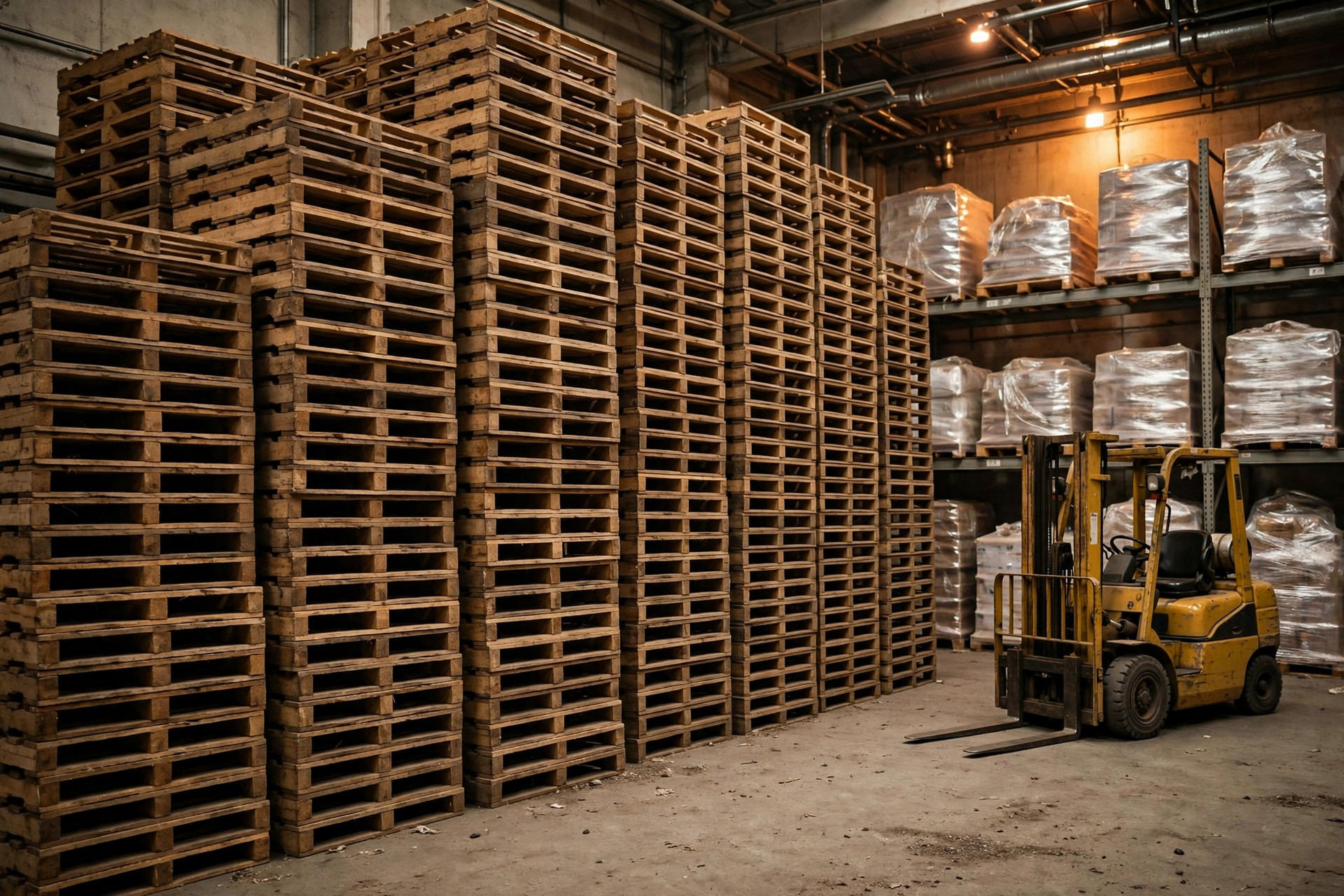
Timber fears two things: rain and crushing. The port sits on a tropical coast, and in the rainy season a month of open storage can eat a shipment's margin in mould and end-splitting. The fix is unglamorous: sawn timber goes under a roof, stacks separated by ventilation gaps, dunnage lifting the bottom boards clear of the ground, an inspection aisle left against the wall. Logs can sit outside, but stacked by species and sailing date, first in first out, each stack tagged with vessel name and closing time. The metric that matters for a timber warehouse is not floor area but dwell days — every day a box sits in the port is a day of storage charges and decay risk.
Oilfield equipment fears the opposite: waiting. A pump or a set of valves may be worth only tens of thousands of dollars, while a day of platform downtime costs many times that. This cargo belongs in a fast-pick store hard against the quay, even at a higher rent, because retrieval time has to be measured in hours. Take a worked scenario: a spares supplier serving the offshore fields moved its fast-moving stock from a downtown depot to the port edge in 2025. Monthly rent rose about 30% on the worked assumptions, but one emergency pick cut a well's downtime from two days to half a day. Cost it this way: the rent rise is a visible number, the downtime saved is a much bigger invisible one. Deciding on rent per square metre alone means reading only half the ledger.
Set side by side, the two cargoes want different warehouses:
| Timber (sawn / logs) | Oilfield equipment and spares | |
|---|---|---|
| Fears | Rain, mould, crushing | Waiting, stock-outs, slow picks |
| Location | Roofed store on the port fringe | Fast-pick store against the quay |
| Key metric | Dwell days, decay rate | Emergency pick time, stock-out count |
| Cost centre | Storage charges, damage | Rent, downtime losses |
| Saving lever | Stack by sailing date, cut dwell | Pre-position fast movers, book pick windows |
Three corridors out of Pointe-Noire, three separate sums
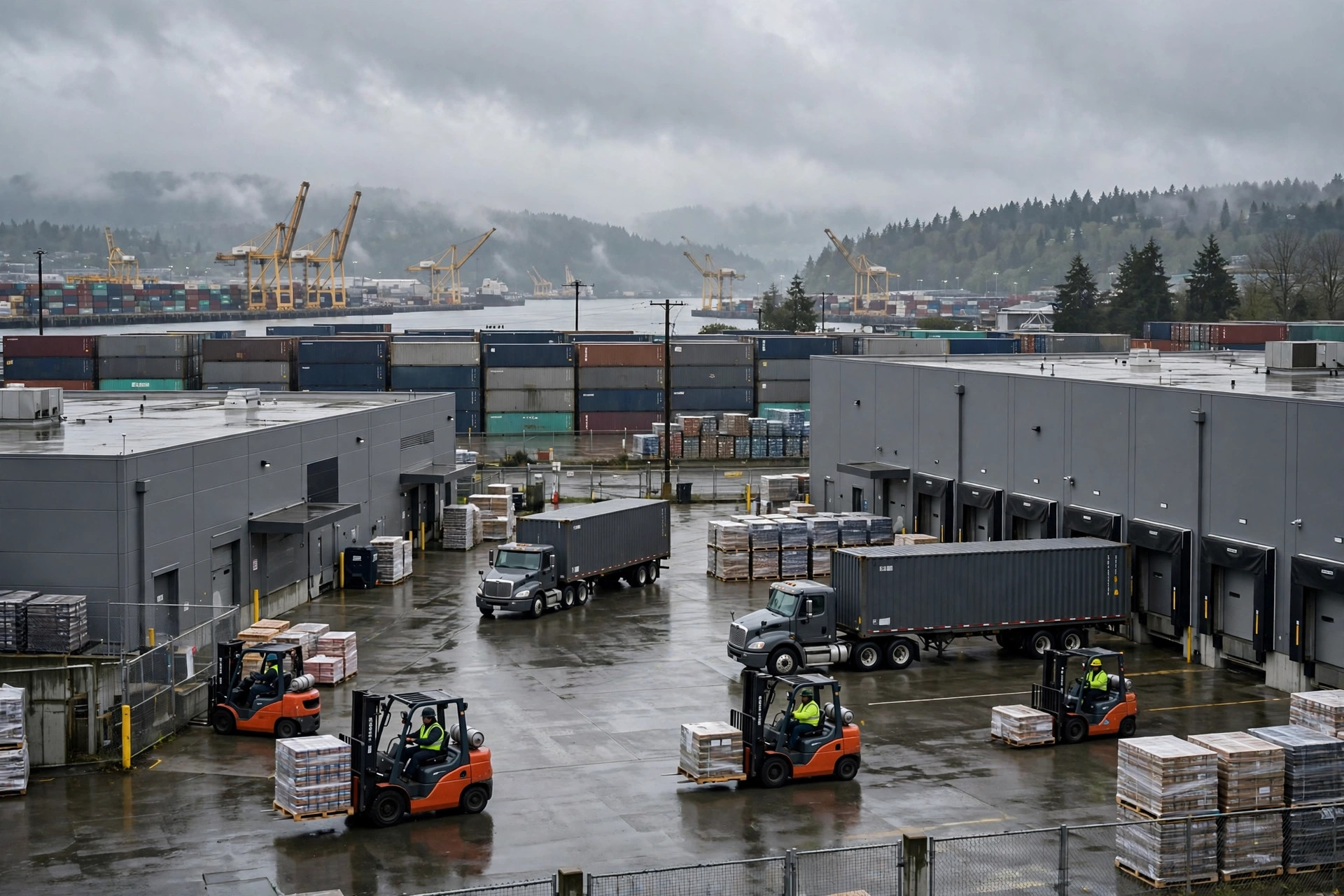
Inland distribution from the port runs on three routes. The Congo-Ocean Railway links the port to the capital, Brazzaville, about 500 kilometres inland, and from there river transport reaches into the Central African interior. The road network concentrates in the south, toward Brazzaville and the Gabon border. The third route crosses the river at Brazzaville to Kinshasa, capital of the Democratic Republic of Congo, and onward inland.
No single route wins on every cargo, so the choice follows the cargo's temperament. Timber — heavy, bulky, shipped in volume against fixed sailings — fits rail plus direct port loading best, with the risk sitting in schedule reliability and wagon availability, so peak-season slots and wagons need locking in early. Oilfield equipment and high-value spares — small lots, time-critical — fit direct road haulage better: dearer per unit, but controllable. Cargo bound for the DRC carries a fixed river-crossing cost in time and paperwork, and any combined river-plus-rail quote has to include two handlings and two sets of documents; miss one and the quote is fiction.
A second worked scenario, labelled as an assumption, shows where the money sits. Take ten 40-foot boxes of sawn timber exporting through the port, with port and warehousing costs broken down on illustrative assumptions only — the structure is the point, not the rates:
| Cost item | Illustrative assumption (USD per box) | Note |
|---|---|---|
| Yard storage, 7 days | 140 | Daily rate after the free period |
| Handling and port charges | 210 | Terminal handling plus documentation |
| Inland shuttle | 180 | Fringe warehouse to the quay |
| Demurrage risk provision | 60 | Priced on peak-season delay odds |
| Total | 590 | About 40% of it compressible |
Storage and shuttle together take more than half the total, and both yield to stacking discipline and sailing-date coordination. Pushing cargo into the port before the sailing is fixed is a voluntary donation to the terminal. The correct sequence is sailing date, wagon, warehouse slot — aligned first, cargo moving second.
The levers: spend where the return can be calculated
Three levers, ranked by return. First, sailing-date coordination. Plan timber arrivals backwards from the sailing and cut dwell from seven days to three; on the worked assumptions that saves USD 80 a box, or USD 40,000 a year on 500 boxes, and the investment is a schedule and a phone call. Second, pre-position spares. Put fast-moving oilfield parts in the quayside store at 30% higher rent, and one emergency pick can pay back months of the rent difference in downtime avoided. Third, do not gamble on capacity on the eve of an expansion. Môle Est opens in 2027 and doubles capacity, which makes the second half of 2026 into the first half of 2027 the tightest window of all — peak-season contracts need delay clauses and a backup corridor, not all volume on one road.
The verdict fits in one line: Pointe-Noire pays when your cargo can align sailing date, warehouse slot and corridor. Aligned, the port's 1.2 million TEU scale works for you; misaligned, even 2.3 million TEU of new capacity does you no good. Before the next shipment moves, write its sailing date, warehouse slot and corridor on one sheet of paper. Ship when all three line up, change the plan when they do not. Do the arithmetic before moving the cargo — that is the rule.
By Lao Zhou, Logistics Cost Analyst