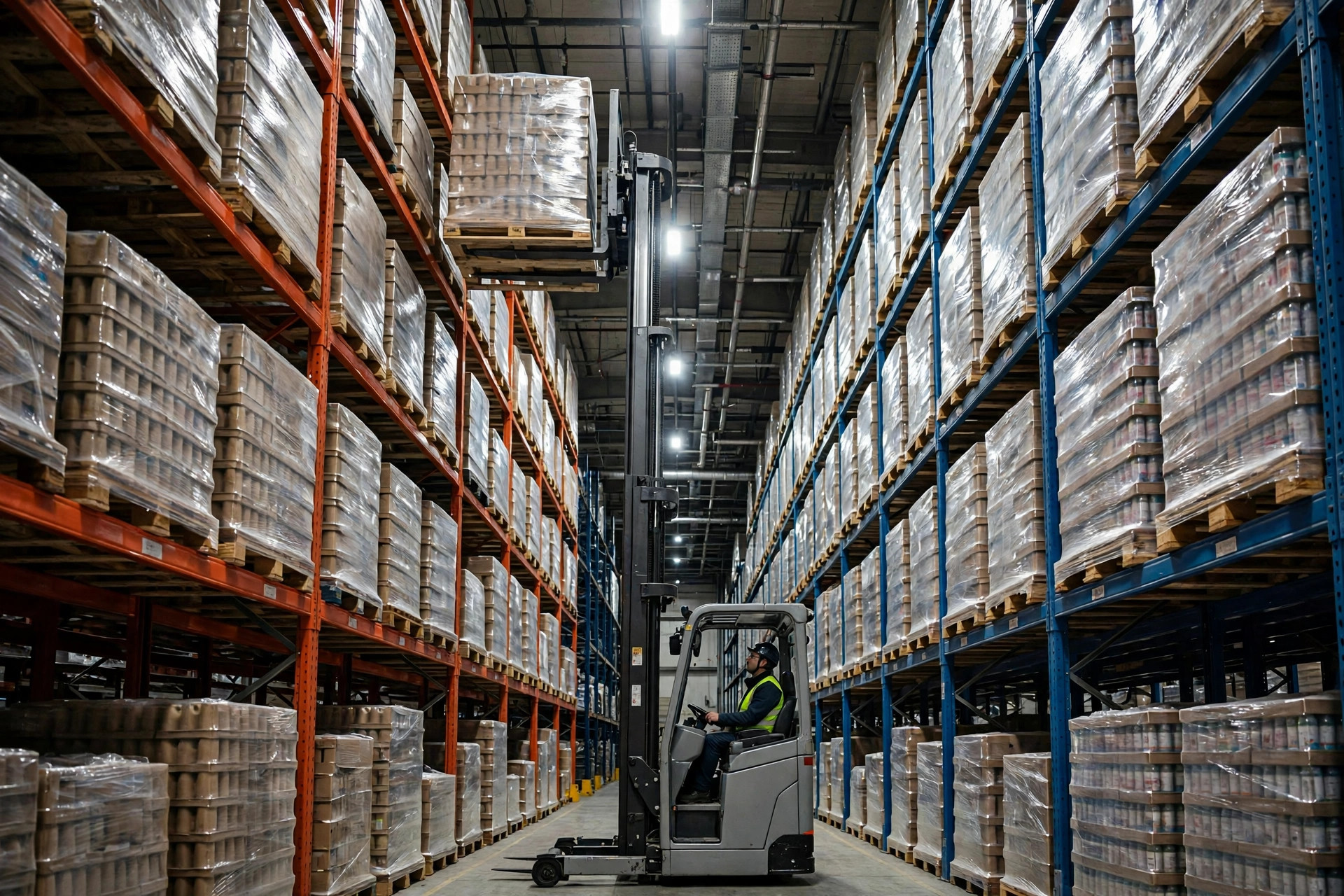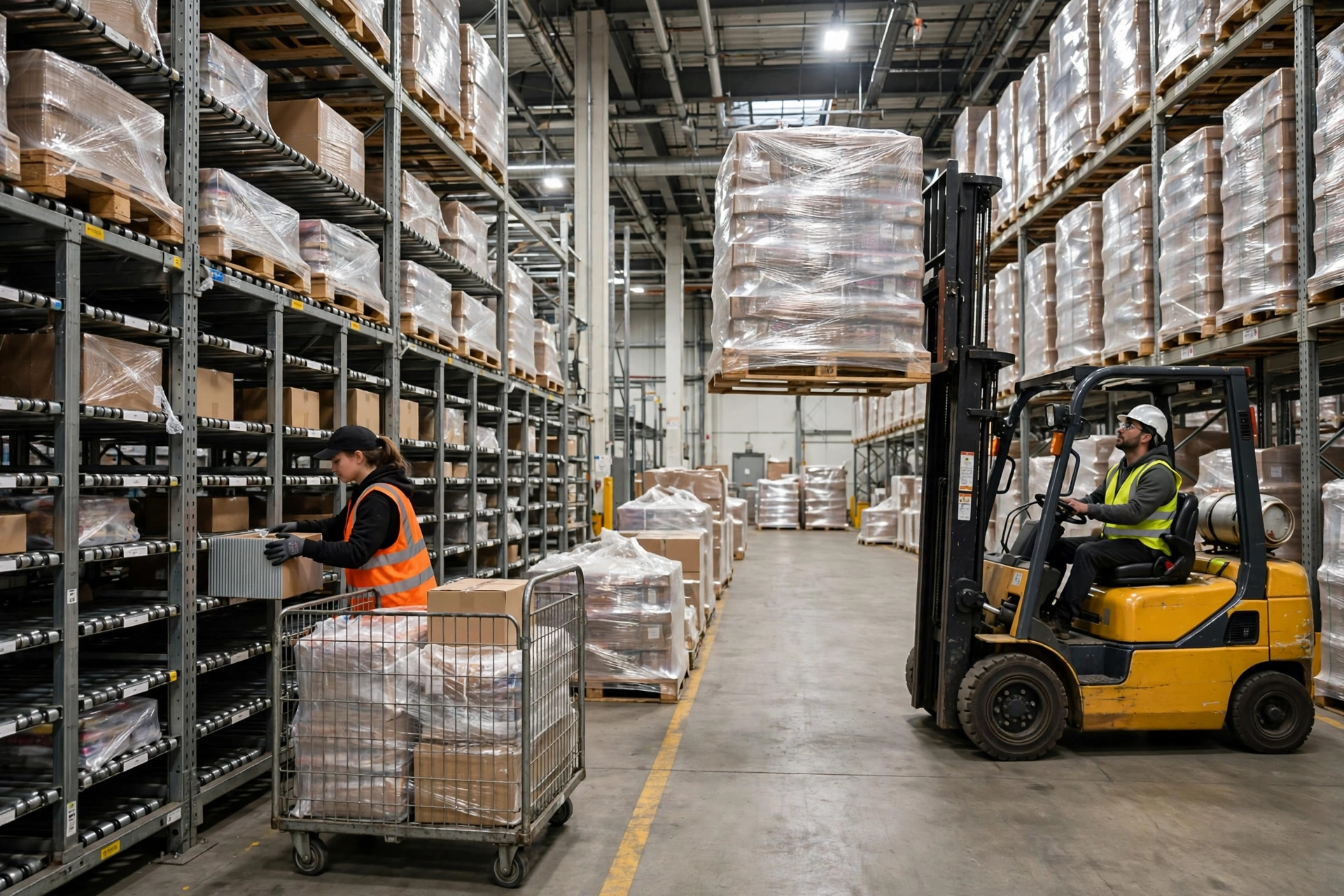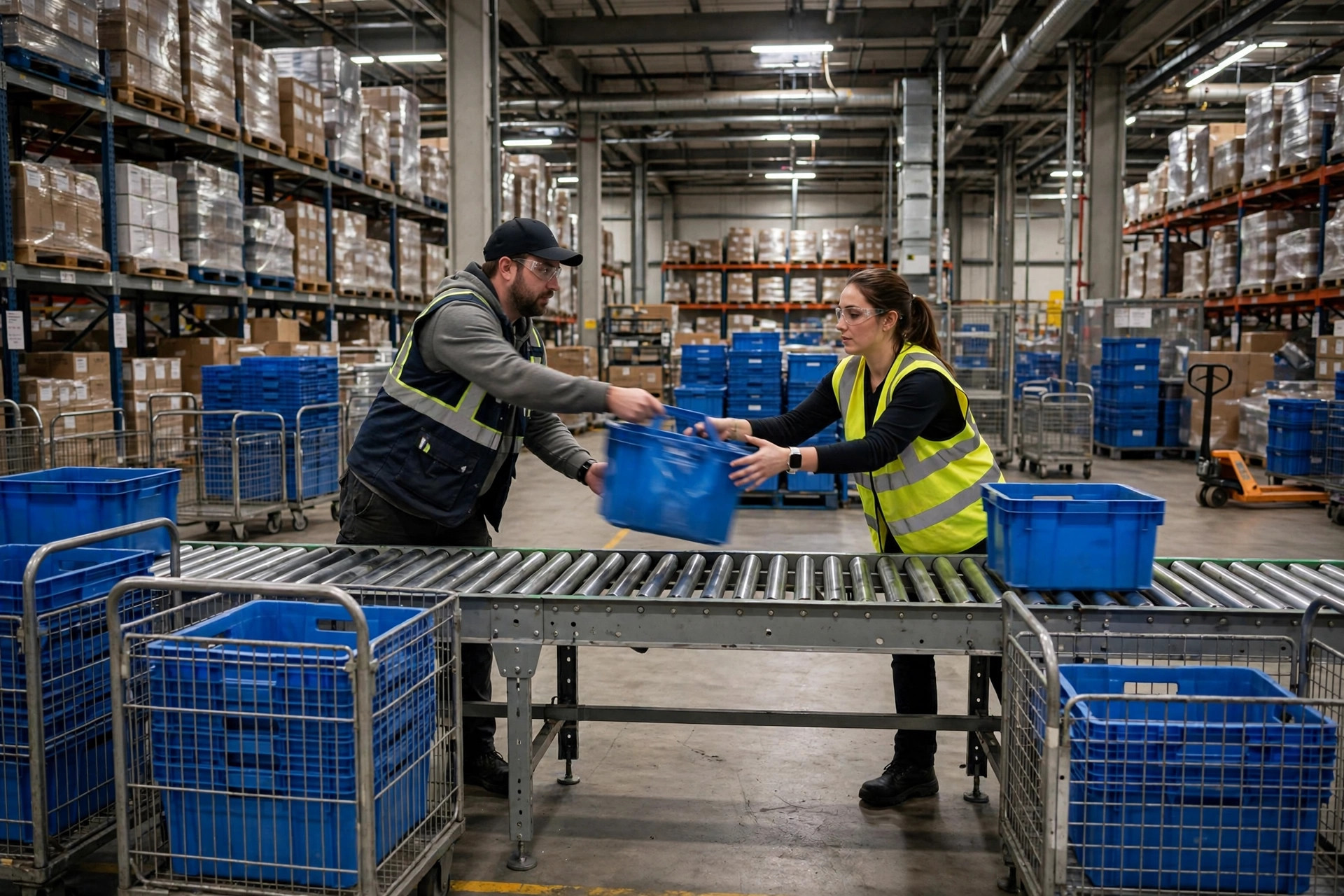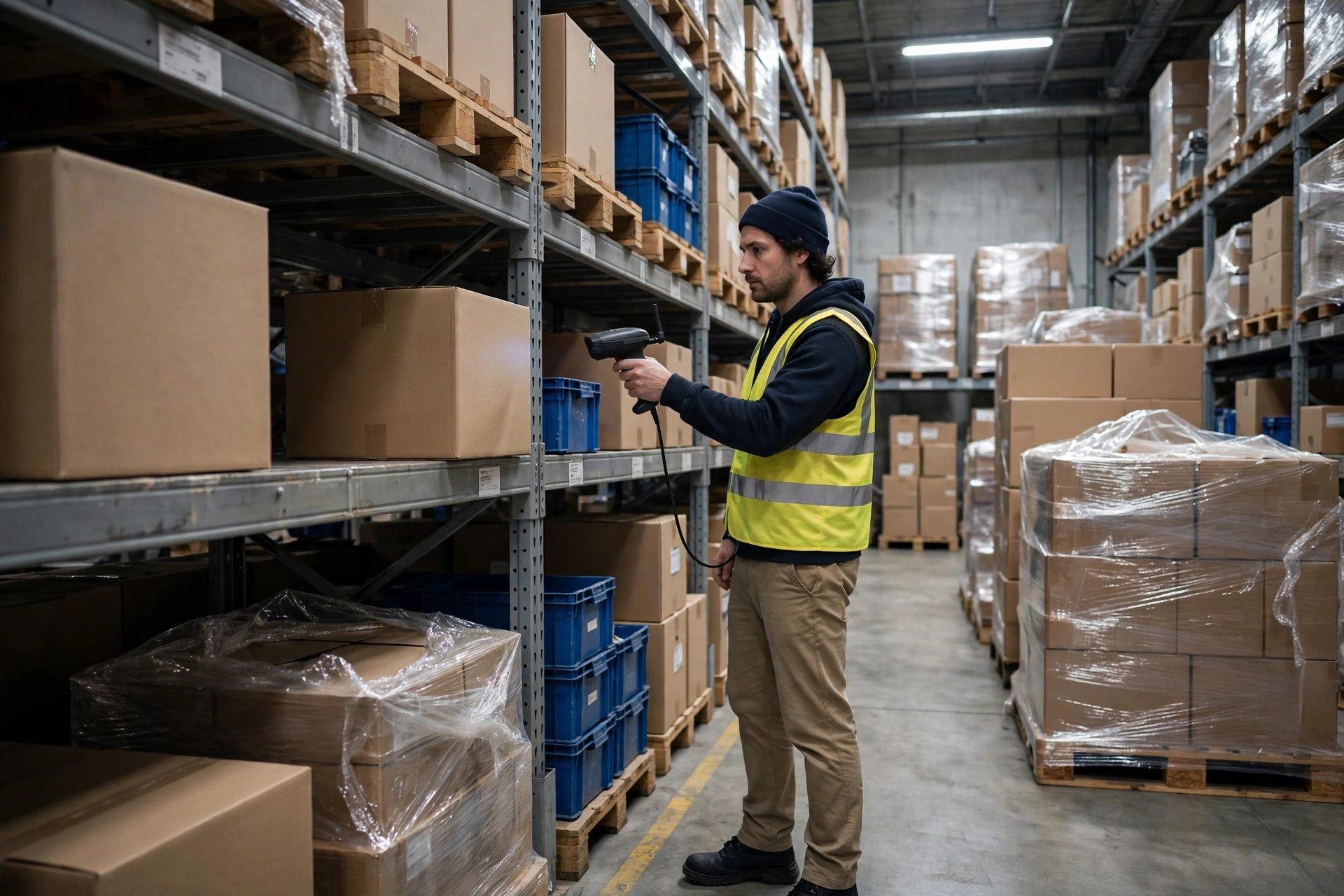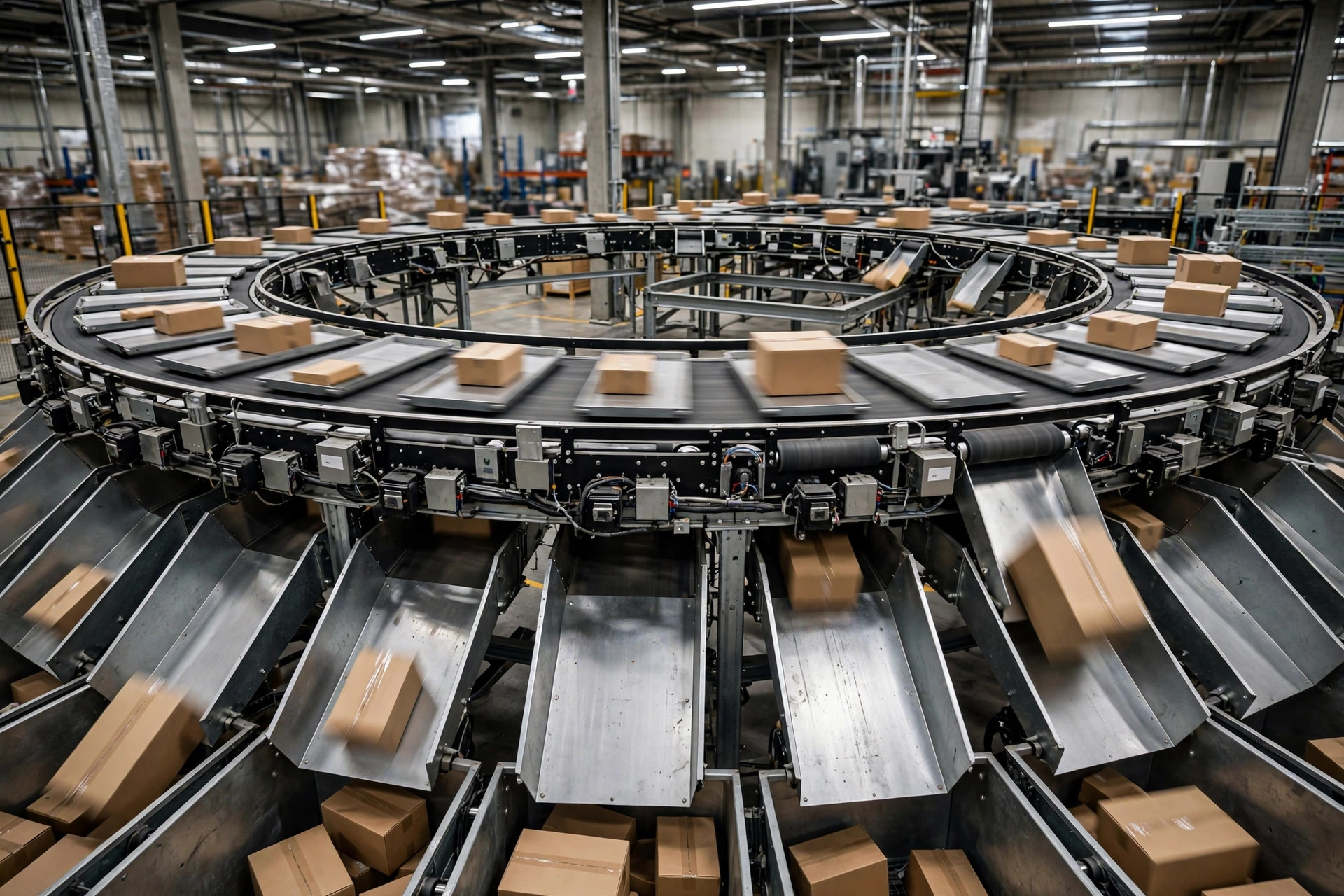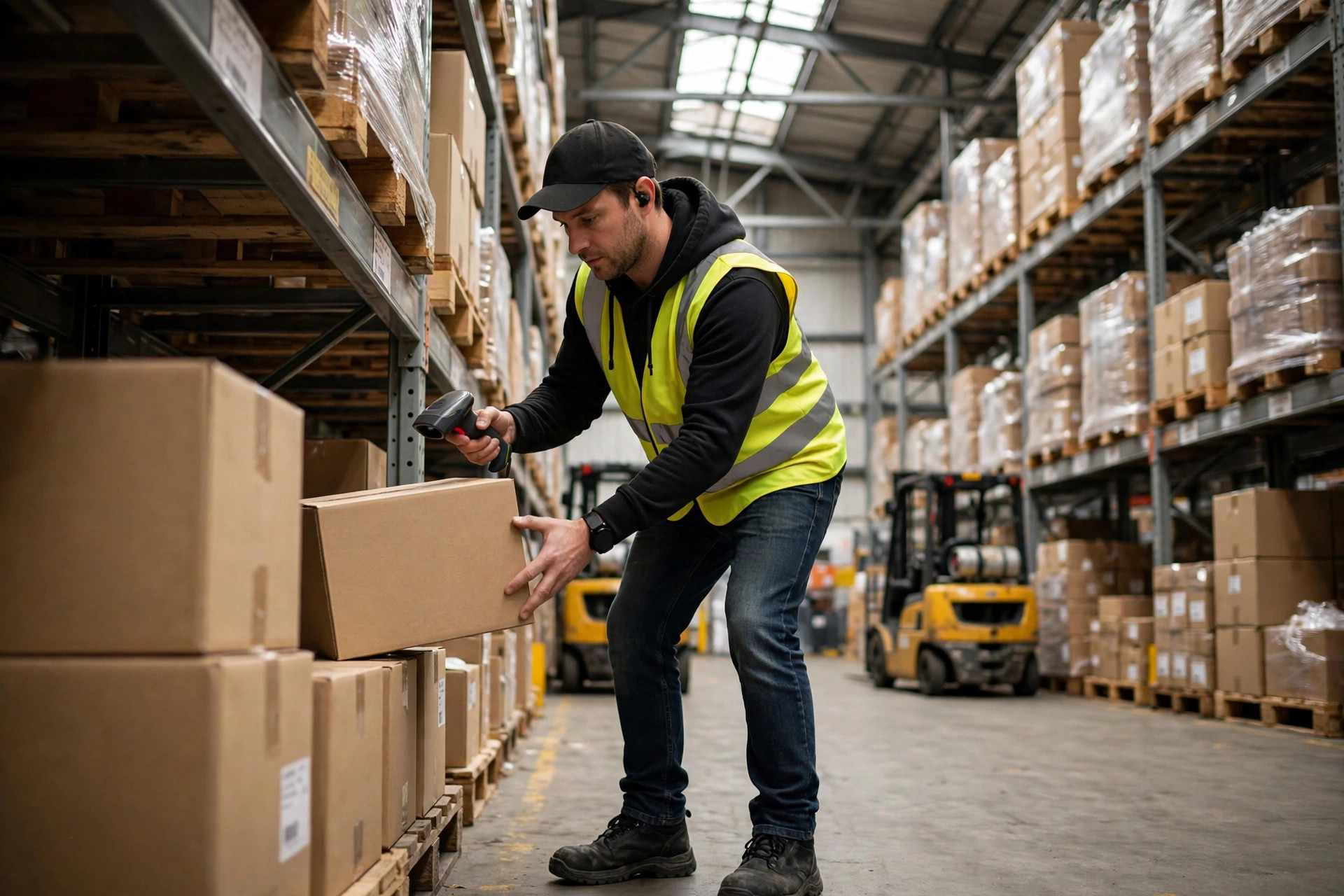
A 3PL operator in Ontario called me the week after Black Friday two years ago. His 80,000-square-foot auto parts warehouse had shipped over four thousand orders a day through peak — and his customer service desk was buried in "wrong item" returns. "We do verification," he told me. "We open one box in ten at the dock before it ships." That's when I stopped him: verification isn't about having a step. It's about where the step sits. Put it in the wrong place and it might as well not exist.
Somewhere between the pick and the truck, you get three places to catch a mispick: scan-confirm at the pick face, verify at the pack station, or sample-check before shipping. Where you put it decides whether you're spending pennies to prevent errors or dollars to apologize for them.
Scan at the Pick Face: Tightest Control, Heaviest Tax
The earliest option is scan-to-pick: the operator scans every unit as it's picked, and the system confirms it against the order before the tote moves on. Nothing wrong leaves the aisle. On paper, it's the gold standard.
In practice, it taxes every single pick. Two to three extra seconds per unit doesn't sound like much until you do the math: 3,000 orders a day at six units each, 2.5 seconds a unit — that's 12.5 labor-hours a day burned on scanning. Your pick team is effectively donating a person and a half every shift, and your throughput takes the hit.
I've seen worse than slow. Back in 2021, an e-commerce warehouse in the City of Industry — thousands of SKUs of beauty samples, average order value in the teens — ran double verification: scan at pick, scan again at pack. When peak volume hit, pickers started gaming it. They'd wave the scanner at the rack without actually scanning the item, the system lit up green, and mispicks shipped anyway. That taught me something I now tell every operator: push verification harder than people can sustain, and people will fake compliance. Too early and too dense doesn't just slow you down — it stops working.
My call: reserve pick-face scanning for two categories. High-value items, where one miss costs tens of dollars. And your repeat offenders — the SKUs that keep showing up in complaint tickets. Everything else? Leave the pick flow alone.
Checking at the Dock: Cheap Theater
A lot of warehouses love dock sampling — one person at the shipping dock opening a random box here and there. It's the cheapest option on paper.
It doesn't catch random mispicks. Sampling catches systematic errors, like a whole batch of mislabeled locations. A single wrong unit in a single order? A one-in-ten sample will almost certainly miss it. Sampling is a trend instrument, not a safety net: when your sample checks keep flagging the same SKU, your slotting is broken and it's time for a cycle count. Relying on it as your main defense is wishful thinking.
The real problem is the cost curve. Catch a mispick at the pick face and it costs you 1 — put it back, re-pick, thirty seconds. Catch it at the pack station and it costs 5 — reopen, re-pick, re-pack, all the earlier labor wasted. Let it reach the customer and it costs 50 or more — return freight, CS time, reshipment, and a one-star review. That 1-to-5-to-50 ratio is something I've watched play out in warehouse after warehouse over twenty years: the further a mispick travels, the more brutally expensive it gets to fix.
The Pack Station Is Where Most Warehouses Should Fight
For the typical warehouse doing a few thousand orders a day, verification belongs at the pack station. Two reasons.
First, the pack station already has a natural pause. The operator lifts items out of the tote and into the box — eyes pass over everything anyway. Folding verification into that motion adds almost no cycle time. The simple version: scan the order barcode, the screen shows the expected SKUs and quantities, the packer checks as they load. The stronger version: scan every item after it's in the box, and let the system flag mismatches with a red light.
Second, a catch at the pack station is the cheapest catch you can still make. The goods are still in someone's hands — no reopening cartons, no return labels, no apologies.
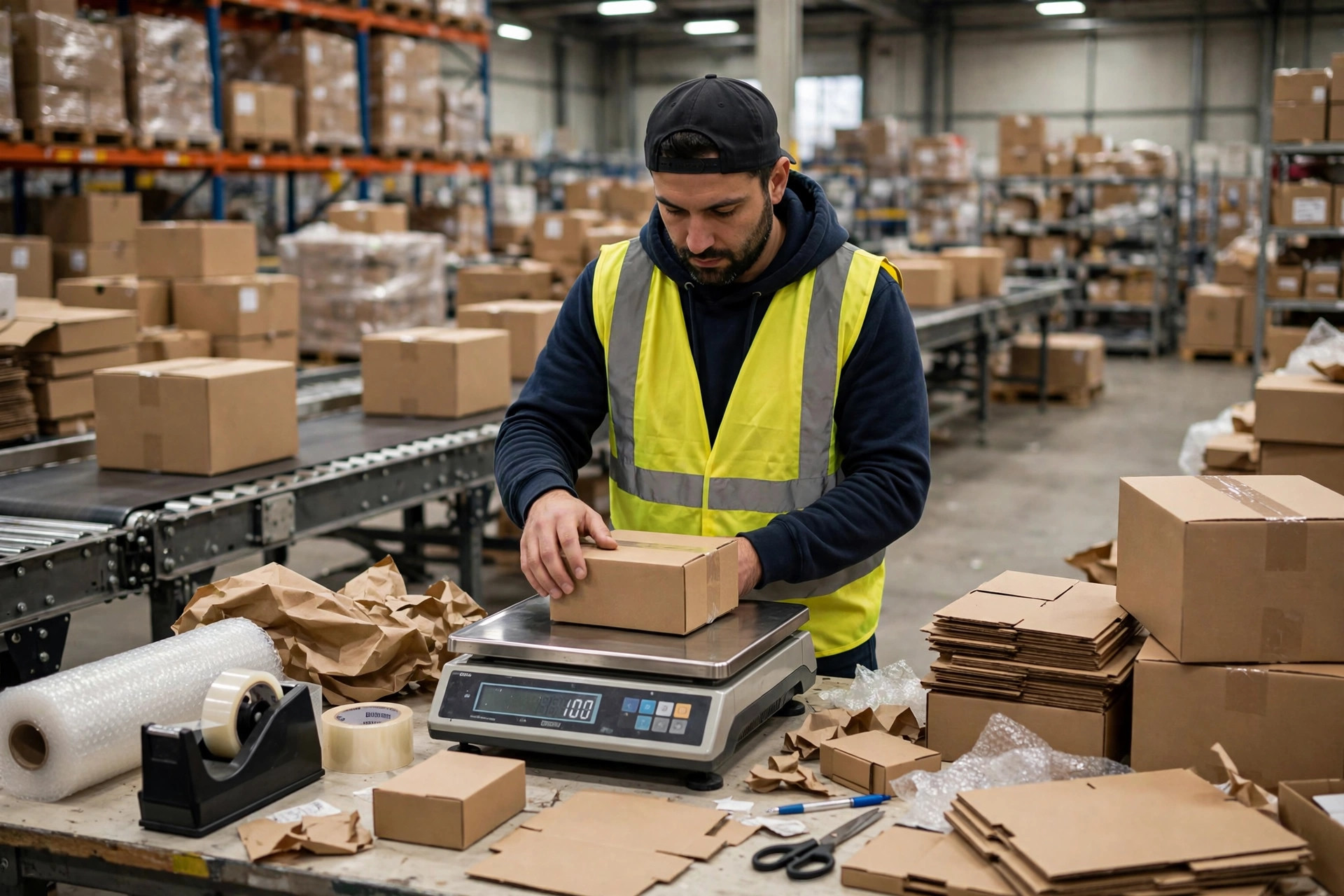
But there's a prerequisite that trips up a lot of operations: the item data on that screen has to be good. If your item master has vague product names and missing photos, the packer is staring at a screen that doesn't help. In 2022 I worked with a home goods warehouse in Moreno Valley whose pack verification looked perfect on paper but whose mispick rate wouldn't budge. The root cause? Dozens of SKUs sharing one supplier photo in the item master — the packers literally couldn't tell them apart. Clean your master data before you build verification on top of it. Get the order right.
Checkweighing: Cheap and Tireless, With One Catch
Once you're past ten thousand orders a day, even pack-station verification starts to drag. That's when checkweighing earns its place: every sealed carton crosses a scale, the system compares actual weight against the expected weight, and anything out of tolerance diverts to an exception lane.
It's inexpensive — an industrial scale plus a system integration runs a few thousand dollars — and it never gets tired. But it has one hard requirement: your SKUs need distinct weights. Books, hardware, auto parts — big weight differences, and checkweighing is scary accurate. Apparel, beauty samples — a few grams between one item and another, and the scale can't tell them apart. False rejects pile up until the operators just mute the alarm.
I watched exactly that happen at an apparel warehouse in Fontana in 2023. Three months after installation, the false-reject rate was so high they demoted the system to catching short picks only — a carton that's clearly underweight is definitely missing something — and gave up on catching wrong-item swaps. Before you buy a checkweigher, ask one question: do my SKUs actually differ in weight? If not, skip it. Spend the money on your packers instead.
One Thing You Can Do Tomorrow
Before you buy equipment or redesign the flow, do this: pull every "wrong item" ticket from the last 30 days of customer service records and rank them by SKU. You'll find an uncomfortable pattern — mispicks cluster on a handful of SKUs. Usually the look-alikes: two colors, two sizes, sitting in adjacent slots.
Take the top ten offenders and treat them separately: move their locations apart, print their labels in a different color, flag them for extra attention at the pack station. It costs nothing. I've done it in three warehouses, and mispick volume dropped by more than half each time.
There's no universal answer for where verification belongs — only a cost equation. Remember the rule: the further a mispick travels, the more it costs to fix. Put your verification at the latest point where it's still cheap to fix.