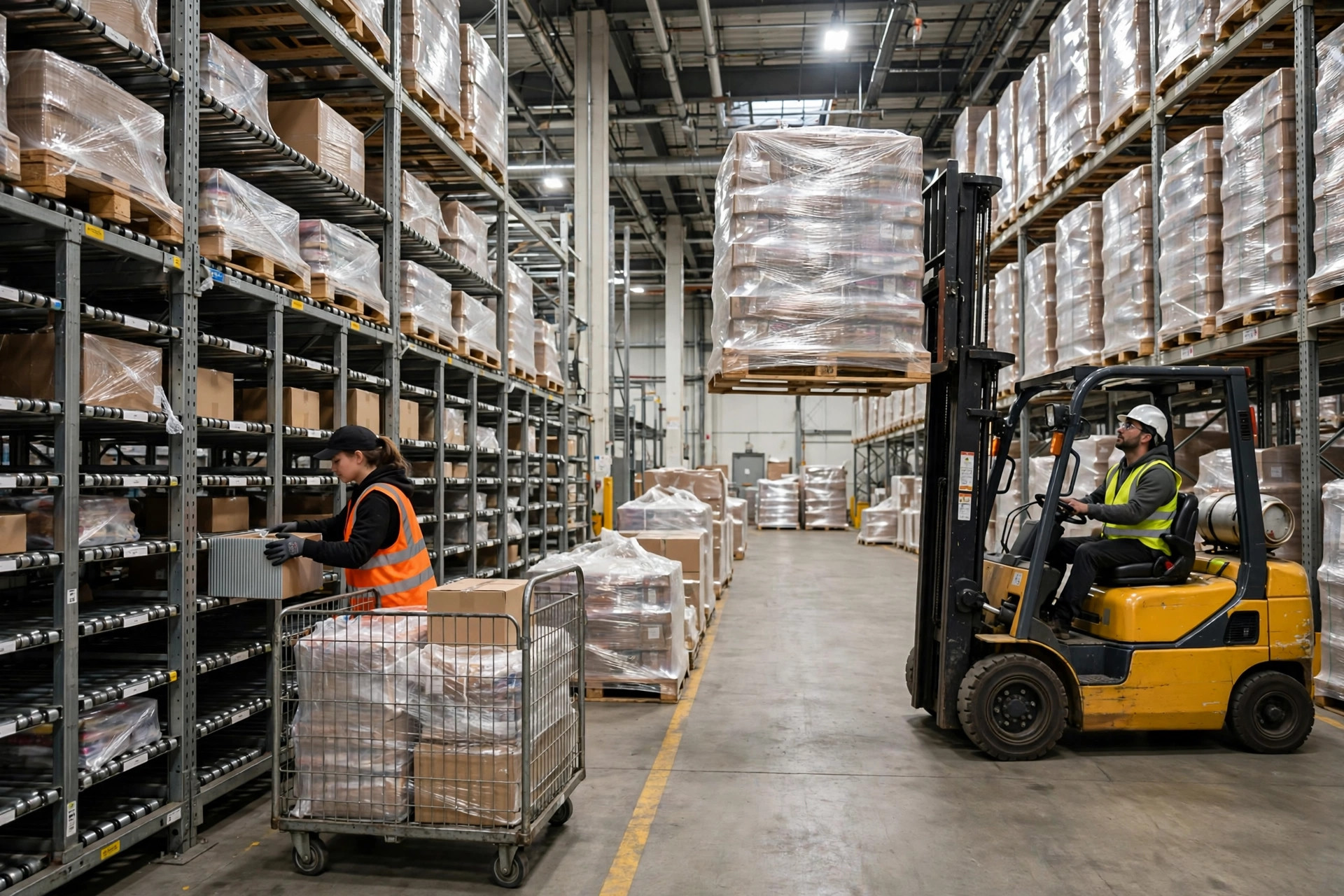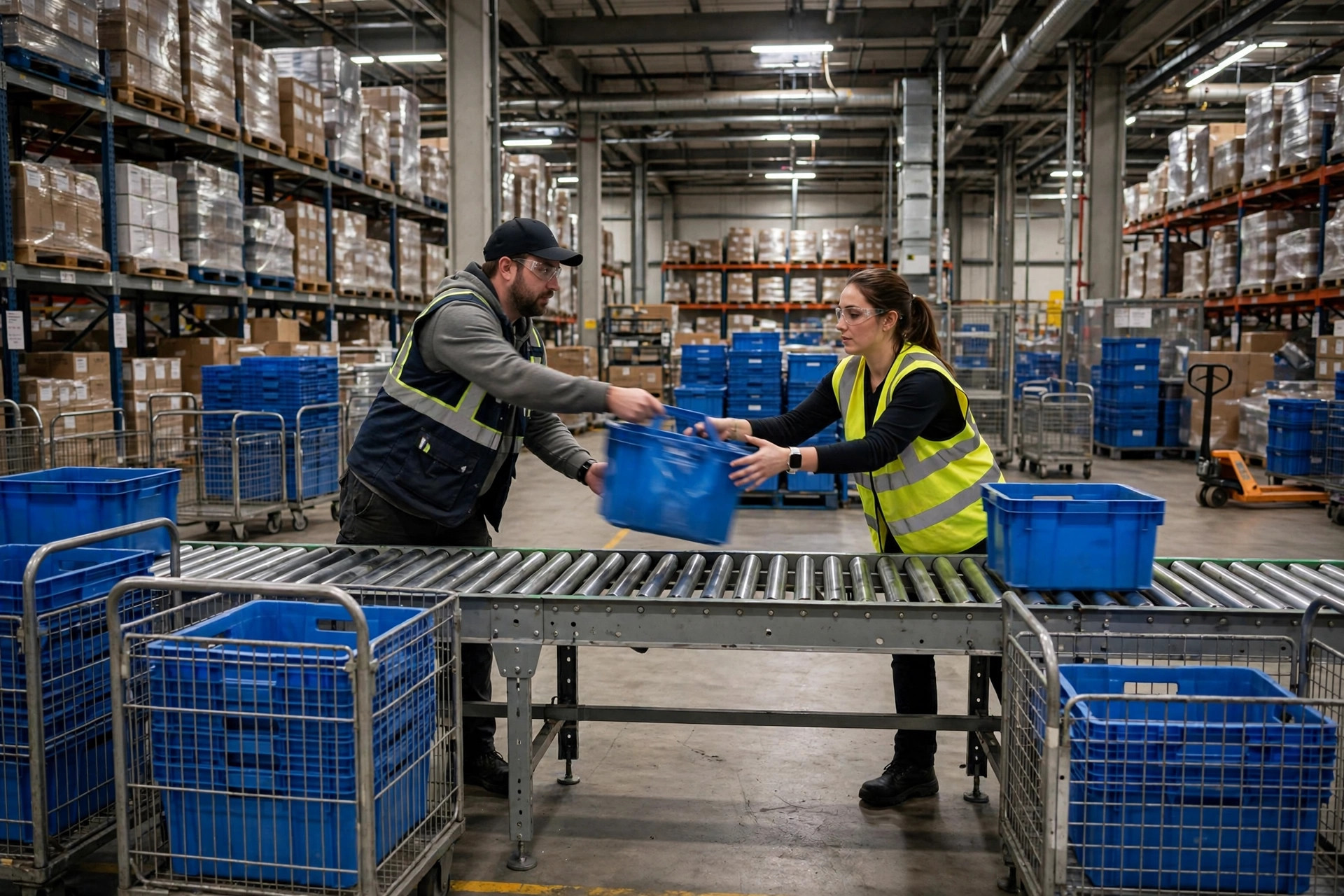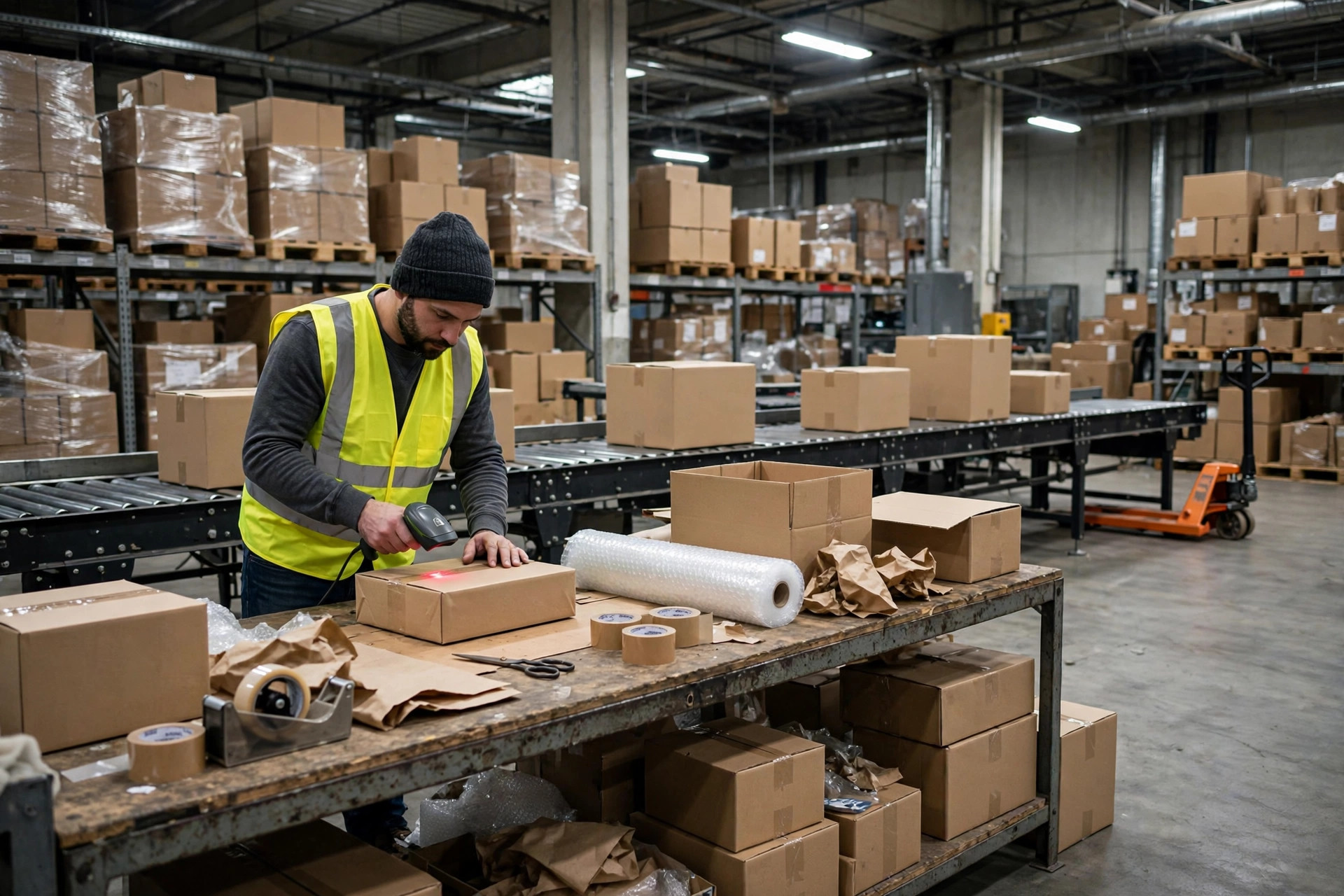
Last month I visited a 3PL warehouse in Ontario. The owner was frustrated: over 4,000 orders a day, returns wouldn't come down, he'd added three people to the verification station, and complaints kept rolling in. I stood by their packing line for forty minutes and spotted the problem: the verification station only counted pieces. Scan gun beeps, piece count matches, order ships. Wrong color, wrong size, wrong batch — nothing like that ever got caught.
That money was wasted. Where you put verification — during picking, before packing, or before outbound — changes cost and effectiveness by multiples, not percentages. Too many warehouses install verification with a "better than nothing" mindset and never run the numbers. Let me lay out the three stages clearly. My conclusion up front: no single stage fits every warehouse. It depends on your order profile.
The Three Stages Catch Errors Very Differently
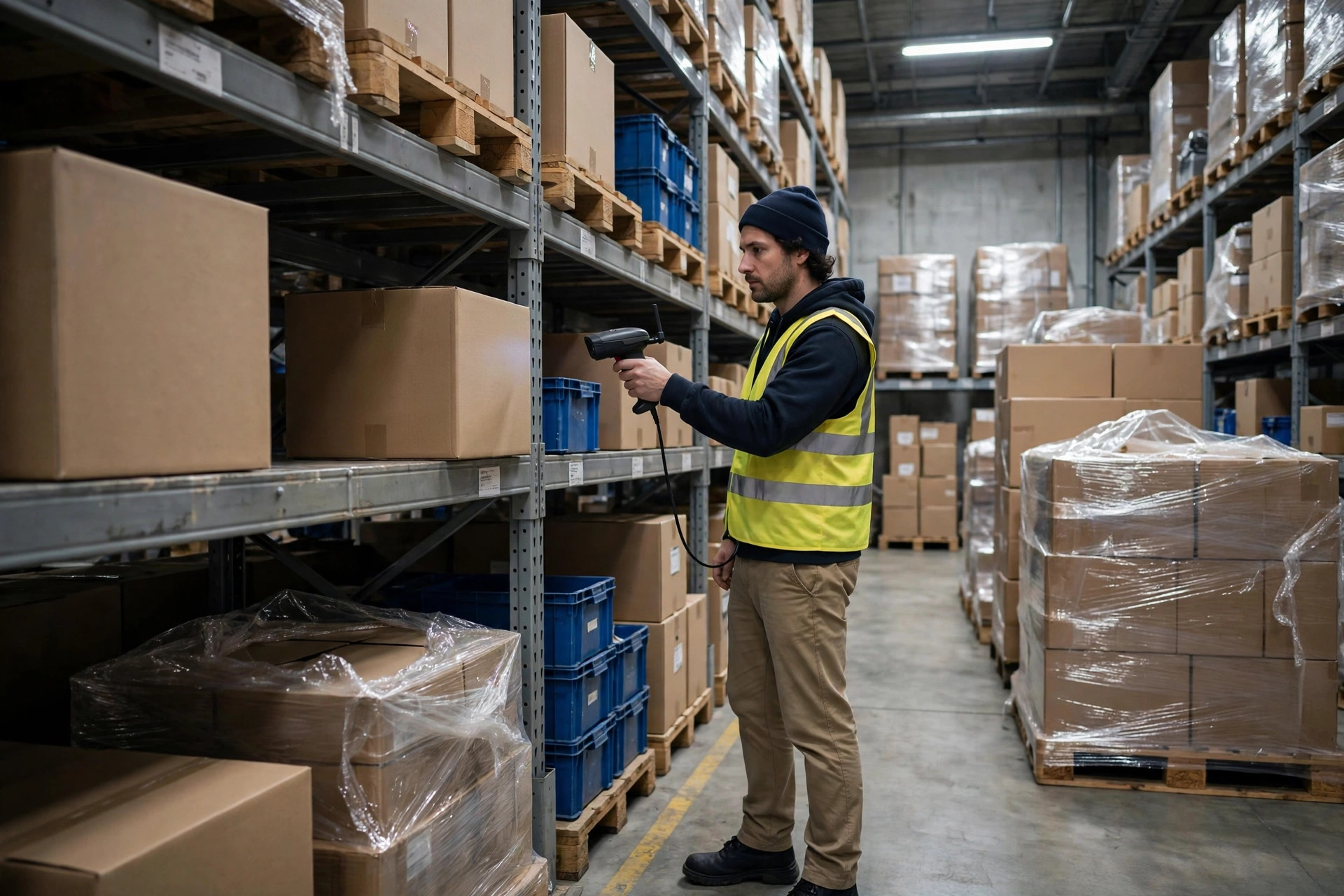
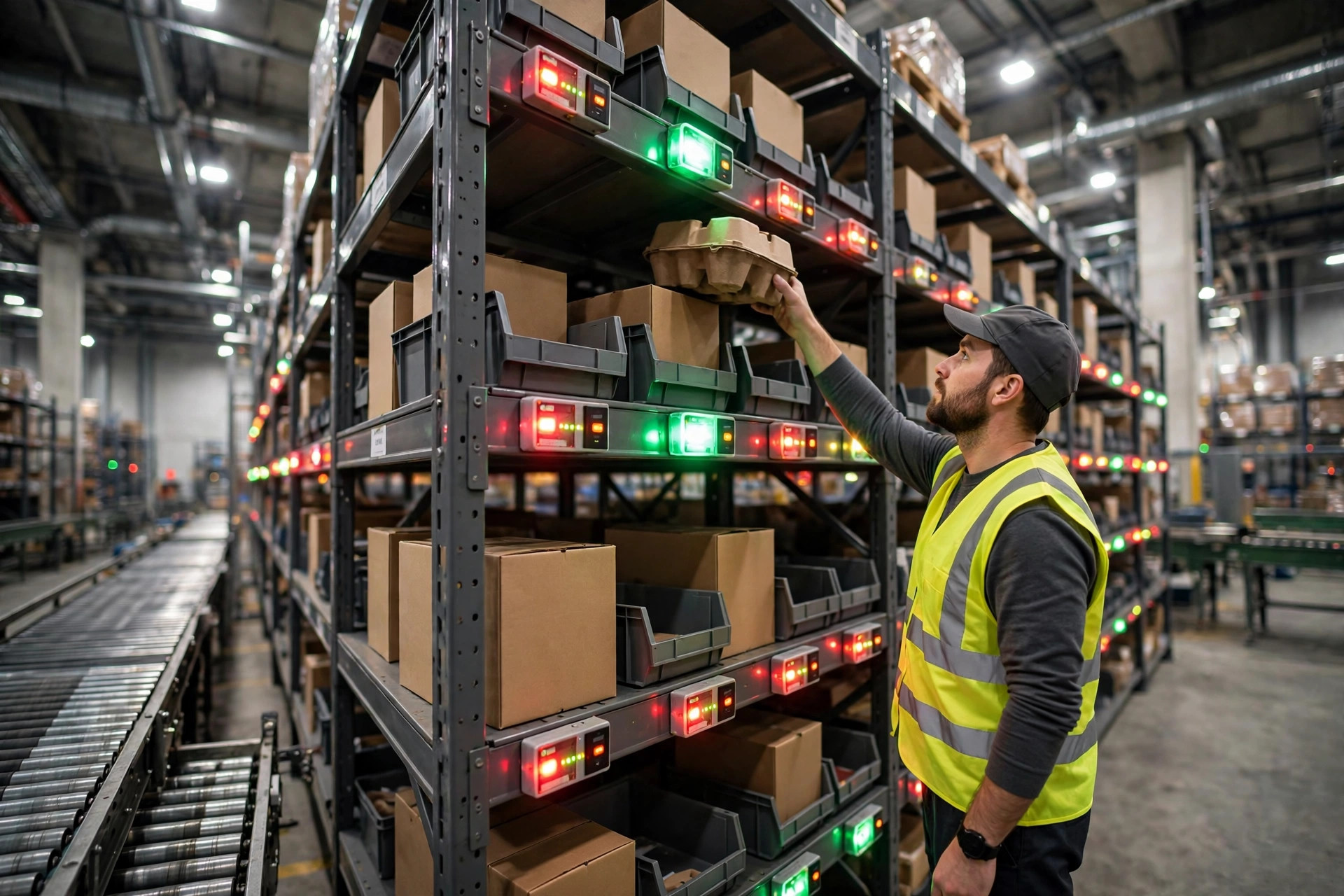
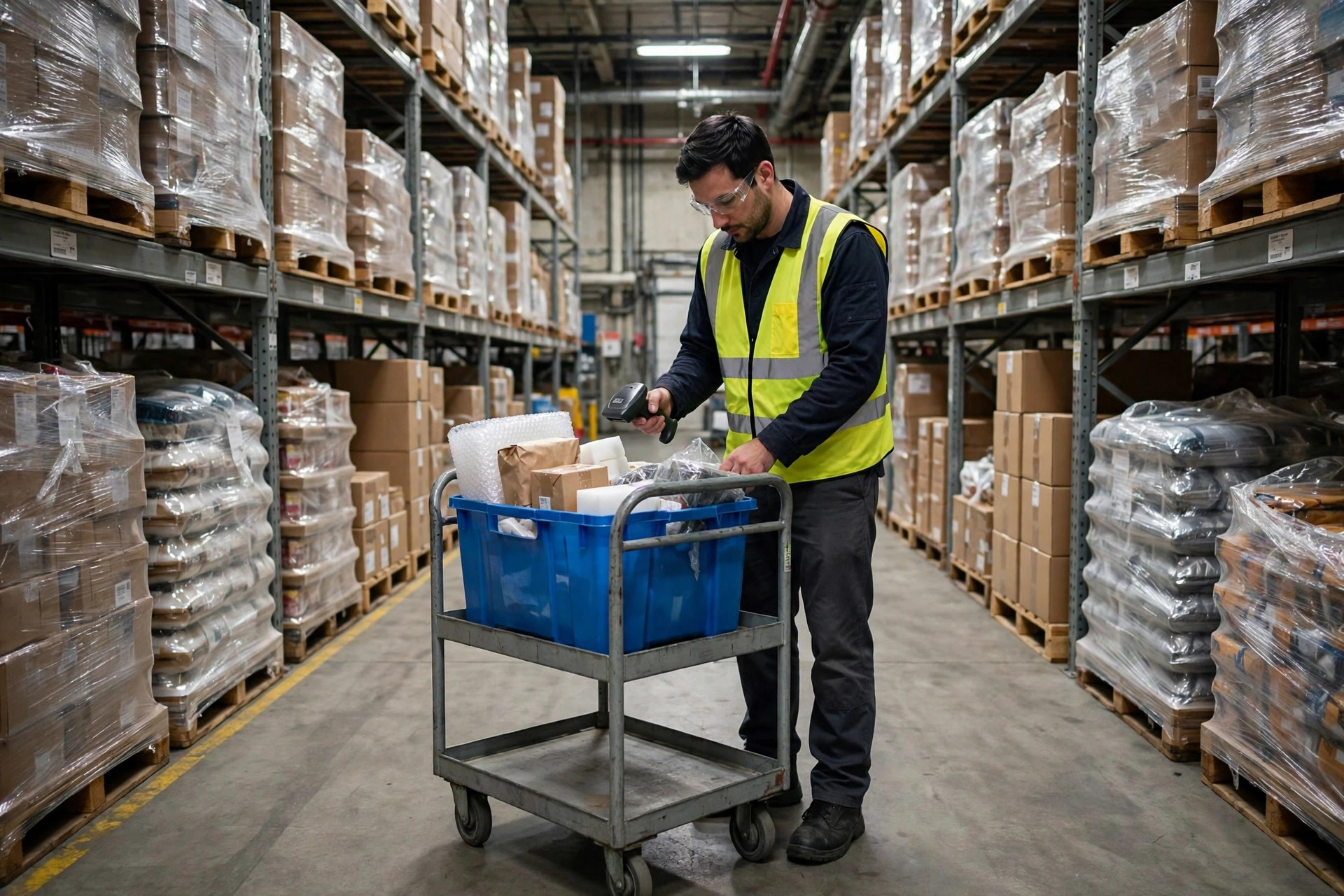
Stage one: verify during picking. The picker scans each item's barcode as it's picked, and the system checks it against the task line in real time. Wrong item, instant alarm. A stricter version adds weight verification: the system stores a standard weight per SKU, and if the picked weight doesn't match, the screen locks. This stage catches the most errors — mistakes barely make it out of the pick zone.
It's also the most expensive. Line-by-line scanning slows picking pace by 15% to 25%. That's not a number I made up — I measured it at an apparel e-commerce warehouse: after rolling out scan-to-verify, output per 8-hour shift dropped from about 180 orders to around 150 per person. Weight verification costs more still: every pick position needs a scale, every SKU on the shelf has to be weighed to build the standard-weight database, and every new product means more weighing. Maintenance adds up.
Stage two: verify the full order before packing. Picked goods arrive at the packing station, and the operator re-scans every item while the system reconciles against the order lines. Over-picks, short-picks, and wrong picks all surface at once. This is where most small and mid-size warehouses sit today, and the incremental investment is small — the packing station already has staff, and verification just adds scanning steps.
But it has a fatal weakness: it finds the error without telling you where it happened. Verification flags a short pick, and the operator has to go hunt across the racks. If the item can't be found, the order gets split and re-picked, and the whole order stalls at the packing station. I've seen a warehouse during peak season with over a hundred "problem orders" piled up in front of packing — the verification staff had turned into firefighters.
Stage three: sample inspection before outbound, or no inspection at all. Full-pallet and full-case orders get spot-checked at a set ratio before they ship; high-frequency single-SKU warehouses sometimes skip verification entirely and rely on pick accuracy alone. This is the cheapest stage — spot-checking a pallet takes minutes. But when something slips through, the full cost lands downstream: customer complaints, returns, reshipments. In B2B, one bad shipment can cost you a customer for a quarter.
Match the Stage to Your Order Profile
None of the three stages is inherently better. The only question is fit, and my rule is simple: look at what your orders look like.
Small orders with many lines — beauty products, 3C accessories, apparel e-commerce, say 3 to 8 lines per order with 1 to 2 units each — belong in stage one, verification during picking. These orders share three traits: many lines, decent unit value, and customers who notice a wrong item immediately. A beauty warehouse I worked with in LA, average order value over $40, cut its error rate from above 2% to under 0.3% after adding scan-to-verify at pick. Their math: 20 extra seconds of scanning to protect a $40 order from shipping wrong. Worth it.
Full-pallet, full-case B2B orders belong in stage three, sample inspection before outbound. Big orders have inherently low pick error rates — grabbing the wrong full pallet is far less likely than grabbing the wrong eaches — and errors are easy to trace: check the pallet label and you're done. I set inspection ratios by customer tier: 100% inspection for new customers in their first three months, 10% to 20% sampling once they're stable, occasional spot checks for long-term accounts.
Low-value, high-frequency B/C SKUs — the $9.99 free-shipping crowd — belong in stage two, full-order verification before packing, or even partial exemption. The logic here is blunt: reshipping a mispick costs $3 to $4, which may be less than the labor cost of verifying it. I'll say it straight: pushing these warehouses to 100% verification usually loses money. Better to invest in error-proofing at the pick face — bigger location labels, physical separation of look-alike SKUs.
Run the Numbers: Is Verification Labor Worth It?
Many owners resist adding verification because they fear the labor cost. Many others add it blindly because they've never priced a mispick. Here's the simplest calculation I know. Plug in your own numbers.
First, price a single mispicked order honestly. Don't count just the freight. Add it all up: return shipping (usually 1.5 to 2 times the outbound cost), customer service time (15 to 20 minutes at loaded hourly rates), re-pick and re-pack labor plus reship freight, and the hidden cost of customer churn. For a warehouse doing 3,000 orders a day, I helped them work this out: $18 to $35 per mispick all-in. Call it $25.
Then price verification labor. A verification operator at a loaded $20 an hour can process 60 to 80 orders an hour, so $0.25 to $0.33 per order. Even if verification only catches half the errors, the math is easy.
Assume a 2% error rate — that's the range I typically see for manual picking, roughly 1% to 3%. Well-run warehouses get under 1%; messy ones can't hold 3%. At 3,000 orders a day, that's 60 bad orders daily, $25 each, $1,500 leaking out every day. Verification labor for the day? 3,000 orders times $0.30 is $900. Even catching just half the errors saves $750 a day — over $20,000 a month.
Once you run it, the feeling that "verification is too expensive" usually collapses. What's actually expensive is shipping the wrong goods. Of course, if your error rate is already 0.3%, or your average order is a few dollars, verification may genuinely not pay — which is exactly why I say match the stage to the order profile, and run the numbers before you act.
A Verification Station Checklist You Can Use Tomorrow
Whichever stage you pick, a working verification setup needs the same building blocks. Here's the checklist:
Equipment: a scan gun is the floor, not the ceiling. It must scan both product and order barcodes with real-time system matching — offline or after-the-fact matching is theater. For stage one, put a scale on every pick cart or pick position, gram-level precision, and make standard weight a required field in your SKU master data. Weigh every new product at receiving — no weight on file, no verification. For stage two, give the packing station dual screens or a split view: order lines on one side, scanned lines on the other, discrepancies highlighted in red so the operator doesn't have to think.
Process: three hard rules. First, the person verifying can't be the person who picked it — or at least not in the same continuous motion. Verifying your own pick is the same as no verification. Second, discrepant items go to a separate exception area. No fixing orders at the verification station, and every correction gets logged. Third, roll up verification data daily: error rate, error type (wrong pick, over-pick, short-pick), and the most error-prone SKUs. Review the top ten weekly — nine times out of ten it's a label or look-alike packaging problem, fixed by moving a location.
People: staff verification with careful newcomers, not veterans. Veterans "eyeball it" from experience, and that's exactly where errors slip through. Schedule verification between order waves instead of competing with packing for bodies. During peak season, the verification station is the first place to add headcount, not the last.
One last honest word. More verification isn't better — more accurate verification is. The most aggressive warehouse I've seen ran all three stages: scan at pick, full-order check before pack, sample inspection before outbound. Error rate under 0.1%, but verification ate a quarter of total warehouse headcount. The owner thought it was worth it — his customers were hospitals, and one wrong shipment could be a medical incident. Your customers, your orders, your product values decide which stage your verification belongs in.
Two things you can do tonight: first, pull your last 30 days of error orders and sort them into wrong-pick, over-pick, and short-pick to see where the bulk sits. Second, run the calculation above — your true cost per mispick versus verification labor. Numbers don't lie. Once you've run them, you'll know exactly which stage your verification belongs in.