Philippines mango export is a math problem I got wrong in my first year, and I got it wrong in the most expensive way possible. I stared at the air freight quote, saved a couple of dollars per kilo, and felt clever. Then the shipment landed, inspection flagged part of it, soft fruit pushed spoilage up, and the loss ate the freight saving and then some. A mango is alive from the moment it leaves the tree. Every hour counts, and every step in the chain has its own clock.
I have sold cross-border fresh produce for five years, and my biggest mistake was treating mangoes like ordinary fruit. Lose an ordinary parcel and you refund it. With mangoes, harvest maturity, field heat, vapor heat treatment, pre-cooling, packing, and booking all lock together. Control one step and ignore the rest, and the destination port will hand you the bill for all of them.
Philippines Mango Export: Vapor Heat Treatment Is the Gate You Cannot Skip
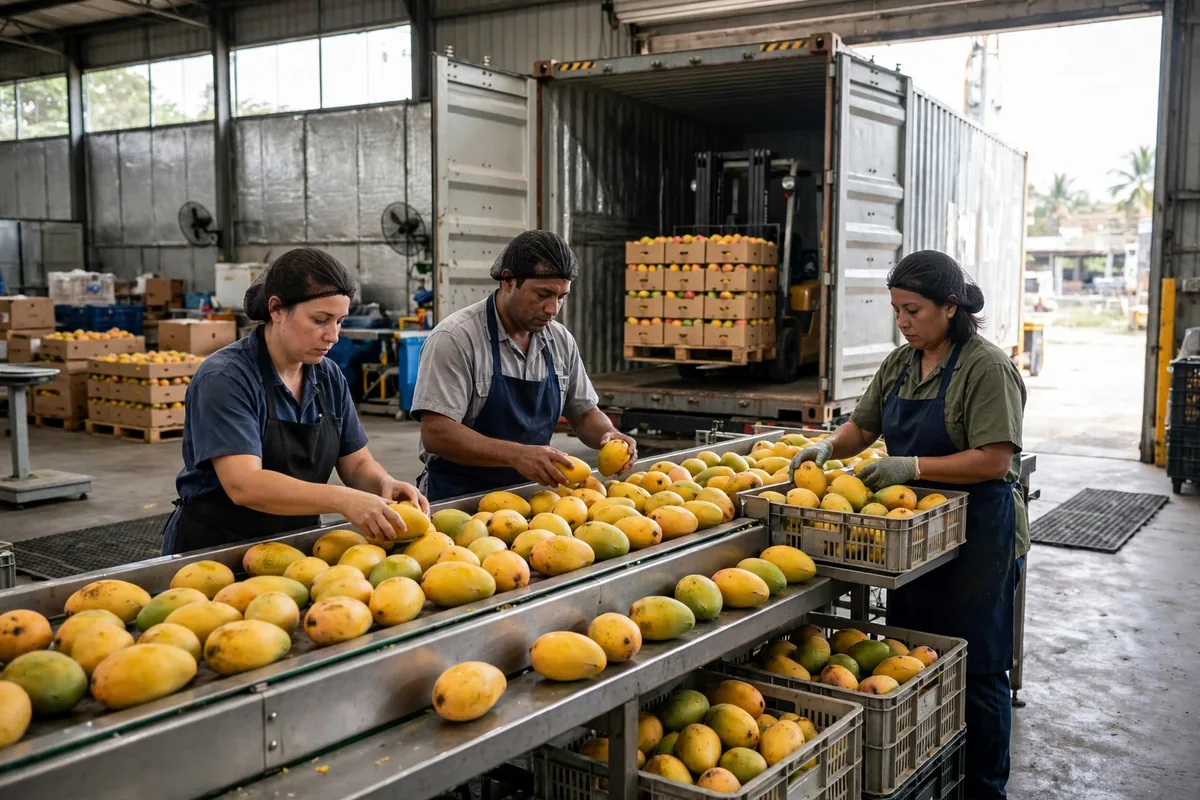
Let me complain about the current state of things first: most sellers talk about mango export by asking about air freight and sea freight prices, and nobody asks about vapor heat treatment slots first. I do it the other way around. When I get an orchard quote, I ask three questions before anything else: is the treatment facility registered, how many treatment slots are left this week, and can fruit picked today make tonight's treatment run. Miss the slot and the fruit sits an extra day, maturity jumps a notch, and everything downstream shifts with it.
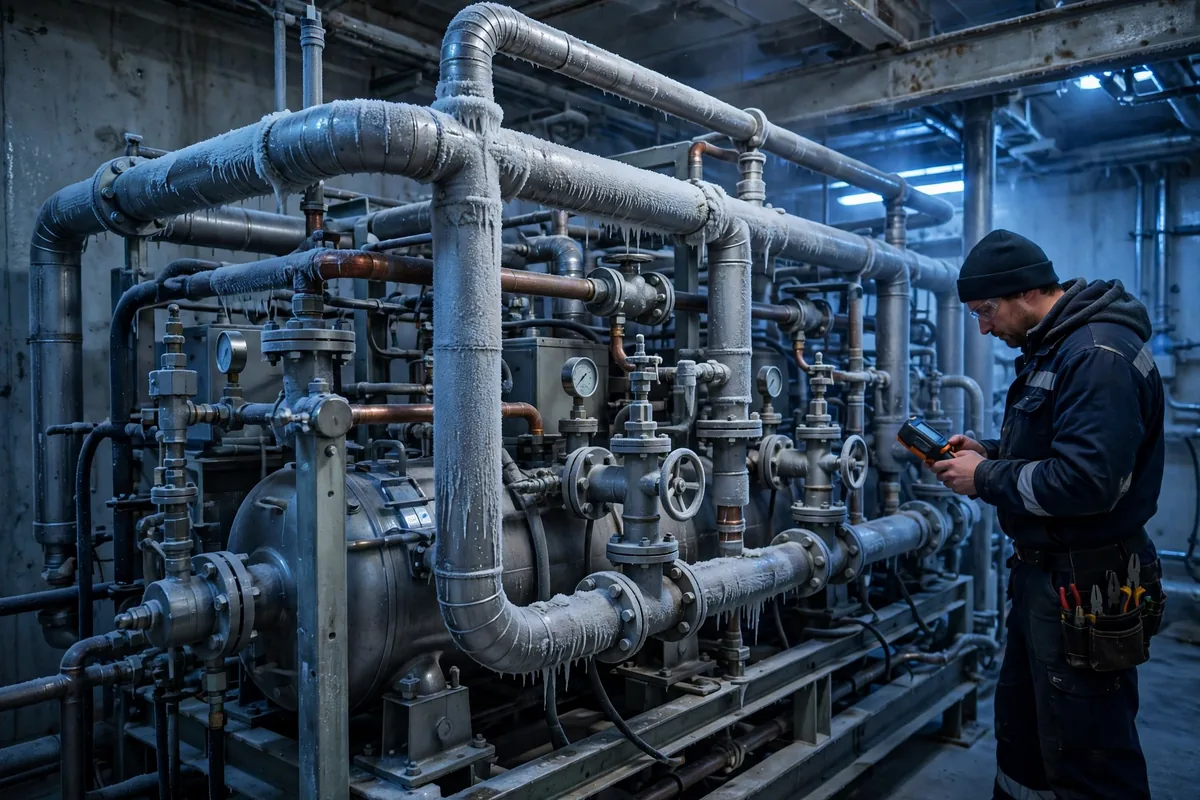
Vapor heat treatment, or VHT, is not a formality. Australia's import conditions are explicit: fresh mangoes from the Philippines must undergo pre-shipment vapor heat treatment at a facility registered by the exporting national plant protection organization, with fruit pulp temperature reaching 46°C for a minimum of 10 minutes, proven by a phytosanitary certificate. The United States Department of Agriculture sets the same line: raise the fruit center to 46°C, hold it for 10 minutes, with the heat-up taking a minimum of 4 hours. Behind those numbers sits fruit fly quarantine. Fail the treatment and a whole container can be refused. Exporters also publish a hot water dip step ahead of VHT, 50°C to 55°C for 3 to 5 minutes, followed by the vapor heat chamber with relative humidity held at 90% or above. My rule is simple: never take a temperature from a chat group when the destination country's official policy is published. Check the official policy, and keep the treatment record for every batch.
Case one: in May 2024, an orchard in Luzon loaded fruit at 10 a.m., field temperature above 30°C, and the truck reached the treatment plant at 3 p.m. Maturity ran high, and the plant suggested splitting it into two treatment runs, the riper fruit first. I refused, to save one treatment fee, and pushed it through in a single run. Inspection then found some fruit softening too fast, and spoilage at arrival ran clearly above a normal batch. After that I made a rule: uneven fruit gets split, even if it costs an extra run.
Case two: in March 2025, a batch of Carabao mangoes from Samal Island went to Australia. Samples taken about two days after harvest read around 9 to 10 degrees Brix, and the fruit ripened normally after treatment. Sellers in my groups keep repeating that heat treatment "cooks" the mango. That is wrong. Done correctly, VHT does not stop normal ripening; fruit may still arrive green or semi-green and ripen afterward. What ruins fruit is uncontrolled temperature and a long delay after harvest. My rule is that picking, treatment, and pre-cooling finish within 48 hours of harvest. Fruit past that window goes to local channels, never onto an export line.
Philippines Mango Export by Air or by Sea: Faster Does Not Mean More Profitable
Here is the counterintuitive call: air freight is fast, and fast does not mean profitable. Sea freight is slow, and slow does not mean loss-making. Philippines mango export has to be priced on the share of good fruit at arrival, not on transit days. A shipment that flies in 3 days with 82% good fruit can lose to a shipment that sails in 12 days with 88% good fruit. People who only look at freight pick air. People who have paid for spoilage reach for a calculator first.
| Route (illustrative example) | Transit | Freight share | Good fruit at arrival | Best fit | | Air freight direct | Short, about 2 to 4 days | High | Swings with pre-cooling | Ripe fruit, festival windows | | Sea reefer container | Long, about 10 to 14 days | Low | Depends on temperature stability | Even maturity, large volume, no rush | | Mixed air plus sea | Split batches | Medium | Varies by batch | Air to test a new product, sea to restock |
That table is an illustrative example, built from the structure of batches I have actually run, not a quote from any carrier or airline. Real freight changes with the season, so check the official policy and current quotes before you book, and do not use my table to haggle with a forwarder. Its only job is to force freight, spoilage, and selling price into the same row. The extra dollars per kilo you pay for air only make sense when they are smaller than the value of the good fruit they save. Otherwise you are paying for anxiety.
My approach is to split shipments. New products fly in small quantities first, so I learn which size and maturity grade holds up best at the destination. Then I set the sea shipment to match what I learned. For festival windows I lock reefer space three weeks ahead and keep one air batch as a top-up, never betting everything on one vessel. The real risk with sea freight is temperature swings in the reefer and queues at the destination port.
Spoilage Hides in Pre-Cooling and Packing
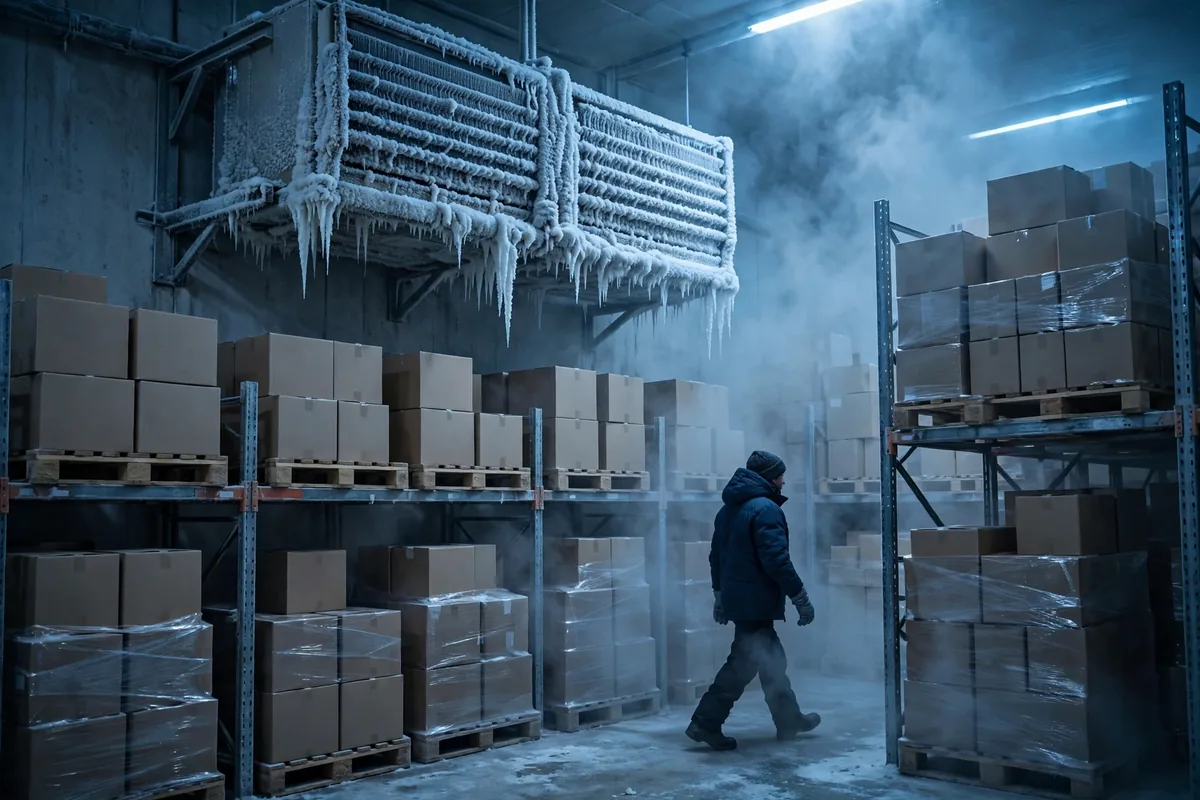
Do not rush from treatment to packing. Pre-cooling is the quiet killer. Fruit coming out of a 46°C treatment has a hot core and a cooler skin. Box it straight away and the carton turns into a small sauna. My approach is to air-cool the fruit first, wait until the pulp temperature is close to the cold storage set point, and only then pack, leaving air channels in the carton and never stuffing boxes full. Cartons need to breathe. A sealed plastic liner that traps the fruit blocks cold air, and spoilage starts in the middle of the box where you cannot see it.
Harvest timing matters too. Morning-picked fruit carries more field heat, afternoon-picked fruit runs cooler, but both must enter pre-cooling the same day. I have seen orchards wait until 5 p.m. to fill one truck, arrive at the plant at night, and treat the fruit the next day, after a night stewing in the truck. I would rather refuse that fruit than fight soft fruit at the destination. Do not only negotiate price with the orchard. Write the hours from picking to plant delivery into the agreement, with a price cut for delays and rejection for fruit that arrives far too late. Put one or two temperature loggers in every shipment as well, recording the curve from pre-cooling to loading. When a dispute comes up at arrival, that logger is your evidence with the buyer and the forwarder. Without records, nobody can say whose loss it is. With records, the boundary is clear.
A Seller Checklist Before You Book
This is the checklist I run through before every mango shipment, and I do not book until all five pass. Do I have the treatment facility's credentials and the batch treatment record? Have I checked the destination country's quarantine rules against the latest official policy? Is the gap from picking to treatment inside 48 hours? Do I have a measured temperature record after pre-cooling and packing? Have I recalculated the air-versus-sea split against good fruit at arrival, not freight alone? One fuzzy answer means I stop and ask, not book and hope.
Philippines mango export is not won by whoever negotiates the cheapest freight. It is won by whoever breaks the chain least. Orchard, treatment plant, pre-cooling, packing, booking, and customs clearance: if any one of the six fails, the money spent on the other five is wasted. The money worth spending sits in treatment and pre-cooling, not in freight haggling. Get those right, lift the good fruit rate, and a slightly higher freight bill still leaves a profit. This one I have tested myself, and it works.
By Ah K, E-commerce Seller (5 yrs)