We have this client, a generic drug company out of New Jersey. August 2023, they got 400 cases of OTC painkillers returned from a distributor in Texas. The truck sat at a Phoenix cross-dock for over two hours in 100-degree heat, and the temperature log on the handoff paperwork? Blank.
Monday morning, their QA director called: don't touch anything until we finish our evaluation. That evaluation took three weeks. All 400 cases ended up destroyed — and when the bill landed, the client's first question was: so the 3PL is covering this, right?
That was the day I learned that in pharma returns, the real fight isn't in the warehouse. It's in the contract. Here's how returned drugs actually move through quarantine, evaluation, and relisting — plus the stuff only the 3PL side of the table ever tells you.
Returned Drugs Go to Quarantine, Not to Stock
Pharma warehousing diverges from regular warehousing most sharply at returns. A normal e-commerce DC opens a return, eyeballs it, and puts it back on the shelf. Pharma can't do that.
Federal regulation 21 CFR 211.204 is blunt: returned drug products must be identified as such and held. If anything about how they were stored or shipped before or during their return — or the condition of the product, its container, carton, or labeling — casts doubt on safety, identity, strength, quality, or purity, the product gets destroyed unless examination, testing, or investigation proves it meets standards.
In warehouse language, that means three non-negotiables:
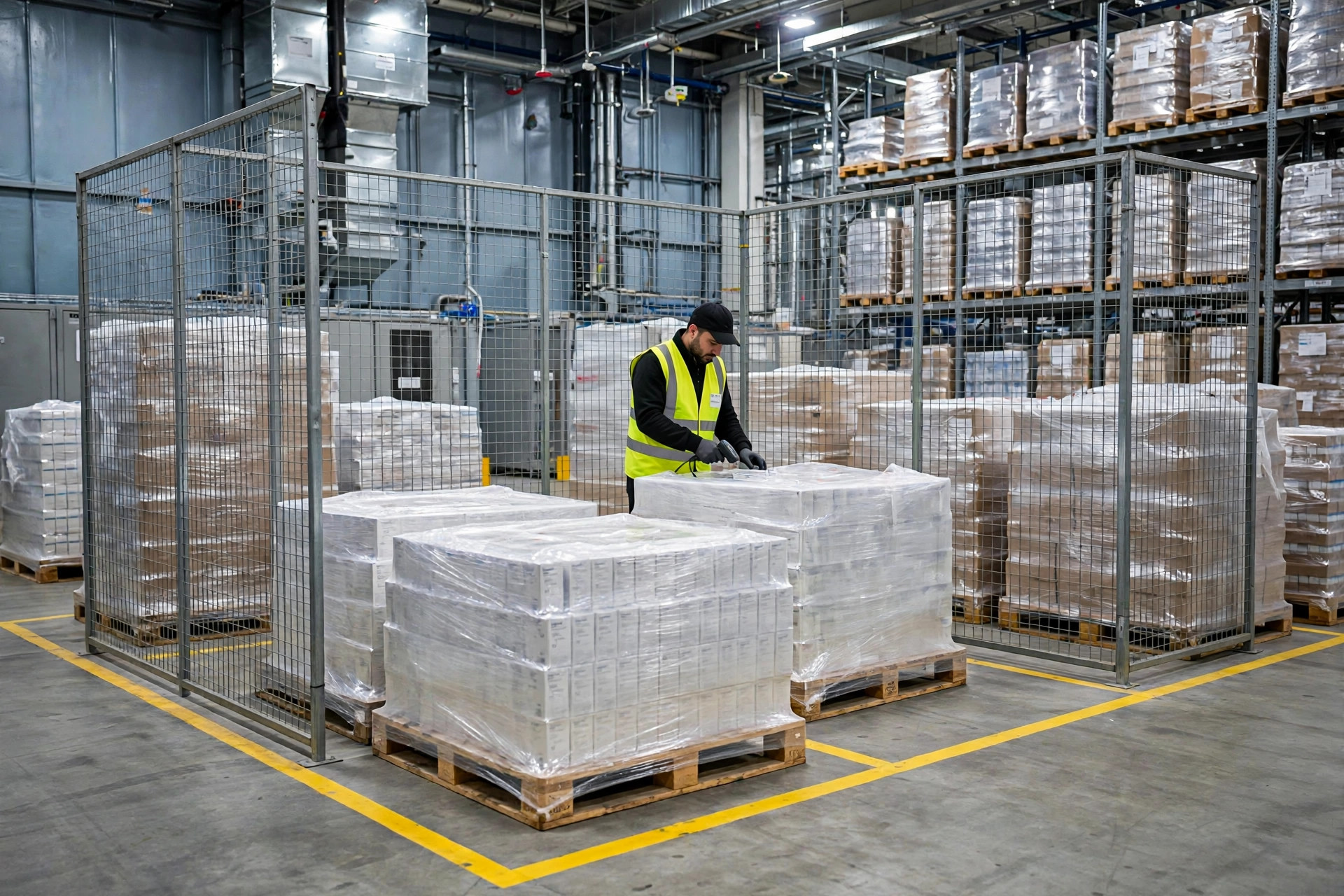
First, physical quarantine. Returns go straight into a segregated hold area on arrival — ours is a taped-off zone — and the WMS locks the inventory status to quarantine. Once that status is locked, nobody can "accidentally" transfer the stock out. No release instruction, no forklift moves it. Period.
Second, identity. Every returned case gets tagged: product name, lot number, reason for return, return date, originating customer. The regulation wants the name and label potency, lot number, reason for return, quantity returned, date of disposition, and ultimate disposition on record. Miss one field and the FDA auditor will find it.
Third, evaluate fast — don't let returns retire in quarantine. Our internal SOP targets an evaluation decision within 5 business days of receipt. That's our house rule, not a regulatory number; the actual deadline should follow the client's QA SOP. The longer product sits, the uglier it gets, as I'll show below.
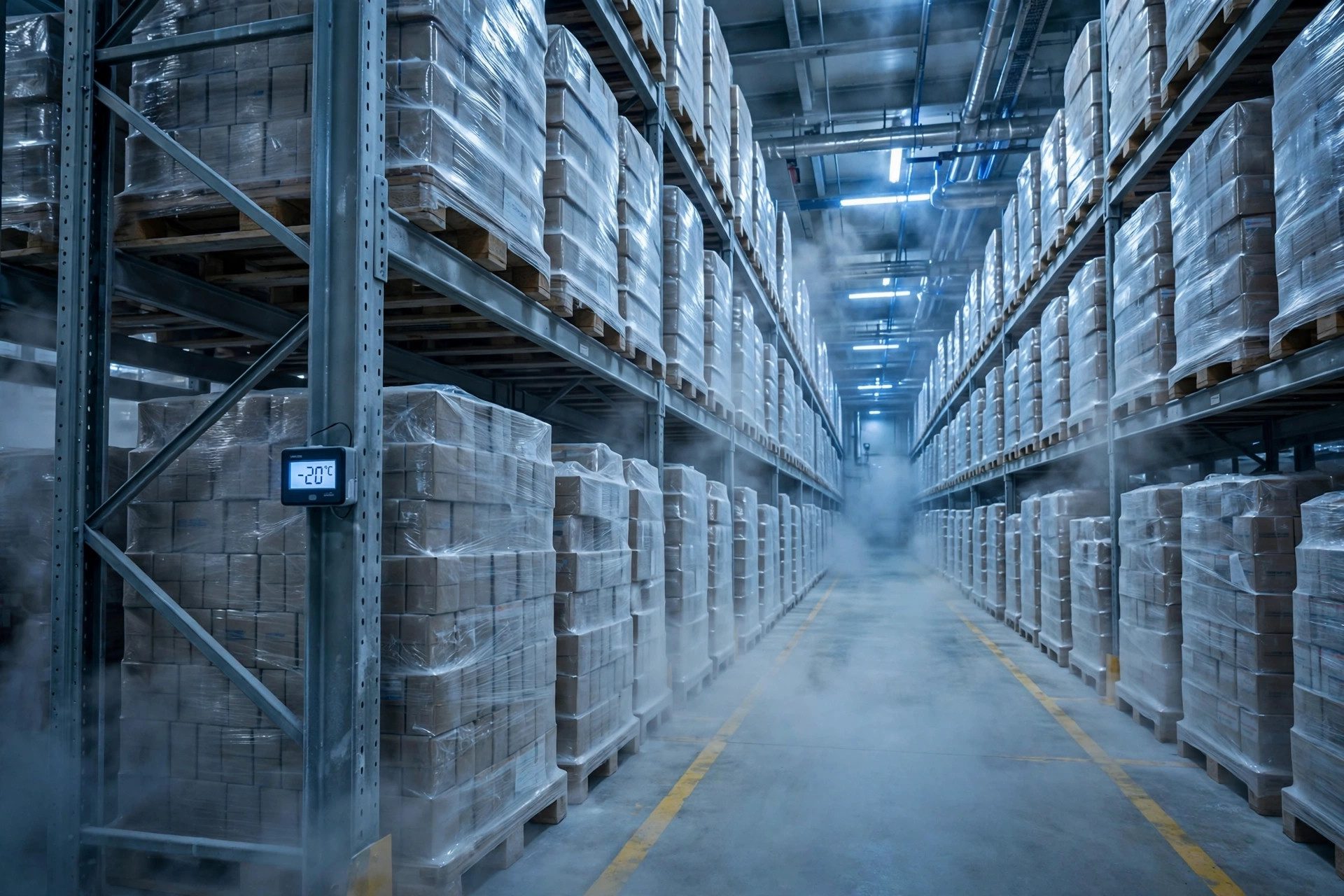
Those 400 New Jersey cases died at step one: missing temperature data. Two hours at 100°F, and controlled room temperature product is labeled for 20–25°C (excursions to 15–30°C permitted). Nobody could say what the product went through in transit. Can't say, means doubt. Doubt means destroy — unless you can prove otherwise, and proving it costs more than the product is worth.
What Goes Back on the Shelf, and What Gets Destroyed
Not all returns share the same fate. In 2024, another client — a California distributor of medical devices and OTC products — got 120 cases back because a clinic "ordered the wrong item." Seals intact, temperature records complete, lot numbers verified through the DSCSA tracing system in minutes. Evaluated and relisted within 48 hours. Zero waste.
Same evaluation process, wildly different outcomes. Here's the decision framework we actually run in our warehouse:
| Return scenario | Key checkpoints | Disposition |
|---|---|---|
| Outer packaging intact, lot traceable, temp records complete, within expiry | Visual inspection + document check | Relist to active stock |
| Outer carton damaged but inner seal intact | Open-case evaluation, lab test if needed | Relist if it passes, destroy if not |
| Temperature records missing or showing excursion | Treated as "doubtful" | Destroy unless proven compliant |
| Return reason implicates batch quality | Investigation of associated batches per 21 CFR 211.192 | Follow client's QA directive |
| Short-dated product (e.g., under 6 months) | Even if quality is fine | Recommend against relisting — discount channel or destroy |
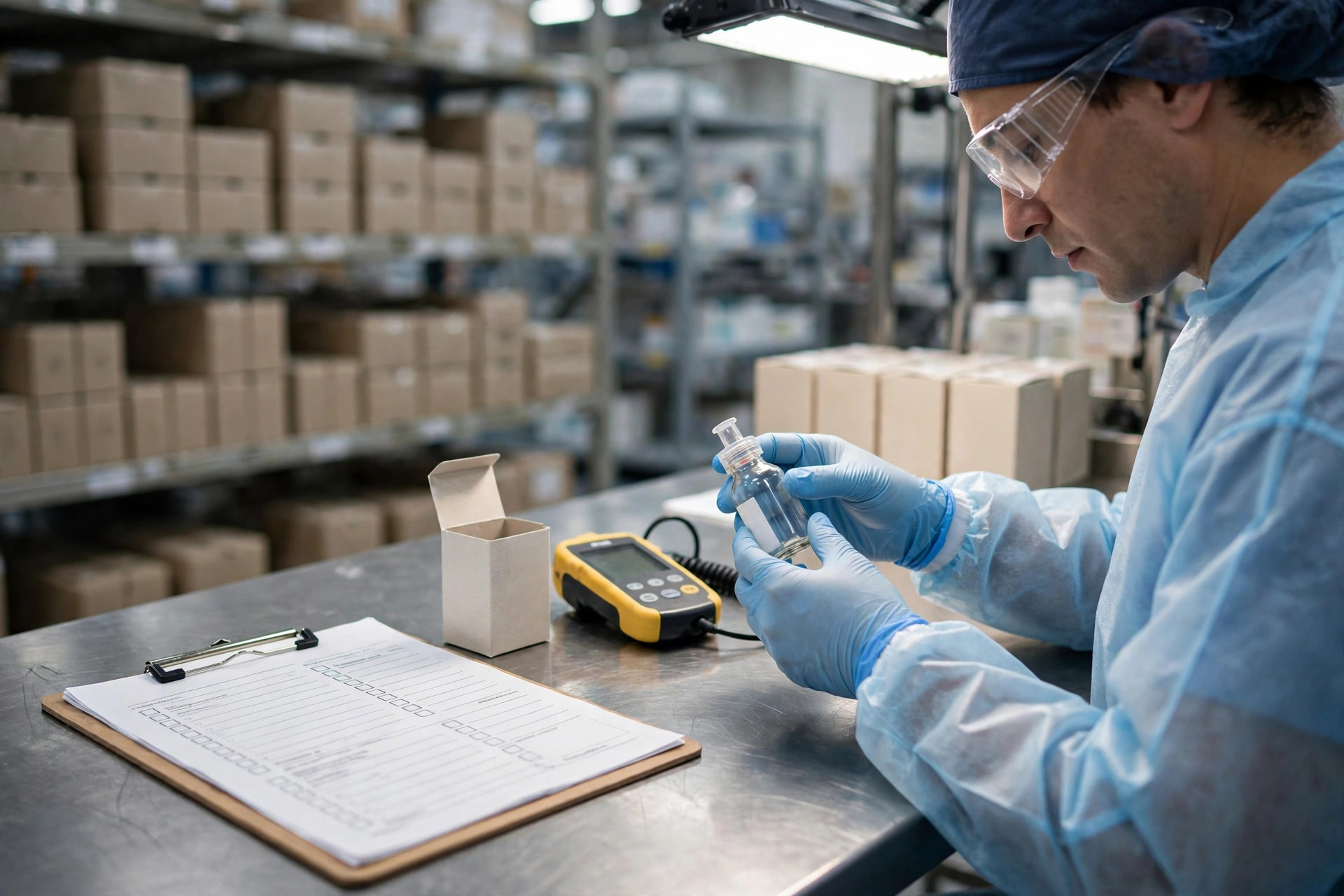
Here's the counterintuitive part: whether a return can be relisted is about 80% decided in the first 10 minutes at receiving. Temperature records complete? Outer packaging intact? Lot numbers matching? A sharp receiving clerk settles all three at the dock. Everything after that is mostly procedure. Those 10 minutes determine whether product is "back in stock in 48 hours" or "three weeks in quarantine, then destroyed."
There's also a quiet trade-off hiding in expiry dates. The regulation doesn't say "don't relist short-dated product," but in practice, product with tight dating won't sell through in time even if it's perfectly fine — it just occupies a slot for months and then gets destroyed anyway. Our advice to clients: don't put short-dated returns back into active stock. Discount channel or destroy. Short pain beats long pain.
And then there's the DSCSA thread. Since the Drug Supply Chain Security Act moved into full unit-level traceability in 2023, every returned unit should theoretically have a traceable pedigree. Lot number doesn't resolve, serial number not found — don't shrug it off as "close enough." That goes straight into suspect-product investigation. QA departments are more afraid of this than we are.
The Returns Clauses in the Contract — the Part Clients Hope You Skim
Back to those 400 cases. How did the bill shake out? We didn't pay for destruction — the contract said destruction costs from product-quality concerns sit with the client. But the three weeks of quarantine storage? The client initially refused to pay, claiming "your warehouse was slow." A month of back-and-forth, and we met halfway.
After years on the 3PL side of the table, I've learned this: the scariest thing in a pharma warehouse contract isn't "how much do we pay" — it's what's not written down. Three clauses where clients consistently hope you won't look closely:
First: the evaluation clock. Product sitting in quarantine accrues storage fees daily. The client's QA department can easily take two or three weeks internally. Who pays for that? Our rate card bills pharma quarantine storage per pallet-day, with overage kicking in past the agreed window. Whether that window is 5 business days or 10 decides whose pocket the money comes from. Unwritten means the 3PL eats it.
Second: fee separation. A single pharma return generates at least four cost lines: quarantine storage, evaluation labor, third-party destruction, and DSCSA verification labor. Our rule: itemize all four in the contract exhibit with unit rates. Never bundle them into a vague "warehouse management fee." Bundled, the client assumes everything's included. Itemized, every dollar has a receipt. Destruction especially needs its own line — medical waste disposal goes through licensed vendors, billed per batch, and it's not cheap. Say it upfront, not after the fact.
Third: liability boundaries. Temperature records missing from the inbound leg — whose fault? If the 3PL arranged the transport, fair enough, ours. If the client used their own carrier, why should the warehouse take the hit? And when the return reason is a product quality issue (say, a batch complaint), the 3PL's job is "quarantine plus cooperate with the investigation" — destruction costs and associated-batch investigation expenses don't belong on our invoice. Leave this unwritten and the client defaults to "everything that happened in your building is your problem."
Do the full math and it clicks. A 400-case return might be worth $100K-plus in product, but the real cost is usually time: three weeks in quarantine means storage fees, tied-up capital, and expedited freight to resupply the distributor — often 20–30% of the product value on top. So the KPI that actually matters in pharma returns management isn't "how much did we destroy." It's "average evaluation cycle time in days." Shorter cycle, less pain for both sides — and yes, you can say that to the client across the negotiating table. They understand money.
Next time you're negotiating a contract, ask these three questions:
One: is the return evaluation deadline in writing, and who pays quarantine fees past it? Two: when inbound temperature records are missing, whose liability is that by default? Three: for destruction — what's the process, who handles it, and are the fees itemized?
Ask those three and the other side will know this isn't your first pharma warehouse.
By Susan, 3PL Sales Director