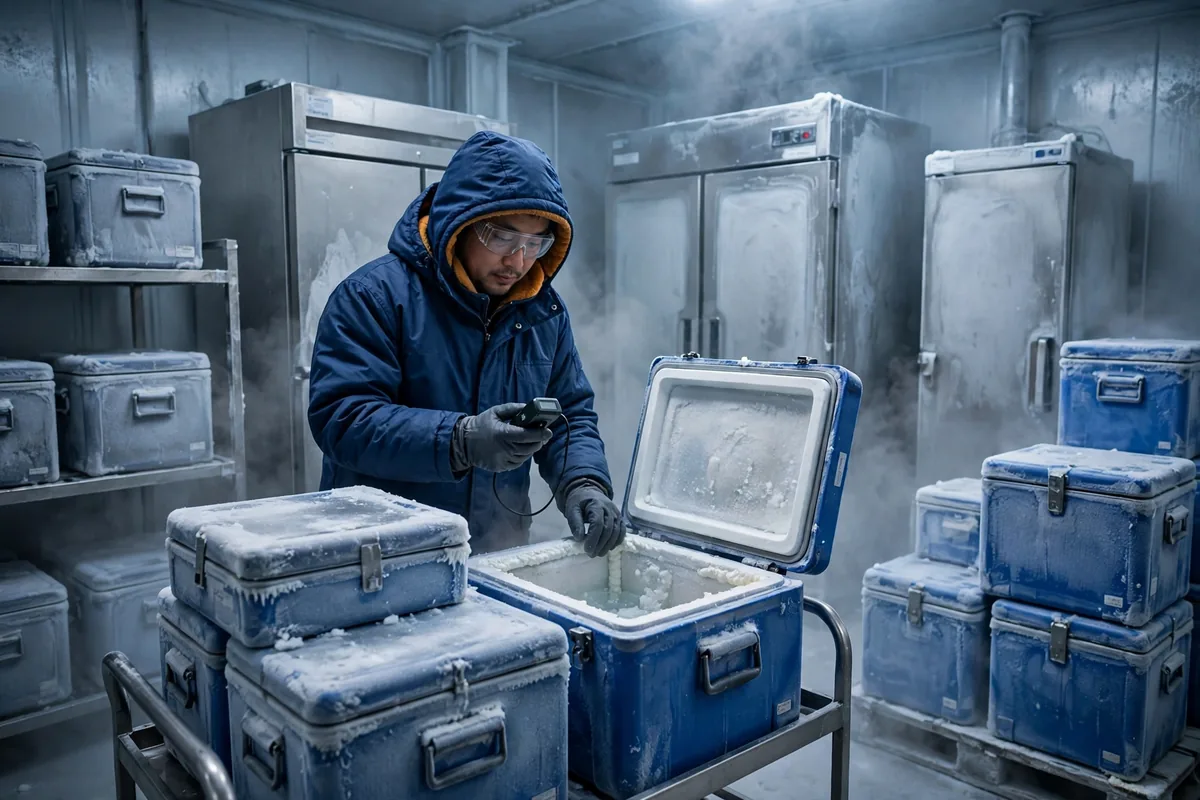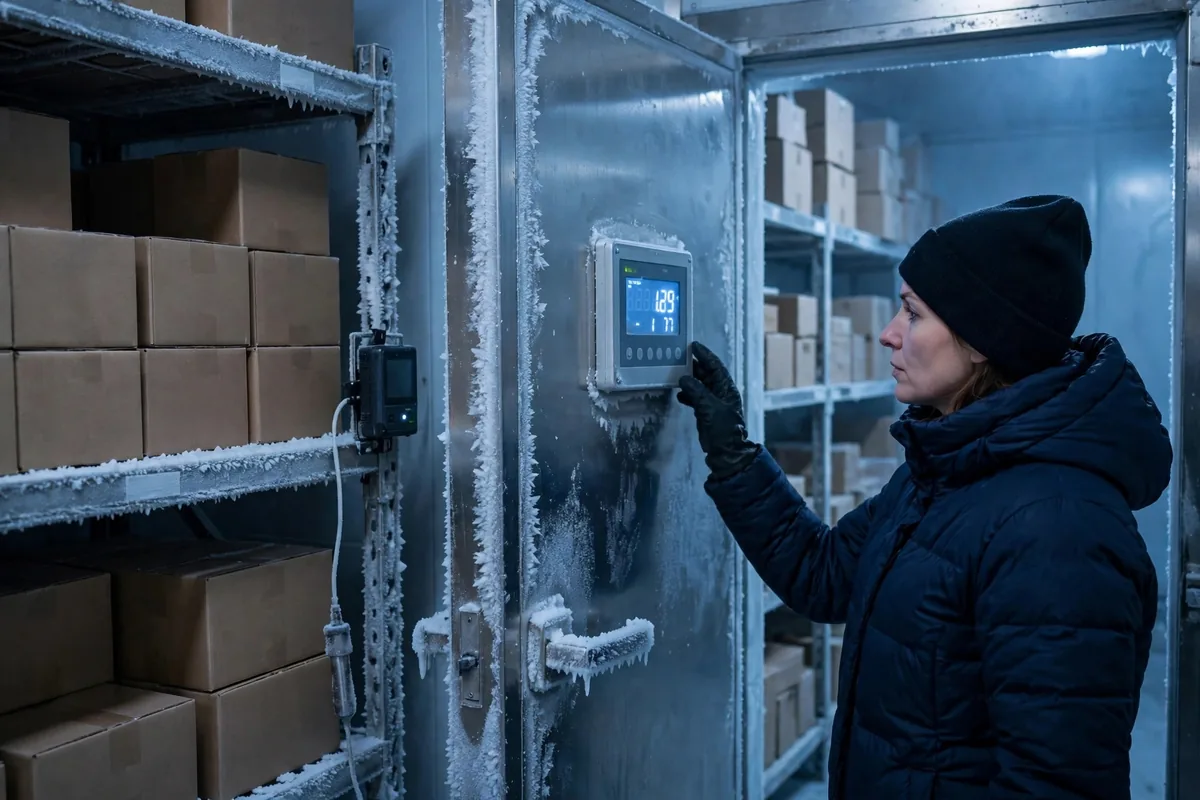
A batch of refrigerated medicine sat in a warehouse for 40 days. The temperature logs looked clean. Then an auditor found three days of records that did not match the calibration date on the probe, and the whole batch was frozen. The goods were worth about $120,000. They stayed frozen for 11 days, and the warehouse paid $29,000 after two rounds of negotiation. That was not a quality failure. It was a record failure. Pharma cold chain temperature monitoring is not a contest over who buys the most expensive equipment. It is a test of whether your records can stand up on an auditor's desk, and whether the money you spend on GDP compliance in the warehouse buys protection worth more than it costs.
When the Temperature Monitoring Record Fails, the Product Pays
In March 2026, a pharmaceutical warehouse in Jiangsu lost power in its cold room for 2 hours and 40 minutes in the early morning. Staff noticed 40 minutes late, and the backup power did not switch over on its own. The room rose from 5°C to 11°C and took another hour to come back inside 8°C. Three products were inside, worth about $120,000. The power cut was survivable. The record was not. The automatic logger stopped writing because it had no independent battery, and the manual entry for that night read, in full, "temperature normal." No time, no measured value, no signature. The customer's quality team ruled the batch could not be shown to have stayed compliant.
Split the bill. The $120,000 is the ceiling on direct loss; the $29,000 settlement is what negotiation produced. Behind those numbers sit 11 days of frozen stock, inspection labour, and lost trust. Over the next six months that warehouse failed two new-customer qualification reviews, both citing the same reason: temperature records were not traceable. A logger with an independent battery would have cost under $3,000.
A warehouse in Guangdong in November 2025 made the opposite mistake. Auditors sampled 30 days and found the cold room logged by hand twice a day, both times during office hours. Nights and weekends were blank. The auditor's answer was short: no staff is not a reason for a record to stop. The fix took three weeks and forced a pause on intake for one new product. Manual logging had saved less than $450 a month. The fix cost more than 20 times that.
Pharma cold chain temperature monitoring: what GDP compliance actually requires
Compliant records come down to five hard actions. Miss one and an audit can send the file back.
Start with frequency. A refrigerated room held at 2–8°C should be logged automatically and continuously, generally at intervals of no more than 30 minutes, with extra probes at the spots that swing most: near doors, near air outlets, and at the warmest mapped point. Handwritten readings twice a day are enough for an ambient store. They do not cover a cold chain room. Logging every minute doubles the data volume without making the record more credible.
Calibration is the second action. Probes, loggers, and alarms need scheduled calibration, and each certificate must match its device number exactly. Expired by one day means expired. The common trap is a swapped probe: a new probe goes in and the file still carries the old probe's number. Put a card on every device showing its number, next calibration date, and owner, with reminders 30 days and 7 days before expiry. A device past its date gets locked out until calibrated again.
Power loss and excursion handling is the third action, and the one where most warehouses lose points. A short, mild excursion needs duration, peak temperature, the curve, and the action taken. A sustained excursion, or a room that passes 10°C, needs goods isolated and marked for inspection first, then a quality assessment. During a power cut, logging must keep running on battery or backup supply, with manual checks every 30 minutes recording time, temperature, humidity, action, and signature. Auditors do not accept "handled" or "temperature normal." They accept time, value, action, and a name.
Retention is the fourth action. Keep records beyond the product's expiry date, with the exact period set by the latest official policy and by customer contracts where they specify longer. Electronic records need a second copy held off-site or in the cloud. Paper records should be bound monthly, numbered, and filed. Corrections need a single line through the error, a signature, and a reason.
The fifth action is to audit yourself the way an external auditor will: continuity, whether the record has gaps; consistency, whether automatic, manual, and alarm logs agree; and traceability, whether one batch can be followed from receipt to dispatch.
| Step | Compliant practice | Common failure |
|---|---|---|
| Logging frequency | Automatic, continuous, no more than 30 minutes apart | Handwritten twice a day, nights blank |
| Calibration | Scheduled, certificate matched to device number | New probe, old calibration file |
| Excursion handling | Isolate and mark for inspection, then assess | Release first, document later |
| Power-cut logging | Battery-backed logging plus manual checks every 30 minutes | Logger stops, one line added afterwards |
| Retention | Electronic copy plus off-site backup, period per current policy and contract | Single local copy, no backup |
The cost of compliance vs the cost of getting caught short
Separate one-off equipment spend from annual running cost. The table below is a worked example for a 500-square-metre cold room. Treat the figures as a planning model, not a quotation; confirm prices with your supplier before budgeting.
| Item | One-off cost | Annual running cost | Note |
|---|---|---|---|
| Automatic temperature and humidity logging system | $5,500–$8,500 | $850–$1,400 | Probes, loggers, alarms included |
| Calibration and verification | — | $1,100–$1,700 | Scales with probe count |
| Backup power and independent batteries | $1,400–$2,800 | $280 | Keeps logging alive in a cut |
| Training and procedures | $700 | $420 | Refresher once a year |
| Total | $7,600–$12,000 | $2,650–$3,800 | First-year total $10,250–$15,800 |
Now price the other side with your own stock value. Assume a cold room that normally holds $420,000 of goods. One excursion that writes off 10% costs $42,000. One failed audit that loses a single customer can cost $28,000–$70,000 a year in lost margin. Against that, first-year compliance costs $10,250–$15,800: roughly a third of one small write-off, and roughly a quarter to a half of losing one customer. That spend is insurance, and the premium is small next to the loss it covers.
Three levers cut the cost without cutting protection. The first is probe placement. Map the room first, then add probes only where it swings. Cutting a 500-square-metre room from 20 probes to 12 can save about a third of equipment and calibration cost. The second is alarm tiers. A small drift goes to the duty phone only; a sustained excursion escalates to the supervisor and quality team. The third is automation. Manual reading costs about $450 a month; an automatic system spreads to under $150 a month, and it closes the overnight gap manual logging leaves open.
The counterintuitive point is that fuller records make a claim cheaper to settle. The Jiangsu warehouse paid $29,000 because its record had a gap of 2 hours and 40 minutes and it had nothing to argue with. Another warehouse had a similar excursion, a room that reached 9.5°C for 50 minutes, but its record was complete and showed isolation and assessment step by step. Quality assessment cleared the goods and the warehouse paid only $1,100 in inspection fees. Same kind of excursion, a 26-fold difference in payout.
The payback point can be calculated. For that 500-square-metre room, first-year spend is $10,250–$15,800 and running cost is $2,650–$3,800 a year. If the system prevents one $42,000 write-off in three years, or keeps one customer worth $42,000 a year in margin, it has already paid for itself. Money saved by skipping compliance is not saved at all. It is a loan against the next incident, charged in frozen stock, lost customers, and audit findings. In pharma cold chain work, a GDP-compliant temperature record is not a bonus. It is the entry ticket.
By Lao Zhou, Logistics Cost Analyst