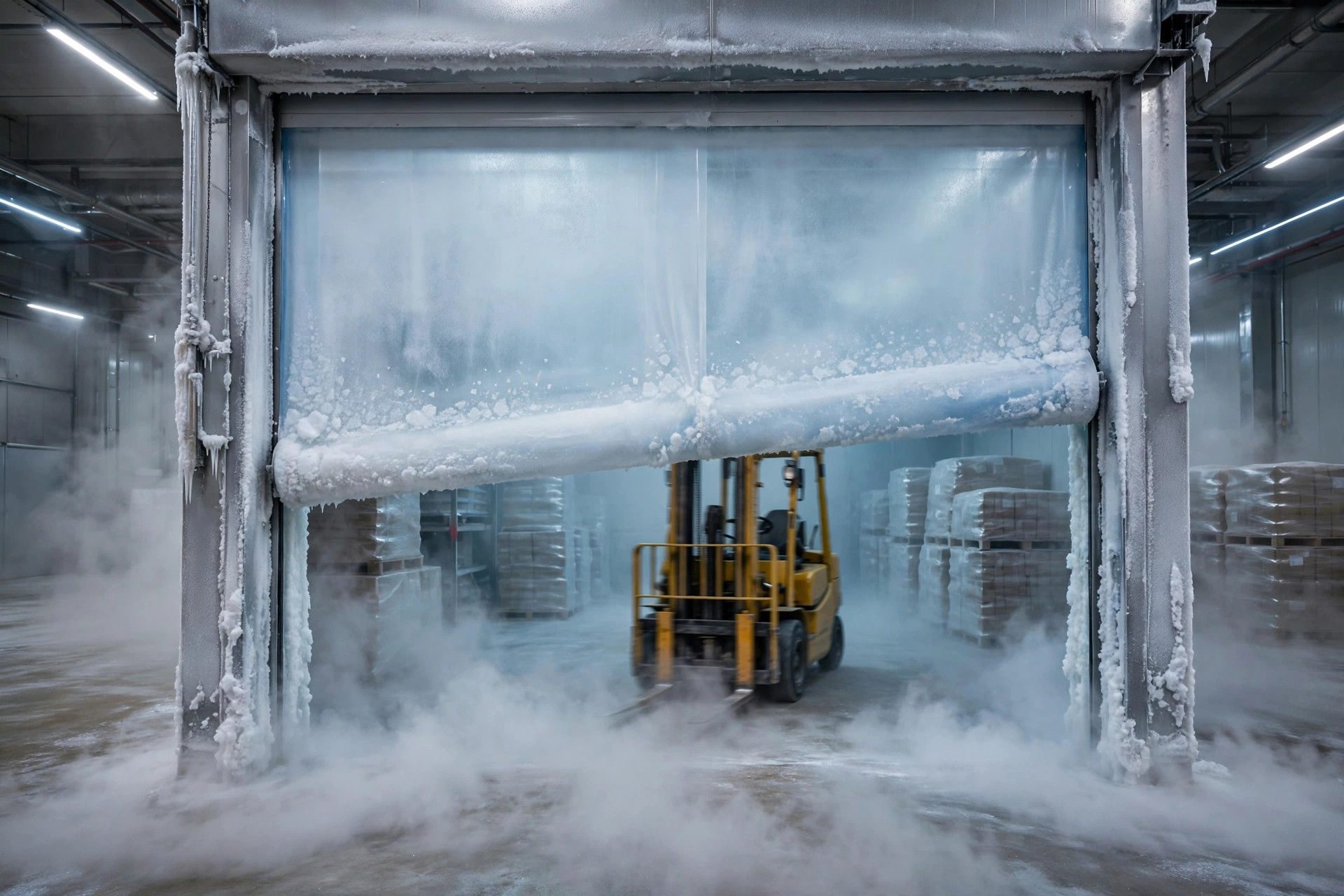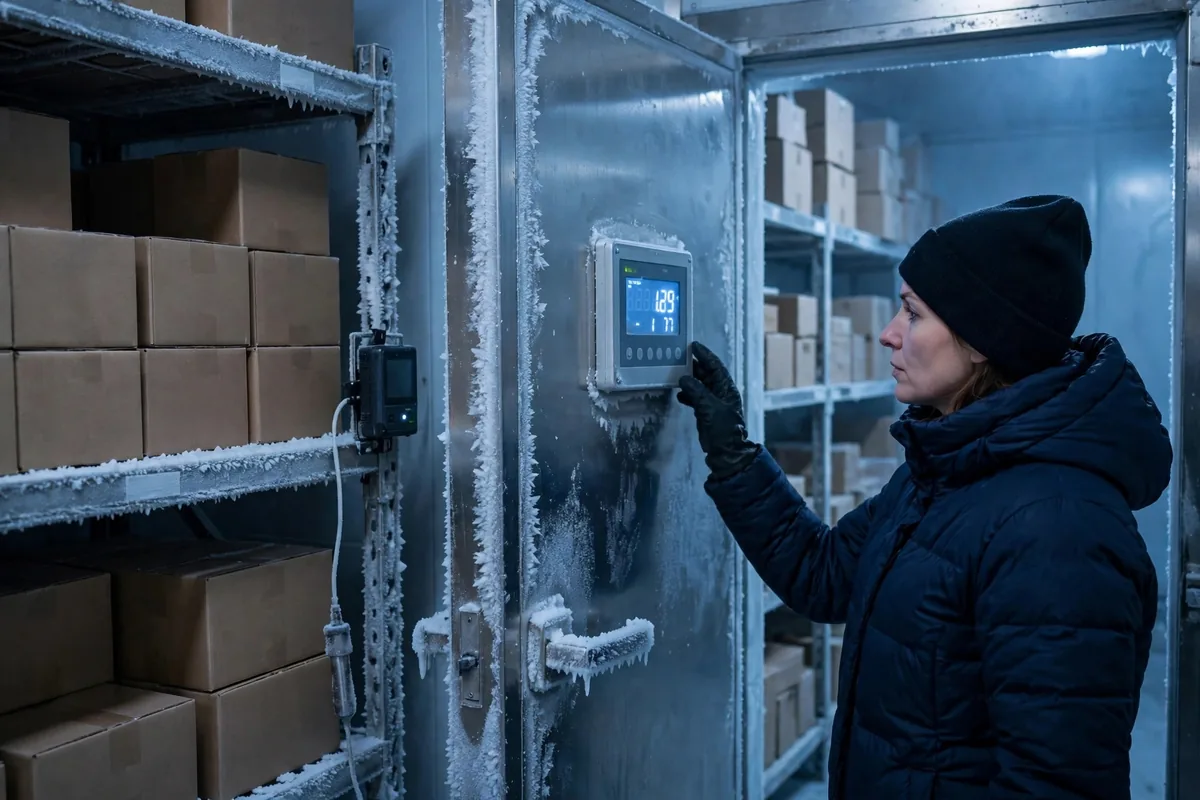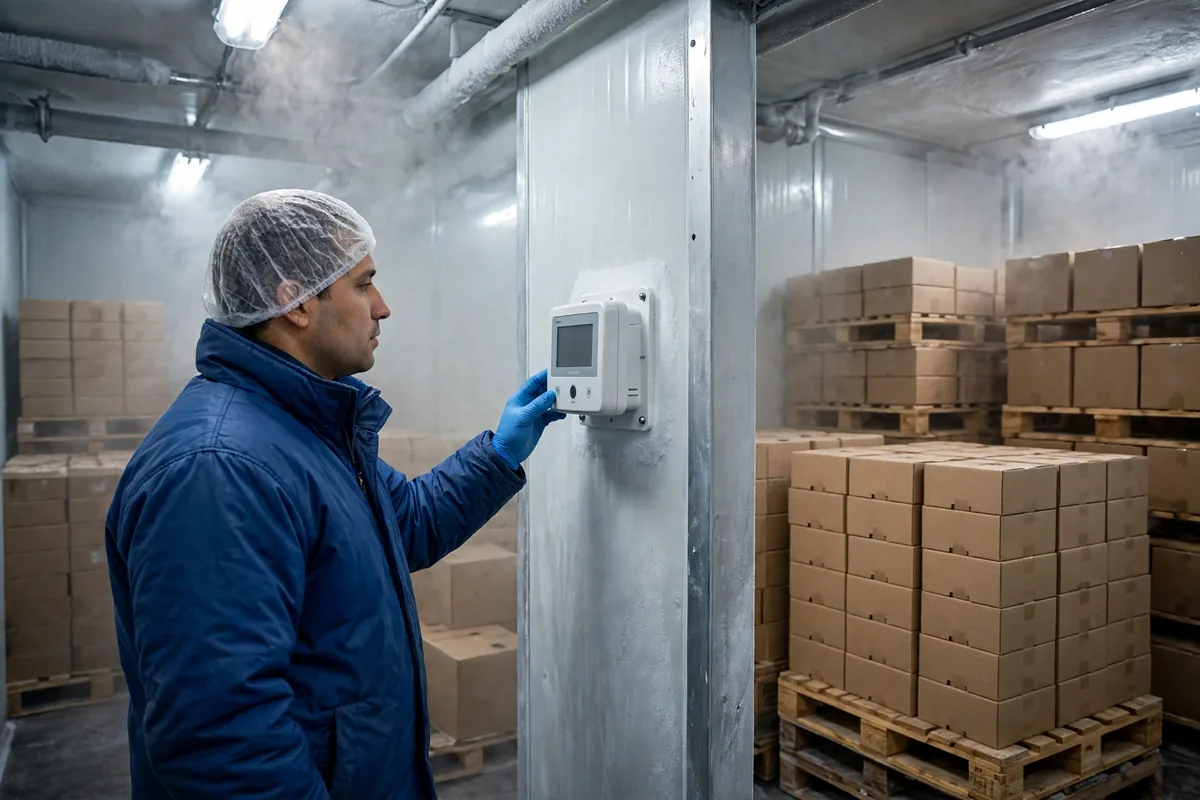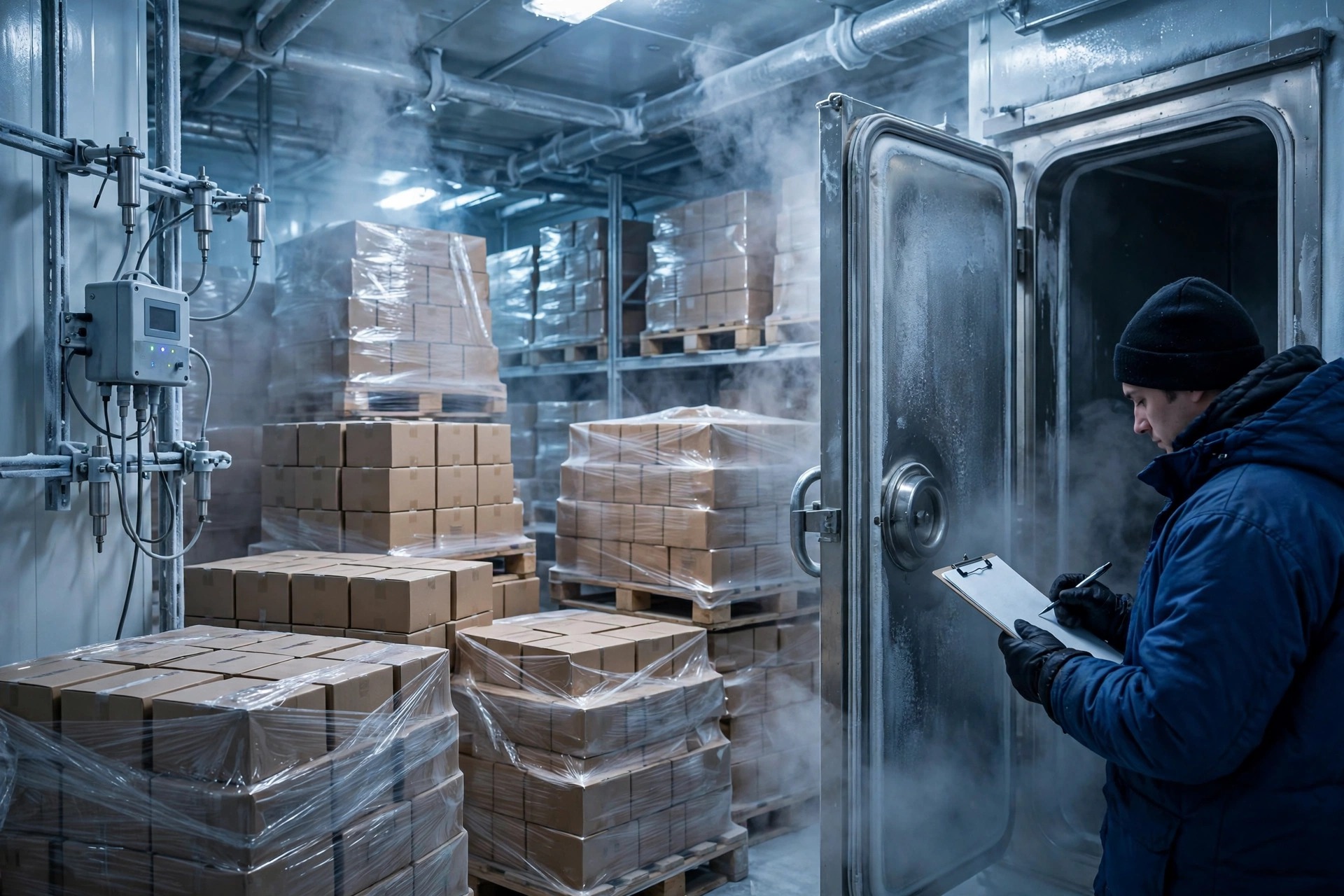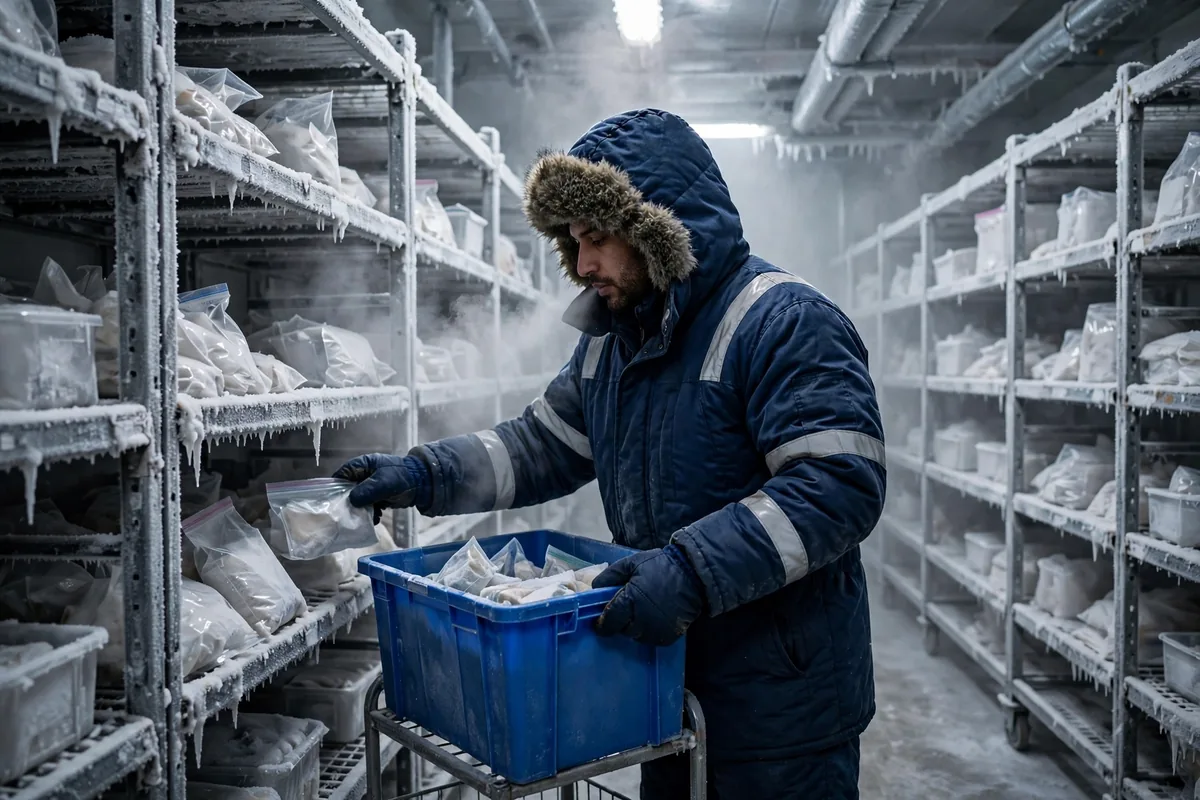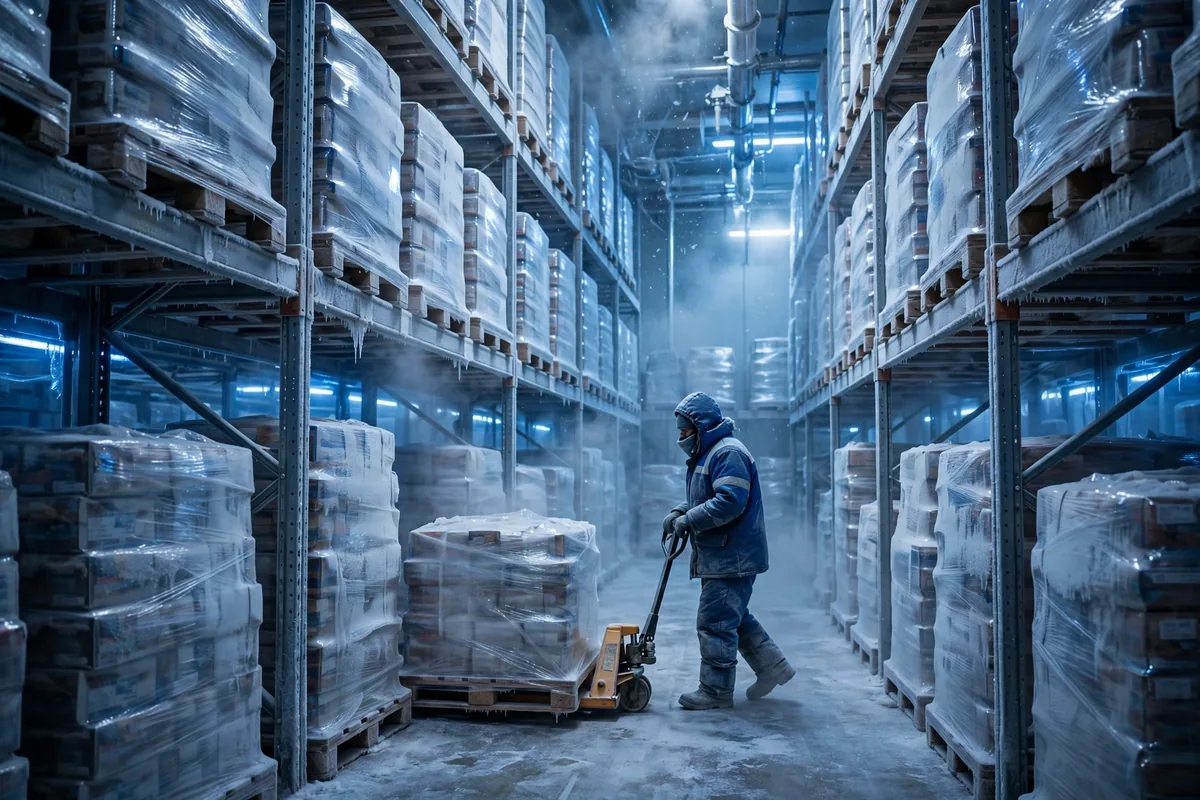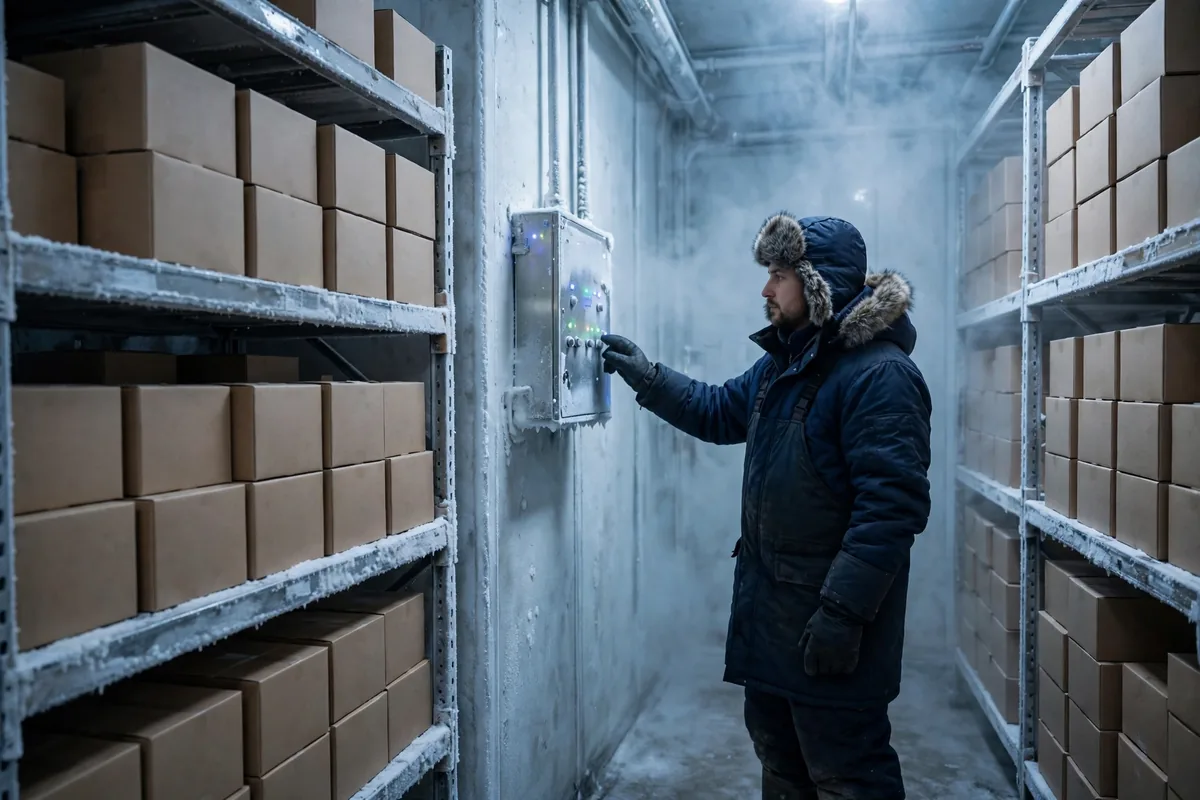
At an industry conference last autumn, a quality director from a pharmaceutical distributor told a story that has stayed with me. When the inspector walked into the cold room, he did not start by looking at the drugs on the shelves. He asked for the last three months of pharma cold chain GSP temperature and humidity records first. The curves came up on screen, smooth as if drawn with a ruler, pinned at 4.5°C the entire time, without a single alarm. The inspector stared at the screen for a moment and asked just one question: does nobody ever open the door in your warehouse?
That story captures the current state of pharma cold chain compliance. China's Good Supply Practice for Pharmaceutical Products, known as GSP, sets clear storage bands: refrigerated storage at 2–8°C, cool storage at 8–15°C, and ambient storage at 15–25°C. The temperature bands are easy to understand. The hard part is proving compliance. A drug sits in the warehouse for three months. Did it ever go out of range, for how long, did anyone act, and what happened to the product? The record has to answer all of that. In cold chain warehousing, temperature and humidity records are the black box: whatever happened in the room, the black box must be able to reconstruct it.
Four tests a GSP cold chain temperature and humidity record must pass
According to publicly documented GSP cold storage projects and industry validation practice, a compliant record must satisfy four conditions at once. Miss one, and the inspector will keep digging.
The first is continuity. An automatic monitoring system must run around the clock, refreshing data every minute and recording automatically every 30 minutes, with no unexplained gaps. The era of manual readings on clipboards does not survive this test. The first thing an inspector looks at is whether the timeline has holes, when each hole occurred, and what was happening at the time.
The second is integrity. Records must be tamper-proof, and the system must keep an audit trail showing who changed what, when, and why. Electronic records and electronic signatures must meet the applicable regulatory requirements. Once data is generated, it cannot be quietly erased and rewritten.
The third is traceability. Every data point must lead back to its source: probe serial number, installation point, calibration certificate, and temperature mapping report. The chain has to be complete. Inspectors will follow it link by link, checking where each probe sits, why it sits there, and whether its calibration has expired.
The fourth is closed-loop alarming. An excursion must trigger a local audible and visual alarm plus a remote text alert sent to at least three members of staff. What matters even more is what happens after the alarm: who received it, when they arrived on site, what they did, when the temperature returned to range, and how the affected drugs were handled. An alarm with no documented response is, in an inspector's eyes, barely better than no alarm at all.
| Test | What the inspector asks | Common failure |
|---|---|---|
| Continuity | Are there gaps in the timeline? | No records during system downtime, no explanation |
| Integrity | Can this data have been altered? | No audit trail, manual backfill without annotation |
| Traceability | Do probes match their calibration? | Certificate numbers that do not match the probes on site |
| Closed-loop alarming | What happened after the excursion? | Alarm raised, no documented response |
Three places pharma cold chain warehouses most often fail
Start with temperature mapping. GSP requires a cold room to pass temperature distribution validation, with multiple measuring points checked under both empty and fully loaded conditions, every point inside 2–8°C. Many operators validate the empty room and keep postponing the loaded test. Last summer, a distributor in East China learned this the hard way: all nine points passed when the room was empty, but on the loaded retest, a point near the door climbed to 9.3°C. The cause was unremarkable. Once the room was full, the stacked goods blocked the air outlet and the doorway became a dead zone for cold air. The fix was equally unremarkable: rearrange the pallet positions, add a guiding air curtain, and redo the loaded validation. The lesson is that an empty-room pass only proves the refrigeration unit can cool. A loaded pass proves the room can hold drugs.
Then there is probe calibration. Probes are the eyes of the entire record system, and if the eyes are blurred, even a complete record is wrong. Three problems recur: calibration lapses with nobody tracking expiry dates, certificates whose serial numbers do not match the probes in the room, and probes installed in the wrong spots. The most informative points are usually the doorway, directly under the air outlet, and the corners, and those are exactly the points most likely to be moved casually during construction. One practical habit is to check serial numbers against certificates before a calibrated probe goes back on the wall, and to keep a single sheet in the monitoring room matching probe, certificate, and location, so it can be produced within a minute when asked.
The third failure point is power and network outages. A cold room is most vulnerable not in the daytime but at two or three in the morning. In July 2025, a distributor's refrigeration unit failed overnight and the room temperature climbed from 4.5°C to 9.8°C. The duty officer noticed 40 minutes later. The excursion lasted 3 hours and 20 minutes and involved two batches. The post-incident review found that the problem was not the refrigeration unit itself but the alarm chain: the text alert went to a single person whose phone was on silent that night, and the backup power covered the main unit but not the probes and the alarm module, which went offline with the power cut. The affected drugs were quarantined, assessed, and written off under procedure. Outage scenarios have to be rehearsed in advance: backup power must cover probes, alarms, and communications; data must be stored locally during a network outage and uploaded automatically on recovery; and that recovery upload path itself needs periodic testing.
Doing the math: compliance cost against one incident
The figures below are a hypothetical worked example, using typical magnitudes for a mid-sized pharmaceutical cold room. They illustrate relative scale only and do not represent any specific company's actual costs.
| Item | Hypothetical example |
|---|---|
| Automatic monitoring system, probes and alarms | One-off investment of roughly 80,000–150,000 yuan |
| Annual third-party temperature mapping validation | Roughly 20,000–40,000 yuan per year |
| Annual probe calibration | Roughly 5,000–10,000 yuan per year |
| One temperature excursion: product value lost | Roughly 500,000–2,000,000 yuan per batch |
| One excursion: assessment, suspension, and reputational cost | Hard to price in money at all |
The counterintuitive part of this math is that compliance spending, which looks like a cost, is the cheapest insurance in the entire cold chain. Monitoring, validation, and calibration together cost tens of thousands of yuan a year. A single excursion can wipe out hundreds of thousands of yuan in product value, and in a serious case can shut operations down. And without a complete record after the incident, there is not even a basis for explaining what happened to regulators or customers.
There is a second counterintuitive judgment worth stating plainly: a perfectly flat 4.5°C curve is the most suspicious record of all. A real cold room temperature fluctuates. It rises a little when the door opens for receiving, jumps during defrost cycles, and shows small ripples around shift changes. The curve should have a sawtooth to it. Inspectors who have seen enough perfect straight lines will start asking whether the probe is sitting in the discharge airflow, or whether the data has been smoothed. A record with fluctuations, alarms, and documented responses is evidence of a room that actually runs. The value of a record is not that it looks good. It is that it is honest.
Temperature and humidity records are shifting from after-the-fact documentation to real-time evidence. Continuous monitoring, automatic alarming, and tamper-proof storage are becoming the default package for pharma cold chain GSP compliance. The direction of travel is clear: inspectors will no longer ask only whether you have records. They will ask whether your records can explain, within ten minutes, every excursion of the past three months. Can yours?
By Dr. Chen, Supply Chain Researcher